Which Rules Control a Sunnydale Sewer Discharge?
Mining and metals plants near Sunnydale meet sewer pretreatment limits by characterizing each wastewater stream, obtaining the applicable POTW industrial user permit, and treating to the receiving sewer authority’s written requirements. The US EPA states that point-source discharges from mining operations, including associated impoundments, require NPDES authorization. A discharge entering a municipal sewer instead follows Clean Water Act Section 307(b) and 40 CFR Part 403 pretreatment, with 40 CFR Part 437 ore mining or 40 CFR Part 433 metal finishing standards where the facility’s industrial-user classification applies. A defensible train normally combines equalization, pH adjustment, metal precipitation, coagulation, DAF or lamella clarification, multimedia filtration, and sludge dewatering; UF or RO is added only when residual colloids, dissolved metals, or salts require it.
Do not size equipment against a generic NPDES limit. Confirm the POTW’s sewer-use ordinance, industrial user permit or equivalent authorization, local discharge limits, monitoring requirements, sampling point, and enforcement provisions. The HydropureWater pretreatment article, published in 2026, reports a representative 40 CFR Part 437 zinc limit of 1.0 mg/L daily maximum and 0.5 mg/L monthly average, while local POTW monthly-average zinc limits are commonly reported as 0.3–1.0 mg/L. The specific Sunnydale requirement therefore controls the design target.
Federal categorical standards establish a baseline, but they do not replace the sewer authority’s local rules. Confirm whether the operation is principally ore mining and dressing, metal finishing, or a different industrial category. Facilities considering an acquisition should also address wastewater due diligence for a mining acquisition, including transfer of permits, historical exceedances, sampling obligations, and the treatment operator’s residual-waste responsibilities.
Build the Compliance Basis from Real Waste Streams
Mining wastewater cannot be represented reliably by one unverified average because acid mine drainage, process water, tailings runoff, and dewatering discharge impose different treatment requirements. EPA’s Industrial Wastewater guidance states that mining point-source discharges require NPDES authorization, but it does not establish the chemistry or capacity of a Sunnydale site. Those inputs must come from representative sampling.
Acid mine drainage develops when sulfide minerals oxidize and can carry acidic water with dissolved metals. Process water may contain flotation reagents, leach constituents, cyanide, ammonia, or chloramines depending on the operation. Tailings runoff can add fine solids and residual process chemicals, while mine dewatering composition varies with geology. The Tenino pretreatment article, published in February 2026, identifies these as distinct mining wastewater categories and warns against a “one stream fits all” treatment assumption.
Build a sampling plan that records pH, flow variability, suspended solids, turbidity, conductivity or TDS, and the metals identified by process chemistry and the POTW. Expand the analyte list to the applicable categorical standard. Document peak, average, batch-discharge, seasonal, and clean-out conditions separately; do not average them into a value that hides a shock load.
| Stream | Characterization to establish | Design consequence |
|---|---|---|
| Acid mine drainage | pH, flow variability, suspended solids, and dissolved metals | Equalization, pH correction, metal precipitation, and solids removal |
| Process water | Process reagents, pH, suspended solids, TDS, and permit-listed analytes | Stream-specific treatment; biological or membrane steps may be needed |
| Tailings impoundment or runoff | Solids, metals, process chemicals, and rainfall-driven peaks | Equalization and clarification based on peak solids loading |
| Dewatering discharge | Flow regime, pH, metals, suspended solids, and geology-related variability | Decide whether to treat separately or combine only after characterization |
The HydropureWater article recommends equalization at 8–24 hours of average daily flow and warns that a 4-hour basin may not absorb dump-leach cycles, shift changes, or mill clean-outs. Use that recommendation only after checking the site’s actual discharge pattern. The supplied research contains no Sunnydale flow, concentration, or local numerical limit, so none should be invented for preliminary sizing. Comparisons with biological treatment options for mining wastewater and pretreatment limits for fabricated metals plants can inform the investigation, but they do not replace site data or the Sunnydale permit.
Match Each Treatment Step to the Permit Target
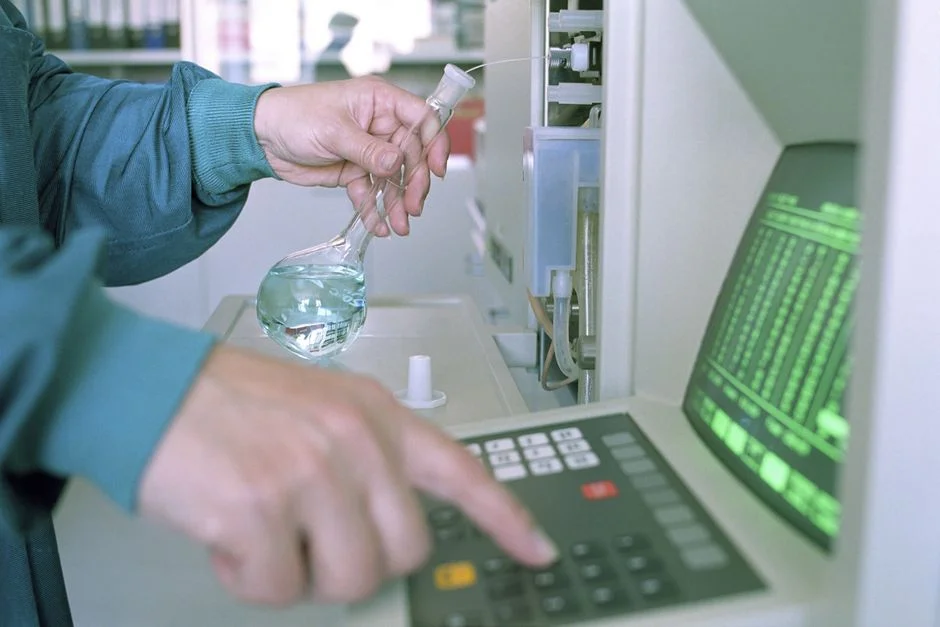
A compliant treatment train should be selected as a sequence of linked removal mechanisms: equalization, pH correction, precipitation, coagulation, DAF or lamella clarification, multimedia filtration, optional UF or RO polishing, and sludge dewatering. Every stage needs a documented pollutant, target concentration, flow condition, and residual-waste output.
Equalization buffers batch discharges before reagents and solids-removal equipment. pH correction follows because metal hydroxide precipitation depends on pH control. The HydropureWater pretreatment article recommends staging dosing when influent pH varies by more than 2 pH units and using PLC-controlled automatic dosing to hold pH within a ±0.2 band. That is an operating-control recommendation, not a universal POTW pH limit. A PLC-controlled chemical dosing skid can integrate pH adjustment and coagulant feed, but its reagent and control selections must follow jar tests and process chemistry.
Hydroxide precipitation is the usual starting point for dissolved metals. Properly controlled systems in the 2026 HydropureWater comparison are reported to achieve 85–95% total-metals removal. The same source reports sulfide residuals of 0.01–0.05 mg/L compared with 0.5–2.0 mg/L for hydroxide treatment, making sulfide polishing relevant where the local limit is below 0.3 mg/L. Sulfide treatment requires controlled reactors and H₂S management, so it is not merely a reagent substitution.
Coagulation converts fine particles into floc that the next solids-removal step can capture. DAF is appropriate for buoyant floc; lamella is appropriate for dense metal-hydroxide solids. Multimedia filtration then protects downstream equipment and smooths clarification upsets. The 2026 HydropureWater article reports a filtration rate of 1–2 m/h and residual TSS below 10 mg/L. A multimedia filtration system should therefore be checked against backwash capacity, residual solids, and the next process stage rather than selected from nominal flow alone.
| Step | Primary purpose | Inputs and output to document |
|---|---|---|
| Equalization | Buffer batch and variable flows | Peak, average, batch and clean-out flows; retained volume |
| pH correction | Create the precipitation condition | Influent pH range, setpoint, reagent demand, control band |
| Precipitation and coagulation | Remove dissolved metals and form removable floc | Metal profile, jar-test results, reagent consumption, sludge yield |
| DAF or lamella | Separate precipitated solids | Solids loading, floc behavior, oil or colloid content, underflow |
| Multimedia filtration | Remove residual suspended solids | Turbidity, TSS, filtration rate, backwash and waste stream |
| UF or RO | Remove residual colloids, dissolved metals, or salts | Permit target, feed chemistry, recovery demand, concentrate disposal |
| Dewatering | Stabilize residual sludge | Cake dry solids, filtrate quality, disposal acceptance |
UF addresses colloids and suspended solids; RO addresses residual dissolved metals and salts. The 2024 review in Heliyon reports that some integrated technologies can recover salts and more than 95% of water, but this is a reported research result, not a universal recovery guarantee. A UF system is justified when particulate carryover threatens compliance or protects downstream equipment. An RO system is justified when dissolved constituents remain outside the sewer target or when reuse requires further demineralization. Both require a defined concentrate route.
Choose DAF or Lamella for the Solids Load
The DAF-versus-lamella decision should follow the solids characteristics, not a preferred equipment catalog. The 2026 HydropureWater comparison reports DAF hydraulic loading of 5–25 m/h, 90–98% TSS removal, and 85–95% oil and grease removal in mining and metal-finishing service. DAF is therefore the stronger candidate when oil, grease, buoyant floc, or fine colloids dominate the clarification problem.
Lamella is the stronger candidate when dense metal-hydroxide sludge and footprint are dominant. The same source reports 20–40 m/h surface loading and approximately one-third the footprint of a conventional clarifier. Neither technology removes dissolved metals or salts; precipitation, polishing, and any membrane stage must provide those functions.
| Decision input | Favors DAF | Favors lamella |
|---|---|---|
| Solid character | Buoyant floc, oil, grease, fine colloids | Dense metal-hydroxide floc |
| Hydraulic condition | Flow and load suit the selected DAF geometry | High flow with constrained available footprint |
| Sludge handling | Float and underflow removal must be specified | Dense sludge blanket and underflow capacity are required |
| Operating resources | Air supply and polymer compatibility must be verified | Plate packing, sludge blanket, and withdrawal design must be verified |
| Resilience | Parallel trains may be needed for peak-flow and maintenance resilience | Future hydraulic growth and maintenance access must be checked |
The same comparison reports 13 standard DAF models covering 4–300 m³/h, but that catalog range is selection evidence, not a Sunnydale sizing conclusion. Obtain peak and minimum flow, turndown requirements, solids loading, chemical demand, air availability, underflow capacity, maintenance access, and future expansion assumptions. Compare a mining wastewater DAF system against a high-efficiency lamella sedimentation tank only after those inputs are established. A supplier that offers only one technology must explain how its proposed unit handles the actual worst-case stream.
Control the Sludge and the Monitoring Burden
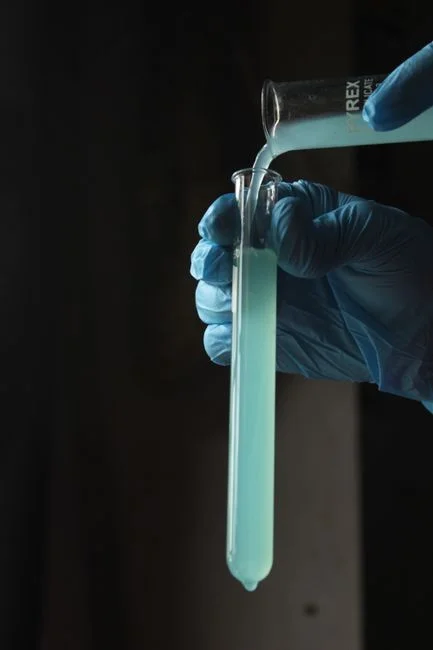
Chemical precipitation creates metal-bearing sludge, so treatment compliance cannot be separated from residual-waste management. Identify the receiving waste facility’s acceptance criteria, analytical requirements, transport assumptions, and disposal authorization before selecting a dewatering device. Changes in precipitate chemistry, pH control, or coagulant use can change cake volume and characteristics.
The 2026 HydropureWater pretreatment article reports plate-and-frame filter-press performance of 25–35% dry solids. That is a reported comparison value, not a guarantee for every mine sludge. Require a plate-and-frame filter press for mining sludge dewatering proposal to state expected dry solids, filtrate quality, cycle time, plate capacity, cake handling, and excluded disposal work.
The 2024 Heliyon review warns that some treatment technologies can generate highly toxic sludge and other waste products. Technology selection should therefore include a waste-management plan, not only an effluent balance sheet. The same review reports systems that recover salts and more than 95% of water; that result does not remove the obligation to manage concentrates, spent chemicals, backwash waste, and dewatering residues.
For operating control, the February 2026 Tenino pretreatment article identifies continuous pH, flow, and conductivity monitoring with PLC/HMI and POTW self-monitoring records as appropriate controls for a mining treatment train. Distinguish continuous instrument readings from automatic sampling and laboratory analysis. The industrial user permit must define which parameters require records, composite samples, grab samples, external laboratory testing, reporting frequency, and compliance calculations.
Ask the POTW whether monitoring extends to the discharge point, upstream sampling stations, or both. Also clarify how treatment upsets, chemical deliveries, sludge shipments, and bypass events must be documented. A 2026 screw-press engineering guide can support a dewatering comparison, but the disposal route and permit obligations remain site-specific.
Issue a Supplier a Quote-Ready Basis of Design
A comparable bid requires a written performance target, documented stream data, and explicit operating and waste assumptions. Begin with the Sunnydale POTW’s sewer-use ordinance, industrial user permit, local limits, sampling and monitoring rules, prohibited-discharge provisions, surcharge provisions, and any approved alternative limits. A generic treatment train is not a bid specification.
For each stream, provide peak and average flow, representative chemistry, variability, seasonal factors, operating schedule, and anticipated batch discharges. State whether equalization must accommodate a dump-leach cycle, mill clean-out, rainfall event, or dewatering surge. The supplied research publishes no Sunnydale-specific flow range, chemistry profile, equipment price, or delivery lead time, so those values must come from site records and written quotations.
- Define the required treatment sequence and the specific removal objective for each unit.
- State the sewer-quality target, any reuse percentage, and the quality required for the intended reuse application.
- Provide available footprint, utilities, access, geotechnical or civil constraints, and the sludge-disposal route.
- Define PLC/SCADA, alarms, data logging, automatic sampling, and POTW reporting interfaces.
- Require each bidder to state guaranteed performance, worst-case chemistry, reagent consumption, sludge yield, redundancy, commissioning tests, and O&M assumptions.
- List excluded civil work, chemicals, analytical services, waste transport, disposal fees, installation, and commissioning items.
Reuse remains an economic option, not a regulatory substitute. The February 2026 Tenino article cites 40–60% freshwater-intake reduction from RO-enabled reuse in water-stressed mining operations. That result can support a reuse business case, but any unrecycled discharge must still meet the local sewer requirements. Ask the bidder to separate treatment capital cost, consumables, sludge handling, monitoring, and disposal assumptions so that the proposals can be compared on total operating cost rather than a generic equipment price.
Frequently Asked Questions
Do NPDES limits or POTW limits control discharge to a Sunnydale municipal sewer?
POTW pretreatment requirements control a discharge entering a municipal sewer. NPDES addresses direct point-source discharges to waters of the United States under Clean Water Act Section 402. A mine may need NPDES coverage for a separate surface-water outfall, but that permit does not replace the sewer authority’s industrial user permit, local limits, monitoring rules, or enforcement provisions.
What data is needed to size equalization, DAF or lamella, UF, and RO equipment?
Provide each stream’s peak and average flow, batch-discharge pattern, representative chemistry, suspended-solids load, pH variability, dissolved metals, TDS or conductivity, and required effluent or reuse quality. The 2026 HydropureWater article recommends 8–24 hours of equalization based on average daily flow. It also reports a 4–300 m³/h catalog range for DAF and 20–40 m/h lamella surface loading. These are selection references, not universal sizing values; actual hydraulic and solids loading must be calculated from Sunnydale data.
How should suppliers be compared on cost when no Sunnydale price range is available?
Request site-specific quotations using the same basis of design, then compare guaranteed limits, worst-case chemical consumption, sludge yield, controls, monitoring, utility demand, commissioning tests, O&M assumptions, and exclusions. Do not compare a unit price without checking whether civil work, reagent systems, waste transport, disposal, installation, and permit-support work are included. Also ask each supplier to identify the performance boundary and conditions under which its guarantee applies.
When are UF and RO justified for mining wastewater?
UF is justified when residual colloids or suspended solids must be removed, when downstream protection is needed, or when the UF stage protects an RO train. RO is justified when residual dissolved metals or salts remain outside the applicable sewer target, or when the reuse application requires demineralized water. The 2024 review reports technologies that recover salts and more than 95% of water, but that finding is not a universal recovery or rejection guarantee; ask for feed-specific performance and concentrate-disposal data.
What must be reconciled before ordering treatment equipment?
Reconcile the POTW’s written local limits, any applicable federal categorical standard, stream-by-stream chemistry, peak and batch conditions, reuse goals, monitoring obligations, and residual-waste disposal route. A unit operation should not be included merely because another mine uses it. It belongs in the scope because a documented pollutant, permit target, flow condition, or downstream treatment requirement makes it necessary.