Why Woodinville Chemicals Plants Are Rethinking Primary Treatment in 2026
Woodinville chemical, paint, adhesive, and cleaning-product manufacturers discharge to King County sewers, and the binding compliance frame in 2026 is the King County Industrial Waste Program (KC IWS) pretreatment limits, not the EPA national defaults alone. The EPA's Lake Washington watershed management plan (nepis.epa.gov) sets regional discharge expectations that reinforce KC IWS authority for industrial streams in the Sammamish and Woodinville sub-basin. Chemicals streams differ sharply from food-processing FOG loads: they carry solvents, surfactants, and pH swings that change floc chemistry day-to-day, so the primary unit must be selected with chemical conditioning in mind, not just hydraulic capacity. This guide applies these criteria to the DAF versus clarifier decision.
How a DAF Clarifier Works in a Chemicals Plant
DAF systems generate 30–50 micron micro-bubbles that attach to flocculated particles and float them to the surface, where a paddle skimmer scrapes the float layer into a collection trough (Clearwater Industries, 2026-04-27). A recirculation pump pressurizes clarified water with air; when the saturated stream is released into the flotation tank, the dissolved air comes out of solution as the micro-bubbles that drive separation (Clearwater Industries). Clean water must be available at start-up because the recirculation loop pressurizes clarified effluent, not raw wastewater, and a dirty start-up can foul the saturation system and pump.
DAF chemistry is non-optional. Coagulant, pH adjustment, and polymer flocculant are dosed upstream through 15–45 second serpentine flocculation tubes or staged mix tanks with impeller agitators, and the chosen chemistry is what makes the bubbles stick to the right particles (Clearwater Industries, 2026-04-27). Mix-tank trains are used when a chemical needs longer contact time, while serpentine tubes deliver the flash-mix regime for most coagulant and polymer pairs. Most DAF units also include a bottom auger or sediment compartment for heavier settleable solids, so a DAF vessel handles both floatable and settleable fractions in one tank. A HydropureWater DAF system (4–300 m³/h) covers the chemicals-plant flow range in this configuration.
How a Lamella or Gravity Clarifier Handles the Same Stream
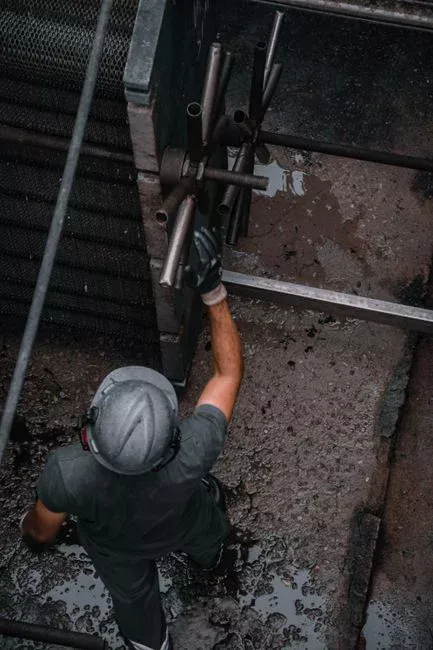
A lamella clarifier uses inclined parallel plates to shorten the effective settling distance, raising the surface loading rate of an otherwise conventional sedimentation tank. The HydropureWater high-efficiency sedimentation tank operates at 20–40 m/h surface loading, which is the key parameter a buyer should anchor sizing to rather than a generic retention-time rule of thumb. Many modern lamella designs add sludge recirculation and an integrated flocculation zone, which can cut coagulant and flocculant consumption versus a conventional clarifier by re-contacting fresh water with already-formed floc (HydropureWater lamella clarifier spec).
Gravity clarifiers rely on quiescent settling and do not actively remove emulsified oils, surfactants, or low-specific-gravity particles — those will pass through and show up as FOG and COD in the effluent. The right chemicals stream for a clarifier is one dominated by settleable inorganics or metal-hydroxide floc, with low emulsified-FOG load and relatively stable influent. When the influent carries surfactants or solvent emulsions, a clarifier alone is the wrong tool and the FOG ceiling in the KC IWS permit will be the first parameter to fail.
DAF vs Clarifier: Side-by-Side Comparison for Chemicals Streams
| Parameter | DAF system | Lamella / gravity clarifier |
|---|---|---|
| Primary mechanism | Floats floc with 30–50 micron micro-bubbles; skimmer removes float (Clearwater, 2026-04-27) | Settles floc on inclined plates; sludge recirculation and hopper remove solids (HydropureWater) |
| Target contaminants | FOG, emulsified oil, low-specific-gravity TSS, BOD, COD, metals co-precipitated with floc (Kemco Systems) | Settleable TSS and metal-hydroxide floc; poor fit for emulsified FOG or surfactants |
| Flow range | HydropureWater DAF models span 4–300 m³/h across 13 standard sizes | Surface loading 20–40 m/h on the lamella plate pack |
| Footprint vs flow | Smaller footprint advantage on low-FOG, high-flow streams | Smaller footprint advantage on high-FOG, low-flow streams due to plate pack |
| Chemical conditioning | Coagulant + pH + polymer through 15–45 s serpentine tubes or staged mix tanks with three dosing points (Clearwater, 2026-04-27) | Coagulant and flocculant typical, but mixing is built into the flocculation zone |
| Skid / modular layout | COMPACT DAF: single skid ≤66 GPM; two-skid modular above 66 GPM (Clearwater) | Plate-pack tanks with integrated sludge hoppers, typically one vessel |
| Heavier settleable solids | Bottom auger / sediment compartment handles settleables (Clearwater) | Sludge hopper and scraper handle settleables |
| Typical fit for chemicals streams | Emulsified FOG, surfactant, solvent, pH-variable streams | Metal-finishing rinses, inorganic settling, stable influent |
Both technologies require chemical conditioning, so neither is a "no-chemistry" option. The practical difference is that DAF almost always needs a dedicated 15–45 s serpentine flocculation tube or mix-tank train with three dosing points for the bubbles to attach, while a clarifier can sometimes run with a single polymer dose if the influent is already coagulating naturally.
Matching the Influent Profile to the Right Technology
Choose DAF when the stream has visible or measured emulsified oil or FOG, surfactants, or low-specific-gravity TSS that would carry over a clarifier and push the effluent above 2026 KC IWS FOG or COD ceilings. Choose a lamella clarifier when the stream is dominated by settleable inorganics — for example, metal-finishing rinses routed through a chemicals plant — and the limiting parameters are TSS and metals rather than FOG. Choose DAF first and lamella polish second when both emulsified FOG and settleable TSS are present and the site is flow-constrained, because DAF handles FOG upstream and the lamella polishes residual TSS for reuse.
Always run jar tests on the actual chemicals stream before procurement. The same DAF hardware can hit 90%+ TSS removal on one formula and underperform on another, because chemistry drives the bubble-particle attachment (Clearwater, 2026-04-27). A pilot run also validates the coagulant and polymer choice against the actual 2026 KC IWS permit parameters rather than against a generic target list. The same logic applies when comparing this chemicals-stream decision to the DAF vs clarifier for mining/metals wastewater problem, where the controlling parameter is usually metals rather than FOG.
Chemical Conditioning, Sludge Handling, and 2026 Compliance
DAF sludge is a float layer that must be dewatered; a plate and frame filter press for DAF float sludge is the common pairing, with filtration area sized to the float-solids mass flow. Chemical dosing needs PLC-controlled accuracy. Coagulant, pH adjusters, and flocculant dosing should be automated and tied to flow-proportional setpoints through an automatic coagulant and polymer dosing skid, not hand-tuned, because influent swings in a chemicals line are too fast for operator response.
Woodinville discharges in 2026 fall under KC IWS pretreatment limits, with permit parameters typically including pH range, FOG ceiling, TSS ceiling, COD and BOD limits, and metals action levels. The chosen primary unit must be matched to the controlling parameter, which is often FOG for chemicals streams. A rotary mechanical bar screen ahead of the DAF protects the recirculation pump and saturation system from rags and large debris — the same rationale as municipal headworks protection. For float-sludge dewatering, a filter press design for industrial float sludge follows the same sizing logic, even when the upstream stream is food rather than chemicals.
Frequently Asked Questions
When is a DAF the right primary unit for a Woodinville chemicals plant in 2026?
DAF is the default when the stream contains emulsified FOG, surfactants, solvents, or low-specific-gravity TSS that a clarifier would carry over. The decision should be confirmed by jar tests on the actual stream, because chemistry — not the hardware — drives removal performance (Clearwater, 2026-04-27).
How do I size a DAF or lamella clarifier for a chemicals line?
HydropureWater DAF models span 4–300 m³/h across 13 standard sizes, and the lamella clarifier is sized by surface loading of 20–40 m/h on the plate pack. The buyer should request a sizing memo that ties the selected model to jar-test TSS and FOG removal, peak and average flow, and the 2026 KC IWS controlling parameter.
What does a DAF system cost for a chemicals plant?
The supplied research does not publish numeric capex or opex ranges. Request a written quote based on jar-test data, the 4–300 m³/h flow range, and the chosen chemical conditioning skid, and ask the supplier to itemize the conditioning train separately from the flotation vessel so you can compare like for like.
How do I choose between DAF suppliers for a KC IWS-compliant installation?
Prioritize suppliers who run jar tests or pilot units on the actual stream, supply the chemical conditioning skid with three dosing points, and document KC IWS 2026 compliance history on similar chemicals streams. A reference list with operating data — not just project names — is the single best filter for supplier selection.