What Gainesville mining and metals plants are clarifying in 2026
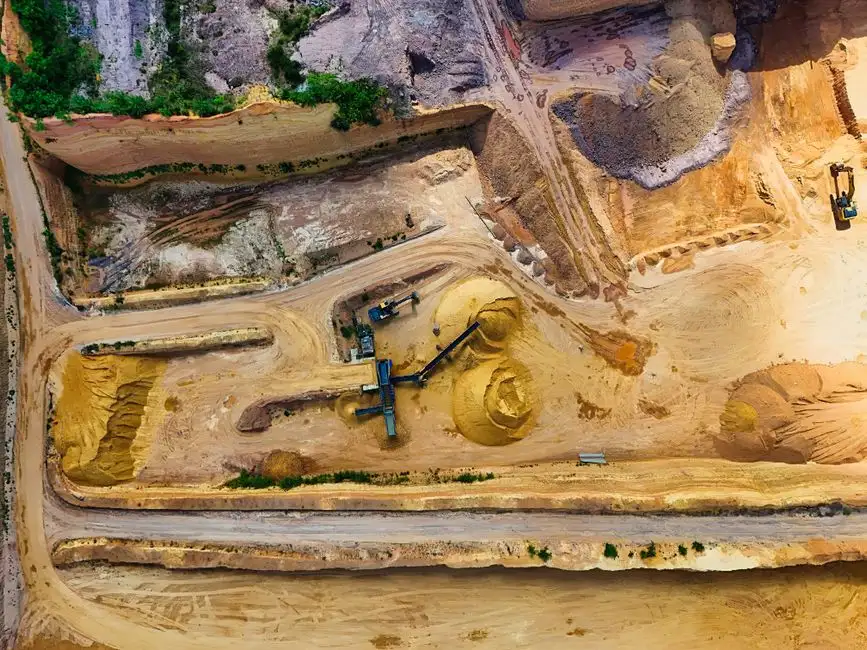
Gainesville-area facilities generating industrial wastewater in 2026 typically handle one of three influent patterns, and the first clarifier choice should follow the contaminant rather than the flow number. Metalworking and surface-finish shops produce streams loaded with oils, greases, coolants, and metal-hydroxide flocs from rinse water; phosphate, limestone, and aggregate operations produce heavy mineral fines in wash water and process water; and combined plants send a blend of both into a common sewer.
Per Kemco's published technology page, DAF systems target "oils, greases, suspended solids, BOD, COD, and metals" specifically, while SigmaDAF's manufacturer description states DAF clarifiers "effectively treat industrial wastewater by removing suspended solids, oils, and fats along with associated pollutants." Heavy settleable solids are typically the domain of gravity or lamella clarifiers, which the HydropureWater high-efficiency lamella clarifier documentation positions for turbidity and suspended-solids reduction in surface and mine water. Florida's humid, warm climate also matters at the siting stage: outdoor tank material selection, corrosion allowance, and indoor-versus-outdoor placement should be decided with the local water analysis in hand, since the supplied research gives no Gainesville-specific chloride or temperature figure to anchor a quantitative allowance.
How DAF and gravity clarifiers actually work
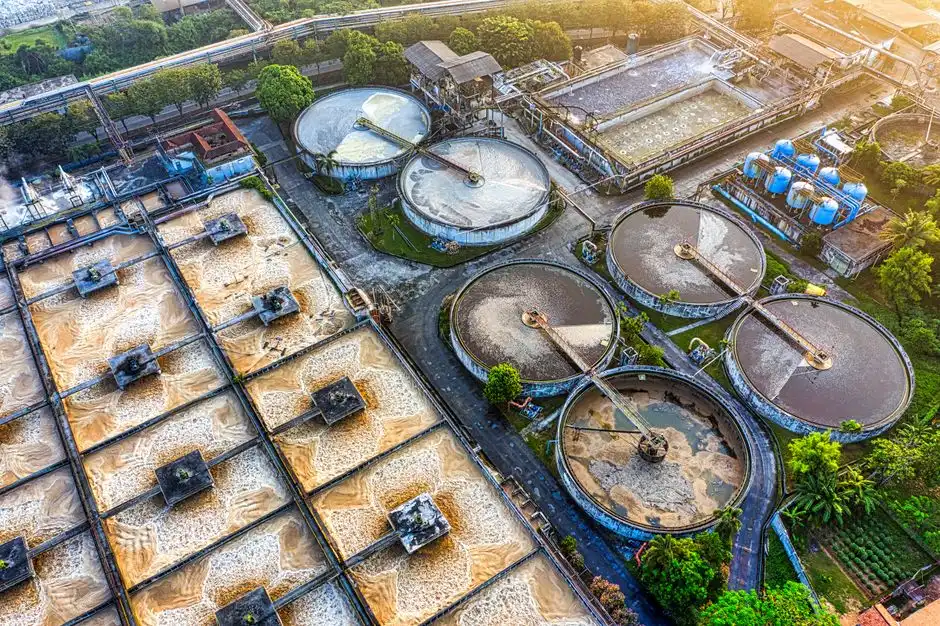
DAF clarifies by floating rather than settling. Per SigmaDAF's published equipment description, the system saturates water with air under pressure, then releases the air at atmospheric pressure inside a flotation tank, producing microbubbles in the 30–50 µm range that attach to floc and lift it to the surface. Coagulant and flocculant conditioning upstream is part of the documented chain, and SigmaDAF describes the resulting skimmer-plus-auger arrangement: a paddle skimmer scrapes the floated layer, while heavier settleable matter is augered out of the bottom collection zone. The same SigmaDAF page documents the Compact DAF as a pre-assembled, PLC-controlled skid for flows of 66 GPM or less per single skid, with modular two-skid configurations above that. For a mining or metals site, the HydropureWater DAF system (4–300 m³/h across 13 models) covers the same general flow band with a broader model range.
Lamella and conventional gravity clarifiers clarify by settling. Inclined plates multiply the effective settling area inside a compact footprint, allowing hydraulic surface loadings that the HydropureWater high-efficiency lamella clarifier documentation publishes at 20–40 m/h, with the manufacturer claiming up to 30% lower chemical consumption versus conventional clarifier designs. Per the same HydropureWater JY-series documentation, the flow band for that clarifier family is 10–200 m³/h. Both technologies, in a mining or metals context, are almost always preceded by coarse screening. Kemco's documented DAF treatment chain begins with a hydrocyclone for sand and gravel or a shaker screen for lint, scale, and other large objects, and pH adjustment with automatic acid/caustic dosing, since neither unit handles large debris or extreme pH on its own. Removal targets differ: DAF is documented for oils, greases, suspended solids, BOD, COD, and metals (Kemco); lamella clarifiers are documented for turbidity and suspended-solids reduction. The supplied research publishes no numeric removal percentages for either technology on Gainesville mining or metals duty, so any quoted figure should be treated as a vendor claim until pilot data confirms it.
Side-by-side comparison: DAF vs clarifier for Gainesville mining duty
The matrix below is built only from facts present in the supplied research. Where the research gives no number, the cell says "specify by pilot" rather than guessing.
| Parameter | DAF | Gravity / Lamella Clarifier |
|---|---|---|
| Target contaminant | Oils, greases, light flocs, suspended solids, BOD, COD, metals (Kemco); suspended solids, oils, fats, and associated pollutants (SigmaDAF) | Settleable suspended solids, turbidity (HydropureWater lamella clarifier documentation, surface and mine water duty) |
| Separation mechanism | Pressure-dissolved air released as 30–50 µm microbubbles that attach to floc; floated layer skimmed, heavier grit augered from bottom (SigmaDAF) | Gravity settling on inclined plates; surface loading 20–40 m/h (HydropureWater) |
| Typical flow band | 4–300 m³/h across 13 standard models (HydropureWater); ≤66 GPM single-skid Compact, modular two-skid above (SigmaDAF) | 10–200 m³/h JY series (HydropureWater); 20–40 m/h lamella plate loading (HydropureWater) |
| Chemical demand | Coagulant/flocculant conditioning typically required (SigmaDAF; Kemco) | Up to 30% lower chemical consumption versus conventional clarifier designs (HydropureWater) |
| Footprint | Larger tank for a given flow; Compact skid available for ≤66 GPM (SigmaDAF) | Inclined plates give a much shorter tank for the same effective settling area |
| Upstream pretreatment | Coarse filtration (hydrocyclone or shaker screen) plus automatic pH control (Kemco) | Coarse screening and pH adjustment typically required; verify with influent analysis |
| Material of construction | 304SS standard, 316SS or polypropylene optional (SigmaDAF) | 304/316SS or FRP; specify per chloride, pH, and abrasion data on the actual stream |
| Sludge handling | Floated sludge skimmed to sludge dewatering; filter press documented downstream (Kemco) | Underflow sludge typically routed to a filter press or other dewatering step before disposal |
| Numeric removal efficiency | Specify by pilot (no supplied percentage for Gainesville mining/metals duty) | Specify by pilot (no supplied percentage for Gainesville mining/metals duty) |
A three-question decision tree for Gainesville plants
This decision tree converts the comparison table into a five-minute recommendation. Answer each question in order; the first "yes" short-circuits the rest.
| Question | If Yes | If No |
|---|---|---|
| 1. Does the stream contain oil, grease, or floated metal-hydroxide floc? | Use a DAF as the primary clarifier; add a grit clarifier upstream only if very heavy solids are present (Kemco; SigmaDAF) | Continue to question 2 |
| 2. Is the suspended load dominated by heavy mineral fines (sand, silt, phosphate, limestone)? | Use a lamella or gravity clarifier as the primary; add DAF only as a polishing step if residual oils appear (HydropureWater) | Continue to question 3 |
| 3. Is the footprint tight and the flow at or below ~66 GPM (~15 m³/h)? | Specify a skid-mounted Compact DAF (SigmaDAF) | For higher flows or generous footprints, evaluate the HydropureWater DAF system (4–300 m³/h across 13 models) against the HydropureWater high-efficiency lamella clarifier (10–200 m³/h, 20–40 m/h loading) using pilot data |
Mixed streams in Gainesville frequently run clarifier-then-DAF in series rather than picking only one technology, because the upstream lamella strips heavy grit and protects the DAF from abrasion, while the DAF catches the oils and light floc the clarifier cannot hold. The supplied research does not publish a specific Gainesville case study quantifying that arrangement, so the sequence should be confirmed with jar testing and on-site pilot work per Kemco's stated design process.
Florida-specific implementation checklist
Selecting the technology is the easy part. Turning the selection into a permitted, reliable 2026 installation in the Gainesville area comes down to five engineering items.
- Upstream screening. Kemco's documented DAF chain always starts with coarse filtration: a hydrocyclone for sand and gravel or a shaker screen for lint, scale, and other large debris. A HydropureWater GX rotary mechanical bar screen serves the same protective role ahead of a clarifier.
- pH control. Per Kemco, automatic acid/caustic dosing with an in-tank pH sensor, mixer, and metering pumps is required before the DAF. The same logic applies to metal-hydroxide precipitation upstream of a clarifier; the dosing setpoint is set by the water analysis, not by the equipment vendor's brochure. A HydropureWater automatic chemical dosing system handles this step.
- Material of construction. SigmaDAF publishes 304SS as standard with 316SS and polypropylene available. For clarifiers handling low-pH or chloride-bearing streams, 316SS or FRP is typically specified, but the right answer depends on the site's own water analysis, which the buyer should request and share with the supplier before final material selection.
- Sludge handling. Kemco documents a filter press downstream of the DAF. A HydropureWater plate-and-frame filter press matches that step and is equally applicable to clarifier underflow sludge, which still needs dewatering before landfill disposal.
- Pilot testing. Kemco explicitly states that "through on-site visits, testing, and pilot studies, a processing plant's unique requirements are determined, and a DAF system is designed specific to your plant." The supplied research gives no Florida-specific removal percentage, so a jar test and an on-site pilot run on the actual plant effluent should be required before any final sizing or purchase order is released.
Frequently asked questions
How much does a DAF system cost compared to a lamella clarifier for a Gainesville mining or metals plant in 2026?
The supplied research does not publish a 2026 price for either a DAF or a lamella clarifier on Gainesville mining or metals duty, so a budget number cannot be quoted from evidence. Request a written quote that itemizes the tank, skimmer, saturator, coagulant/flocculant package, instrumentation, plate-and-frame filter press, and installation per the Kemco treatment chain; compare that total to a HydropureWater high-efficiency lamella clarifier quote for the same flow and effluent, and weigh the lower chemical demand claim (up to 30% reduction per HydropureWater) into the operating side of the comparison.
How do I pick a DAF or clarifier supplier in the Gainesville area without getting locked into the wrong technology?
Treat the supplier as the pilot partner, not just the equipment vendor. Per Kemco, the design is set by on-site visits, jar testing, and pilot studies, and SigmaDAF explicitly markets the Compact DAF as a plug-and-play skid for flows at or below 66 GPM. Require the supplier to run a pilot on the actual plant stream, document removal performance on the contaminants in your influent, and confirm in writing which material of construction (304SS, 316SS, or polypropylene) is appropriate for the chloride and pH profile of the site before purchase.
What upstream screening and pH control does a DAF need in a metals finishing shop?
Per Kemco, the DAF treatment chain always starts with coarse filtration, either a hydrocyclone for sand and gravel or a shaker screen for lint, scale, and other large objects, and automatic acid/caustic pH control with an in-tank sensor and metering pumps. A HydropureWater GX rotary mechanical bar screen and a HydropureWater automatic chemical dosing system cover those two pretreatment steps.
Can a lamella clarifier handle oily coolant blowdown from a Gainesville metalworking shop?
It is the wrong primary for that stream. Kemco's DAF technology page and SigmaDAF's equipment description both place oils, greases, light flocs, and floated metal hydroxides inside the DAF's documented target list, not inside a gravity clarifier's. For mixed influents, run a HydropureWater high-efficiency lamella clarifier upstream for heavy grit and a HydropureWater DAF system downstream for the oil and floc removal step, then dewater the combined sludge on a HydropureWater plate-and-frame filter press. For a related metals-duty decision, the 2026 copper removal methods comparison and the MBR vs conventional activated sludge for mining wastewater guide cover the downstream polishing step, while the Elk City mining DAF vs clarifier guide shows how the same decision tree plays out in a different regulatory climate.
Related Equipment
- HydropureWater DAF system (4–300 m³/h across 13 models) — specifications, capacity range, and technical data
- HydropureWater high-efficiency lamella clarifier — specifications, capacity range, and technical data
- HydropureWater plate-and-frame filter press — specifications, capacity range, and technical data
- HydropureWater automatic chemical dosing system — specifications, capacity range, and technical data
- HydropureWater GX rotary mechanical bar screen — specifications, capacity range, and technical data