Why Magnolia Mining and Metals Plants Are Asking the DAF-vs-Clarifier Question in 2026
For a Magnolia-area mining or metals plant, the 2026 capital question is which single primary separator earns its place in front of the biological or RO step. Industrial wastewater from smelting support, metal finishing and fabricated-metals lines typically carries heavy metals, suspended solids, oils and greases, and pH swings from acid or alkaline process baths — the canonical "industrial wastewater" problem class the source identifies (Hassouna, Wastewater Treatments, 2022).
The same source frames the conventional treatment chain as preliminary → primary (sedimentation) → secondary → tertiary, with the primary clarifier defined as a tank sized so sludge settles and floating material rises to a skimmer (Hassouna 2022). DAF systems in the supplied vendor pages are explicitly positioned as clarifier-class separators upstream of biological or RO treatment, so the procurement choice is whether gravity alone or microbubble flotation does the better job for the site's actual effluent signature. Capital reviews are pushing plants to pick one unit rather than stack both, which is why the DAF-or-clarifier question is now a binary decision in 2026 capex packages. This article is a decision framework grounded only in the supplied evidence; specific Magnolia discharge limits, permit identifiers and capex numbers are not in the research and must be requested from the site and the local pretreatment authority before any order is placed.
How a DAF System Actually Works (and How a Clarifier Does)
Dissolved air flotation (DAF) removes suspended solids, oils, greases, BOD, COD and metals by dissolving air in the wastewater under pressure and releasing it as 30–50 micron microbubbles that attach to conditioned floc and float it to a surface skimmer; heavier solids settle to a collection zone and are removed by an auger (Clearwater/SigmaDAF, 2026-04-27). The source is explicit that DAF technology must be paired with proper chemical coagulation and flocculation to enlarge the solids so the microbubbles can contact them, with the chemical stage carried out in serpentine floc tubes or mix tanks (Clearwater/SigmaDAF, 2026-04-27). Upstream of the DAF, coarse filtration by hydrocyclone or shaker screen removes sand, grit, lint and scale that would otherwise damage or burden downstream equipment (Kemco Systems).
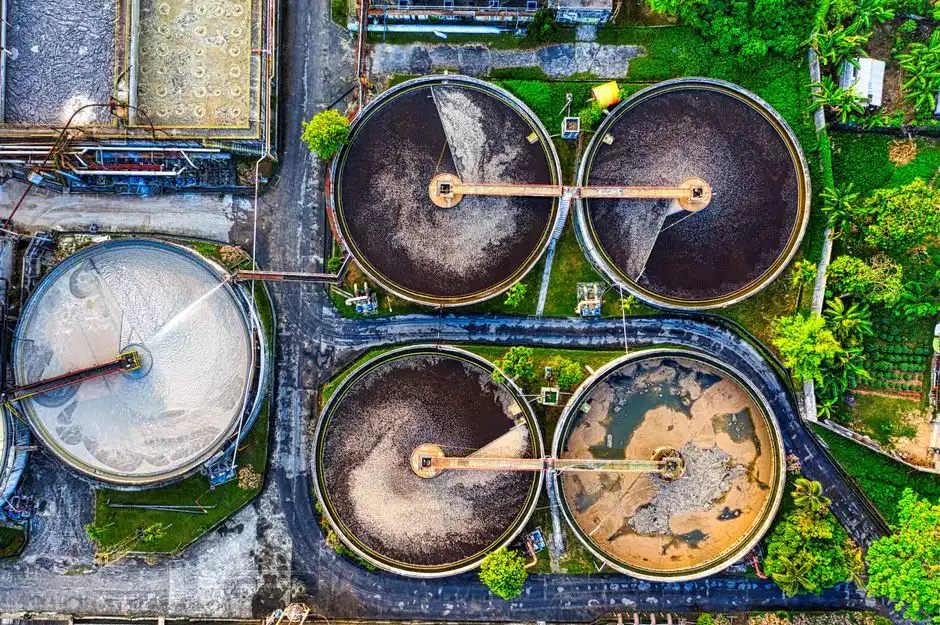
A conventional clarifier is a gravity-based primary sedimentation tank sized so settleable solids drop to a hopper and floating material rises to a skimmer, with mechanically driven scrapers in larger industrial units (Hassouna 2022). The lamella or inclined-plate clarifier is a high-rate version of the same gravity principle, using inclined plates to compress the effective settling area into a smaller footprint; the supplied vendor literature cites a 20–40 m/h surface loading class for this inclined-plate design (HydropureWater high-efficiency lamella clarifier (inclined-plate)). A lamella clarifier pairs naturally with a sludge recirculation loop and is favored where settling dominates and chemical conditioning demand is modest. In a Magnolia metals plant, pH neutralization is generally needed ahead of either separator because acid/alkaline waste streams must be brought to a workable range before metals precipitate as hydroxides — a treatment step the source identifies as standard for metallurgic industries (Hassouna 2022).
The two mechanisms are not interchangeable, as DAF energy pressurizes a recycle stream to lift low-density floc, while clarifier energy powers mechanical scrapers or sludge recirculation. Site engineers must align the separator choice with the specific density and particle size of the waste stream.
DAF vs Clarifier: Decision Matrix for Mining/Metals Effluent
The matrix below is keyed to the effluent signatures a Magnolia mining/metals plant actually sees — high TSS, FOG episodes, fine metal-hydroxide floc, and pH-driven swings — and uses only the mechanism facts supplied in the research. The 30–50 micron microbubble mechanism, the 66 GPM single-skid threshold, the FPAC/FPBC/FPHF DAF variants and the 20–40 m/h surface loading for the inclined-plate clarifier are all sourced from the supplied vendor and academic pages (Clearwater/SigmaDAF, 2026-04-27; Kemco Systems; HydropureWater). Heavier metals removal is treated as a precipitation-plus-separation problem; the separator choice follows from how the precipitated floc behaves, not from the metal identity itself. For the chemistry side of that precipitation step, the chemical precipitation for copper removal — 2026 specs and cost models guide covers the reaction engineering that sets the floc characteristics this matrix is built on.
| Effluent signature | Primary separator recommended | Mechanism match from supplied evidence |
|---|---|---|
| TSS-dominant, low-FOG, settleable mineral grit | Conventional or lamella clarifier | Gravity settling handles coarse particles without saturation-system energy; inclined-plate design at 20–40 m/h is sized for this duty (HydropureWater) |
| FOG-, oil- and floatable-solids-dominant | DAF (FPBC high-profile variant) | 30–50 micron microbubbles lift oil and light floc to surface skimmer; FPBC uses lamella pack to slow flow and maximize separation (Clearwater/SigmaDAF, 2026-04-27) |
| Fine, chemically conditioned metal-hydroxide floc (low density, slow settling) | DAF (FPAC or FPBC) | Coagulation/flocculation enlarges particles so microbubbles can attach — DAF is explicitly designed to capture this fraction (Clearwater/SigmaDAF; Kemco Systems) |
| Very high TSS, limited footprint | Low-profile cross-flow DAF (FPAC) or high-rate lamella clarifier | FPAC is a low-profile cross-flow separator with large free surface for floated solids; lamella clarifier compresses settling area (Clearwater/SigmaDAF; HydropureWater) |
| High flow, low-to-moderate solids | FPHF DAF or inclined-plate clarifier | FPHF combines cross-flow and countercurrent flow for high-flow service; inclined-plate design handles the same regime in a smaller tank (Clearwater/SigmaDAF; HydropureWater) |
| Heavy metals removal (Cu, Ni, Zn, Cr) | Either, after pH adjustment and precipitation | Separator choice follows floc behavior once metal hydroxides are formed; Hassouna (2022) frames pH control and solids removal as the standard metallurgic-industry chain |
| Tight footprint, ≤66 GPM, plug-and-play install | COMPACT DAF single skid | Pre-assembled turnkey system with chemical conditioning, DAF clarifier, sensors and PLC; ≤66 GPM is the single-skid threshold (Clearwater/SigmaDAF, 2026-04-27) |
| >66 GPM with the same plug-and-play scope | COMPACT DAF two-skid modular | Above 66 GPM, the modular two-skid configuration is the standard scope (Clearwater/SigmaDAF, 2026-04-27) |
Read the matrix from the top down: the closer the stream is to settleable grit and the lighter the chemical demand, the more a lamella clarifier earns. The closer the stream is to conditioned floc, oil, or floatable metal-hydroxide precipitate, the more a DAF earns. The Gainesville companion piece (Magnolia 2026 DAF-vs-clarifier decision framed against the sister Gainesville guide) applies the same matrix to a different municipal-industrial mix and is useful as a cross-check.
Footprint, Skidding and Modular Layouts Magnolia Plants Should Plan Around
The COMPACT DAF is a pre-assembled turnkey system that bundles chemical conditioning, the DAF clarifier, sensors, instruments and a PLC panel, with a stated single-skid threshold around 66 GPM and a modular two-skid configuration above that flow (Clearwater/SigmaDAF, 2026-04-27). Standard build is 304 stainless steel, with 316 stainless steel or polypropylene available for corrosive mining/metals service where chloride, acid or alkaline cleaning is in play (Clearwater/SigmaDAF, 2026-04-27). The HydropureWater DAF system (4–300 m³/h, 13 standard models) catalog gives a defensible flow range to size against without bespoke engineering, which matters when a 12–24 month capex timeline cannot absorb a custom build. The HydropureWater lamella clarifier footprint is governed by surface loading rate rather than retention time, and the inclined-plate design is intentionally compact and pairs naturally with a sludge recirculation loop (HydropureWater). Plan a chemical dosing skid alongside either unit so pH and coagulant/polymer feed are controlled from a single panel; the HydropureWater automatic chemical dosing skid is the typical pairing the supplied evidence supports.
Magnolia-Specific Compliance, Sampling and Sizing Inputs to Lock Down Before You Buy
Magnolia-area industrial discharges are governed by a combination of state industrial stormwater and pretreatment rules and any local POTW limits, but the exact numeric effluent limits, permit identifiers and monitoring frequencies were not present in the supplied research and must be requested from the local pretreatment authority before equipment selection. The inputs that decide DAF vs clarifier in that permit envelope are TSS, FOG, total and dissolved metals, pH range and variation, temperature, and peak diurnal flow — these map directly to the matrix above. pH neutralization is generally needed in metallurgic processes before biological or membrane treatment, which is consistent with the source framing of metallurgic industries alongside acid/alkali users (Hassouna 2022); a chemical dosing skid is typically paired with either separator. Plan for sludge handling from day one: a filter press downstream of either unit turns floated or settled solids into a drier cake for disposal, and the supplied evidence explicitly links DAF sludge to filter-press dewatering (Kemco Systems) — the HydropureWater plate and frame filter press for sludge dewatering is the standard downstream pairing. Compliance risk is real and varies by site, so cross-reference the Farmers Branch 2026 pretreatment compliance guide for chemical plants for a working example of how a neighboring jurisdiction frames sampling, reporting and enforcement. For warranty and performance-guarantee language to lock into the PO, the 2026 buyer's guide to WWTP builder warranties and performance guarantees sets out the clauses a Magnolia capex review should require.
Frequently Asked Questions
How much does a DAF system cost for a Magnolia metals plant in 2026?
Unit prices, installation costs and lead times for a DAF skid in this duty class were not present in the supplied research. The actionable input a buyer should request from each shortlisted vendor is a budget proposal tied to the site's actual flow (GPM or m³/h), peak TSS/FOG, and the materials-of-construction upgrade (316 stainless or polypropylene) required for the chemistry in play, plus a separate filter-press line item because the supplied evidence treats the press as a downstream unit, not a DAF option (Kemco Systems).
What supplier and sizing questions should a Magnolia mining plant put on the RFQ?
The buyer should require a single point of accountability for the separator, the chemical conditioning skid, the PLC and the filter press, with a documented performance guarantee keyed to the site's own influent data rather than generic curves. A defensible size basis is the supplied 30–50 micron microbubble mechanism, the 66 GPM single-skid threshold and the 13-model flow range of the HydropureWater DAF catalog, against which the bidder should show how their proposed unit maps (Clearwater/SigmaDAF, 2026-04-27; HydropureWater). Compliance risk should be addressed by asking the bidder to commit in writing to the discharge parameters the local pretreatment authority will set
Frequently Asked Questions
Should a mining or metals factory in Magnolia, US choose a DAF or a clarifier in 2026?
The choice depends on the density and settling velocity of your specific particulate matter. In 2026, for mining and metals facilities in Magnolia, DAF is preferred if your wastewater contains light, oily, or low-density metal precipitates (such as metal hydroxides or emulsified oils) that exhibit poor sedimentation properties. Conversely, a clarifier is the superior choice if your influent contains heavy, granular, or high-density mineral solids that settle rapidly via gravity.
What influent parameters decide between DAF and a clarifier for heavy-metals wastewater?
The primary decision factor is the specific gravity of the suspended solids and the presence of surfactants. DAF systems are required when particle density is close to or less than 1.0 g/cm³, or when metal-laden oils are present at concentrations exceeding 50 mg/L. Clarifiers are selected when total suspended solids (TSS) are high (typically >500 mg/L) and consist of dense metal oxides or inorganic precipitates with a settling velocity greater than 0.5 mm/s.
How much does a DAF system cost versus a lamella clarifier for a small Magnolia plant?
For a small-scale plant in Magnolia, a skid-mounted lamella clarifier typically ranges from $45,000 to $85,000 due to its simpler mechanical design, which lacks pressurized air components. A comparable DAF system, incorporating air saturation pumps, compressors, and dissolved air recycle systems, generally costs between $75,000 and $140,000. These figures reflect 2026 market pricing for stainless steel 304/316 construction suitable for corrosive mining effluent.
What is the typical flow range and footprint for a skid-mounted DAF versus a lamella clarifier?
Skid-mounted lamella clarifiers are ideal for flow rates between 10 and 100 GPM, requiring a compact footprint of approximately 50 to 150 square feet due to the inclined plate surface area. DAF units for similar flow ranges are generally larger, requiring 80 to 200 square feet to accommodate the necessary hydraulic retention time for micro-bubble attachment and float layer management.
Which local permits and pretreatment limits apply to a DAF or clarifier discharge in Magnolia, Texas?
Facilities in Magnolia must comply with the City of Magnolia’s industrial pretreatment program and Texas Commission on Environmental Quality (TCEQ) standards. Discharge limits typically cap TSS at 250 mg/L and Oil & Grease at 100 mg/L for sewer disposal. Mining and metal finishing facilities must also adhere to federal categorical pretreatment standards (40 CFR Part 433 or 440) which mandate specific heavy metal concentration limits for arsenic, cadmium, chromium, and lead before discharge into the municipal collection system.