Why Transportation Equipment Plants Are Classified as Industrial Users
Transportation equipment plants generate waste streams that almost always fall inside a local pretreatment program's definition of an industrial user. Parts-washer effluent carries lubricating oils and tramp grease. Phosphating and nickel-plating rinse water carries dissolved metals. Paint booth water carries overspray, solvents, and suspended solids. Metalworking fluids add emulsified oils and high COD. Boiler blowdown and cooling-tower bleed add temperature and dissolved solids. Even one of these streams averaging 25,000 gallons per day of process wastewater, or any combined process stream hitting that threshold, qualifies a plant as a Significant Industrial User under the Burlington Sewer Use Ordinance (City of Burlington, NC Pretreatment Program page).
Categorical status under federal rules is a separate trigger that operates independently of flow. A facility conducting metal finishing falls under 40 CFR Part 433 and must hold a permit regardless of whether it discharges 2,000 gpd or 200,000 gpd. The 5% of receiving POTW design capacity test and the adverse-impact test are catch-alls: a small Tier-2 supplier with intermittent high-strength discharges — a batch phosphating line that dumps once a week, a paint shop that only discharges on color-change days — can still trip these triggers if the slug load disturbs the receiving plant or limits the city's sludge disposal options. Once a plant is in scope, the design effort stops being a question of "if" and becomes a question of how to engineer the treatment train and reporting cadence that the permit will demand.
The Burlington Discharge Permit Lifecycle in 2026
The permit path is procedural, but the deadlines are hard. Missing the 180-day categorical submission window or the 180-day renewal window is a documented revocation trigger in the Burlington program text (City of Burlington, NC Pretreatment Program page). The lifecycle a transportation equipment plant should plan against is:
- Application. Submit a complete application to the Pretreatment Compliance Specialist per the Sewer Use Ordinance. New facilities must obtain Authorization to Construct before breaking ground.
- Categorical submission (180 days). For 40 CFR Part 433 processes, submit the required categorical information at least 180 days before intended discharge. Acceptance is not guaranteed.
- Draft and NCDENR review. After inspection, the City drafts a permit with effluent limits, prohibitions, and special conditions, then transmits the draft to NC Department of Environment and Natural Resources. A temporary permit may be issued during the 30-day comment window.
- Final permit (5-year term). Issued if no objections are raised. If NCDENR objects, the City must respond within 60 days.
- Renewal (180 days before expiration). Renewal application is due 180 days before expiration. Modifications can occur at renewal or via reopening.
Revocation triggers are explicit in the program text: false reporting, failure to report significant changes in operations or wastewater characteristics, denial of access for inspection or monitoring, and permit violations (City of Burlington, NC Pretreatment Program page). For a plant engineer, that list is the operational self-audit checklist — any of those four items can void the permit regardless of effluent quality.
| Milestone | Actor | Deadline / Window | Document or Action |
|---|---|---|---|
| Submit application | Industrial user | Before discharge | Sewer Use Ordinance application to Pretreatment Compliance Specialist |
| Authorization to Construct | City of Burlington | Before building | Written approval of plans for new facilities |
| Categorical submission | Industrial user | ≥180 days before discharge | Categorical process information for 40 CFR Part 433 processes |
| Facility inspection | City pretreatment staff | After application completeness | On-site inspection |
| Draft permit to NCDENR | City of Burlington | After inspection | Draft permit plus headworks-derived limit derivation |
| Comment window | State and industrial user | 30 days | Written comments on draft |
| Final permit issued | Pretreatment coordinator | If no objections | 5-year permit with effluent limits, prohibitions, special conditions |
| Renewal application | Industrial user | 180 days before expiration | Renewal package |
What Local Limits Actually Look Like for Transportation Equipment
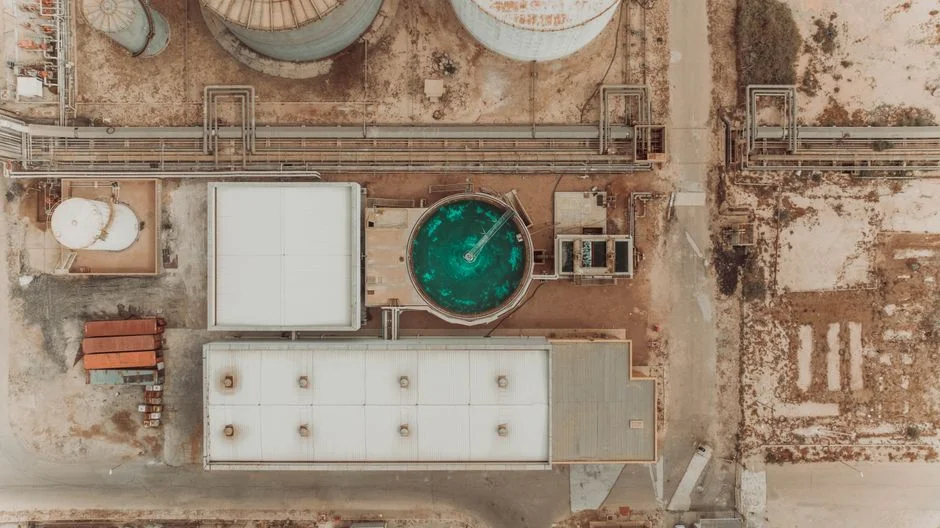
Local limits come out of a headworks analysis—a site-specific calculation of the maximum mass loading of metals, solids, ammonia, oil and grease, and other pollutants a POTW can accept without violating its own NPDES permit or losing sludge disposal options (City of Burlington, NC Pretreatment Program page). The Burlington program lists six classes of prohibited discharge: corrosive waste, fire or explosion hazards, anything that obstructs the sewer or interferes with its operation, anything that upsets treatment processes, anything that causes pass-through in violation of State or Federal standards, and any discharge that pushes incoming wastewater above 104°F (40°C).
For a transportation equipment plant, the practical pollutant families to design around are: total suspended and dissolved metals from machining and plating rinse water; oil and grease from parts washing and metalworking fluids; COD and BOD from paint booth water and process washwater; pH excursions from alkaline cleaners and acid pickling; and ammonia or cyanide if heat treatment is on-site. Headworks-derived local limits are written around these families, and a well-engineered treatment train treats them as separate unit operations rather than a single blended stream.
Once permitted, the documentation burden is the same burden that put 17 permittees on Vermont's significant non-compliance list for 2024. That December 12, 2025 release from the Vermont Department of Environmental Conservation split the 17 findings into exceedance of permit limits, missed monitoring, late monthly reports, and lapsed O&M (Vermont DEC, December 12, 2025). A transportation equipment plant that treats its own reporting cadence as carefully as its chemistry will not end up on that list.
Building a Treatment Train That Actually Meets the Permit
Source segregation is the primary control in the train. Keep parts-washer oil, phosphating rinse, paint booth water, and sanitary streams in separate sewer laterals so each can be treated to the right specification rather than blended into one hard-to-treat composite. After segregation, the front-end protection step is screening: a rotary mechanical bar screen for headworks protection removes rags, plastics, and coarse solids before they reach pumps and the flotation unit — the same protection strategy the receiving POTW applies at its own headworks.
Oil and grease removal is the next unit operation. A dissolved air flotation system for oil and grease removal handles both free and emulsified oils from parts washing and metalworking fluids. Micro-bubble skimming pulls the FOG fraction to the surface for removal before any biological stage sees it; DAF is the primary FOG step in nearly every metals and finishing pretreatment train because it tolerates the slug loads that an equalization basin would have to be enormous to absorb.
Downstream of DAF, PLC-controlled chemical dosing for metals precipitation and pH control handles dissolved metals and pH excursions. Coagulant and flocculant demand will vary day-to-day with the production schedule, so dosing should be flow-proportional and tied to a pH/ORP probe on the equalization tank rather than to a fixed setpoint. The precipitated metals and suspended solids drop out in a clarifier or back into the DAF unit before the water moves to biological polishing.
For biological polishing, an MBR membrane bioreactor for biological polishing delivers near-reuse-quality effluent at a smaller footprint than conventional activated sludge, which matters at urban industrial sites where the plant is landlocked between the property line and the production floor. The MBR stage also produces a tighter effluent on TSS and turbidity, which makes the final disinfection step more reliable.
Disinfection before the sewer tap is the last liquid-stream step. A chlorine dioxide generator for discharge disinfection handles pathogen control without producing the regulated DBPs that complicate downstream POTW operations; UV is an alternative where chlorine residual at the receiving plant is a concern. Sludge from DAF and the MBR is then dewatered with a plate and frame filter press for sludge dewatering to a cake suitable for off-site disposal, cutting hauling volume and disposal cost.
| Unit Operation | Target Pollutants | Notes for Transportation Equipment Plants |
|---|---|---|
| Source segregation | Oils, metals, paint, sanitary | Keeps high-strength streams from overwhelming the train |
| Rotary mechanical bar screen | Rags, plastics, coarse solids | Protects downstream pumps and DAF from fouling |
| Dissolved air flotation (DAF) | Free and emulsified oil and grease, suspended solids | Primary FOG removal before any biological stage |
| Automatic chemical dosing | Dissolved metals, pH | Flow-proportional; tied to production schedule |
| MBR membrane bioreactor | COD, BOD, residual TSS | Compact footprint; tight effluent quality |
| Chlorine dioxide or UV | Pathogens | Disinfection without regulated DBPs |
| Plate and frame filter press | DAF float and biological sludge | Cake for off-site disposal; reduces hauling |
For a parallel perspective on metals-focused trains, the DAF vs clarifier decision guide for metals wastewater walks through when DAF is the right primary clarifier versus when a conventional clarifier carries the load. Operational economics, especially staffing, are covered in the labor cost optimization playbook for wastewater plants. For a sister-segment view, the fabricated metals pretreatment compliance playbook covers a closely related stream profile.
Staying Out of Significant Non-Compliance in 2026

Vermont DEC's December 12, 2025 release covering 2024 data identified 17 permittees in significant non-compliance, split into four categories: six for exceedance of permit limits or missed monitoring, eleven for late or missing monthly reports and other documents, and two for failing to follow operation and maintenance requirements without notifying DEC (Vermont DEC, December 12, 2025). Those four categories map directly onto the Burlington revocation triggers, which makes them the right self-audit checklist for any 2026 pretreatment program.
Build a monthly reporting calendar with hard internal deadlines a few days ahead of the regulatory deadline for flow, pH, metals, oil and grease, and BOD/COD, and a non-compliance notification protocol that is rehearsed before the first excursion. Instrument the discharge line with continuous pH and conductivity, and schedule flow-proportional composite sampling for the parameters the permit specifies. Keep a written log of operational changes, chemical substitutions, and production-rate shifts — unreported significant changes are an explicit revocation trigger under the Burlington program, and the log is the only proof a permittee can offer that a change was both evaluated and disclosed.
Frequently Asked Questions
How do I know if my plant qualifies as a Significant Industrial User?
Under the Burlington Sewer Use Ordinance, an SIU is any industry discharging an average of 25,000 gpd of process wastewater, classified as a categorical industry under federal rules, contributing 5% or more of a receiving POTW's design capacity, or shown to adversely impact the receiving plant, stream, or sludge disposal options (City of Burlington, NC Pretreatment Program page). A transportation equipment plant almost always trips at least one of these — categorical status under 40 CFR Part 433 alone is enough, even at low flow. Request a copy of the Sewer Use Ordinance from the Burlington Department of Utilities and have your EHS lead map each of your process streams against the four tests before you commit engineering hours.
What is the realistic budget range for a transportation equipment pretreatment train?
The research supplied does not include a quotation or cost benchmark for a transportation equipment pretreatment train. A buyer should request from suppliers an itemized capex estimate broken into source segregation, screening, DAF, chemical dosing, biological polishing, disinfection, and sludge dewatering, plus an annual opex estimate that itemizes chemicals, sludge hauling, labor, and laboratory analysis. Compare at least three bids against that line-item structure rather than against a turnkey
Frequently Asked Questions
Does my transportation equipment plant need a Burlington discharge permit if I discharge under 25,000 gallons a day?
Yes, all industrial users discharging process wastewater to the Burlington sewer system are required to obtain a discharge permit regardless of daily volume. While facilities discharging less than 25,000 gallons per day may be classified as Non-Significant Industrial Users (NSIUs), you are still subject to local limits, prohibited discharge standards, and mandatory reporting requirements to ensure compliance with the Clean Water Act.
What is a realistic capital budget for a transportation equipment pretreatment train that meets 2026 sewer limits?
For a standard transportation equipment facility, a compliant pretreatment train typically requires a capital investment ranging from $150,000 to $450,000. This budget must account for advanced multi-stage treatment technologies, such as membrane filtration, dissolved air flotation (DAF), or ion exchange, necessary to meet the stringent 2026 limits for heavy metals like zinc, nickel, and chromium, as well as total suspended solids (TSS) and oil and grease concentrations.
How long does the Burlington Discharge Permit process take from first application to legal discharge?
The permitting process generally takes between 90 and 180 days from the initial application submission to the issuance of a final permit. This timeline includes a technical review of your facility's process wastewater characterization, a public notice period, and the development of site-specific effluent limitations and monitoring protocols mandated by the local pretreatment program.
What monitoring and reporting records should I keep to avoid significant non-compliance with a local pretreatment program?
To avoid Significant Non-Compliance (SNC) status, you must maintain at least three years of records, including all analytical laboratory reports, chain-of-custody documentation, and flow meter calibration logs. You are required to submit Self-Monitoring Reports (SMRs) on a quarterly or semi-annual basis, documenting compliance with local limits for pH, oil and grease, and specific metal concentrations as defined in your individual permit.
Can a single treatment train handle parts-washer oil, phosphating rinse water, and paint booth overspray at the same time?
While technically possible, handling these streams simultaneously is highly complex and generally discouraged due to chemical incompatibility and varying pollutant loads. These waste streams require a sophisticated integrated system—typically involving oil-water separation for parts-washer fluids, chemical precipitation for phosphating rinses, and ultrafiltration or coagulation for paint booth overspray—to ensure the final effluent remains within the specific 2026 regulatory thresholds for all combined constituents.