What New Castle Fabricated-Metals Wastewater Looks Like in 2026
New Castle, Delaware fabricated-metals plants should generally choose a Dissolved Air Flotation (DAF) unit as the primary clarifier in 2026 because cutting fluids, tramp oils, and parts-washer emulsions produce oil & grease, TSS, and heavy metals that 40 CFR Part 433 regulates. DAFs typically remove 80–95% of TSS and free oil and handle 25–500 GPM in a small footprint. A conventional gravity clarifier only suits low-flow, low-oil shops; a lamella clarifier (20–40 m/h surface loading) is a useful polishing step after DAF rather than a primary.
Four streams dominate a New Castle stamping, machining, and finishing shop. Stamping and drawing operations contribute tramp oils, lubricating greases, and iron-rich fines — typically the largest free-oil load on the floor. Machining and grinding cells discharge spent coolants and split emulsions where surfactants have stabilized oil droplets that no longer coalesce on their own. Alkaline and acid parts-washer rinses add pH swings between 4 and 12, plus detergent and phosphate loadings. Passivation, chrome, and nickel rinsewaters introduce hexavalent chromium, total chromium, nickel, and zinc at low mg/L concentrations but at the very limits a categorical standard cares about.
Measured at the Influent Monitoring Point, typical fabricated-metals wastewater carries 200–2,000 mg/L TSS, 100–1,500 mg/L oil & grease, and trace heavy metals — Pb, Cd, Cr, Ni, Zn — at concentrations that fall under EPA's 40 CFR Part 433 Metal Finishing categorical limits for any shop discharging to a New Castle County POTW. For a daily-maximum compliance basis the rule sets oil & grease at 52 mg/L, lead at 0.69 mg/L, cadmium at 0.69 mg/L, total chromium at 2.77 mg/L, and nickel at 3.98 mg/L (per EPA 40 CFR 433). New Castle County's Department of Special Services administers the local industrial pretreatment program and requires a baseline monitoring report before discharge to the publicly owned treatment works, which means the equipment choice has to satisfy both the categorical rule and the local POTW's discharge permit conditions in 2026.
| Pollutant | Typical Influent Range | 40 CFR Part 433 Daily Max | Binding for Most Shops? |
|---|---|---|---|
| Oil & Grease (FOG) | 100–1,500 mg/L | 52 mg/L | Yes |
| TSS | 200–2,000 mg/L | Not numeric; POTW-controlled | Often |
| Lead (Pb) | 0.5–10 mg/L | 0.69 mg/L | Frequent |
| Cadmium (Cd) | 0.05–2 mg/L | 0.69 mg/L | Selective |
| Total Chromium (Cr) | 0.5–15 mg/L | 2.77 mg/L | Yes (passivation lines) |
| Nickel (Ni) | 0.5–20 mg/L | 3.98 mg/L | Yes (electroless Ni, plating) |
| pH | 4–12 (process swings) | 6.0–9.0 (continuous) | Yes |
DAF vs Clarifier: How Each Unit Actually Separates Solids and Oils
A Dissolved Air Flotation (DAF) unit separates contaminants by floating them. A pressurized recycle stream — typically 20–30% of clarified effluent — is saturated with air at 60–90 psig, then released through a nozzle or proprietary breakout valve into the flotation tank at atmospheric pressure (per FRC Systems, 2026 product literature). The pressure drop generates 10–100 micron microbubbles that attach to oil droplets, floc particles, and suspended solids, lifting the agglomerate to the surface where a chain-and-flight skimmer removes it as float. Hydraulic residence time is short — usually 3–5 minutes — which is why a DAF can handle 25 to 2,000+ GPM in a footprint measured in tens of square feet (per FRC Systems, 2026).
A clarifier separates by letting gravity settle particles to the bottom. Conventional circular or rectangular clarifiers need 1–3 hours of residence time and large floor area; a lamella clarifier adds inclined plate packs to multiply the effective settling area, raising surface loading to roughly 20–40 m/h depending on plate spacing and angle. A lamella works well for free-settling TSS but only removes the free oil fraction that rises naturally — emulsified coolant, where surfactants have stabilized droplets below ~20 microns, will not break out in a quiescent tank without chemical pre-treatment (per EPA Process Design Manual, 2025-08).
The mechanism difference dictates everything downstream. A DAF routinely hits 80–95% TSS removal and 90%+ free-oil removal in a single stage when paired with proper coagulant and flocculant dosing; a primary clarifier typically settles 50–70% of TSS and only skims the oil a mechanical oil-skimmer has already lifted off upstream. For a fabricated-metals stream with emulsified cutting fluid, the clarifier simply passes the problem downstream to the POTW. For more on the primary DAF hardware itself, the HydropureWater dissolved air flotation (DAF) system is a representative 2026 design, and the HydropureWater high-efficiency lamella clarifier is the typical polishing step that follows.
Side-by-Side Comparison for Fabricated-Metals Duty
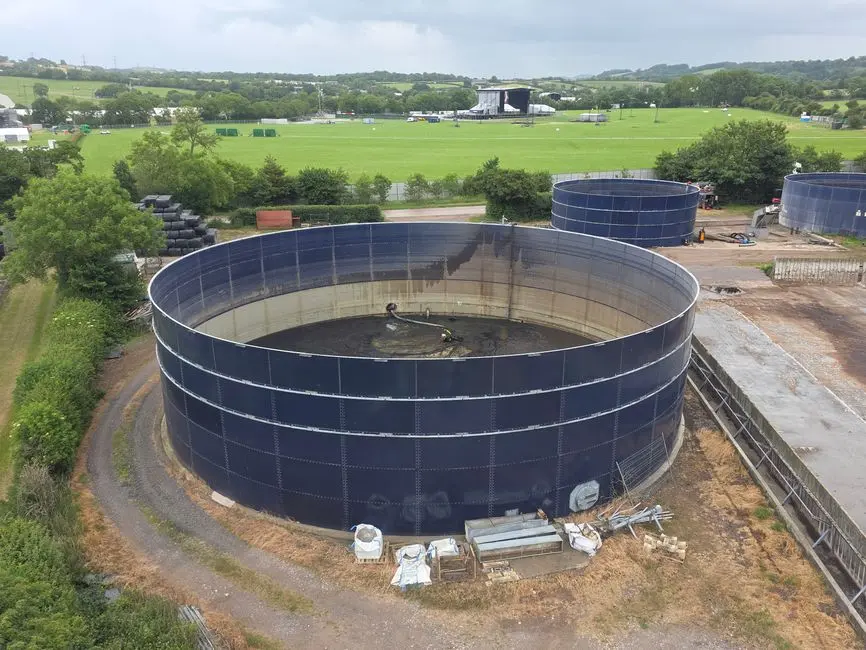
The comparison that follows is built around the eight parameters a pretreatment coordinator will ask about: removal efficiency for TSS, FOG, and metals; flow range; footprint; CAPEX band; OPEX drivers; sludge dryness; oil-slug resilience; and 40 CFR 433 fit. DAF reference specs follow FRC Systems' published 2026 product line — up to 2,000+ GPM, 35–3,100+ sq ft effective area, 304/316/duplex stainless — while clarifier reference specs use a typical lamella at 20–40 m/h surface loading (per FRC Systems, 2026).
| Parameter | DAF (Primary) | Lamella Clarifier (Primary) | Lamella Clarifier (Post-DAF Polish) |
|---|---|---|---|
| TSS removal | 80–95% | 50–70% | 40–60% of remaining |
| FOG removal | 90–95% (free + emulsified w/ chemistry) | 20–40% (free oil only) | Marginal |
| Metals removal | 60–85% w/ coagulant (pH-dependent) | 30–50% (sweep floc only) | Marginal |
| Flow range | 25–2,000+ GPM | 10–500 GPM (footprint-bound) | Matches upstream DAF |
| Footprint (per 100 GPM) | ~30–50 sq ft | ~60–100 sq ft (incl. plate pack) | ~25–40 sq ft |
| Hydraulic residence | 3–5 minutes | 1–3 hours | 20–30 minutes |
| CAPEX band | Higher ($) — skidded, instrumented | Lower ($) — passive tank | Lower ($) |
| OPEX drivers | Recycle pump, saturator, polymer, skim | Polymer, sludge pumping, periodic desludge | Lowest of the three |
| Sludge dryness | 3–6% DS (float) | 1–3% DS (underflow) | 1–2% DS |
| Oil-slug resilience | Strong — float skimmed off top | Weak — resuspends sludge blanket | Protects DAF from upsets |
| 40 CFR 433 fit (single stage) | Yes, with chemistry | Marginal — usually needs secondary | Required for direct discharge |
The qualitative read is straightforward. DAF CAPEX is higher per GPM than a clarifier, but it pays back through reduced POTW surcharges (oil & grease, TSS, metals surcharges) and avoided downtime from shock loads. A standalone clarifier has lower CAPEX but struggles on emulsified oil and metals, and its sludge blanket is easily re-suspended when a 50-gallon drum of tramp oil hits the floor — exactly the failure mode that produces a Notice of Violation from a pretreatment coordinator. For the equipment itself, both the HydropureWater DAF system and the HydropureWater high-efficiency lamella clarifier are sized in this range.
When a Clarifier Still Makes Sense in a New Castle Metals Plant
A clarifier is not a bad unit; it is the wrong primary for most fabricated-metals streams but the right primary in a narrow set of cases. Small job shops under 20 GPM with light oiling (wire-EDM, deburring-only, or screw-machine cells running neat oil that is mechanically skimmed at the machine tool) often have TSS-dominated effluent and low FOG, which a lamella clarifier can settle economically. The HydropureWater high-efficiency lamella clarifier at 20–40 m/h surface loading handles this duty without the operator overhead of a saturator pump, air rotameters, and skim drives.
A clarifier also works as a pre-sediment unit ahead of a spent coolant pit, where the goal is to drop grinding swarf and tramp metal before the coolant is sent for reconditioning. In that case the clarifier is a process-side device, not a compliance device.
The more defensible use for a clarifier in 2026 is as a polishing step after a DAF. When a New Castle plant has tightened its internal discharge target below 40 CFR 433 (for water-reuse loops, ZLD programs, or a state NPDES permit for direct discharge), a lamella after DAF is a low-cost insurance layer that catches residual floc carryover. A clarifier on its own, however, cannot lift emulsified oil and metals to the categorical limits — it requires coagulant and polymer dosing, which a HydropureWater automatic chemical dosing system delivers with the kind of repeatability a manual day-tank cannot match. Without that chemistry, expect a clarifier effluent to fail 40 CFR 433's 52 mg/L oil & grease daily max more often than not.
Process Train and Equipment Sizing for a 2026 DAF-Based System
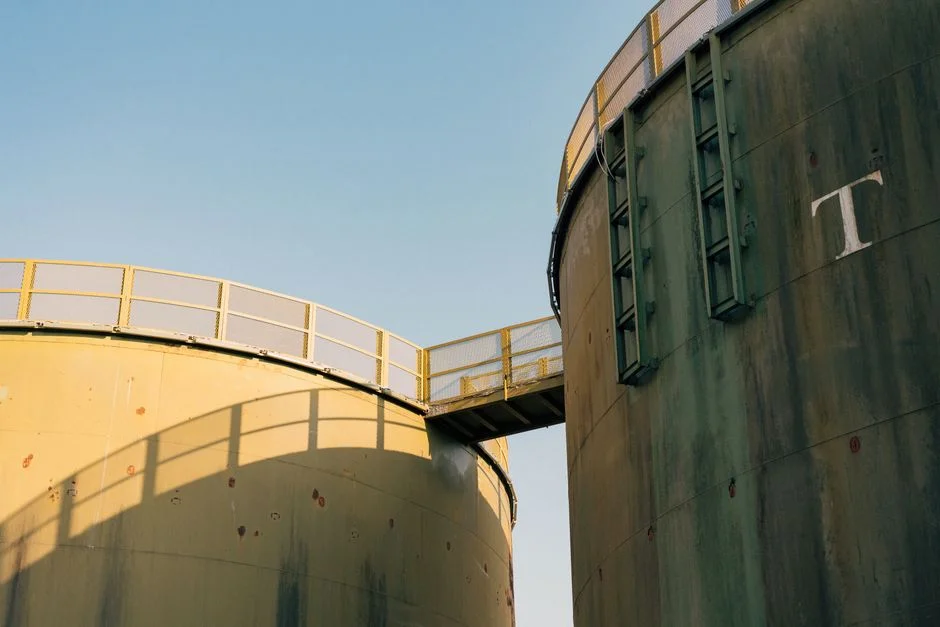
A 2026 DAF-based process train for a New Castle fabricated-metals plant typically runs: rotary bar screen → equalization tank → pH adjustment → coagulant + flocculant dosing → DAF → lamella clarifier (polish) → sand/multi-media filter → carbon adsorption or membrane polish → discharge or reuse. Solids handling runs the DAF float to a plate-and-frame filter press to reduce hauling volume. Each link matters: a DAF that receives raw coolant will quickly blind its microbubble cloud, and a lamella placed before a DAF will be overwhelmed by floatable oil that should have been skimmed upstream.
DAF sizing in 2026 follows two rules. First, size for peak hourly flow — typically 1.5–2× the daily average, because a coolant spill or batch wash dump can double influent for an hour. Second, target 15–20 minutes of hydraulic residence in the flotation zone, not the 3–5 minute nominal — the longer residence is the difference between meeting 40 CFR 433 in steady state and missing it after a slug. High-rate DAFs with plate packs (FRC's PCL-series is a published example, 2026) achieve the same removal in a smaller footprint, which is the only practical way to fit a 100+ GPM system into an existing New Castle fabrication bay.
Material selection follows the rinse chemistry. 304 stainless is fine for general coolant and stamping wastewater; 316 stainless is the safer pick where chloride from parts-washer additives or acidic rinse is present; duplex (2205) is justified for hot passivation chrome rinse where chlorides and low pH meet. Sludge from a DAF float typically runs 3–6% dry solids — wet enough that a HydropureWater plate and frame filter press is the right dewatering step, producing a 25–35% dry cake that can be hauled as a non-hazardous industrial waste in most cases. For chemistry control, the HydropureWater automatic chemical dosing system and a HydropureWater rotary mechanical bar screen for upstream trash removal round out a defensible 2026 skid list. For a parallel passivation-line design, the 2026 passivation chrome rinse pretreatment guide covers the chemistry-specific train in more depth.
2026 Selection Framework: Pick DAF or Clarifier in Five Steps
Step 1: Quantify the stream. Pull a composite sample over at least 5 operating days and run TSS, oil & grease, total chromium, lead, cadmium, nickel, zinc, and pH. Without these numbers the rest of the framework is guesswork. Step 2: Map to 40 CFR 433. Compare your daily-max numbers to oil & grease 52 mg/L, Pb 0.69 mg/L, Cd 0.69 mg/L, Cr 2.77 mg/L, Ni 3.98 mg/L (per EPA 40 CFR Part 433). Identify the binding pollutant — the one closest to its limit drives the equipment choice. Step 3: Score oil-slug frequency and emulsifier content. If the shop sees one or more coolant spills per week, or runs semi-synthetic coolants with high surfactant loading, DAF is the only primary that absorbs the slug without resuspending settled solids. Step 4: Compare footprint and CAPEX. If floor space is tight and average flow exceeds 50 GPM, DAF wins on $/GPM-of-removal. If flow is under 20 GPM, oil is mechanically skimmed upstream, and the binding pollutant is TSS alone, a clarifier is defensible. Step 5: Confirm with a pilot. Both DAF and clarifier vendors offer jar tests and rental pilot units; a one-week pilot on your actual wastewater beats any spreadsheet (per VanAire, 2026). For a parallel decision in a different market, see our 2026 Springfield fabricated-metals DAF vs clarifier guide and the Tell City EV/auto DAF vs clarifier guide.
Frequently Asked Questions
What is the 40 CFR Part 433 oil and grease limit for fabricated-metals shops in New Castle?
The 40 CFR Part 433 Metal Finishing categorical standard sets oil & grease at 52 mg/L as a daily maximum and 26 mg/L as a monthly average, with pH held between 6.0 and 9.0 at all times for continuous discharge to a POTW (per EPA 40 CFR 433). Most fabricated-metals influent in New Castle County exceeds 100 mg/L oil & grease before treatment, so a primary unit capable of 90%+ FOG removal — a DAF with coagulant chemistry — is usually the lowest-cost path to compliance.
Can a lamella clarifier replace a DAF as the primary unit in a New Castle metal-finishing shop?
Only when oil & grease is below roughly 50 mg/L and emulsified coolant is absent. A lamella clarifier at 20–40 m/h surface loading settles 50–70% of TSS but removes only the free-oil fraction; emulsified cutting fluid passes through and violates 40 CFR 433's 52 mg/L daily max (per HydropureWater catalog, 2026). For typical stamping, machining, and parts-washing duty a DAF is the primary and a lamella is the polish.
How does a New Castle fabricated-metals plant handle a coolant-spill slug without violating its pretreatment permit?
Equalization is the first defense — a properly sized EQ tank absorbs the slug, and pH adjustment brings the slug back inside the 6.0–9.0 continuous-discharge band. The second defense is a DAF as primary: the float layer is skimmed off the top, so a settled sludge blanket is not resuspended the way it would be in a clarifier. A pilot test on actual spill-stream wastewater is the only way to confirm sizing before specifying (per VanAire pilot-program guidance, 2026).
What does a 2026 DAF cost versus a lamella clarifier for a 50–100 GPM fabricated-metals plant?
CAPEX for a 2026 DAF system in this flow range runs higher than a comparable lamella clarifier because of the saturator skid, recycle pump, air rotameters, and skimmer drive; OPEX is dominated by polymer consumption and energy for the recycle pump. A lamella clarifier has lower CAPEX and lower energy OPEX, but it typically needs a downstream DAF or a chemical-intensive coagulation stage to meet 40 CFR 433 limits, which erodes the upfront saving (per FRC Systems, 2026). For total-cost framing, the 2026 steel mill wastewater treatment plant cost guide walks through the comparable cost bands.