
Why Passivation Chrome Rinse Cannot Enter an MBBR Untreated
Passivation chrome rinse water is the single most hostile stream in an electroplating shop, and routing it raw to a moving bed biofilm reactor collapses the biofilm in days. A typical post-passivation rinse carries Cr(VI) at 20–200 mg/L, free acidity of 0.5–5% expressed as H2SO4, traces of HNO3 and HCl, residual H2O2 from bright-dip operations, and rack-drag metals — Cu, Ni, Zn, Fe — that strip off the part as it leaves the bath. Each of those species is independently toxic to the heterotrophic and nitrifying bacteria that colonize MBBR carriers, and their combination is worse than any one of them alone.
Frontiers in Environmental Science (2026-04) confirmed that MBBR performance depends on maintaining high biomass on the carriers, with the moving bed providing stable pollutant removal efficiency across seasons. That advantage disappears the moment the feed carries oxidizers, free chlorine, or heavy metals above the inhibition thresholds that an electroplating ETP routinely produces. Specifically, Cr(VI) above 1–2 mg/L inhibits nitrifiers within 48–72 hours of exposure; free Cl2 above 0.5 mg/L sloughs biofilm off the carrier surface; pH below 6 or above 9 collapses BOD removal by suppressing enzymatic activity. The MBBR is a forgiving reactor on a properly conditioned feed, but it has no tolerance for an untreated passivation stream.
Stage 1 — Segregation and Alkaline Cyanide/Chrome Cracking
Plumbing, not chemistry, is the first pretreatment decision: keep the passivation rinse segregated at the source and never blend it with cyanide-bearing rinses. Mixing the two streams and then acidifying produces HCN gas, breaches safety permits, and forces the entire equalization tank into a hazardous classification. Most electroplating ETP layouts dedicate a separate sump and transfer line for the chrome rinse upstream of the equalization basin.
Once isolated, the segregated stream goes through two-step alkaline chrome cracking at pH above 12. Caustic soda is dosed via a PLC-controlled chemical dosing system with a setpoint near pH 12.5; this converts entrained H2O2 (a strong oxidizer that would otherwise bleach the downstream Cr(VI) reduction step) and partially reduces a fraction of the Cr(VI) before the stream is re-acidified for the reduction reactor. NaOH is preferred over lime at this stage because lime introduces calcium, which combines with sulfate carryover to form gypsum scale on the walls and agitators of the downstream reduction tank. Retention of 15–20 minutes is sufficient for the cracking step; the ORP at this point is typically above +400 mV (Ag/AgCl) because the oxidizers are still dominant.
Stage 2 — Hexavalent Chromium Reduction to Trivalent Chromium
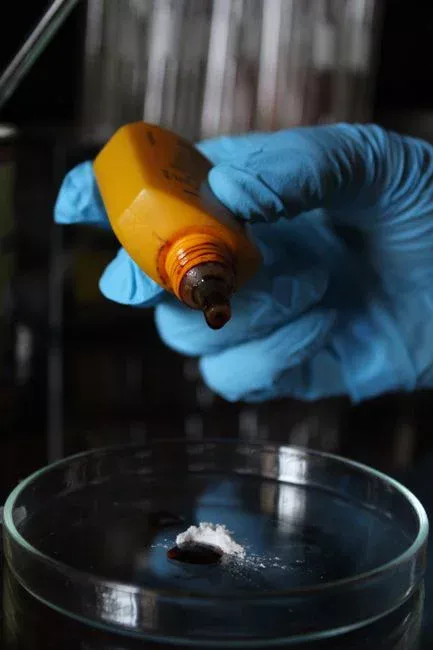
The regulated species is Cr(VI), while the precipitable species is Cr(III). Stage 2 is the redox step that closes that gap. The stream is re-acidified to pH 2.0–3.0 with H2SO4 to keep Cr(VI) in soluble dichromate form and to activate the reductant. Ferrous sulfate heptahydrate (FeSO4·7H2O) is then dosed at roughly 16:1 mass ratio to Cr(VI); sodium bisulfite (NaHSO3) is dosed at roughly 3.2:1 if the plant prefers a lower-volume reductant. The half-reaction is:
Cr2O72− + 6 Fe2+ + 14 H+ → 2 Cr3+ + 6 Fe3+ + 7 H2O
End-point control is where most ETPs get the chemistry wrong. ORP is the right instrument: target below +250 mV (Ag/AgCl reference) and hold for at least 5 minutes of stable reading before allowing flow forward. Running on a timer at this stage is the single most common reason a chrome stripper column on the MBBR ages prematurely. Hydraulic retention of 20–30 minutes in a baffled, mechanically mixed tank is typical for influents under 200 mg/L Cr(VI); double that for peak loads. Plants that want to avoid the iron hydroxide sludge burden are now piloting zero-valent iron (Fe0) packed columns and SO2 gas sparging in 2026, both of which cut solids generation roughly in half. For a deeper dive on the reaction chemistry, see our two-stage Cr(VI) reduction and Cr(III) precipitation guide.
Stage 3 — Trivalent Chromium Precipitation and Coagulation
Raising the pH drops Cr(III) out of solution once it is in the +3 oxidation state. Caustic or lime is dosed to pH 8.5–9.5; the minimum solubility of Cr(OH)3 sits near pH 9.0, where residual soluble chromium falls below 0.5 mg/L and Cr(OH)3 precipitates as a gelatinous, pale-green floc. Below pH 8.5 the precipitation is incomplete; above pH 9.5 the hydroxide begins to redissolve as chromite complexes. The narrow operating window is exactly why the equalization tank and the PLC-controlled chemical dosing system upstream matter — the stripper column downstream will not forgive a pH swing.
At pH 9, co-precipitation does the engineer a favor. Cu, Ni, Zn, and Fe all drop as their respective hydroxides under the same alkaline condition, so a single clarification step removes the bulk of the heavy-metal load. Anionic polymer flocculant at 0.5–2 mg/L binds the gelatinous floc into settleable agglomerates; cationic polymer works on streams with high organic carryover. The dosing pump should track the streaming current detector output, not a fixed-rate timer, because floc demand varies with influent Cr loading. Engineering tolerances for this stage are covered in our hexavalent chromium chemical precipitation engineering specs.
Stage 4 — Solid–Liquid Separation Before the MBBR
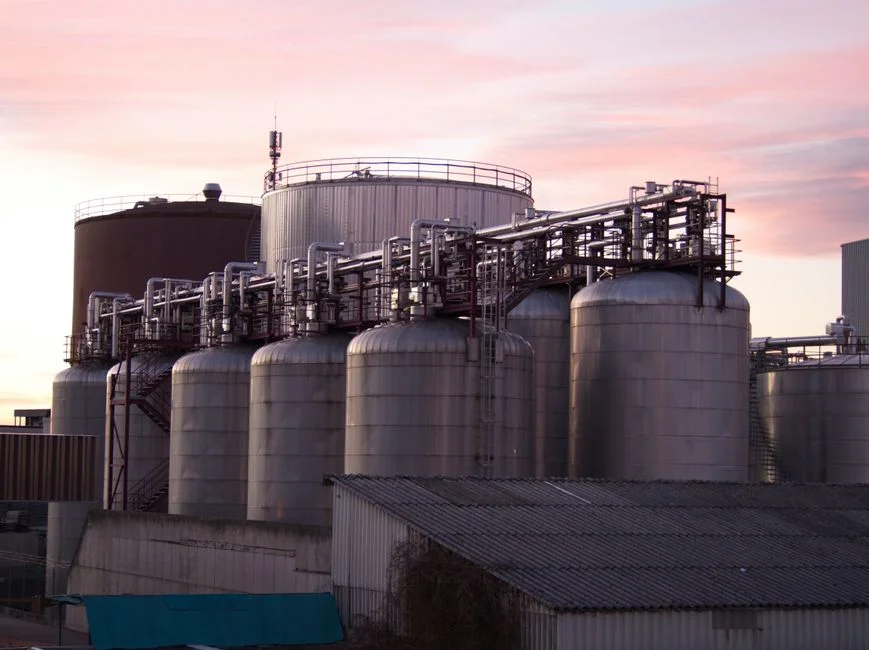
The clarified overflow, rather than the chemistry tank, protects the biofilm. Two equipment choices dominate: a high-efficiency lamella clarifier at 20–40 m/h surface loading for plants with steady, surfactant-free flow, or a dissolved air flotation system at 4–25 m/h hydraulic loading when the stream carries emulsified oils, wetting agents, or surfactant brighteners from the passivation bath. DAF has the additional advantage of floating the lighter floc fractions that would otherwise drift over a lamella weir.
The clarified overflow target going into the equalization tank feeding the MBBR is TSS below 50 mg/L, total chromium below 1 mg/L, and turbidity below 30 NTU. Hitting those numbers requires a properly sized sludge hopper, a regular underflow pump-out schedule, and a periodic lamella or flight inspection — scraped sludge that re-suspends defeats the clarifier. The underflow is hazardous: chrome-bearing sludge is regulated as a hazardous waste under EPA RCRA and most state analogs. It must be dewatered in a dedicated plate and frame filter press and consigned to a licensed disposal facility. Routing it to the biological sludge thickener contaminates the entire biosolids stream and turns a routine cake into a hazardous manifest.
MBBR Feed-Water Specification and Why Each Limit Matters
The Frontiers 2026 review of MBBR performance states that the reactor's advantage is high biomass on carriers, and the influent specification exists to protect that biomass. Discharge limits are what the regulator cares about; feed limits are what the MBBR needs to keep nitrification and BOD removal in spec. The following table consolidates the targets an ETP designer should set on the equalization tank discharge line feeding the MBBR.
| Parameter | Target at MBBR Influent | Why it matters for the biofilm |
|---|---|---|
| pH | 6.5–8.5 | Nitrifiers lose activity below 6.5; floc carryover rises above 8.5 |
| TSS | < 50 mg/L | Solids blind the carrier surface and slough established biofilm |
| Total Cr | < 1 mg/L | Cr(VI) above 1–2 mg/L inhibits Nitrosomonas within 48–72 h |
| Cu / Ni / Zn (each) | < 1–2 mg/L | Heavy metals above this range collapse heterotrophic yield |
| Free Cl2 | < 0.5 mg/L | Residual oxidizer sloughs biofilm and bleeds nitrification |
| Temperature | 15–35 °C | Below 10 °C nitrification rate drops sharply |
| COD | 200–800 mg/L | Famine (<150) starves heterotrophs; overloading (>1000) starves O2 |
| Residual H2O2 / SO2 | Not detectable | Carryover from reduction stage bleeds biofilm and shifts ORP |
Equalization is the buffer that makes the table work. A 24-hour HRT basin with real-time pH, ORP, and TSS probes feeding the chemical dosing trim system absorbs the morning ramp-up of a plating line and the end-of-shift dump rinse. Without it, the MBBR sees the same shock loads that the clarifier is trying to average out. For a side-by-side look at why MBBR is favored over activated sludge for this kind of variable feed, see our activated sludge vs biofilm cost comparison.
Common Pretreatment Mistakes and How to Avoid Them
Three failure modes appear in nearly every commissioning report on a passivation-rinse-fed MBBR, and all three are preventable at the design stage.
- Running Cr(VI) reduction on a timer instead of an ORP probe. Timer-based dosing misses the morning Cr(VI) peak and overdoses on the dilute afternoon flow. Result: incomplete reduction sends 5–10 mg/L Cr(VI) into the MBBR, and nitrification collapses within two weeks. Spec an ORP probe on the reduction tank discharge and interlock the flow-forward valve to a setpoint below +250 mV.
- Blending passivation rinse with cyanide rinses to save pipe. The downstream acidification releases HCN gas, triggers the toxic-gas alarm, and forces a permit incident report. Keep the streams segregated all the way to the equalization tank.
- Sending chrome sludge to the biological clarifier. The biological clarifier's sludge becomes a hazardous waste the moment chrome-bearing solids reach it, and the disposal cost jumps an order of magnitude. Route chrome sludge to a dedicated plate and frame filter press for dewatering and licensed disposal.
Frequently Asked Questions
What ORP setpoint confirms complete Cr(VI) reduction?
An ORP reading below +250 mV (Ag/AgCl reference) held for at least 5 minutes confirms the dichromate has been reduced to Cr(III). Higher values mean incomplete reduction and unsafe MBBR feed.
Why must pH be held at 2–3 during the Cr(VI) reduction step?
The reduction reaction Cr2O72− + 6 Fe2+ + 14 H+