
Why Norfolk transportation equipment plants are pretreatment-regulated
Any facility that sends process wastewater to a sanitary sewer is an "industrial user" engaged in "indirect discharge" under 40 CFR 403.3(j), and is therefore on the regulatory hook (EPA, "Pretreatment Standards and Requirements-Local Limits," epa.gov). For a transportation equipment plant — rail, ship-repair, heavy truck, or aerospace components — that hook is double-barreled: a discharge that exits the POTW and violates its NPDES permit is "pass-through," and a discharge that disrupts POTW unit processes or sludge handling is "interference," both defined in 40 CFR 403.3 (EPA, epa.gov). The same EPA guidance states that "Most of the general prohibited discharge standards specified at 40 CFR Part 403.5 are not specific pollutant limitations," which is why every POTW is expected to layer site-specific local limits on top of the federal floor (EPA, epa.gov).
Transportation equipment plants generate the exact streams the program is designed to police: oily wastewater from parts washing and machining, paint and coating rinse water, metal-finishing rinses, and cleaning solvents. These carry oils and grease, suspended solids, heavy metals, and organics — the parameter families HRSD and EPA Region 3 scrutinize under 40 CFR Part 403.5. The federal authority flows from the Clean Water Act, passed by Congress in 1972 and amended in 1977, through EPA's 1978 General Pretreatment Program Regulations, and down to the local control authority that actually enforces against the industrial user (PCWRA, pcwracolorado.org, summarizing the same federal framework).
The regulatory stack plants must satisfy
Engineers must address five specific regulatory layers to ensure compliant system design. The PCWRA summary of the federal framework confirms the order: Congress passed the Water Pollution Control Act in 1972, amended and renamed it the Clean Water Act in 1977, and EPA established the General Pretreatment Program Regulations in 1978, which "require States and local wastewater districts to enforce national pretreatment regulations" (pcwracolorado.org).
Layer 1 is the Clean Water Act and the 1978 General Pretreatment Regulations, which set the national floor (pcwracolorado.org). Layer 2 is 40 CFR Part 403.5, the prohibited discharge standards, which are "mostly narrative" rather than numeric pollutant limits (EPA, epa.gov). Layer 3 is the categorical pretreatment standards for specific industry subcategories — for transportation equipment this can include metal-finishing categories — but the exact 40 CFR subcategory numbers must be confirmed against current EPA effluent guidelines. Layer 4 is the local limits developed under 40 CFR 403.5(c); the EPA guidance is explicit that "Local limits are site-specific and can be numeric or narrative effluent discharge limits, including BMPs" (EPA, epa.gov). Layer 5 is the site-specific permit, including monitoring frequency, sampling points, and reporting, issued by the control authority — HRSD where the program is EPA-approved, and EPA Region 3 by default where it is not (pcwracolorado.org; EPA, epa.gov).
The EPA guidance also notes that "POTWs impose local limits at the end-of-pipe discharge from an industrial user (i.e., at the point of connection to the POTW's collection system)," which fixes the compliance point and shapes where sampling and monitoring must be designed (EPA, epa.gov).
Process flow: matching pollutants to unit operations
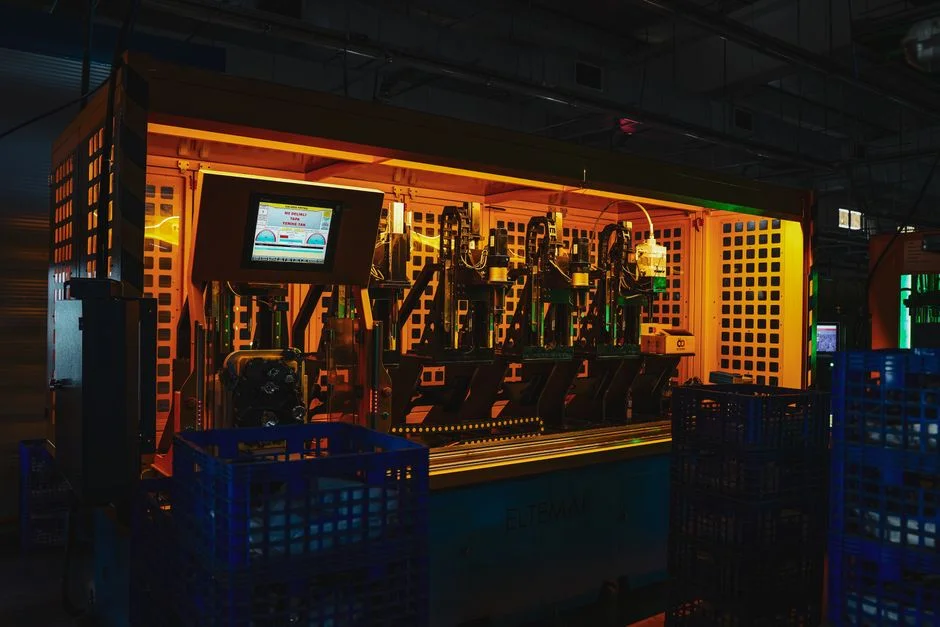
A defensible treatment train maps each contamination class to a unit operation sized for the worst case the Local Limits will be applied to at the end-of-pipe sample point. The flow below is the engineering sequence for a Norfolk transportation equipment plant whose streams include oily parts-washer water, paint rinse water, and metal-finishing rinses.
- Coarse screening. A rotary mechanical bar screen at headworks protects downstream equipment from rags, plastics, weld spatter, and metal fragments common in fabrication and ship-repair work. The rotary mechanical bar screen is the unit operation typically specified for this duty.
- Flow and load equalization. A surge tank or EQ basin smooths shock loads from batch painting and cleaning campaigns. Sizing must come from the plant's own flow data.
- Dissolved air flotation. DAF removes free and emulsified oils, FOG, and suspended solids generated by parts washing and machining; a dissolved air flotation system is the standard selection for this stream.
- Chemical dosing. An automatic chemical dosing system manages pH adjustment, coagulation, flocculation, and emulsion breaking. PLC-controlled injection is required because Local Limits "may include BMPs" that demand dose control even when the numeric limit is not specified (EPA, epa.gov, on the 40 CFR 403.5(c) framework). For a deeper look at coagulant selection, the coagulant dosing system engineering guide walks through the chemistry.
- Filtration. Multi-media or membrane filtration polishes residual TSS before the end-of-pipe sample point; selection depends on the downstream discharge objective.
- Sludge handling. A plate and frame filter press reduces waste-handling volume and protects the POTW's sludge processes from interference as defined in 40 CFR 403.3 (EPA, epa.gov).
| Stream | Primary pollutants | Primary unit operation | Compliance driver |
|---|---|---|---|
| Parts washing / machining | Oil & grease, emulsions, TSS | DAF + chemical dosing | 40 CFR 403.5 prohibited discharge; HRSD local limit (numeric) |
| Paint & coating rinse | Suspended solids, organics, pH excursions | Equalization + chemical dosing + filtration | 40 CFR 403.5 narrative BMPs; pass-through risk |
| Metal-finishing rinse | Heavy metals, pH, TSS | Chemical dosing + sedimentation + filtration | Categorical standard (subcategory-specific) + local limit |
| Generated sludge | Oils, metals, solids | Plate and frame filter press | Interference definition, 40 CFR 403.3 (EPA, epa.gov) |
For facilities that also handle fabricated metal work, the same logic is laid out in the fabricated metals pretreatment compliance guide; chemical-plant parallels are covered in the chemical plant pretreatment compliance guide.
Designing equipment to meet HRSD local limits
Confirm whether HRSD or EPA Region 3 is the control authority for the specific discharge before placing any equipment orders (EPA, epa.gov, on default EPA authority where no approved program exists; pcwracolorado.org, on delegated authority). That decision dictates whose forms, sampling protocols, and enforcement exposure apply, and it should be documented in the project file before sizing starts.
Obtain the current HRSD Local Limits and the plant's categorical standard directly from HRSD's published local-limits document. Any equipment sized against assumed values will fail the end-of-pipe test. Build the design around the worst-case pollutant of concern, not the average, because "POTWs impose local limits at the end-of-pipe discharge from an industrial user" (EPA, epa.gov) and the compliance check is a single-point maximum.
Where the Local Limit is a low numeric value for a parameter that varies widely, specify redundant duty: a lamella clarifier as a polishing stage ahead of a multi-media filter provides two barriers instead of one. Plan sludge handling in parallel with the water train; a plate and frame filter press keeps hauled sludge volumes manageable and reduces the interference risk at the POTW, which 40 CFR 403.3 ties directly to sludge processes, use, and disposal (EPA, epa.gov).
Monitoring, sampling, and reporting duties
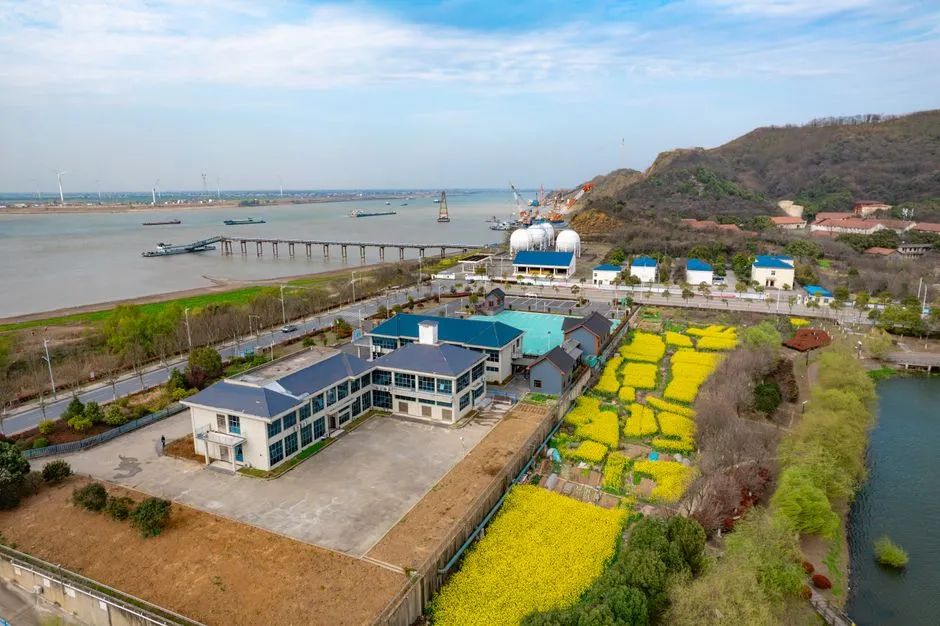
Compliance is proven by documentation and sampling, not just by installed equipment. The EPA guidance fixes the compliance point: "POTWs impose local limits at the end-of-pipe discharge from an industrial user (i.e., at the point of connection to the POTW's collection system)" (EPA, epa.gov). The entire system must be designed to ensure a representative sample can be pulled at that location.
Local limit programs require ongoing administrative maintenance. The EPA guidance specifies that the program "includes how to calculate maximum allowable loadings, collect and analyze data, design and implement local limits, determine pollutants of concern, and perform annual reviews and periodic reevaluations of local limits" (EPA, epa.gov). The plant's own monitoring data feeds that review, which means the sampling program and the records it produces are part of the compliance system.
Maintain chain-of-custody, calibration logs, and BMP records because Local Limits "can be numeric or narrative effluent discharge limits, including BMPs" (EPA, epa.gov), and a narrative BMP that is not documented is hard to defend in an enforcement action. Confirm the control authority in writing: "When POTWs have not been approved by EPA to implement Pretreatment Regulations, EPA will then be the default regulating agency" (pcwracolorado.org), which changes both the reporting forms and the enforcement exposure.
Frequently Asked Questions
What does it cost to install a pretreatment system for a transportation equipment plant near Norfolk?
Pricing for a transportation equipment pretreatment system varies based on site-specific requirements. The actionable check is to obtain the current HRSD Local Limits and the plant's categorical standard first, then issue an RFQ against a site-specific flow and load envelope derived from at least 30 days of the plant's own sampling. Capital cost follows the envelope, not the other way around.
How do I choose a pretreatment equipment supplier for an HRSD-regulated facility?
Confirm the supplier can size against the current HRSD Local Limits and the relevant 40 CFR categorical standard for your subcategory, and that they provide a documented basis for their sizing. A defensible vendor will request your Local Limits document and your site sampling data before quoting, and will reference 40 CFR 403.5(c) end-of-pipe compliance (EPA, epa.gov) in their design basis.
Which wastewater streams from a transportation equipment plant trigger categorical standards?
Metal-finishing rinse water and certain surface-coating operations are the streams most likely to fall under a 40 CFR categorical pretreatment standard. Confirm against current EPA effluent guidelines for the specific process before assuming the plant is covered only by the general 40 CFR 403.5 prohibited discharge standards (EPA, epa.gov).
What sampling and reporting records does HRSD or EPA Region 3 expect?
Records must support an end-of-pipe compliance demonstration at the point of connection to the POTW's collection system, with chain-of-custody, calibration logs, and BMP records available for review (EPA, epa.gov). If HRSD is the EPA-approved control authority, submit through HRSD; if not, EPA Region 3 is the default control authority and the reporting forms and enforcement exposure differ (pcwracolorado.org).