DAF vs Clarifier for Kennewick Mining and Metals Wastewater: Which to Choose in 2026
For a Kennewick mining or metals factory in 2026, choose dissolved air flotation (DAF) when the waste stream carries oils, greases, flotation reagents or fine buoyant solids, and choose a gravity clarifier (including a high-rate lamella design) when the dominant load is heavy settleable suspended solids such as mill tailings fines or metal-hydroxide precipitate. The Washington Department of Ecology "Criteria for Sewage Works Design" (Publication 98-37) recognizes DAF as a chemical/physical treatment option alongside sedimentation, and the EPA Process Design Manual for Suspended Solids Removal (EPA 625/1-75-003a) lists flotation and sedimentation as parallel solids-separation families. Most Kennewick metals lines end up running both, with DAF upstream of a lamella clarifier, because mining wastewater character shifts between batch discharges.
The 2026 decision rule is to match the dominant solid fraction to the right separator rather than defaulting to the newer technology. Three Kennewick-relevant sub-streams drive the choice: metals finishing rinsewater with oils and fine metals, mineral processing washdown with heavy settleable fines, and process water recycle with mixed character. A Kennewick permit reviewer will expect any DAF or clarifier proposal to cite the Ecology "Orange Book," because WAC 173-240-040 requires reasonable consistency with that document even though the manual itself is not regulation.
How a Dissolved Air Flotation Unit Actually Cleans Mining Wastewater
DAF separates solids by dissolving air under pressure and releasing it as 30–50 micron microbubbles that attach to oils, greases and fine suspended matter, lifting them to the surface for skimming. The Clearwater/SigmaDAF reference describes the microbubble size and standard materials of construction, and the EPA Process Design Manual covers flotation in Section 7.8 as one of the parallel suspended-solids removal families. In a metals or mining context DAF is most often paired with coagulation and flocculation to enlarge particles so the bubbles can attach; without that chemistry step DAF underperforms on colloidal metals.
For Kennewick plants the commercial DAF product envelope covers 4–300 m³/h across 13 standard models in the HydropureWater DAF system (4–300 m³/h, 13 models) range, which matches typical mining flow rates. Standard build is 304 stainless steel with optional 316 stainless or polypropylene for corrosive mining water. Where flows exceed the 66 GPM breakpoint, the COMPACT DAF reference from Clearwater/SigmaDAF shifts from a single-skid to a modular two-skid arrangement, providing a scalability point when Kennewick plants are still sizing their peak influent.
How a Clarifier — Conventional and Lamella — Handles Metals-Bearing Solids
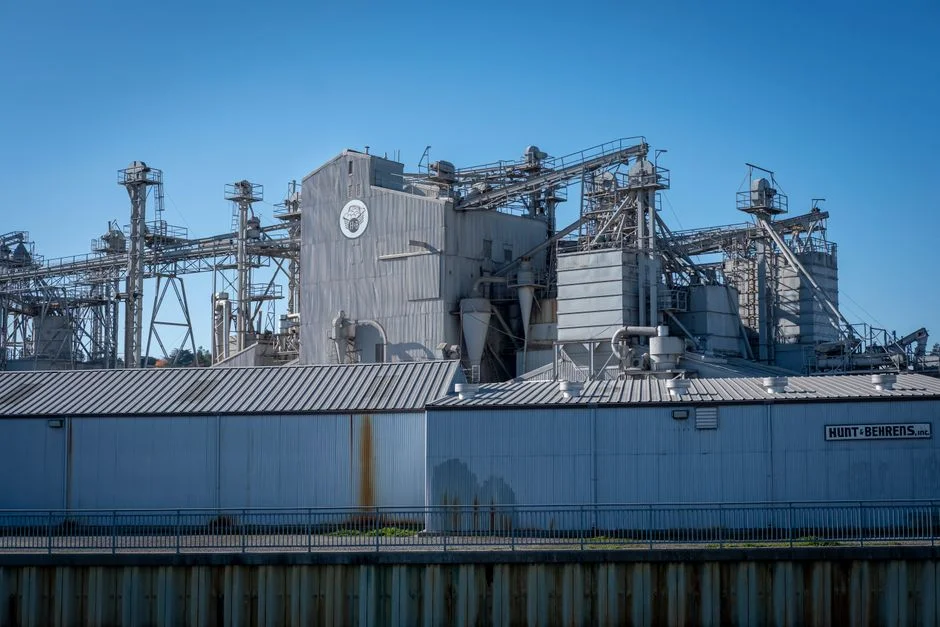
Clarifiers rely on gravity settling and remain the workhorse for heavy suspended solids. Chapter 7 of the EPA Process Design Manual (S1) covers primary, secondary and chemical sedimentation, and lists typical design parameters for primary clarifiers in Table 7-2. Conventional circular or rectangular rake units are well understood, but they require large footprints at the 1–2 m/h surface loadings common in mining service.
Lamella (inclined-plate) clarifiers pack many shallow settling zones into a compact footprint, making them the right primary unit for fast-settling metal hydroxides, mill scale, and tailings fines that would otherwise overload a DAF float layer. The HydropureWater high-efficiency lamella clarifier catalog specifies 20–40 m/h surface loading and up to 30% lower chemical consumption versus conventional designs, both directly relevant to a Kennewick mine site where civil space and reagent cost matter. Clarifier underflow is also a thicker, easier-to-dewater sludge than DAF float, which simplifies downstream filter-press sizing.
DAF vs Clarifier: Side-by-Side Comparison for Kennewick Mining Plants
Use the matrix below as the project-file summary. The hydraulic-loading, footprint and skidded-delivery rows draw on the HydropureWater catalog and the Clearwater/SigmaDAF DAF reference; the mechanism, influent match and chemical-demand rows tie back to EPA S1 and the Washington "Orange Book" (S4), which lists both DAF and sedimentation in Chapter T4 as parallel chemical/physical treatment options.
| Parameter | Dissolved Air Flotation (DAF) | Gravity Clarifier (incl. Lamella) |
|---|---|---|
| Mechanism | Microbubble flotation of low-density and colloidal material (EPA S1 §7.8) | Gravity settling of denser particles (EPA S1 Ch. 7; CSWD Ch. T4) |
| Typical influent match | Oils, FOG, flotation reagents, fine colloids, metal-finishing rinsewater | Tailings fines, metal hydroxides, mill scale, fast-settling precipitates |
| Hydraulic loading | Skid models up to 300 m³/h in the HydropureWater DAF system (4–300 m³/h, 13 models) range; single-skid ≤66 GPM, two-skid >66 GPM per Clearwater/SigmaDAF | 20–40 m/h surface loading for the HydropureWater high-efficiency lamella clarifier vs. ~1–2 m/h conventional (catalog) |
| Footprint & delivery | Fully skidded, PLC-controlled COMPACT units shorten installation windows (Clearwater/SigmaDAF) | Smaller tank footprint than a conventional clarifier at equivalent flow (catalog) |
| Sludge character | Wetter, oil-laden float; needs a downstream plate and frame filter press | Thicker underflow; easier to filter-press, smaller press |
| Chemical demand | Consistent polymer/coagulant dosing required to condition the float | Up to 30% lower coagulant consumption vs. conventional designs (catalog) |
To optimize performance, consider these two practical implications. First, for variable mining effluent the safer 2026 default is a DAF-then-lamella train, with DAF catching oils, reagents and fines before they overwhelm the clarifier. Second, both streams end up at a filter press, so a downstream plate and frame filter press should be in the budget from day one.
Washington State and EPA Design References a Kennewick Plant Must Cite
The Washington Department of Ecology "Criteria for Sewage Works Design," Publication 98-37, revised May 2023, has a dedicated Chapter T4 on chemical/physical treatment that includes dissolved air flotation alongside sedimentation. The manual is not regulation, but state regulation WAC 173-240-040 requires "reasonable consistency" with the CSWD, which is the practical standard a Kennewick factory designer must meet. Chapter T4 of the Orange Book is the section an Ecology permit reviewer will look for when sizing either unit.
On the federal side, the EPA "Process Design Manual for Suspended Solids Removal" (EPA 625/1-75-003a, January 1975) covers sedimentation in Chapter 7, flotation in Section 7.8, and chemical conditioning in Chapters 4 and 6 — the same process families a 2026 Kennewick plant will draw on. Both references explicitly recognize that chemical coagulation and flocculation precede the separator, which means the DAF-vs-clarifier choice sits downstream of the chemistry decision, not independent of it. Cite both manuals in the engineering report so the reviewer does not have to ask.
A 2026 Decision Checklist for Kennewick Mining and Metals Buyers
- Characterize the stream — TSS, FOG, metals, particle density — and decide whether the dominant fraction is settleable or floatable. The EPA manual (S1) frames this in terms of settleable, supra-colloidal, colloidal and soluble fractions.
- Check peak vs average flow. A modular DAF (single-skid under 66 GPM, two-skid above 66 GPM per Clearwater/SigmaDAF) is easier to scale than a civil clarifier when peak flows are still uncertain.
- Confirm acceptance criteria with the local Ecology reviewer using CSWD Publication 98-37 Chapter T4 and, where metals are present, the federal effluent limits and any sector-specific pretreatment rules.
- For variable mining effluent, default to a DAF-then-lamella train rather than a single unit, and budget for dewatering with a downstream plate and frame filter press because both DAF float and clarifier underflow will need it. Pair the train with a HydropureWater automatic chemical dosing skid so coagulant and polymer feed stay on setpoint across batch swings.
- Request pilot or jar-test data from the supplier. Both EPA (S1) and the commercial DAF vendors emphasize on-site testing before final sizing, and a Kennewick reviewer will want to see the data sheet.
Frequently Asked Questions
What is the single biggest factor that decides DAF vs clarifier for a Kennewick mining or metals line?
The dominant solid fraction. If the stream is mostly oils, FOG, flotation reagents or fine colloids, DAF is the right primary unit; if it is mostly heavy settleable fines, metal hydroxides or mill scale, a clarifier (or lamella) is. For mixed or batch-driven streams, default to a DAF-then-lamella train.
What capital and operating cost inputs should we request before we size a unit?
Ask each vendor for a scope-specific budget number tied to your flow, TSS, FOG and metals load, and for a separate polymer/coagulant consumption number per m³ treated. Neither the EPA manual (S1) nor the commercial DAF pages provide generic price-per-m³ figures, so request a written quote with a defined influent envelope rather than relying on catalogue ranges.
How do we choose a DAF or clarifier supplier without buying a brochure?
Require on-site jar-test or pilot data on your actual stream, a written reference list of mining or metals installations, and confirmation that the proposed design references the Washington "Orange Book" (Publication 98-37, Chapter T4) and EPA 625/1-75-003a. Suppliers that cannot produce site-specific data or cannot cite the right Ecology chapter are unlikely to survive an Ecology review.
What is the lead-time and compliance risk we should plan for in 2026?
Skidded DAF units (single-skid ≤66 GPM, two-skid >66 GPM per the Clearwater/SigmaDAF reference) typically ship faster than civil clarifiers, but any system discharging to the Columbia River basin will still need Ecology review against CSWD Chapter T4 and WAC 173-240-040. Build at least one review cycle into the project schedule, and confirm pilot data and chemistry setpoints before final purchase.