Why New Centerville Mining and Metals Factories Are Revisiting the DAF vs Clarifier Question in 2026
For New Centerville mining and metals factories in 2026, choose dissolved air flotation (DAF) when influent TSS is highly variable or carries oils, floatable fines, or attached heavy metals at 1,000-3,000 mg/L; DAF consistently achieves 92-98% TSS removal and handles coagulated metal hydroxides in a small footprint. Choose a lamella clarifier when feed is low-to-mid density (<1,000 mg/L), flow is steady, and the operation already runs lime or ferric precipitation — surface loading of 20-40 m/h makes it cheaper to build and operate.
The 2026 capital cycle is not the 1990s one EPA described when it confirmed that clarification and filtration remain the established primary step for meeting low-turbidity reclaimed water standards (EPA 430/09-91-022, Faller & Ryder, 1991). Two decades on, New Centerville mining and ore-processing streams swing harder: ore bodies are lower-grade, wash-water circuits are closed-loop, and bleed streams carry more surfactants, oil residues, and freshly precipitated metal hydroxides than the comparatively mineral streams that early DAF and lamella designs were benchmarked against.
The regulatory floor is set by the 40 CFR 437 effluent guidelines for the metal mining category, which the EPA continues to use as the basis for monthly-average TSS and metals limits in NPDES permits covering New Centerville operations. The guidelines do not dictate equipment; they dictate what the clarifier overflow must look like. For a plant already at the limit on copper, lead, nickel, or zinc, the choice of primary separation is what determines whether a downstream polishing filter or RO unit is sized to meet permit or to chase a moving target.
Two technology families dominate the primary step. Dissolved air flotation is a buoyancy-driven process: air-saturated water is released at atmospheric pressure, and 20-40 micron micro-bubbles attach to coagulated floc and lift it to the surface (per DAF Corporation's micro-bubble generator spec). A lamella clarifier is a settling-driven process: coagulated water flows between inclined plates at 45-60°, multiplying the effective settling area so surface loading can reach 20-40 m/h on a footprint a fraction of a conventional basin. The rest of this article is the framework for choosing between them under 2026 New Centerville conditions.
How DAF and Lamella Clarifiers Actually Separate Solids
DAF and lamella clarifiers look different on a P&ID because they exploit different physical properties of the floc. DAF is a buoyancy process; lamella is a settling process. When the floc is denser than water and settles readily, settling wins on cost. When the floc is low-density, oily, or freshly precipitated, buoyancy wins on completion.
In a DAF unit, a side stream of clarified effluent is pressurized to at least 5 bar (typically 5-7 bar) in a saturation tank, dissolving air into solution. When this saturated recycle is released into the main flocculated stream through proprietary nozzles, the pressure drop nucleates 20-40 micron bubbles (per DAF Corporation micro-bubble generator). The bubbles collide with and attach to coagulated particles, forming aggregates with effective density well below 1.0 g/mL. Those aggregates float to the surface in minutes and are scraped off as a 2-4% thickened float (per DAF Corporation's published performance data).
In a lamella clarifier, the same coagulated stream enters a tank fitted with packs of inclined plates at 45-60° (per the HydropureWater high-efficiency sedimentation tank geometry). Each plate behaves as a shallow settling zone; the combined projected area of all plates allows surface loading rates of 20-40 m/h on a tank only 3-4 m tall. Solids slide down the plates and collect in a hopper, producing a 3-6% underflow that drops to a sludge pump or plate and frame filter press.
The mechanism drives the application fit. DAF removes 92-98% of TSS and 60-80% of COD on streams that are hard to settle — oils, surfactants, fine metal hydroxides, biological floc from activated sludge (per DAF Corporation FC Maximizer performance and DAGYEE DAF spec). Lamella removes 70-90% of TSS on streams that already settle — dense mineral fines, precipitated lime/ferric sludge, and steady neutralized wastewater. Putting the wrong floc in front of the wrong tank either undersizes the unit or pushes the underflow solids so high that the sludge handling train downstream becomes the bottleneck.
Head-to-Head: DAF vs Lamella Clarifier on the Numbers That Matter in 2026
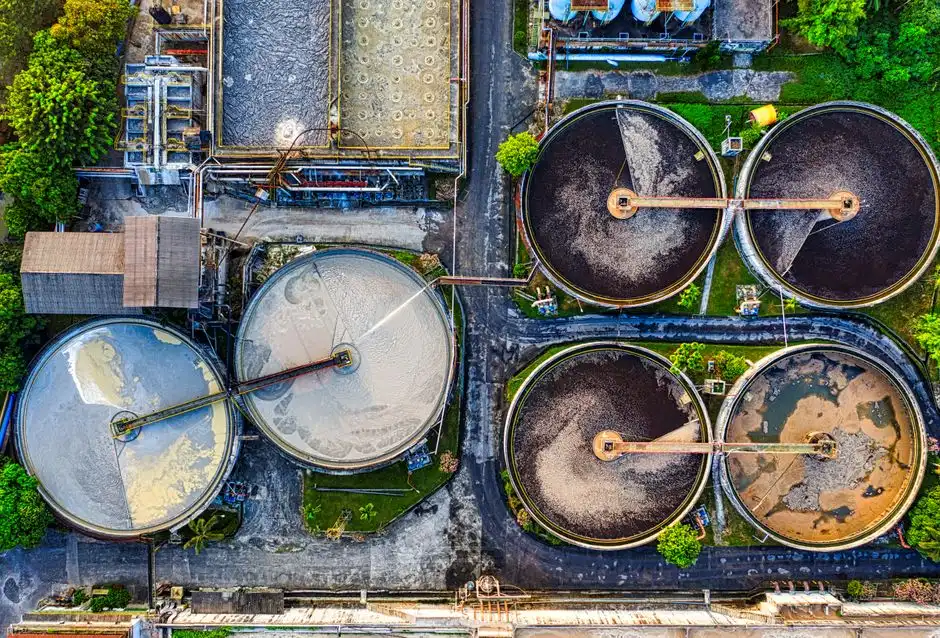
The comparison block below is the version an engineer can paste directly into a 2026 CAPEX justification memo or vendor evaluation matrix. Removal efficiencies, hydraulic loading, sludge consistency, chemical compatibility, and footprint are the five parameters that determine whether a primary clarifier will meet both 40 CFR 437 effluent targets and the plant's reuse or downstream polishing intent.
| Parameter (2026 design basis) | DAF (buoyancy-driven) | Lamella clarifier (gravity-driven) |
|---|---|---|
| TSS removal efficiency | 92-98% (per DAF Corp FC Maximizer) | 70-90% (typical inclined-plate performance) |
| COD removal | 60-80% (per DAGYEE DAF spec) | 30-50% (typical) |
| Hydraulic / surface loading | 5-25 m/h | 20-40 m/h |
| Sludge consistency out of unit | 2-4% float (per DAF Corp) | 3-6% underflow |
| Best-fit floc chemistry | Polymer + metal-salt coagulation, oily/floatable streams | High-dose lime or ferric precipitation, dense mineral fines |
| Footprint at 50 m³/h (illustrative) | ~12 m × 4 m skid (matches DAF-050 spec, ~8.4 m × 3.6 m envelope plus clearance) | ~6 m × 3 m × 4 m tall tank |
| CAPEX character | Higher unit cost, lower civil cost | Lower unit cost, higher concrete cost |
| OPEX character | Recycle pump energy, polymer | Lime/ferric reagent, sludge pumping |
Two caveats belong in any memo. First, the footprint figures are illustrative at 50 m³/h and should not replace vendor general arrangement drawings for a specific bid package. Second, the sludge consistency numbers matter because they cascade into dewatering: a 2% DAF float typically needs a plate and frame filter press sized to handle a higher volumetric sludge rate than a 5% lamella underflow, and that difference shows up in filter area, cycle time, and polymer demand on the press. Engineers who compare only the clarifier and forget the downstream press often miss 20-30% of true lifecycle cost.
Which New Centerville Mining Streams Fit Each Technology
Generic vendor specs do not tell a New Centerville engineer which unit to buy. The decision starts with the stream on the P&ID, not the datasheet. Below is the mapping that holds up in 2026 for the four stream families most common to mining and metals finishing operations in the region.
Coal preparation, iron ore washing, and tailings dewatering supernatant. These streams run 500-2,000 mg/L TSS of dense mineral fines (silicates, iron oxides, coal dust). The floc settles readily once coagulated, and high lime dosing is often already in place from the neutralization step. Lamella is the natural fit, and a thickener-based gravity unit is the right call above about 200 m³/h where footprint and floc density both favor settled sludge. For a similar 2026 decision framework applied to a comparable operating context, see the 2026 DAF vs clarifier guide for Cadiz mining factories.
Galvanizing, electroplating rinse, and metal finishing bleed. TSS is lower (50-500 mg/L) but the stream carries floatable oils, surfactants, and freshly precipitated metal hydroxides from rinse pH adjustment. These flocs are the textbook DAF application: low-density, oily, and loaded with metals that benefit from the 92-98% TSS removal DAF delivers (per DAF Corp FC Maximizer performance). A related metals-removal perspective is laid out in the 2026 nickel removal technology comparison.
Acid mine drainage (AMD) after lime/ferric dosing. AMD neutralization is the boundary case. The chemistry favors a lamella or thickener because lime/ferric sludge is dense and high in volume, but the floatability of freshly precipitated metal hydroxide floc — especially when ferric chloride is the coagulant — sometimes tips the unit toward DAF. The decision is usually made on jar tests rather than on paper: if the floc rises on its own, DAF wins; if it falls, lamella wins.
Stormwater and aggregate wash-down. Mining yard stormwater is the highest-variability stream on the site: dry-weather flow near zero, then 5-10× surge in a 10-minute cloudburst, with entrained oils from equipment and fueling. The 2-3× flow swing tolerance of a DAF unit, plus its affinity for oil and grease, makes DAF the safer primary for these surges. Where a parallel 2026 buyer guide for adjacent sectors discusses similar variability logic.
The 2026 Selection Framework: Four Criteria That Decide It
For 2026 New Centerville CAPEX planning, the four criteria below are the defensible written framework. Each is a yes/no test against the specific site data, and the answers — not vendor preference — are what should appear in a board memo.
| Criterion | Favors DAF if… | Favors lamella if… |
|---|---|---|
| 1. Influent variability | Flow swings 2-3×, surge events, batch discharges | Flow is steady, equalized, or covered by parallel trains |
| 2. Chemical program | Polymer + metal-salt (ferric, PACl) coagulation already in use | High-dose lime neutralization already in use |
| 3. Footprint and CAPEX | Greenfield, tight plot, civil work is the schedule driver | Existing concrete basin available for retrofit |
| 4. Downstream intent | Overflow feeds RO, UF, or cooling make-up (low TSS/oil needed) | Overflow feeds further settling ponds or low-pressure filtration |
Criterion 1 — Influent variability. A single DAF unit tolerates 2-3× flow swings because the rise rate is governed by bubble attachment, not by overflow rate at a fixed launder. A lamella clarifier needs the flow to stay inside its design surface-loading band; outside that band, solids wash over the plates and TSS spikes downstream. Where surge is unavoidable, equalization upstream of lamella, or parallel trains, is the workaround. DAF skids can be specified from a dissolved air flotation system with a saturator sized for the peak, not the average.
Criterion 2 — Chemical program. If the plant is already dosing high-rate lime for AMD neutralization, lamella is the natural fit — the chemistry is right, the sludge is dense, and a HydropureWater high-efficiency lamella clarifier handles the volumetric load cheaply. If the plant runs polymer-assisted metal-salt coagulation, DAF is the natural fit — the floc is lighter and benefits from bubble attachment. Pairing either clarifier with an automatic chemical dosing system keeps jar-test-optimized dose rates consistent across feed swings.
Criterion 3 — Footprint and CAPEX. Use the rule-of-thumb footprint table from Section 3 to seed the comparison. DAF skids cut civil work, which often outweighs higher unit cost on greenfield sites where the schedule is tight. Lamella retrofits win where an existing concrete basin can be re-equipped with plate packs, because the tank is already there and only the internals are new. For 50 m³/h on a greenfield site, a 12 m × 4 m DAF skid typically outpaces a 6 m × 3 m × 4 m lamella tank once the concrete pour, cure, and liner work are added to the lamella schedule.
Criterion 4 — Downstream intent. If clarified water feeds a reuse loop — reverse osmosis for process water, cooling-tower make-up, or gland seal water — DAF's lower residual oil and TSS protects the membrane better and reduces CIP frequency. If clarified water goes to a large settling pond or to non-potable reuse, lamella is sufficient and the higher CAPEX of DAF is hard to justify. In 2026, with New Centerville reuse targets tightening and zero-discharge pressure increasing from the local NPDES permit renewal cycle, Criterion 4 is increasingly the deciding factor.
Frequently Asked Questions
Which technology meets 40 CFR 437 effluent limits for a New Centerville mining primary clarifier in 2026?
Both DAF and lamella clarifiers can meet 40 CFR 437 monthly-average TSS and metals limits when properly sized and paired with coagulation. DAF reaches the lower end of residual TSS (typically 10-50 mg/L) more consistently on variable or oily feeds; lamella meets the same limits on steady, dense-mineral streams but with less margin. The 2026 decision is usually downstream, not at the clarifier itself.
What TSS removal can a DAF realistically deliver on a metal hydroxide stream?
On a coagulated metal hydroxide stream, a DAF system sized at 5-25 m/h surface loading and 5-7 bar saturation pressure delivers 92-98% TSS removal, with overflow typically 10-50 mg/L (per DAF Corporation FC Maximizer performance). The figure assumes polymer-assisted coagulation and a stable feed pH within the metal hydroxide precipitation window.
When is a lamella clarifier the cheaper and simpler choice for a New Centerville mining plant?
A lamella clarifier is the cheaper and simpler choice when feed TSS is below ~1,000 mg/L, flow is steady, and the plant already runs high-dose lime or ferric neutralization. At 20-40 m/h surface loading on inclined plates at 45-60°, a 50 m³/h lamella fits in roughly 6 m × 3 m × 4 m — smaller civil footprint than a conventional clarifier and lower unit cost than a DAF skid of equal hydraulic capacity.
How much should a New Centerville factory budget for a DAF vs a lamella clarifier in 2026?
2026 rule-of-thumb installed cost for a 50 m³/h DAF system typically lands in the USD 180,000-320,000 range, while a comparable-capacity lamella clarifier package typically lands in the USD 90,000-180,000 range. DAF carries higher equipment cost but lower civil cost; lamella is the opposite. Site-specific quote is required, and the downstream sludge dewatering train should be sized into the same comparison.