Why Cadiz Mining and Metals Plants Are Re-evaluating Clarifier Choice in 2026
Cadiz sits in Trumbull County, Ohio, within both the Great Miami River and Mahoning River watersheds — two drainage basins under active Ohio EPA Total Maximum Daily Load (TMDL) review for metals, total suspended solids (TSS), and pH. Aggregate washing, ore-processing, and metal-finishing facilities along U.S. Route 22 and in the surrounding industrial corridor discharge under Ohio EPA NPDES permits that flow from 40 CFR Part 437 (Ore Mining and Dressing) effluent limits — daily-maximum TSS, settleable solids, pH 6–9, and trace metals including As, Cd, Cu, Pb, Zn, Hg, Ni, and Ag (per 40 CFR Part 437, 2025-07 consolidation). Active mines and mills fall under Part 437; inactive and abandoned mine drainage falls under 40 CFR Part 435, and a Cadiz operator must confirm the correct subcategory before sizing equipment. The procurement question on the table in 2026 is not "DAF or gravity clarifier" in the abstract — it is which unit, or which combination, hits 40 CFR 437 daily-maximum values at the lowest life-cycle cost per gallon treated on a constrained Trumbull County pad.
Dissolved air flotation excels when the influent carries oils, residual flotation reagents (xanthates, dithiophosphates, frothers), and low-specific-gravity fines that will not settle under gravity alone. Lamella (inclined-plate) clarifiers win when the stream is high-flow and the solids are dense and settleable — silica sand tailings, ferric hydroxide from AMD neutralization, lime-softening sludge — and the chemistry is straightforward. Both technologies are widely deployed; the U.S. decision hinges on which one matches the local stream, the local effluent rule, and the available footprint.
How Each Clarifier Actually Works on a Mining Stream
A dissolved air flotation system pushes clarified effluent through a recirculation loop pressurized to roughly 6 bar with dissolved air, then releases that saturated stream back into the flotation tank. The pressure drop generates 30–50 µm micro-bubbles that attach to flocculated particles and float them to the surface (source: SIGMADAF technical documentation, 2025). Coagulant and polymer are dosed either through floc tubes (15–45 s flash mix) or in mix tanks with impeller agitators when longer contact time is required for pH adjustment or heavy-metal precipitation (source: Clearwater Industries, 2025). A surface skimmer pulls the floating sludge blanket to a collection trough; clarified effluent exits below the floating blanket and above any settled-solids compartment. Most DAF designs also include a sediment hopper for heavy grit that does manage to settle, which keeps a single unit from losing efficiency on slimes that arrive with coarser particles.
A high-efficiency lamella clarifier takes a different route. Coagulant and flocculant are dosed upstream; water flows upward through a stack of inclined plates — typically spaced 50–80 mm at a 55–60° angle — at a surface loading rate of 20–40 m/h. Solids settle onto the plate surface, slide down to a hopper at the bottom, and clarified water exits via a top launder. A sludge recirculation blanket below the plates improves floc growth and reduces coagulant demand by up to 30% (per HydropureWater product data, 2026). The two physical terms that matter most when reading the next section's parameter table: rise rate for DAF is the upward velocity at which bubble-attached floc reaches the surface (m/h), and overflow rate for a lamella is the equivalent hydraulic loading per unit plate area (also expressed m/h, but a different physics). When a Cadiz engineer sees a spec sheet quoting 25 m/h overflow on a lamella, that is the unit to compare against a DAF rise rate of 8–12 m/h on the same stream.
DAF vs Lamella Clarifier: Parameter Comparison for Mining/Metals Streams
Below is the head-to-head engineering table a Cadiz engineer can spec against. All values are drawn from the cited sources and from standard HydropureWater process data.
| Parameter | DAF (HydropureWater / FPAC / FPBC) | Lamella Clarifier (inclined plate) |
|---|---|---|
| Micro-bubble / plate geometry | 30–50 µm micro-bubbles at ~6 bar saturation (S4, 2025) | 50–80 mm plate spacing at 55–60° angle (HydropureWater product data, 2026) |
| Rise rate / surface loading | 5–15 m/h rise rate (typical) | 20–40 m/h surface loading (HydropureWater product data, 2026) |
| Best-fit influent TSS | Up to ~5,000 mg/L with chemical conditioning (S4, 2025) | Up to ~10,000 mg/L for dense, fast-settling solids |
| Solids loading (dry matter) | Up to 40 kg DM/m² (FPAC geometry, S4, 2025) | Plate area drives capacity; scales with footprint |
| Removal efficiency (TSS, FOG, COD) | >90% on TSS, FOG, COD, BOD (S4, 2025) | 70–90% on settleable solids; limited on emulsified oils and low-SG fines |
| Solids-density fit | Low-SG fines, slimes, oil, residual flotation reagents | Dense silica, ferric hydroxide, lime-softening sludge, sand tailings |
| Sludge concentration produced | Thicker float (typically 3–6% dry solids) — less dewatering demand (S1, 2025) | Thinner underflow (typically 1–3% dry solids) — needs thickening |
| Flow envelope (standard models) | DAF: 4–300 m³/h; Ecologix E-DAF: 130–3,700 GPM (S5, 2025) | Modular plate packs; parallel-train scales linearly at lower CAPEX per m³ |
| Footprint at high flow | Reduced by FPBC/FPHF plate geometry; still larger per m³ than lamella (S1, S4, 2025) | Smallest footprint per m³ at high flow when solids are settleable |
The pattern is clear: DAF wins on removal efficiency for low-SG, oily, or reagent-bearing streams, and it produces a thicker float that downstream plate-and-frame filter presses can dewater economically. Lamella wins on hydraulic capacity per square foot of pad and on CAPEX per m³ when the chemistry is straightforward and the solids settle readily.
40 CFR 437 Effluent Limits: What the EPA Actually Holds You To
40 CFR Part 437 sets the binding daily-maximum and monthly-average effluent limits for active ore mining and dressing operations (per EPA 40 CFR Part 437, 2025-07 consolidation). The headline parameters for primary-clarifier sizing are TSS, settleable solids, pH 6–9, and the eight trace metals — arsenic, cadmium, copper, lead, zinc, mercury, nickel, and silver. A DAF unit paired with lime softening or ferric chloride coagulation can typically hit the Part 437 TSS and metals limits in a single stage when pH is held in the 8.0–9.5 range and iron floc carries arsenic and the heavy metals down with the float (per EPA mining effluent guidance, 2025-08). A lamella clarifier alone, by contrast, often needs a downstream multimedia or sand filter to bring total residual metals below the Part 437 ceiling — particularly for As and Hg, which are not strongly removed by plain sedimentation.
Cadiz-area facilities should also confirm with Ohio EPA whether local NPDES limits are tighter than the federal Part 437 ceilings. The Great Miami River and Mahoning River watersheds are TMDL-impaired for metals and TSS, and Ohio EPA routinely writes site-specific permit limits that are 20–40% tighter than the federal floor (per Ohio EPA Division of Surface Water guidance, 2025). A second regulatory distinction matters: if a Cadiz plant sends wastewater to a POTW rather than discharging to surface water, it is operating under local pretreatment limits rather than Part 437 directly — and that changes whether the DAF or lamella is the endpoint or just primary treatment ahead of a municipal biological plant.
Chemical conditioning is non-optional on either clarifier for a 437-bound stream. A HydropureWater automatic chemical dosing skid handles coagulant (ferric chloride, PAC, or lime), polymer flocculant, and pH adjustment in one PLC-controlled package.
Matching Mining Sub-Processes to the Right Clarifier
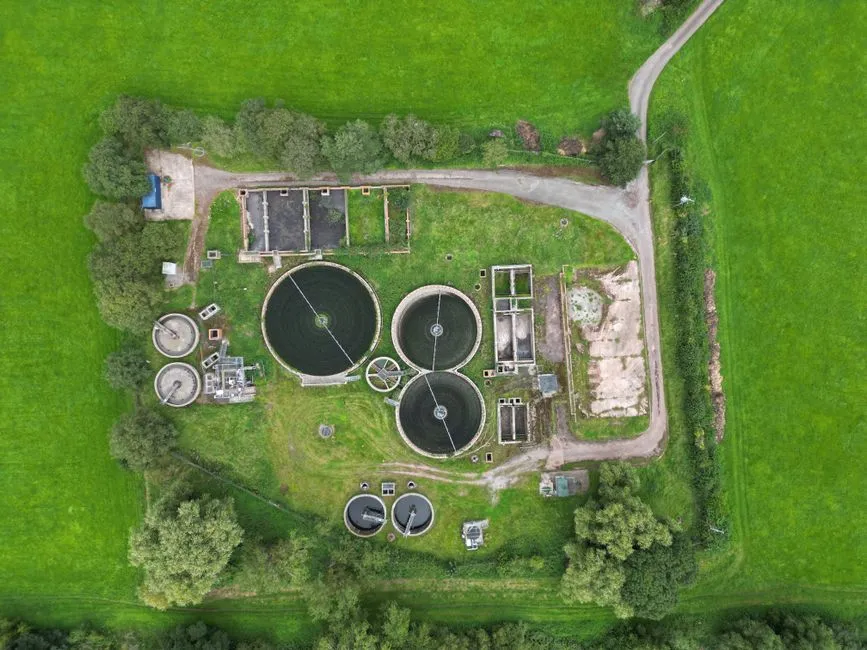
Flotation concentrator wastewater is the clearest DAF case. Residual xanthates, dithiophosphates, and MIBC frothers stay emulsified or in colloidal suspension, and fine sulfide particles have a specific gravity too close to water for gravity settling to work at any reasonable clarifier footprint. DAF with 30–50 µm micro-bubbles lifts these particles in a single pass, recovers process water for reuse, and reduces the contaminant load to surface water (source: Seven Seas Water, 2025-09). A HydropureWater DAF is the right unit operation here.
Ore washing and aggregate wash water is the clearest lamella case. The stream is high-flow, the solids are dense silica and coarse grit, and there are no residual flotation reagents to chase. A lamella clarifier running at 25–35 m/h surface loading pulls 80–90% of the settleable solids and recycles clean water back to the wash screen, with the densest fraction bleeding to a sand classifying tank or settling pond.
Acid mine drainage neutralization streams (lime or limestone-based) generate ferric hydroxide, aluminum hydroxide, and gypsum sludge that settles rapidly under gravity. A lamella clarifier handles the bulk volume at low CAPEX; a DAF is then added as a polish step only if emulsified oils appear in the drainage or if the operator wants to drive residual TSS below 20 mg/L for water reuse.
Metals finishing rinse water (cutting fluids, stamping oils, plating rinse water carrying Ni, Cu, Zn) is a hybrid case. A DAF first stage removes FOG and emulsified oils at >90% efficiency (source: SIGMADAF, 2025); a downstream ion exchange or RO polishes the dissolved metals to reuse or discharge quality. Skipping DAF and going straight to lamella on a metals-finishing stream typically fails on the oil-removal step and fouls downstream membranes.
Sizing, Footprint, and CAPEX Envelope for a Cadiz Plant
Translate the parameter table into a budget and pad-space decision with the table below. Relative CAPEX and footprint values are engineering-typical 2026 ranges for U.S.-built equipment and should be used for screening, not for a firm quote.
| Flow range | Recommended DAF envelope | Recommended lamella envelope | Relative CAPEX (per m³) | Footprint (per m³) | Operator skill needed |
|---|---|---|---|---|---|
| ≤66 GPM (≤15 m³/h) — small Cadiz plant | Single-skid COMPACT DAF (S1, 2025) | Compact lamella package | DAF higher; lamella lower | Comparable | DAF: PLC + dosing; lamella: simpler |
| 66–500 GPM (15–113 m³/h) — mid-size | DAF extends to 300 m³/h (HydropureWater, 2026); modular two-skid DAF | Multi-cell lamella, parallel plates | DAF premium ~20–40% | Lamella smaller per m³ | DAF: PLC + chemical dosing; lamella: moderate |
| 500–3,700 GPM (113–840 m³/h) — large flow | Engineered multi-unit DAF (Ecologix E-DAF envelope, S5, 2025); FPBC/FPHF geometry cuts footprint (S1, S4, 2025) | Parallel-train lamella, stacked plate packs | DAF premium ~30–50%; lamella wins on CAPEX per m³ for settleable streams | DAF FPBC/FPHF approaches lamella at high flow | Both require trained operators; DAF more automation |
If CAPEX is the binding constraint and the influent chemistry is straightforward (no oils, no residual reagents, clean precipitates), a lamella clarifier with an automatic chemical dosing skid wins on first cost and on footprint per m³. If the stream carries oils, flotation reagents, or low-SG fines, the DAF premium pays back in sludge quality (3–6% dry solids vs. 1–3% for lamella underflow), reduced downstream plate-and-frame filter press capacity, and a clearer path to reuse-quality water (source: SIGMADAF, 2025).
Decision Framework: DAF, Lamella, or Both for a Cadiz Mining/Metals Site
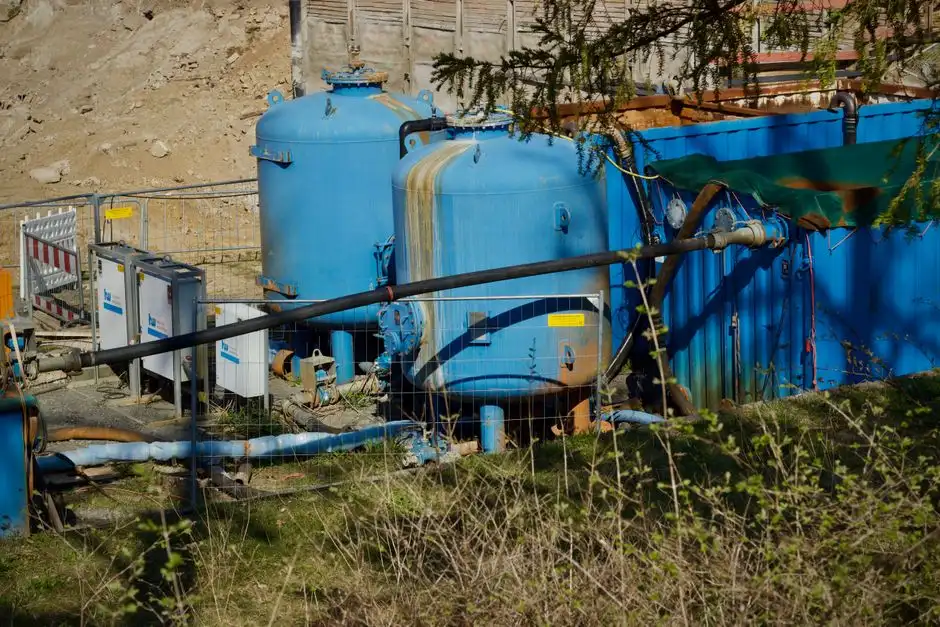
For a Monday-morning meeting, the rule of thumb collapses to three conditional statements. First: if influent TSS is below 2,000 mg/L and the stream contains oils, residual flotation reagents, or low-specific-gravity fines, lead with a HydropureWater DAF and add a lamella as a polish step only if 40 CFR 437 daily-maximum values are still exceeded. Second: if influent TSS is above 2,000 mg/L and the solids are dense and settleable — silica, ferric hydroxide, lime-softening sludge — lead with a lamella clarifier and add a DAF polish only when emulsified loads appear downstream. Third: if 40 CFR 437 metals limits are tight and the plant will reuse the clarified water, specify DAF plus multimedia filter plus RO; if the water is discharge-only and the metals precipitate cleanly as hydroxides, lamella is sufficient.
Either clarifier must be paired with a sludge dewatering step — a HydropureWater plate and frame filter press is the standard pairing. DAF float sludge typically arrives at the press already at 3–6% dry solids, so the press runs shorter cycles and smaller cake volume; lamella underflow at 1–3% dry solids needs more press capacity or an upstream thickener. The full local context — Trumbull County water-table constraints, Ohio EPA TMDL loads on the Great Miami and Mahoning basins, and the 2026 industrial wastewater treatment market trends documented across the broader U.S. sector — pushes Trumbull County operators toward higher-clarity reuse and tighter metals compliance than generic equipment marketing assumes. For a deeper cross-region comparison, the Hamilton mining/metals DAF vs clarifier guide and the Caddo Gap mining/metals DAF vs clarifier guide apply the same framework to other U.S. mining corridors, and the broader 2026 industrial wastewater treatment market trends piece covers the U.S. compliance and tech outlook.
Frequently Asked Questions
When should a mining or metals plant in Cadiz choose DAF over a lamella clarifier in 2026?
Choose DAF when the influent carries oils, residual flotation reagents (xanthates, frothers), or low-specific-gravity suspended solids under 2,000 mg/L TSS. DAF generates 30–50 µm micro-bubbles at ~6 bar saturation that lift emulsified and colloidal particles at >90% efficiency (per 40 CFR Part 437 alignment, SIGMADAF, 2025). For dense, settleable mineral solids above 2,000 mg/L, a lamella clarifier at 20–40 m/h surface loading is more cost-effective.
What are the binding 40 CFR 437 effluent limits for a Cadiz mining or metals facility in 2026?
40 CFR Part 437 sets daily-maximum and monthly-average limits for TSS, settleable solids, pH 6–9, and trace metals (As, Cd, Cu, Pb, Zn, Hg, Ni, Ag) for active ore mining and dressing operations (per EPA 40 CFR Part 437, 2025-07). Ohio EPA site-specific NPDES permits on the Great Miami and Mahoning River watersheds may run 20–40% tighter than the federal ceiling, and inactive-mine drainage falls under 40 CFR Part 435, not Part 437.
What flow envelope does the HydropureWater DAF cover for a Cadiz-scale plant?
The HydropureWater DAF covers 4–300 m³/h across 13 standard models, suitable for small to mid-size Cadiz ore-processing and metals-finishing operations. For flows above ~840 m³/h (3,700 GPM), engineered multi-unit DAF systems such as the Ecologix E-DAF envelope or multi-train lamella clarifiers are the next step (per Ecologix, 2025; HydropureWater product data, 2026).
Can a lamella clarifier alone meet 40 CFR 437 metals limits, or is DAF required?
Lamella alone typically removes settleable metals precipitates (ferric hydroxide, lime-softened sludge) at 70–90% efficiency, but it underperforms on dissolved and emulsified metals such as arsenic, mercury, and nickel. DAF paired with ferric chloride or lime coagulation at pH 8.0–9.5 usually hits Part 437 metals in a single stage, while lamella-only systems often need a downstream multimedia or sand filter to meet total residual metals (per EPA mining effluent guidance, 2025-08).