The Two Layers Every Bellevue-Area Mining Discharger Has to Clear
Mining and metals plants near Bellevue meet pretreatment limits by stacking two regulatory layers: the federal Mineral Mining and Processing Effluent Guidelines at 40 CFR Part 436 (EPA, 2026-02), which is incorporated into the facility's NPDES permit, plus a local pretreatment program run by the receiving POTW that sets its own limits for heavy metals, pH, and TSS. Where the mineral falls under a reserved subpart with no numeric federal limits, the local POTW limits are the binding number. The defensible 2026 treatment train is six steps: pH correction to >10 for metals precipitation, coagulation/flocculation, DAF or lamella clarification, multimedia filtration targeting RO-feed SDI, ultrafiltration, and RO polish at >99% rejection of dissolved metals and salts.
The federal floor is 40 CFR Part 436, the Mineral Mining and Processing Effluent Guidelines and Standards. EPA promulgated 40 CFR Part 436 in 1975 and amended the regulation in 1976, 1977, 1978, and 1979; it covers wastewater discharges from mine drainage, mineral processing operations, and stormwater runoff, and the requirements are incorporated into NPDES permits (EPA, 2026-02). The permit itself cites 40 CFR Part 436 limits for the parameters the subpart covers, and the Washington State Department of Ecology and the local sewer authority add their own conditions on top. A Bellevue-area operator cannot choose between EPA authority and state or local authority — they stack.
The second layer is the local POTW pretreatment program. Every POTW that accepts industrial discharge runs a pretreatment program, and the local sewer authority reconciles EPA categorical standards with locally established limits for heavy metals, pH, and TSS. For a Bellevue-area operation discharging to the regional sewer system, that means the operator needs both sets of numbers in front of them when they size a treatment train — not one or the other. The binding number in 2026 is whichever limit is tighter on each parameter.
Several Pacific Northwest-relevant subparts are reserved, which means there are no current numeric federal effluent limits and the local layer carries the full weight. A Bellevue-area operator working in dimension stone, aggregates, or critical minerals must first check whether their mineral falls under an active subpart with numeric limits or under a reserved subpart. Reserved subparts include Dimension Stone (Subpart A), Lightweight Aggregates (Subpart H), Lithium (Subpart U), Ball Clay (Subpart AH), Feldspar (Subpart AI), Talc/Steatite/Soapstone/Pyrophyllite (Subpart AJ), and Garnet (Subpart AK) (EPA, 2026-02). The literature characterizes U.S. mining and processing as highly localized: 6,785 active mines and mineral plants were identified by the USGS as of 2003, and EPA cited approximately 280 Class III solution mining wells in 2019 (ACS ES&T Engineering, 2021). The reserved-subpart list is the gap a Bellevue-area dimension-stone or lithium operator has to close with the local POTW before sizing a single pipe.
What Mining Wastewater Actually Looks Like in the Pacific Northwest
Acid mine drainage is the most prevalent mining water quality problem: when sulfide minerals (pyrite, pyrrhotite) in waste rock and tailings are exposed to oxygen and water, oxidation produces sulfuric acid that leaches heavy metals — iron, manganese, copper, zinc, arsenic, cadmium — at concentrations far exceeding regulatory limits (AMPAC USA, 2025-09). That is the headline stream a Bellevue-area operator has to characterize, but it is rarely the only one.
Four common wastewater categories show up in the literature, and they behave differently. Process water from ore processing — flotation, heap leaching, cyanide gold extraction, chlorination — typically carries high TDS, ammonia, or chloramines depending on the circuit. Tailings pond effluent contains fine solids, processing chemicals, and leached metals. Dewatering discharge is water pumped from underground or open pits to maintain access, and its composition varies by geology: relatively clean in some settings, metal-loaded in others (AMPAC USA, 2025-09). Contaminated contact stormwater is the fourth stream, and it tends to spike during the first flush after a dry spell.
Conventional wastewater approaches handle mining streams poorly because a copper mine, a coal operation, and a dimension-stone quarry produce fundamentally different wastewaters and cannot share a single default treatment train (AMPAC USA, 2025-09). The trap to avoid is the "one stream fits all" assumption, and the practical consequence is that AMD and process streams together drive the need for pH correction, metals precipitation, and — when salts persist — a membrane polish step. For a Bellevue-area aggregate or dimension-stone site that does not run a sulfide ore body, the AMD signal may be weaker, but the operator still has to test for it because pyrite shows up as a trace mineral in many regional rock types.
Stream-by-stream characterization is the step that determines whether the six-step train is over- or undersized. Operators should pull a representative composite across at least one wet season, test pH and conductivity continuously, and run a full metals scan on each of the four stream categories before they sit down with a supplier. The influent profile is also the only reliable way to decide between DAF and lamella in the clarification step.
The Six-Step Treatment Train That Holds Up in 2026
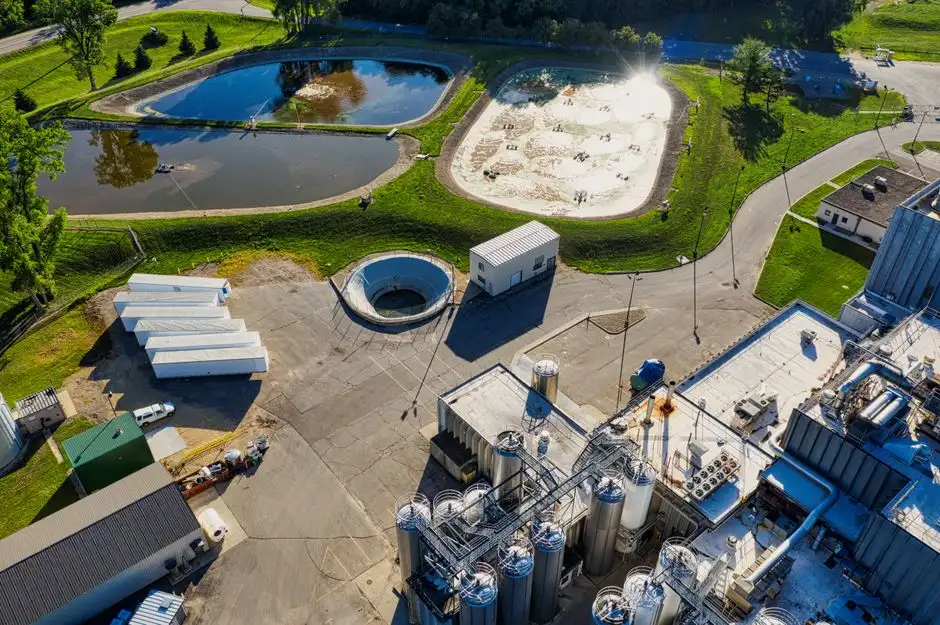
A defensible 2026 unit-operation sequence for a Bellevue-area mineral mining or aggregate operation has six steps, and each one maps to a specific unit operation. The literature and the commercial flow sheets reviewed point to the same order: pH correction first, then coagulation, then solids separation, then multimedia filtration, then a membrane polish when salts or trace metals persist, with monitoring and reporting on the back end (Genesis Water Technologies; PMC review, 2024-02).
Step 1 — pH correction. Raise pH so dissolved metals precipitate as hydroxides and gypsum drops out. Lime raise to pH >10 before thickening (PMC review, 2024-02). The pH setpoint is the lever that controls how completely each target metal precipitates; an automatic chemical dosing system for lime and flocculant is the standard fit for lime, coagulant, flocculant, and pH-adjuster injection, with PLC control and pre-wiring so the dosing ties into the same HMI the rest of the train reports through.
Step 2 — coagulation/flocculation. Aggregate suspended solids and fine metal particles into settleable or floatable flocs. Match coagulant and flocculant to the floc density that drives the next step — buoyant floc routes to DAF, dense floc routes to lamella.
Step 3 — solids separation. DAF for buoyant floc, oils, or floating fines; lamella clarifier when sludge volume and footprint are the constraint (Genesis Water Technologies, 2025-11). A DAF system for mining wastewater solids separation and a lamella clarifier for metal hydroxide sludge are the two equipment paths; the choice between them is driven by the influent profile established in Step 2.
Step 4 — multimedia filtration. Drop turbidity and colloids to protect downstream membranes. Specify target SDI after the filter, not inlet turbidity — SDI is the parameter that predicts RO fouling. A multi-media filter for RO pretreatment is the workhorse for this step.
Step 5 — ultrafiltration. Remove fine colloids and condition RO feed. UF sits between the MMF and the RO and is what holds the Silt Density Index low enough for the RO to run at design flux.
Step 6 — RO polish. Remove dissolved salts and metals. RO at 50–70% recovery for AMD feed; 70–85% as the RO stage of a ZLD train; >99% rejection of dissolved metals and salts (AMPAC USA, 2025-09). An industrial RO system for mining wastewater is sized to the design recovery and the design salt load.
Back end — PLC/HMI and POTW self-monitoring. Continuous pH, flow, and conductivity with PLC/HMI control and POTW self-monitoring records (LiqTech, 2025-08). Sludge from chemical precipitation is dewatered with a filter press for mining sludge dewatering to the cake dryness the disposal site requires.
| Step | Unit Operation | Key Setpoint or Target | Source |
|---|---|---|---|
| 1 | pH correction (lime dosing) | Raise to pH >10 before thickening | PMC review, 2024-02 |
| 2 | Coagulation / flocculation | Match floc density to clarifier choice | Genesis Water Technologies, 2025-11 |
| 3 | DAF or lamella clarification | DAF for buoyant floc / oils; lamella for sludge volume & footprint | Genesis Water Technologies, 2025-11 |
| 4 | Multimedia filtration | Target SDI after filter, not inlet turbidity | AMPAC USA, 2025-09 |
| 5 | Ultrafiltration | RO feed conditioning; colloid removal | AMPAC USA, 2025-09 |
| 6 | Reverse osmosis polish | >99% rejection; 50–70% recovery on AMD feed, 70–85% on ZLD RO stage | AMPAC USA, 2025-09 |
| Back end | PLC/HMI + self-monitoring | Continuous pH, flow, conductivity; POTW records | LiqTech, 2025-08 |
DAF vs Lamella: Picking the Right Clarifier for the Sludge You Actually Have
DAF is preferred when the floc is buoyant or the influent carries oils and fines that float; design drivers are air-to-solids ratio and polymer compatibility. Lamella is preferred when sludge volume and footprint are the constraint and there is no oil loading; design drivers are plate spacing and underflow solids. Both clarifier types sit downstream of pH correction and coagulation and upstream of multimedia filtration in the six-step train, and the decision between them is a feed-water decision, not a budget decision.
Sludge from chemical precipitation is a metal hydroxide sludge and must be dewatered regardless of which clarifier is upstream. A filter press for mining sludge dewatering is the standard fit for the cake volumes produced by precipitation-based mining trains, and the cake dryness target is set by the disposal site's waste acceptance criteria. For a deeper head-to-head comparison of the two clarifier technologies and how to specify each one for a mining or metals site, the DAF vs clarifier for mining wastewater factory selection guide walks through removal targets, footprint, and sludge handling. The same clarifier choice also drives the back end: a lamella train tends to produce a denser, easier-to-filter cake than a DAF train, which can shrink the filter press cycle time.
| Selection Criterion | DAF | Lamella |
|---|---|---|
| Floc density | Buoyant floc (below water) | Dense floc |
| Oil / floatable fines | Yes — designed for oils and floating fines | Not the right fit |
| Footprint constraint | Larger footprint typical | Compact (inclined plates) |
| Sludge volume | Higher moisture float | Higher underflow solids |
| Key design driver | Air-to-solids ratio, polymer compatibility | Plate spacing, underflow solids |
| Upstream step | pH correction + coagulation | pH correction + coagulation |
| Downstream step | Multimedia filtration | Multimedia filtration |
The Basis-of-Design Request That Gets You a Real Quote
The supplied research does not publish price points for a complete pretreatment train or flow ranges for Bellevue-area operations, so a buyer has to request a quotation against their own basis of design rather than rely on a published range. The information to put in that request is the peak and average flow in m³/h, the influent pH and metal profile from a representative sampling round, the local sewer authority discharge limits for metals, pH, and TSS, and the desired recovery percentage if reuse is in scope. Without those four inputs, the quotes that come back are not comparable and the scope is not defensible against a POTW or Ecology reviewer.
Size against the highest anticipated daily discharge, not the average — peak flows are what drive equalization basin volume and pump selection, and mining water treatment processes can vary significantly between operations, in both the required capacity and the wastewater content and the desired quality (LiqTech, 2025-08). Ask suppliers for a recovery curve on the RO polish, not just a nameplate figure, and confirm they have installed DAF or lamella, MMF, UF, RO, and sludge dewatering at flows in the same order of magnitude as the Bellevue site. For water-quality obligations tied to nearby surface water, the water quality obligations for mines near rivers and streams guide is a useful cross-reference; for a different jurisdictional example of how a POTW pretreatment stack is built, the Nashville industrial wastewater pretreatment compliance guide shows the same federal-plus-local logic from another region.
Look for a supplier that helps the operator obtain a durable and efficient mining wastewater treatment system with a clear plan for operation and maintenance (LiqTech, 2025-08). Check that the proposed scope ties the chemistry dosing, the PLC/HMI controls, and the membrane skid into a single integrated control system. Quotes that treat dosing, clarification, filtration, and membranes as separate packages are a flag that the supplier is reselling components rather than engineering a train.
Where the Compliance Investment Starts Paying Back
For mines in water-stressed catchments, internal reuse enabled by RO can reduce freshwater consumption by 40–60% compared to once-through operations (AMPAC USA, 2025-09). That is the lever to monetize a compliance investment: every cubic meter the plant reuses is a cubic meter it does not pay to discharge or to draw from a freshwater source, and the reduction is the number to put in front of a finance reviewer who is comparing pretreatment capex against a baseline of "discharge everything."
In a ZLD train, RO handles the bulk water recovery (typically 70–85%) before the more energy-intensive thermal stages handle the remaining concentrate (AMPAC USA, 2025-09). The sizing logic is "reuse as much as economics allow, then polish the rest to sewer quality," and a compact integrated water purification skid for small mining sites is the package a small Bellevue-area operator typically asks a supplier to quote when they want reuse and pretreatment in one footprint.
Even with reuse, any volume not recycled still has to meet local limits on metals, pH, and TDS — so the polish step has to be designed for the worst-case split, not the average. A plant that sizes the RO for 80% reuse and 20% sewer discharge will find that the 20% stream carries the concentrate load, and the local POTW will see the highest metal and TDS numbers of the day on that slipstream. The basis-of-design request in the previous section has to specify the worst-case split as well as the average, or the polish step is undersized for the binding case.
Frequently Asked Questions
What does a six-step mining pretreatment train cost near Bellevue in 2026?
The supplied research does not publish price points for a complete pretreatment train, so a buyer has to request a quotation against their own basis of design rather than rely on a published range. The defensible inputs to put in that request are the peak and average flow in m³/h, the influent pH and metal profile from a representative sampling round, the local sewer authority discharge limits for metals, pH, and TSS, and the desired recovery percentage if reuse is in scope. Until those four inputs are fixed, any number a supplier quotes is preliminary and not comparable to a competitor's number.
How do I size a six-step train for a Bellevue-area aggregate or dimension-stone site?
Size against the highest anticipated daily discharge, not the average, because peak flows drive equalization basin volume and pump selection (LiqTech, 2025-08). Mining water flows can vary significantly between operations, and the supplied research confirms that suppliers develop customized systems matched to specific needs rather than quoting from a stock flow range. Pull a representative composite across at least one wet season, test pH and conductivity continuously, and run a full metals scan on each of the four stream categories before sizing any single unit operation.
How do I qualify a supplier for a mining pretreatment scope?
Confirm the supplier has installed the same unit operations — DAF or lamella, multimedia filter, UF, RO, and sludge dewatering — at flows in the same order of magnitude as the Bellevue site (LiqTech, 2025-08). Ask for a recovery curve on the RO polish, not just a nameplate figure, and check that the proposed scope ties the chemistry dosing, the PLC/HMI controls, and the membrane skid into a single integrated control system. A supplier that resells components rather than engineering a train is a flag.
What is the compliance risk if my mineral falls under a reserved 40 CFR Part 436 subpart?
If the mineral is reserved — Dimension Stone (Subpart A), Lightweight Aggregates (Subpart H), Lithium (Subpart U), Ball Clay (Subpart AH), Feldspar (Subpart AI), Talc/Steatite/Soapstone/Pyrophyllite (Subpart AJ), or Garnet (Subpart AK) — there are no current numeric federal effluent limits, and the local POTW pretreatment limits become the binding number (EPA, 2026-02). The compliance risk is reading "reserved" as "unregulated" and skipping the local limits check; the local sewer authority's heavy metals, pH, and TSS limits apply regardless of whether the federal subpart has numeric effluent limits.
Related Equipment
- industrial RO system for mining wastewater — specifications, capacity range, and technical data