What Counts as a Water Quality Obligation Near a River or Stream
For a mine sited next to a river or stream, the water quality obligation is a stacked set of duties that begins before a permit is issued and continues long after operations stop. The Society for Mining, Metallurgy & Exploration frames the obligation in five layers: baseline characterisation, operational discharge limits, in-stream monitoring, closure planning, and post-closure treatment backed by financial assurance (SME, 2022). Federal, state and local regulations govern each layer, and the permit cycle links them into a single defensible record.
Proximity to flowing water intensifies every layer because contaminants can reach the receiving water through several pathways at once. Overland flow from waste rock and tailings, groundwater seepage, and direct discharge routes each carry a different contaminant signature, and each is assessed separately under the permit. The downstream consequences include degraded aquatic habitat, impaired drinking-water supplies, and reclassification of the receiving water into a more polluted quality class (SME, 2022). The historical river and stream sampling standard BS 6068-6.6:1991 — identical to ISO 5667-6:1990, withdrawn 16 January 2006 — represents the type of guidance legacy permits still reference for site selection, sample handling and safety measures; modern programs should be benchmarked against it even where a newer equivalent has been adopted (BSI, 1991).
The Three Contaminant Families Regulators Care About Most
Regulators group the parameters they test for into three families, and aligning the monitoring program to those families turns a generic sample list into a defensible compliance case. The first family is acid rock drainage (ARD), the reaction of water and oxygen with sulfide minerals such as pyrite and pyrrhotite that produces acidic water capable of mobilising toxic metals, sulfate and other dissolved solids into aquifers, lakes and streams (SME, 2022). The second family is sediment and suspended solids, generated by erosion of the ground surface and stored geologic material; when transported into a river, the suspended load raises temperature, lowers dissolved oxygen, and reduces light penetration, degrading aquatic habitat (SME, 2022). The third family is processing chemicals: large-scale modern mines manage on-site chemical use under permit, but historic and artisanal operations — particularly gold workings — have released mercury and cyanide into the same catchments (SME, 2022).
The Roșia Montană data set anchors each family with measured values across a single catchment. Sulfate climbed from 21.01–48.22 mg/L at upstream point 1A to over 1,000 mg/L (maximum 3,632 mg/L) at downstream points 1B and 1C, with parallel spikes in Fe²⁺, Zn²⁺, Pb²⁺, Cd²⁺ and As³⁺ and measurable shifts in BOD and COD across the five rivers sampled (Roșia Montană study, 2025). The table below summarises the three families against the case data and the design implication for a treatment train.
| Contaminant family | Dominant parameters | Roșia Montană evidence (2025) | Treatment-train implication |
|---|---|---|---|
| Acid rock drainage | pH, sulfate, dissolved metals (Fe, Zn, Pb, Cd, As, Cu, Mn) | Sulfate 21–48 mg/L upstream → >1,000 mg/L (max 3,632 mg/L) downstream; elevated Fe, Zn, Pb, Cd, As (Roșia Montană study, 2025) | Source control plus active neutralisation and metal-removal stages |
| Sediment and suspended solids | TSS, turbidity, filterable residue at 105 °C | Excessive sedimentation reducing transparency and altering hydrology across the Arieș basin (Roșia Montană study, 2025) | Primary clarification or dissolved air flotation system for sediment-laden mine water ahead of any membrane stage |
| Processing chemicals | Mercury, cyanide (historic sites); residual reagents at modern sites | Identified as a continuing concern at historic and artisanal operations globally (SME, 2022) | Targeted oxidation or adsorption stages sized to the reagent list |
From Baseline Characterisation to Closure: The Compliance Lifecycle
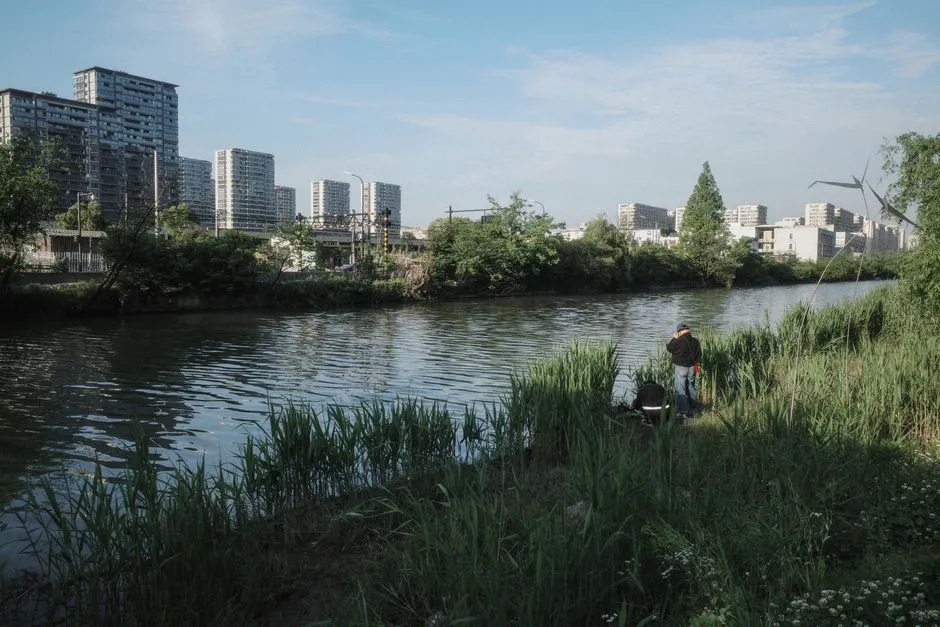
The compliance lifecycle is the chronological spine of the program, and every layer of the obligation maps onto one of its stages. In the pre-permit phase, the operator establishes baseline characterisation of the receiving river or stream, with reference stations upstream of any mining input and compliance stations downstream, so that any later change can be attributed to the mine rather than to background variability (SME, 2022). During operations, the mine must meet stringent water quality standards set by federal, state and local regulations, with monitoring and reporting throughout the operating life. At closure, financial assurance requirements have evolved to better accommodate the known costs of environmental cleanup, including any post-closure water treatment requirements, which can be significant and long-term (SME, 2022).
The Roșia Montană sampling design shows the level of detail expected of a defensible program. The team ran 14 sampling points across 5 rivers, sampled quarterly over one year, and analysed each sample for pH, dissolved oxygen, BOD5, COD, sulfate, Cd, Pb, Fe, Cu, Mn, As and Zn (Roșia Montană study, 2025). The BOD5 test follows the standard 5-day, 20 °C convention, calculated on an undiluted sample as BOD5 = m1 − m2 (mg/L), where m1 is the dissolved oxygen at sampling and m2 is the dissolved oxygen after five days — the same expression a compliance auditor will expect to see reproduced in a quality manual (Roșia Montană study, 2025). Practical guidance on how that result feeds into a wider BOD5 test method and reduction program is covered in BOD5 test method and reduction methods.
Matching Treatment Trains to the Contaminant Profile
Treatment selection should follow from the dominant contaminant family identified during baseline and operational monitoring, not from a generic equipment catalog. Source control comes first: liners and caps, subaqueous disposal of tailings, run-on and run-off diversion, leachate collection, and grout curtains or bulkheads in underground workings are all methods for limiting the reaction between water and mine wastes before any end-of-pipe stage is reached (SME, 2022). Active treatment trains — wastewater treatment plants with industrial reverse osmosis unit for dissolved metals and sulfate removal, aeration or clarification systems — are appropriate for sites with stringent discharge limits near receiving waters, while passive options such as engineered wetlands, reactive barriers and reactive drains are typically applied at historic and abandoned mine sites (SME, 2022).
Case evidence supports reactive-media units as one barrier inside a multi-stage train. In the Roșia Montană experiments, 15 g of natural zeolite (density 2.15–2.25 g/cm³, water absorption 16.21%, pre-washed and oven-dried at 100 °C for 24 h) reduced the Fe concentration in acidic mine water by roughly one-third to 175.5 mg/L within the first 15 minutes of contact at 300 rpm, using a 100 mL sample (Roșia Montană study, 2025). The table below maps each family to the unit processes that control it, and is the kind of artefact a supplier should be asked to populate site-specifically.
| Contaminant family | Source-control options | Active treatment unit processes | Passive / polishing options |
|---|---|---|---|
| Acid rock drainage | Subaqueous tailings disposal, liners and caps, grout curtains / bulkheads | Neutralisation, automatic chemical dosing skid for pH adjustment and coagulation, RO for dissolved metals and sulfate | Reactive barriers, zeolite sorption (15 g reduced Fe to 175.5 mg/L in 15 min, Roșia Montană study, 2025) |
| Sediment and suspended solids | Run-on / run-off diversion, erosion control on waste dumps | Lamella clarifier for pre-RO solids reduction in mine water trains, DAF, filtration | Engineered wetlands for TSS polishing |
| Processing chemicals (historic / artisanal) | Inventory control, isolated drainage of reagent-handling areas | Targeted oxidation, adsorption, RO polishing | Reactive drains for residual metals |
For small-to-mid mine water flows, an integrated JY water purification package for small-to-mid mine water flows can package clarification, dosing and filtration into a single skid, but the influent characterisation must still drive the sizing. A broader treatment-train comparison for sediment-heavy streams is in DAF vs clarifier selection for mining wastewater.
Selecting Equipment: What to Ask a Supplier Before You Specify
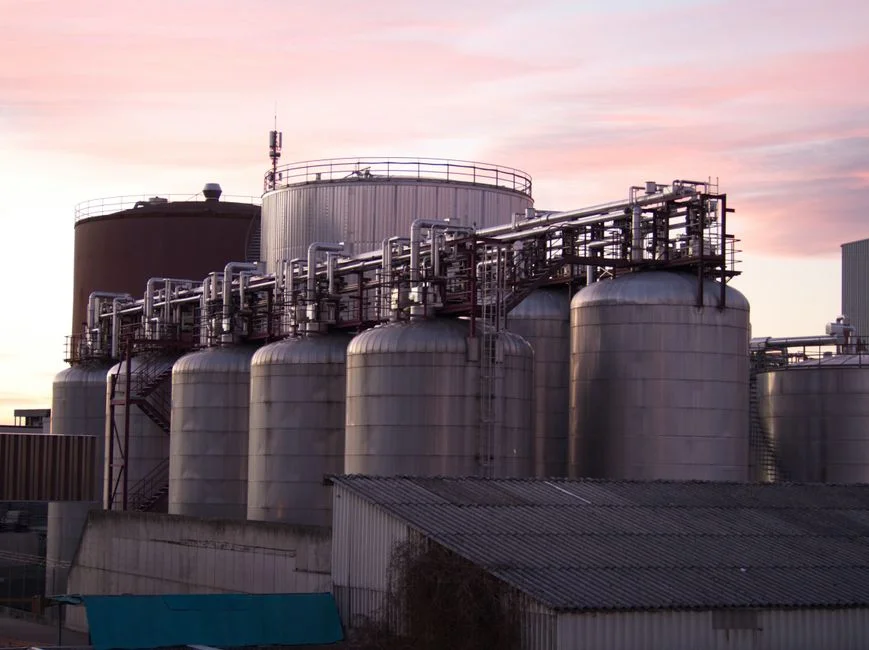
The fastest way to over-specify a treatment train is to size it against a generic "mine water" flow rate rather than against the receiving-water discharge limits. Ask the supplier to size the system against the contaminant profile developed during baseline and operational monitoring — influent characterisation drives design, not the reverse (SME, 2022). Confirm that the proposed train includes source-control components (liners, run-on/run-off diversion, subaqueous disposal) alongside end-of-pipe treatment, because bundling the two in a single scope routinely produces an inflated CAPEX that leaves the upstream reactions uncontrolled.
Request a monitoring and reporting scope aligned to the lifecycle — pre-permit baseline, operational and post-closure phases — so that the data trail covers the full record an auditor will want to walk. Require a financial-assurance view of the post-closure period, since the SME briefing explicitly notes that long-term water treatment liabilities can be significant and must be accommodated in closure cost estimates (SME, 2022). For industrial facilities, the same lifecycle logic underpins any industrial wastewater reuse compliance framework and applies equally to a riverside mine.
Frequently Asked Questions
What is the largest cost driver in a riverside mine water treatment train?
The SME briefing notes that post-closure water treatment requirements can be significant and long-term, and that financial assurance has evolved to accommodate those costs (SME, 2022). Buyers should request a post-closure treatment cost envelope from the supplier rather than a single CAPEX figure, and confirm that the financial-assurance calculation includes the long-term reagent and consumables spend.
How many sampling points and how often should a riverside mine monitor?
The Roșia Montană program ran 14 sampling points across 5 rivers, sampled quarterly over one year, with parameters pH, dissolved oxygen, BOD5, COD, sulfate, Cd, Pb, Fe, Cu, Mn, As and Zn (Roșia Montană study, 2025). Buyers should request a sampling plan from the supplier that pairs upstream reference stations with downstream compliance stations and a quarterly frequency at minimum, then have it endorsed by the permit writer.
What is the minimum performance evidence a zeolite or reactive-media polishing stage should demonstrate?
Performance evidence should be specific to the feed water it will see. The Roșia Montană study reports that 15 g of natural zeolite reduced Fe to 175.5 mg/L within 15 minutes at 300 rpm in acidic mine water (Roșia Montană study, 2025). Buyers should ask vendors for contact-time and dose curves on a sample of their own mine water, not generic removal percentages, before specifying the stage.
Which supplier-evaluation criteria most reduce compliance risk on a riverside permit?
The SME briefing frames the supplier's role as spanning source control, flow management and end-of-pipe treatment, and as covering the pre-mining, operating and post-mining phases (SME, 2022). Buyers should require the supplier to