
Why Pharmaceutical Effluent in Egypt Is a Different Problem
Pharmaceutical effluents in Egypt carry a hybrid signature — API traces, solvents, salts, detergents and cleaning residues whose composition shifts with product, raw materials and cleaning protocol, necessitating a hybrid treatment train (CondorChem, 2026). The World Health Organization has documented that a wide variety of pharmaceutical waste reaches the environment through manufacturing effluents, reinforcing the case for robust on-site treatment in regulated markets (CondorChem, 2026).
Egypt's API, formulation and vaccine manufacturing is concentrated around Cairo, Giza, 10th of Ramadan and 6th of Ramadan, where discharge to municipal or agricultural drains must meet the limits set by Law 4/1994 and Decree 44/2000, and reuse is increasingly expected under the national water-reuse strategy. Antibiotic-contaminated streams from regional API lines have been studied in advanced anaerobic digesters for biogas potential, confirming that real upstream pharma effluent in the Egypt region is both saline and refractory (Sigma Journal of Engineering and Natural Sciences). These drivers — water scarcity, concentrated manufacturing and a tightening regulatory envelope — make a generic global pharma treatment design insufficient for an Egyptian site.
Step 1: Map and Segregate the Effluent Streams
Source segregation is the gating decision that determines whether the rest of the train will work or fail, as certain streams directly compromise the biological reactor (CondorChem, 2026). The first task is to identify streams that can damage biomass: high-salinity scrubber purges, solvent-bearing mother liquors, API-rich concentrates, and cleaning or disinfection residues (CondorChem, 2026). Wash waters with primarily biodegradable organic matter are routed to the biological reactor, while concentrated, saline, toxic, inhibitory or poorly biodegradable streams are diverted to dedicated treatment (CondorChem, 2026). For high-purity recoverable solvents such as THF, methanol, ethyl acetate or DMSO, vacuum distillation is the preferred path; for mixed aqueous streams carrying solvents together with salts and APIs, vacuum evaporation is the appropriate volume-reduction step (CondorChem, 2026). Before any technology is selected, the engineer should build a waste-stream characterisation matrix covering flow, COD, BOD, salinity, TOC, API class and solvent fraction — that matrix, not a vendor brochure, drives the design.
| Stream class | Indicative composition | Biological compatibility | Preferred treatment route |
|---|---|---|---|
| Equipment/rinse wash water | Low COD, biodegradable organics | Compatible | Equalisation → biological |
| Sanitiser / CIP residue | Detergents, residual APIs | Variable, can shock biomass | Equalise separately; AOP polishing if needed |
| Mother liquor / API concentrate | High COD, solvents, API traces | Inhibitory | Vacuum evaporation → AOP / adsorption |
| Scrubber purge / saline stream | High conductivity, salts | Inhibitory to nitrifiers | Vacuum evaporation; reject to crystalliser |
| Solvent-rich stream | THF, methanol, EtOAc, DMSO | Severe inhibition at moderate load | Vacuum distillation for recovery |
Step 2: Biological Treatment of the Biodegradable Fraction
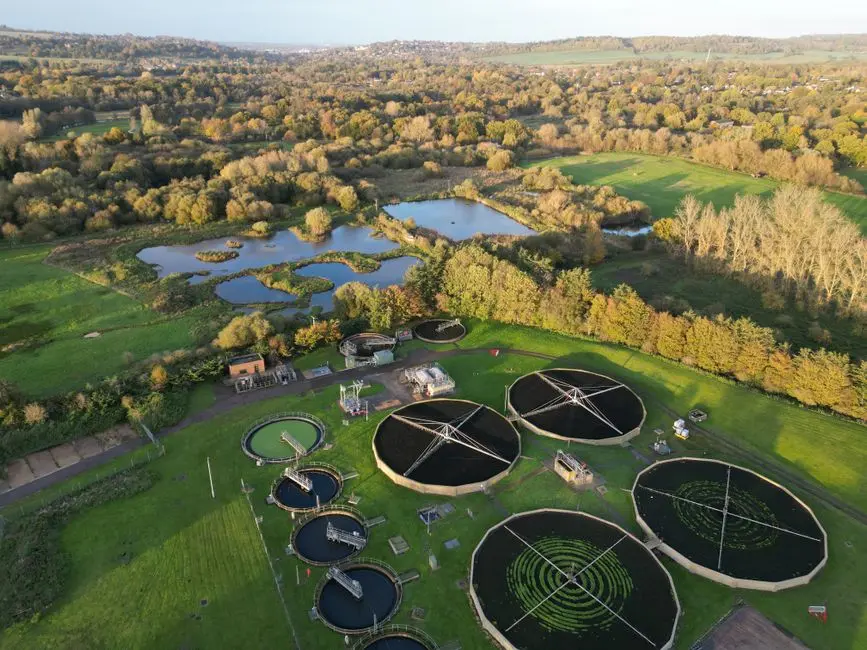
Biological treatment remains the most economical route for the biodegradable organic fraction, and the available reactor types provide the engineer with specific options rather than a single default (CondorChem, 2026). Activated sludge, moving bed biofilm reactor (MBBR), anaerobic reactors and microcontaminant-targeted processes are all applied to pharmaceutical streams (CondorChem, 2026). MBR delivers near-reuse-quality permeate with a smaller footprint than conventional activated sludge, and case studies in southern Taiwan demonstrate MBR applicability to pharmaceutical streams (Academia review, 2014). High-ammonia chemical-synthesis pharmaceutical wastewater has been treated successfully with partial nitritation/denitrification and SBA-ANAMMOX (Academia review, 2014). MBBR offers resilience to the load swings typical of batch pharma campaigns, and SBR gives operational flexibility for small-to-mid Egyptian plants with intermittent discharge. For a flow with a high ammonia or salinity risk, an MBR membrane bioreactor fitted with a PVDF flat sheet MBR module typically provides the best balance between footprint, effluent quality and biological stability.
| Reactor type | Best-fit condition | Footprint | Effluent quality | Notes for Egyptian plants |
|---|---|---|---|---|
| Conventional activated sludge | Steady biodegradable load, low salinity | Large | Discharge quality | Limited buffer against batch swings |
| MBBR | Variable hydraulic and organic load | Medium | Discharge quality | Resilient to short-term toxicity spikes |
| SBR | Intermittent, small-to-mid flow | Small–medium | Discharge / partial reuse | Flexible cycle programming |
| MBR | Reuse target, tight footprint | Small | Reuse-quality permeate | Case-validated on pharma streams (Taiwan, 2014) |
| Anaerobic (UASB / hybrid) | High-COD warm streams | Small (volume) | Needs polishing | Biogas recovery; regional case data exists (Sigma Journal) |
Step 3: Polishing Refractory APIs with Advanced Oxidation
Advanced Oxidation Processes (AOP) are the right tool when the remaining COD is refractory, because hydroxyl radicals (•OH) generated from combinations of O₂, H₂O₂, O₃, UV or catalysts break down persistent molecules into simpler, more biodegradable species, with final oxidation products typically being water, CO₂ and lower-impact compounds (CondorChem, 2026). Fenton processes — iron salts combined with H₂O₂ under controlled pH, temperature and residence time — are the most common AOP applied to pharmaceutical effluents (CondorChem, 2026). The cost-control principle is to use AOP to raise the biodegradability of the recalcitrant fraction so that a downstream biological step finishes the work, rather than attempting full mineralisation with chemical reagents (CondorChem, 2026). The primary AOP targets in an Egyptian API plant are APIs, antibiotics and microcontaminants with low biodegradability and inhibitory effects on biomass; positioning AOP between primary biological treatment and a polishing step keeps reagent consumption proportionate to the recalcitrant load.
| AOP variant | Oxidant / energy input | Best-fit target | Operating constraint |
|---|---|---|---|
| Fenton (Fe²⁺/H₂O₂) | Iron catalyst + H₂O₂ | Refractory COD, antibiotic traces | Strict pH window (~3) and iron sludge handling |
| Photo-Fenton / UV-Fenton | Fenton + UV | Lower-iron residual, faster •OH yield | UV lamp maintenance, energy |
| O₃ / H₂O₂ | Ozone + peroxide | APIs and colour bodies | Off-gas destruction, ozone generator power |
| UV / H₂O₂ | UV + peroxide | Trace microcontaminants | UV transmittance of effluent critical |
| Catalytic wet peroxide oxidation | Catalyst + H₂O₂ | Concentrated refractory streams | Catalyst life, reagent recovery |
Step 4: Concentrate Saline and Refractory Streams with Vacuum Evaporation
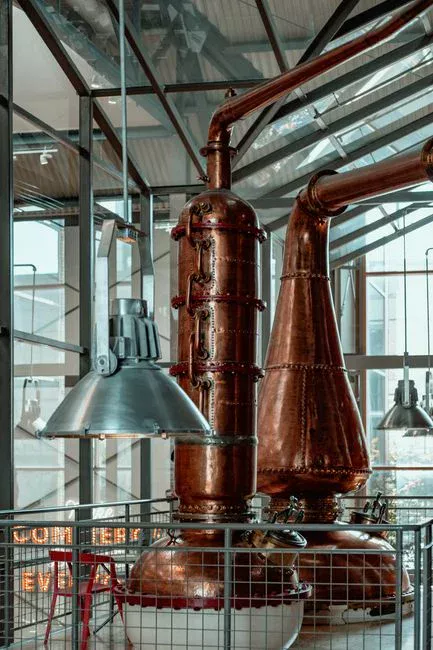
Vacuum evaporation is the dedicated step for streams the biological reactor cannot safely accept, as operating under reduced pressure lowers the boiling point of water, cutting energy use and protecting heat-sensitive APIs (CondorChem, 2026). Dissolved salts cannot be removed biologically and, when they accumulate, they depress biomass activity; evaporation separates water from the saline stream and concentrates salts in the reject, isolating the biological reactor from conductivity spikes (CondorChem, 2026). APIs and microcontaminants are concentrated in a much smaller volume, which simplifies their subsequent management by adsorption, advanced oxidation, crystallisation or specialised filtration (CondorChem, 2026). Where process economics allow, the concentrate can also yield recovered APIs, solvents or raw materials that retain value for reuse within the plant. A PLC-controlled chemical dosing system stabilises pH and reagent feed upstream of the evaporator, and a chlorine dioxide generator positioned after evaporation handles residual microbial load before the distillate is returned to service water.
Treatment Train Comparison for an Egyptian Pharma Plant
Three realistic train options cover the procurement decision space, and the right choice depends on the share of segregated high-salinity, solvent and API streams. Option A — MBR-only — is the lowest-CAPEX path, suited to plants with predominantly biodegradable effluent and direct discharge to a compliant sewer, with limited API polishing (CondorChem, 2026; Academia review, 2014). Option B — MBR with Fenton/AOP polishing — balances CAPEX and OPEX, raises the biodegradability of refractory APIs, meets stricter discharge limits and produces reuse-quality permeate (CondorChem, 2026). Option C — full segregation plus biological, AOP and vacuum evaporation — has the highest CAPEX but the lowest waste volume, enables distillate reuse and isolates the biological reactor from saline and API shocks, which aligns directly with Egypt's water-scarcity push (CondorChem, 2026). The decision rule is simple: a high share of segregated high-salinity/solvent/API streams justifies Options B or C; a low share allows Option A. For cross-stream polishing, a UV steriliser handles residual microbial load and a high-efficiency sedimentation tank upstream protects the biological stage; for a full liquid-recovery envelope, a ZLD plant buyer's guide frames the evaporation-to-crystallisation tail.
| Option | Train scope | CAPEX position | Discharge outcome | Reuse outcome | Best fit |
|---|---|---|---|---|---|
| A — MBR-only | Segregation → equalisation → MBR → disinfection | Lowest | Compliant sewer discharge | Limited permeate reuse | Predominantly biodegradable effluent |
| B — MBR + Fenton/AOP | Adds Fenton/UV-H₂O₂ between biological and polishing | Mid | Stricter limits met reliably | Reuse-quality permeate | Mixed API/formulation lines |
| C — Full segregation + biological + AOP + vacuum evaporation | Adds evaporation for saline and refractory streams | Highest | Exceeds compliance envelope | Distillate + permeate reused on site | High saline / solvent / API share, water-stressed site |
Designing for Reuse and Compliance in Egypt

The engineering case closes by tying every technology choice to local discharge rules, reuse targets and reproducible operation. The design envelope should align with Egyptian discharge requirements for COD, BOD, TSS, pH, residual chlorine and heavy metals, and with any holding-tank or sewer-agreement constraints imposed by the local authority. PLC-controlled chemical dosing, online monitoring and a sludge-dewatering stage keep O&M reproducible across shifts, which matters in a batch pharmaceutical operation where feed swings are the norm. The recovered distillate from evaporation, combined with MBR permeate, can be redirected to cooling-tower makeup, boiler feed (after polishing) or CIP rinse, reducing freshwater draw in water-stressed governorates. Disinfection — through a plate and frame filter press for sludge handling and an industrial RO system for high-purity reuse polishing — must be positioned after biological and AOP polishing to handle residual microbial load before water is returned to service. For broader regional context on arid-climate ETP design, the ETP design guide for arid regions and a wastewater treatment plant cost breakdown help benchmark the CAPEX conversation that procurement will raise next.
Frequently Asked Questions
What is the best treatment sequence for pharmaceutical wastewater in Egypt?
Segregate saline, solvent and API-rich streams at source; biologically treat the biodegradable fraction with MBR, MBBR or activated sludge; polish refractory APIs with Fenton or another AOP; and concentrate any remaining high-salinity or high-COD streams with vacuum evaporation so the distillate
Frequently Asked Questions
What is the best treatment process for pharmaceutical wastewater in Egypt?
The most effective treatment configuration for pharmaceutical wastewater in Egypt follows a multi-stage approach: preliminary screening, followed by biological treatment using Membrane Bioreactors (MBR) for organic load removal, and tertiary treatment utilizing Advanced Oxidation Processes (AOP) such as Fenton’s reagent or UV/H2O2. This sequence is necessary to address the high Chemical Oxygen Demand (COD) typically ranging from 2,000 to 10,000 mg/L and to neutralize recalcitrant Active Pharmaceutical Ingredients (APIs) that standard biological systems fail to degrade.
Is MBR alone enough to treat pharmaceutical effluent, or do I also need AOP and evaporation?
MBR alone is insufficient for pharmaceutical effluent because it cannot effectively degrade complex synthetic organic compounds and persistent APIs. While MBR provides excellent suspended solids removal and high-quality permeate, AOP is required to break down molecular structures that are toxic to bacteria or resistant to biodegradation. Evaporation (specifically Zero Liquid Discharge or ZLD systems) is only mandated if the effluent contains high concentrations of Total Dissolved Solids (TDS) exceeding Egyptian Ministry of Environment discharge limits or if the facility operates in a zero-discharge industrial zone.
How much does a pharmaceutical wastewater treatment plant cost in Egypt in 2026?
For 2026, the capital expenditure (CAPEX) for a pharmaceutical wastewater treatment plant in Egypt typically ranges from 15,000 to 25,000 EGP per cubic meter of daily capacity, depending on the complexity of the AOP system and the level of automation required. Operational expenditure (OPEX) is estimated between 25 and 45 EGP per cubic meter, driven primarily by electricity consumption for membrane aeration and the cost of chemical oxidants and membrane cleaning agents.
How do I size an MBR for a small to mid-sized Egyptian pharma plant?
Sizing an MBR requires calculating the average daily flow rate and the maximum organic loading rate (F/M ratio). For most pharmaceutical plants, a design Flux rate of 15 to 25 LMH (Liters per Square Meter per Hour) is standard. You must account for a peak peaking factor of 1.5 to 2.0 to ensure the membrane surface area can handle hydraulic surges without fouling, while maintaining a Mixed Liquor Suspended Solids (MLSS) concentration between 8,000 and 12,000 mg/L to optimize biological degradation efficiency.
Can treated pharmaceutical wastewater be reused for cooling towers or boiler feed in Egypt?
Yes, treated pharmaceutical wastewater can be reused for non-potable applications like cooling towers or boiler feed, provided it undergoes additional polishing. For cooling towers, the permeate must meet Langelier Saturation Index (LSI) stability requirements to prevent scaling. For boiler feed, the MBR-AOP effluent must be further processed through Reverse Osmosis (RO) and Ion Exchange to reduce conductivity and silica levels to below 0.5 mg/L, complying with Egyptian reuse standards for industrial process water.