
Why pretreatment starts at the POTW, not the plant
Under Clean Water Act section 402(b)(8), a state-authorized NPDES program must require every POTW it covers to operate a pretreatment program that ensures compliance with section 307(b) pretreatment standards by significant industrial users discharging into the sewer. That single sentence is the reason an Omaha-area petroleum bulk plant does not negotiate a number with EPA — it negotiates a number with the city of Omaha's Papillion Creek or Missouri River Water Resource Center, or with whatever Nebraska satellite POTW owns the receiving manhole.
The methodology the POTW uses to derive that number sits in EPA's 2015 Local Limits Development Guidance (epa.gov/sites/default/files/2015-10/documents/final_local_limits_guidance.pdf, 134 pages), which the agency prepared to help municipalities implement the requirements of 40 CFR 122, 123, 124, and 403 (Local Limits Development Guidance, EPA, 2015). EPA's guidance is not a regulation — the document is explicit on that point — but it is the de facto methodology POTWs follow when they calculate a Maximum Allowable Headworks Loading (MAHL) and then allocate a Maximum Allowable Industrial Loading (MAIL) to each significant industrial user. The permit ceiling a bulk plant designs against is therefore the local limit the controlling POTW writes into the SIU permit, not a categorical number in 40 CFR Part 419 or 421.
The pretreatment hierarchy a bulk plant actually faces
Four regulatory layers stack on top of each other, and only one of them usually shows up on the engineer's desk as a number with units.
- Layer 1 — National categorical standards at 40 CFR Part 419 (petroleum refining) and Part 421 (lubricating oils and greases). These apply to bulk plants that cross categorical throughput thresholds. Many small bulk storage and loading terminals sit below those thresholds and operate as non-categorical SIUs, but they are still SIUs if the controlling POTW classifies them as significant.
- Layer 2 — General and specific prohibitions under 40 CFR 403.5. These cover oils and grease, flammable materials, and slug discharges, and they apply to every industrial user regardless of category status (NACWA, 2017).
- Layer 3 — Local limits developed under 40 CFR 403.5(c). These protect the POTW from pass-through, interference, worker exposure, and collection-system damage. The 2015 guidance groups them into chemical-specific limits, additional specific prohibitions, BMPs, and case-by-case discharge limits (EPA, 2015).
- Layer 4 — Site-specific SIU permit conditions. Monitoring frequencies, slug-control plans, and reporting requirements are how the local limit becomes an enforceable daily number on the discharge monitoring report.
The 1996 UST-cleanup model permit that EPA Region 6 proposed for Texas, Louisiana, Oklahoma, and New Mexico (Federal Register Vol. 61, No. 141, July 22, 1996) shows the same hierarchy in action: benzene 5 µg/L, total BTEX 100 µg/L, total petroleum hydrocarbons 15 mg/L, polynuclear aromatic hydrocarbons 10 µg/L for non-gasoline streams, lead 50–250 µg/L by state, and pH 6.0–9.0 (Texas, Louisiana, New Mexico) or 6.5–9.0 (Oklahoma). Those are NPDES limits, not local limits, but the pollutant set is the same set a 2026 bulk plant's POTW-derived local limit is built around.
Pollutants that drive the design of a bulk-plant treatment train
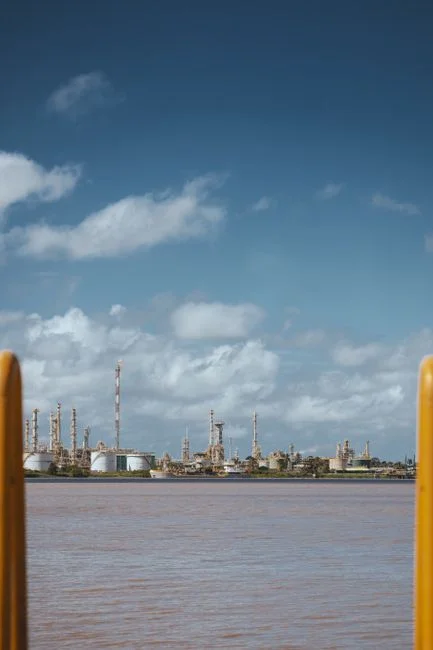
The pollutant set that sizes equipment is not the categorical table; it is the receiving POTW's local-limit list, anchored in the parameters EPA has historically regulated for petroleum streams.
| Parameter class | Parameters of concern | Anchoring reference value | Source |
|---|---|---|---|
| Volatile / semi-volatile organics | Benzene, toluene, ethylbenzene, xylene, total BTEX, TPH, PAH | Benzene 5 µg/L; total BTEX 100 µg/L; TPH 15 mg/L; PAH 10 µg/L (non-gasoline streams) | Federal Register, 1996-07-22 (TXG830000 model permit) |
| Conventional pollutants | Oil & grease, pH, TSS, BOD, ammonia, fecal coliform | pH 6.0–9.0; oil and grease listed as a conventional pollutant in CWA section 301(b)(1)(E) | Federal Register, 1996-07-22; CWA §301(b)(1)(E) |
| Metals | Lead (and any other metals the POTW's screening flags above the 50% WQC / 25% inhibition cut-offs) | Lead 50–250 µg/L depending on state | Federal Register, 1996-07-22 (TX/LA/NM model permits) |
| Site-specific POCs | Chloride, sulfate, ammonia, antifreeze indicators | Set by the receiving POTW based on its own headworks and sludge data | EPA Local Limits Guidance, 2015 |
Conventional pollutants are the bulk plant's signature problem. The CWA section 301(b)(1)(E) listing in the 1996 Federal Register notice names pH, BOD, oil and grease, TSS, and fecal coliform as the five conventional pollutants subject to BCT-based limits, and EPA's local-limits screening thresholds treat oil and grease exactly the way they treat BOD and TSS — a Maximum Allowable Headworks Loading is calculated for it just like any other POC (EPA, 2015). A bulk plant's local-limit conversation is therefore not just about benzene and BTEX; it is also about an oil-and-grease ceiling that the receiving POTW will write into the SIU permit as a daily-maximum number. The 1996 model limit is a useful upper-bound reference, but the actual oil-and-grease number a 2026 bulk plant designs to is whatever the controlling Omaha-area POTW has derived under its current approved local-limits evaluation.
How a local limit actually gets written into a number on your permit
The MAHL → MAIL → permit-limit chain is a five-step process the EPA guidance documents in detail and that the 2017 NACWA training walks through step by step. The relevant steps, condensed for an operations audience:
- Step 1 — POTW identifies pollutants of concern. A screening scan flags a pollutant as a POC if the maximum POTW effluent concentration exceeds 50% of the effluent limit based on water quality criteria, the maximum sludge concentration exceeds 50% of applicable sludge criteria, the maximum influent grab sample exceeds 50% of the inhibition threshold, the maximum influent 24-hour composite exceeds 25% of the inhibition threshold, or the influent concentration (adjusted for receiving-stream dilution) exceeds water quality criteria (NACWA, 2017).
- Step 2 — POTW collects samples. Twenty-four-hour flow-proportional composites are the most representative sample type for non-volatile POCs; grabs are required for volatiles and pH. POTW samples the headworks, the collection system, and individual industrial users (EPA, 2015).
- Step 3 — POTW calculates removal efficiencies. For BOD and TSS, the approval authority typically directs the pretreatment coordinator to use POTW design criteria rather than the pass-through NPDES removal calculation; for metals, detection-limit discipline matters — a ½-DL substitution on a single non-detect in one NACWA chromium example changed the calculated removal efficiency from 54.5% to 82% (NACWA, 2017).
- Step 4 — POTW sets the MAHL. Effluent-quality-based, sludge-quality-based, inhibition-based, and air-quality-based Allowable Headworks Loadings are calculated for each POC, and the most stringent of the four is selected as the MAHL (EPA, 2015).
- Step 5 — POTW calculates the MAIL. Uncontrollable sources and hauled-waste loadings are subtracted from the MAHL, a safety factor and a growth allowance are applied, and the resulting MAIL is allocated across SIUs through chemical-specific permit limits, BMPs, and case-by-case discharge limits under 40 CFR 403.5(c)(4) (NACWA, 2017; EPA, 2015).
The 1996 Federal Register benzene and BTEX values are not the MAIL — they are the NPDES permit effluent limits EPA set in the model permit for a different universe of discharges. The MAIL is the number on your SIU permit, derived using the methodology above, and it can be more or less stringent than the 1996 model depending on the POTW's dilution, headworks loadings, and removal efficiencies.
Where the wastewater actually comes from in a bulk plant
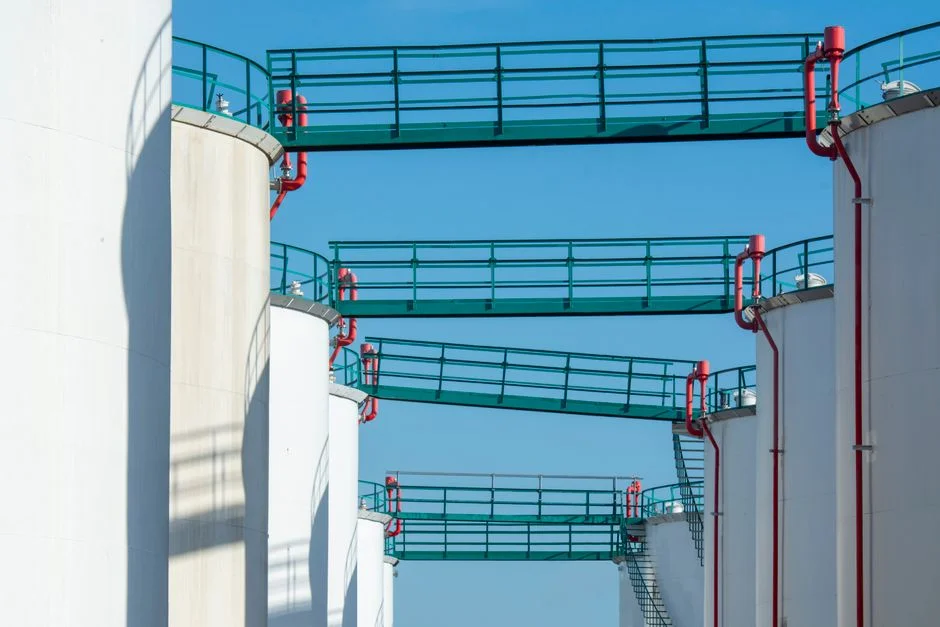
Each wastewater stream on a bulk plant hits a different rule. Tank-bottom draw and periodic tank cleaning are the largest contributors of oil and grease and TPH to the headworks — the 1996 UST-cleanup model permit was written for exactly this material, and the pollutant set EPA chose (benzene, BTEX, TPH, lead, PAH) reflects what tank-bottom water actually contains. Hydrostatic test water and truck-loading-area washdown are episodic, high-volume streams that carry hydrocarbons plus detergent residues; episodic flows are what a slug-control plan is designed to capture, and a 40 CFR 403.5(c)(4) BMP from the receiving POTW may set equalization or diversion requirements on them. Stormwater from the tank farm is generally not a sewer discharge, but it becomes one if it contacts petroleum-contaminated surfaces and is routed to the sanitary sewer — confirm routing with the local POTW before assuming storm stays out of the SIU permit. API/CPI separator effluent, glycol coolant water, and boiler blowdown (if discharged) round out the categorical and conventional pollutant load, and the BOD/TSS contribution from glycol-bearing streams is what often drives the conventional side of the local-limit conversation at a petroleum terminal that also stores or handles antifreeze.
Equipment chain that gets a bulk plant under the local limit
The equipment chain maps directly to the pollutant list in the previous section. Each stage removes something different, and the local limit cannot be hit without the full chain.
| Stage | Equipment | Target pollutant(s) | Role in the local-limit chain |
|---|---|---|---|
| Front end | Rotary mechanical bar screen | Rags, debris | Protects downstream oil–water separation from re-emulsification; supports the 40 CFR 403 general-prohibition duty to protect the collection system |
| Primary separation | API or corrugated-plate interceptor (CPI) | Free oil | Removes the bulk of free oil; sized on the API 421 / Manual on Disposal of Refinery Wastes basis; rarely alone meets a modern oil & grease local limit |
| Secondary separation | Dissolved air flotation (DAF) with coagulant + flocculant dosing | Emulsified oil, FOG, TSS | Breaks emulsions and lifts FOG; the stage that takes oil & grease from typical separator effluent into the range the local limit expects |
| Polishing | Multi-media filtration + carbon adsorption | Residual TSS, residual BTEX | Final barrier to meet chemical-specific BTEX and TSS limits before the 24-hour flow-proportional sampler |
| pH trim | Chemical dosing system for acid/caustic trim | pH | Holds the 6.0–9.0 range required by the 1996 model and most POTW permits |
A rotary mechanical bar screen at the front end prevents debris from re-emulsifying oil downstream — without it, the API separator's oil-removal efficiency drops measurably, and that loss propagates through the rest of the chain. A DAF system with an automatic chemical dosing system is the workhorse of the secondary stage: the coagulant-and-flocculant package is what drops oil and grease into the range the receiving POTW expects, because API-separator effluent alone typically does not meet a modern oil-and-grease local limit. A multi-media filter handles residual TSS and protects the carbon stage that polishes residual BTEX. The same chain is the reference configuration in the DAF vs clarifier guide for petroleum wastewater and is laid out in equipment form for a different geography in the Carthage refinery pretreatment guide; the equipment selection is the same, the local limit it has to hit is what changes by receiving POTW.
Slugs, BMPs, and the paperwork that decides whether you pass an inspection
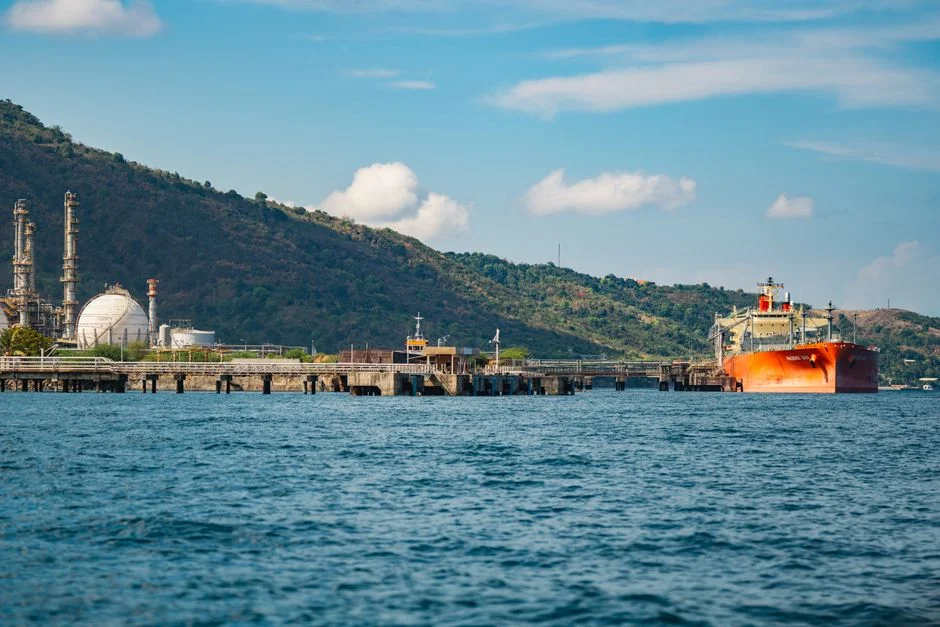
Compliance at a bulk plant is half equipment, half paperwork, and the paperwork half is what an inspector actually reads. The slug-control plan required by 40 CFR 403.5(c)(4) defines what a slug is for the facility — typically any discharge that could cause pass-through or interference — and documents the equalization or diversion used to keep a tank-bottom dump or a hydrostatic-test release from hitting the headworks as a single slug load. The BMPs the local POTW may layer on top under the same rule include spill containment at the loading rack, drip pans at valves, weekly API-separator inspections, and operator training logs. Detection-limit discipline is the third leg: a ½-DL substitution on a single non-detect in a NACWA chromium example changed the calculated removal efficiency from 54.5% to 82% (NACWA, 2017), so a permit holder should know the laboratory's MDLs and insist on 24-hour flow-proportional sampling for non-volatiles. Finally, reporting — DMRs on the SIU permit cycle, accidental-discharge notifications within 24 hours, and an annual POTW self-monitoring report that ties the previous year's monitoring back to the MAHL — is what turns a working treatment train into a passing inspection.
Frequently Asked Questions
What is the actual pretreatment limit a 2026 Omaha-area bulk plant has to hit?
The limit is the local limit the controlling POTW — the City of Omaha's Papillion Creek or Missouri River Water Resource Center, or the relevant Nebraska satellite POTW — has derived under 40 CFR 403.5(c) and written into the SIU permit. The methodology is in EPA's 2015 Local Limits Development Guidance (epa.gov, 134 pages), and the pollutant set is anchored in the 1996 UST-cleanup model permit for petroleum streams (benzene 5 µg/L, total BTEX 100 µg/L, TPH 15 mg/L, pH 6.0–9.0; PAH 10 µg/L for non-gasoline streams; lead 50–250 µg/L by state). To get the actual number, request the current local-limits evaluation and the draft or active SIU permit from the controlling POTW — those documents are the only authoritative source for the limit on your permit.
How much does it cost to bring a bulk plant's treatment train under a typical oil-and-grease local limit?
Capital cost depends on flow rate, influent oil and grease, target oil and grease, and the level of equalization and automation the POTW's BMPs require. There is no published unit cost for a generic Omaha bulk plant in the research, and the right input to request from a supplier is a sized proposal — flow rate (gpm), influent oil and grease (mg/L), target oil and grease (mg/L from the SIU permit), and a P&ID that includes the rotary mechanical bar screen, API or CPI separator, DAF system with chemical dosing, multi-media filter, carbon polisher, and pH trim. The same input set is what the supplier needs to produce a defensible quote.
How do I pick a supplier for an API separator / DAF / polishing chain for a petroleum terminal?
Ask the supplier for three things in writing: (1) a unit-process performance guarantee on the DAF effluent oil and grease that is tied to the SIU permit number, not a generic range; (2) a reference list of petroleum terminals or refineries with operating DAF units on similar feed; and (3) a detection-limit and sampling-protocol statement consistent with EPA's 2015 guidance (24-hour flow-proportional composites for non-volatiles, grabs for volatiles and pH). Suppliers that cannot produce all three should be screened out, because the permit conversation with the controlling POTW will eventually turn on those three documents.
What is the biggest compliance risk a bulk plant SIU faces in 2026?
The biggest risk is not equipment failure — it is paperwork failure combined with a slug event. A slug-control plan that is on paper but not exercised, a sampling program using grabs instead of 24-hour flow-proportional composites for non-volatiles, or a laboratory MDL that inflates a removal-efficiency calculation (NACWA's 2017 chromium example showed a single ½-DL substitution moving removal from 54.5% to 82%) can each turn a passing DMR into a violation. The defensible position is a working slug plan, the right sample type for each analyte, and a written chain-of-custody for the MDLs the lab is actually achieving.