What 40 CFR Part 403 Actually Requires of a Chemicals Plant
The City of Middletown, NY administers a 40 CFR Part 403 Industrial Pretreatment Program put in place by a USEPA Administrative Order issued on 26 September 2013, and the same regulatory architecture governs any chemicals plant whose discharge enters the city's 8.5 mgd wastewater treatment plant at 159 Dolson Avenue (Middletown NY Pretreatment Program SOP, S2, Section 1.1). Under that program an Industrial User is any non-domestic discharger, while a Significant Industrial User is defined in the Town of Middletown, VA sewer ordinance — language commonly mirrored by the Middletown, NY program — as a user discharging 25,000 gallons or more of process wastewater per average work day, contributing a process stream greater than 5% of the POTW's average dry weather hydraulic or organic capacity, or having reasonable potential to cause pass-through or interference (Town of Middletown, VA Sewer Use Ordinance, S3).
Three regulatory layers apply simultaneously and the most stringent controls. First, national categorical pretreatment standards in 40 CFR Parts 405–471 set industry-specific effluent limits for organic and inorganic chemical manufacturing subcategories. Second, local limits derived from the POTW's own VPDES or NPDES permit address pollutants that could pass through or interfere at the receiving plant. Third, general prohibitions cover pass-through, interference, fire or explosion hazard, corrosive discharge, and toxic gases that endanger POTW workers, and a separate Town ordinance language — also enforced in the Middletown, NY program — sets a 5%/10% lower explosive limit (LEL) ceiling at the discharge point and a 104°F temperature cap (Town of Middletown, VA Sewer Use Ordinance, S3).
Notification crosses the Clean Water Act boundary. The SOP requires the Commissioner to notify IUs of applicable standards and of requirements under Sections 204(b)1 and 405 of the Clean Water Act and Subtitles C and D of the Resource Conservation and Recovery Act, so a chemicals plant's discharge profile is shared between pretreatment and hazardous-waste regulators (Middletown NY SOP, S2, Section 2.2.3). National categorical standards and the general prohibitions are non-negotiable; local limits are negotiable within the envelope of the POTW's own discharge permit.
The Middletown Permit Lifecycle in 2026
Identification starts when the City distributes a Commercial/Industrial Wastewater Discharge Questionnaire to every non-domestic discharger; categorical applicability is then screened against the City's local limits and Discharge Screening Levels held in Appendix C of the SOP (Middletown NY SOP, S2, Section 2.2.2). After the application is deemed administratively complete, the Commissioner has 30 days to issue or deny the individual permit, and the permit is capped at 5 years and non-transferable without prior notice and a copy of the existing control mechanism to the new owner (Middletown NY SOP, S2, Section 2.2.4.3).
Sampling frequency is keyed to discharge variability: 2 per year for consistent discharges and 4 per year for variable discharges, with a reduced frequency of once every three years or the permit life (whichever is less) for pollutants believed absent (Middletown NY SOP, S2, Section 2.2.3). A Slug Discharge Control Plan is mandatory for any SIU and must describe non-routine batch discharges, stored chemicals, immediate notification of the Deputy Commissioner, and prevention procedures per 40 CFR 403.8(f)(2)(vi)(D) (Middletown NY SOP, S2, Section 2.2.4.3).
| Lifecycle step | Authority | Time bound | Triggering reference |
|---|---|---|---|
| IU identification & questionnaire | City / Deputy Commissioner | Continuous inventory | 40 CFR 403.8(f)(2)(i); SUO §389-44 |
| Categorical screening vs. local limits & DSLs | Deputy Commissioner | Before permit issuance | SOP §2.2.3; Appendix C |
| Permit issuance / denial | Commissioner of Public Works | 30 days from administratively complete application | SOP §2.2.4.3 |
| Permit term | City | ≤ 5 years; non-transferable without notice | SOP §2.2.4.3 |
| Routine self-monitoring | IU | 2/yr (consistent) or 4/yr (variable) | SOP §2.2.3 |
| Absent-pollutant confirmation | IU | Once per 3 years or permit life | SOP §2.2.3 |
| Slug Discharge Control Plan | SIU | Active for permit term | 40 CFR 403.8(f)(2)(vi)(D); SOP §2.2.4.3 |
| SNC evaluation | City | Rolling 6-month window | 66% chronic / 33% TRC; SOP §2.2.4.3 |
Significant Noncompliance (SNC) bites at two thresholds evaluated over a 6-month window: a chronic violation defined as 66% of measurements of the same pollutant exceeding the Pretreatment Standard or Requirement, and a Technical Review Criteria (TRC) violation defined as 33% of measurements exceeding the standard multiplied by the applicable TRC value (Middletown NY SOP, S2, Section 2.2.4.3). Missing a compliance schedule milestone by 90 days, or a reporting milestone by 30 days, also lands the IU in SNC.
Pretreatment Technology Map for a Chemicals Plant
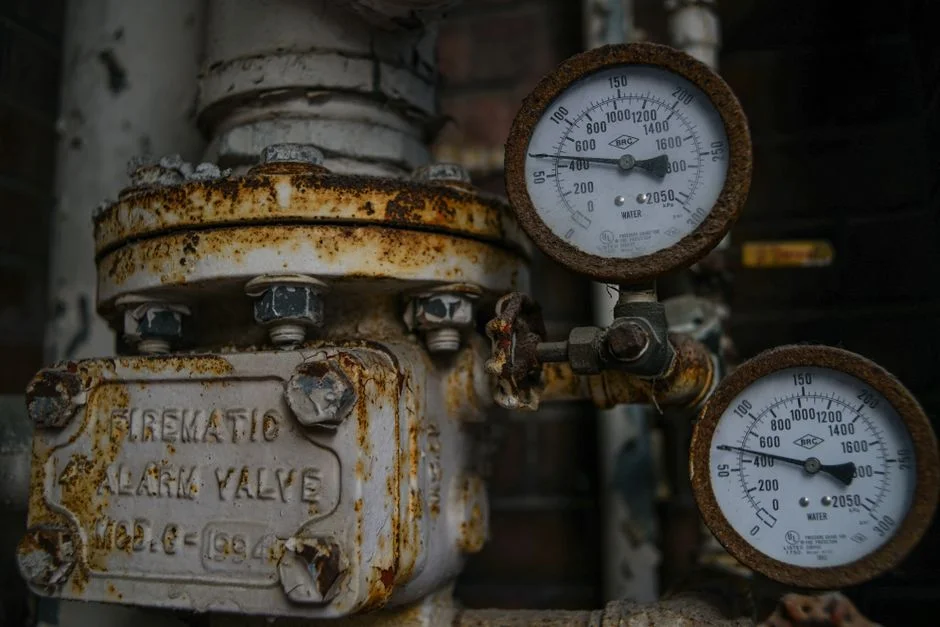
Equalization comes first. A buffered equalization basin dampens batch pH and flow swings before they reach biological treatment, and the SOP's 104°F discharge ceiling means cooling or blending capacity must be sized to worst-case exothermic streams (Town of Middletown, VA Sewer Use Ordinance, S3). Flow and load equalization buys the rest of the train the residence time it needs to absorb the slug events the Slug Discharge Control Plan is designed to prevent.
Oil, grease, and FOG removal is the workhorse stage for free and emulsified oils from batch reactors, lubricant leaks, and condensate streams; skimmings are handled separately so the load does not shift onto the secondary system. Targeted destruction of categorical pollutants follows: alkaline chlorination for cyanide, sulfur dioxide or ferrous sulfate reduction for hexavalent chrome, sulfide stripping or oxidation, and solvent recovery or distillation for organic loads that would otherwise pass through the biological step. Biological polishing handles residual BOD/COD once the toxic categorical pollutants are knocked down; the choice of MBR versus conventional activated sludge trades footprint and membrane cost against sludge age tolerance to inhibitory spikes. A MBR system for biological polishing lets the plant hold a longer sludge age that absorbs variability, while a conventional train needs more equalization volume up front. Polishing closes the loop with a lamella clarifier for solids separation, multi-media filtration where residual TSS matters, and a plate-and-frame sludge dewatering press sized to the hauled-sludge profile so the cake stays inside RCRA Subtitle D non-hazardous criteria. A DAF system for oil and FOG removal sits between equalization and the categorical destruction step, and a PLC-controlled chemical dosing skid carries the pH, reductant, and coagulant loads. Discharge-side safety — the 5%/10% LEL rule and 104°F cap — is enforced at the discharge point itself, so vent capture and temperature interlocks belong on the discharge header, not only inside the process. Readers working through biological train selection can compare the options in our MBR vs CAS comparison for chemicals wastewater, while a parallel petroleum plant pretreatment compliance playbook shows how a related refining train maps to slug-control rules. Air emissions from reactors and scrubber outlets are covered separately in our industrial scrubber selection for chemical plants.
| Pollutant / concern | Typical chemicals-plant source | Unit operation | Permit citation that triggers the limit |
|---|---|---|---|
| pH excursion | Acid / alkaline batch dumps, cleaning | Equalization with pH adjustment via chemical dosing | General prohibitions; local limits DSLs (SOP §2.2.3) |
| Oil & grease / FOG | Lubricants, condensate, batch reactors | DAF, skimming, oil/water separation | General prohibitions; SOP §2.2.3 DSLs |
| Cyanide | Electroplating, organic synthesis | Alkaline chlorination | 40 CFR 405–471 categorical standard as applicable |
| Hexavalent chromium | Chrome plating, pigment manufacture | SO₂ or ferrous sulfate reduction + precipitation | 40 CFR 405–471 categorical standard as applicable |
| Sulfides | Sulfur chemistry, anaerobic sidestreams | Stripping or oxidation | Local limits DSLs; pass-through prohibition (S3) |
| High COD / BOD variability | Batch product runs, washouts | Equalization + MBR or conventional activated sludge | Local limits; pass-through prohibition (S3) |
| Temperature > 104°F | Exothermic reactors, condensate | Cooling / blending before discharge header | 104°F discharge cap (S3) |
| LEL > 5%/10% | Solvent storage, spills | Vent capture, vapor recovery, immediate notification | 5%/10% LEL rule (S3) |
| Sludge profile | Dewatering cake | Plate-and-frame press; hauled waste characterization | RCRA Subtitle D non-hazardous criteria; CWA §405 (S2 §2.2.3) |
How to Read Your Local Limits Letter
The Deputy Commissioner is required to reference the City's local limits and Discharge Screening Levels found in Appendix C of the SOP, and any parameter exceeding a DSL must be analyzed further for inclusion in the SIU's permit as either a numeric limit or a monitoring requirement (Middletown NY SOP, S2, Section 2.2.3). Treat the DSL exceedance as a flag to start engineering scoping, not as a final limit — but assume the City will write it into your permit unless your data supports a different conclusion.
For pollutants believed absent, the SOP allows reduced monitoring — once every three years or the permit life (whichever is less) — but a single positive detection resets the clock and reopens a permit modification (Middletown NY SOP, S2, Section 2.2.3). That is the most expensive "absent" call a chemicals plant can make: it converts a one-time analytical saving into a permit-limit liability.
Because the Middletown WWTP is 8.5 mgd (Middletown NY SOP, S2, Section 1.1), a single chemicals plant contributing more than 5% of average dry weather hydraulic or organic capacity will be classed as an SIU even if its process flow is below the 25,000 gpd per average work day threshold; flow-share is the second SIU gate, not an either/or (Town of Middletown, VA Sewer Use Ordinance, S3).
Building a 2026 CAPEX/OPEX Plan That Survives an Audit
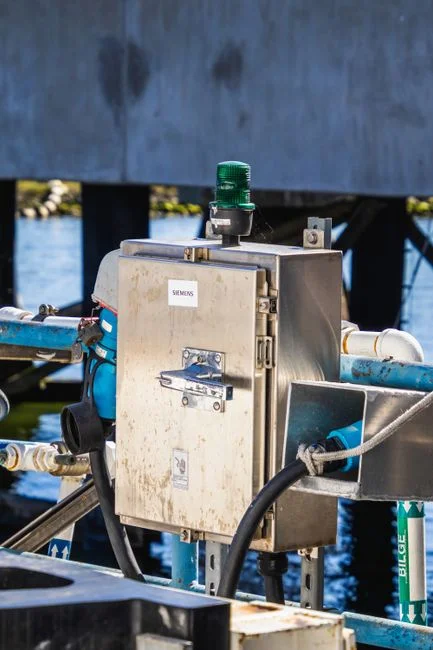
Equipment-side CAPEX is dominated by equalization volume, biological reactor sizing, and the MBR-versus-conventional activated sludge choice — MBR carries a smaller footprint but higher membrane replacement, while conventional activated sludge carries more basinage but lower membrane cost. A PLC-controlled chemical dosing skid is a low-cost addition that pays back the moment grab sampling is replaced by closed-loop reagent control.
OPEX is dominated by chemical dosing (pH adjusters, coagulants, flocculants, reducing agents), sludge hauling and dewatering, and the labor for self-monitoring, slug-plan drills, and the SOP-mandated 2-per-year or 4-per-year sampling cadence (Middletown NY SOP, S2, Section 2.2.3). Compliance risk is asymmetric: the 66% chronic and 33% TRC SNC thresholds are evaluated over 6 months, so a quarter of bad data is enough to trigger a permit action (Middletown NY SOP, S2, Section 2.2.4.3). That argues for online instrumentation at the discharge header, not grab sampling alone.
Because the supplied research does not provide 2026 unit-cost benchmarks for chemical plant pretreatment skids, the actionable buyer input is a request for itemized quotes that separate equipment, instrumentation, installation, and three years of consumables and membrane replacement before comparing suppliers. Without that breakdown, capital and operating numbers are not comparable across vendors, and a low CAPEX bid often loads the difference onto membrane and chemistry OPEX.
Frequently Asked Questions
How do I know if my chemicals plant is a Significant Industrial User under the Middletown program?
You are an SIU if you discharge 25,000 gpd or more of process wastewater per average work day, contribute a process stream greater than 5% of the POTW's average dry weather hydraulic or organic capacity, or have reasonable potential to cause pass-through, interference, or sludge contamination (Town of Middletown, VA Sewer Use Ordinance, S3). The 5% flow-share gate is the one plants miss most often because it is set against an 8.5 mgd envelope, not a plant-side flow number (Middletown NY SOP, S2, Section 1.1).
Should we retrofit existing pretreatment equipment or build a new skid to land an individual permit?
Use the SOP's 30-day permit decision window as your design freeze: the Commissioner has 30 days from an administratively complete application to issue or deny, and any equipment change you make after submittal risks being a permit modification rather than a permit basis (Middletown NY SOP, S2, Section 2.2.4.3). The action is to lock the process flow and equipment list before submission and treat any later change as a re-permit, not a build-phase refinement.
Where does compliance spend actually pay back on a chemicals plant pretreatment train?
Spend on the parameters that drive SNC. The 66% chronic and 33% TRC thresholds are evaluated over 6 months, so a quarter of bad data triggers a permit action; the payback case is online instrumentation, equalization volume, and a PLC-controlled chemical dosing skid that closes the loop on pH and reductant feeds before grab sampling would catch them (Middletown NY SOP, S2, Section 2.2.4.3). Because research does not provide 2026 unit-cost benchmarks, request itemized quotes separating equipment, instrumentation, installation, and three years of consumables before comparing bids.
What triggers immediate notification of the Deputy Commissioner for a slug discharge?
Any non-routine batch discharge of stored chemicals that could cause pass-through, interference, fire or explosion hazard, or a violation of the 5%/10% LEL rule or 104°F temperature cap requires immediate notification under the Slug Discharge Control Plan, with prevention procedures per 40 CFR 403.8(f)(2)(vi)(D) (Middletown NY SOP, S2, Section 2.2.4.3; Town of Middletown, VA Sewer Use Ordinance, S3). Treat the LEL meter and the temperature probe as permit-bearing instruments, not convenience gauges.