
What Exton Fabricated Metals Wastewater Actually Contains
Fabricated metals wastewater in the Exton area typically carries two contaminant families that the primary separator must address separately. The first is free and emulsified oil, grease, and coolant residues from stamping lubricants, machining fluids, and parts-washing baths; the second is suspended solids — grinding swarf, deburring fines, and metal particles washed off parts. These two groups behave differently: oil and emulsified coolant tend to resist gravity settling, while coarse metal fines settle readily if the flow is calm. Pre-sieving upstream of any flotation or clarification step reliably reduces total solids load before it reaches the primary vessel; Abboah-Afari and Kiepper (2012), working with poultry processing wastewater, reported that a 106 µm pre-screen cut mean total solids by roughly 10.8% and mean COD by 16.6% before DAF, and the same upstream-screening logic applies to metal fines ahead of either a dissolved air flotation (DAF) system or a clarifier.
Beyond oil and solids, pH swings from acid pickling and alkaline cleaning routinely dominate the chemistry conversation in metal-fabricating shops, and they often do so independently of the solids-versus-oil question. Exton fabricators discharging to Chester County authorities fall under 40 CFR 433 Metal Products category limits, but the specific numeric daily-maximum and monthly-average ceilings (oil and grease, total metals, TSS) must be confirmed against the local sewer use ordinance before equipment selection. The pretreatment agreement is what drives the design envelope, not the federal ceiling alone.
How a DAF Unit Removes Oil and Solids
A dissolved air flotation unit removes contaminants by attaching fine air bubbles to oil droplets or coagulated floc and lifting that aggregate to the surface, where a skimmer sweeps the float off. The recycle loop pressurises a side stream of clarified water at 3–5 atm, saturates it with air, and then releases it into the flotation cell through needle valves; the pressure drop nucleates a cloud of micro-bubbles, typically 10–100 µm in diameter, that provide enough surface area to collide with and attach to destabilised oil droplets and floc particles.
The Keramati et al. (2008) DAF study on vegetable-oil manufacturing wastewater provides the window a fabricator should expect: optimum pH 7.5 for alum and 5.5 for ferric chloride, coagulant doses of 30 mg/L (alum) and 32 mg/L (ferric chloride), saturation pressure 3–5 atm, flotation time of about 120 s, and air-to-solids (A/S) ratios of 0.001 (for COD, total, volatile, and fixed solids) and 0.0015 (for oil and suspended solids). Under those conditions, mean removals were 75.85% oil, 78.27% COD, 77.32% total solids, 82.47% volatile solids, 73.52% fixed solids, and 85.53% suspended solids (Keramati et al., 2008). The Durban University of Technology (2019) optimisation work on industrial mineral-oil wastewater from refineries and petrochemical plants confirms that the same bubble-attachment chemistry transfers to mineral-oil streams of the kind a stamping or machining shop generates, with high COD, soap oil and grease, turbidity, and TSS. The bubble surface area plus the coagulant destabilises emulsified oil, which is precisely the species a plain gravity clarifier cannot address.
How a Clarifier (Conventional or Lamella) Handles the Same Stream
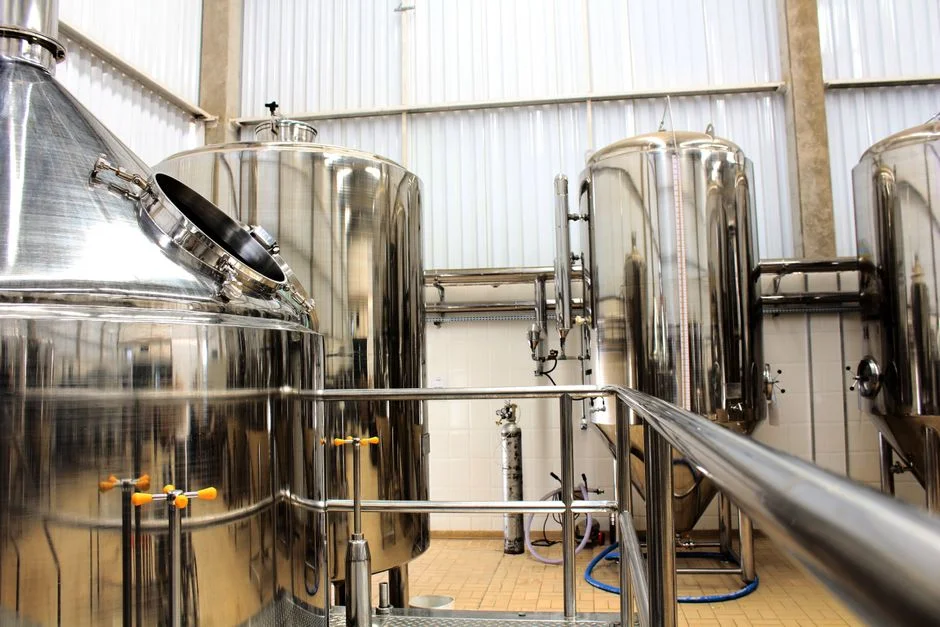
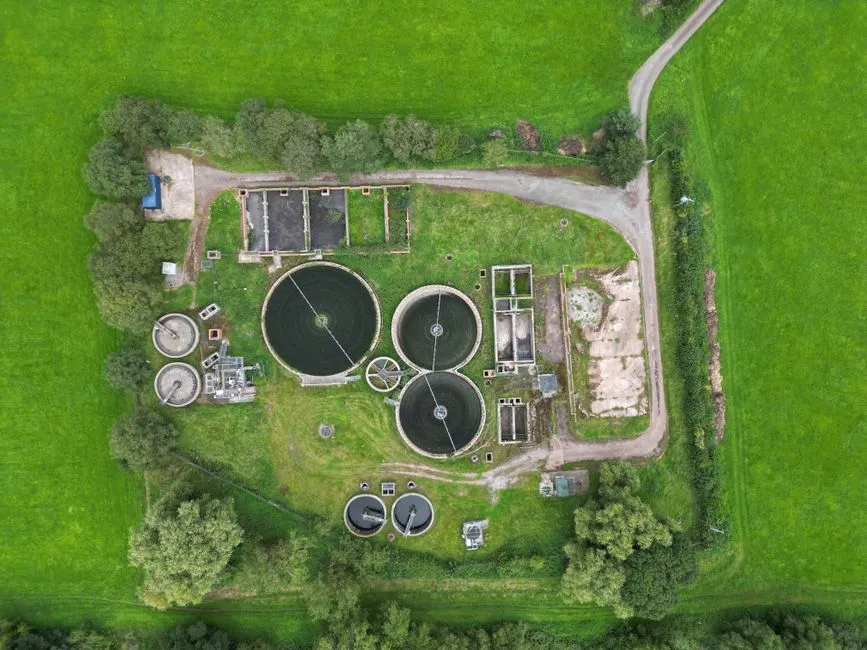
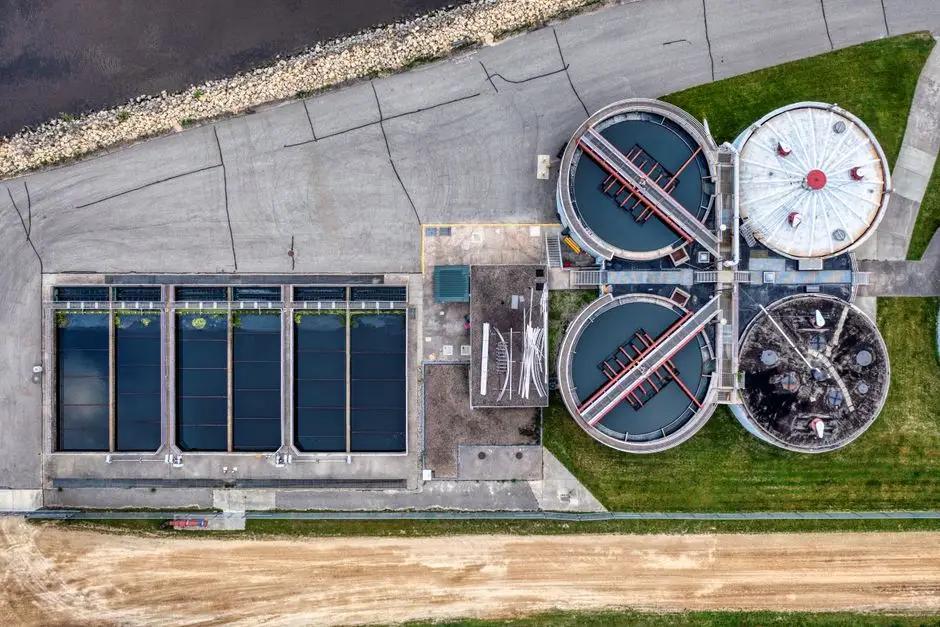
A conventional circular clarifier relies on quiescent settling: flow enters a centre well, slows, and suspended particles drop to a sludge bed under gravity. A lamella clarifier stacks a series of inclined plates inside a much smaller tank footprint; the plates effectively multiply the settling area and raise the surface loading rate to roughly an order of magnitude higher than a conventional tank of the same floor area. For settleable solids — grinding fines, scale, and other heavy particulates — both designs work well, which is why a high-efficiency sedimentation tank (lamella clarifier) is a strong fit on a low-oil stream.
For emulsified oil and coolant, a clarifier on its own is a weak choice. Oil droplets in the 10–50 µm range that carry a surface charge do not settle appreciably, and they tend to coat the inclined plates in a lamella, which both impairs performance and creates a maintenance burden. Lamella units can also reduce coagulant demand compared to a conventional clarifier because the inclined surfaces and floc-blanket contact improve floc growth, which is helpful for plants trying to lower chemical OPEX. Clarifier underflow is typically thicker than DAF float, which simplifies downstream dewatering and is one of the clarifier's strongest selling points for an operator who has to handle sludge in-house. The standard reference for sizing and selecting that downstream dewatering step remains the EPA/625/1-87/014 Design Manual: Dewatering Municipal Wastewater Sludges (1987).
DAF vs Clarifier: Head-to-Head for Exton Fabricators
The choice between these technologies depends on the specific influent stream characterization. The table below maps the two technologies against the parameters that actually drive an Exton fabricator's decision. DAF performance numbers are anchored to the Keramati et al. (2008) vegetable-oil pilot and the Durban University of Technology (2019) industrial mineral-oil optimisation work; clarifier parameters are described qualitatively because pilot numbers in the supplied research are specific to flotation.
| Parameter | DAF | Clarifier (conventional / lamella) |
|---|---|---|
| Oil and grease removal | ~76% mean on oily industrial streams (Keramati 2008); handles free and emulsified oil | Removes free oil that rises; poor on emulsified oil without upstream DAF or coalescer |
| COD removal | ~78% mean (Keramati 2008) | Modest on dissolved COD; relies on TSS-bound fraction |
| Suspended solids removal | ~86% mean (Keramati 2008) | Good on settleable fines; effectiveness drops on colloidal TSS |
| Footprint per m³/h | Compact; high hydraulic loading per unit area | Conventional unit large; lamella shrinks footprint by roughly an order of magnitude |
| Sensitivity to flow surges | Tolerates moderate surges if A/S ratio is controlled | Sensitive to hydraulic surges; scouring resuspends settled solids |
| Coagulant / polymer demand | Alum 30 mg/L or ferric chloride 32 mg/L at pH 7.5 or 5.5 (Keramati 2008) | Lower than DAF on a floc-blanket design; lamella can reduce dose further |
| Sludge solids concentration | Thin float, typically 3–5% dry solids | Thicker underflow; downstream dewatering easier to integrate |
| Capital cost driver | Saturation/recycle pump, skimmer, and control panel | Tankage and plate pack; lower mechanical complexity |
| 40 CFR 433 risk profile | Strongest fit for oil and grease limit; robust against upsets | Risk of oil-and-grease excursions on emulsified coolant streams |
| Fabricator-specific recommendation | Pick DAF for stamping, machining, and parts-washing with coolant and lubricant | Pick lamella for grinding-only or low-oil streams, or as a polishing step after DAF |
DAF's principal weakness is operational: the recycle pump and saturation loop are real energy loads, and the A/S ratio must be controlled, which is why a qualified bidder will be specific about how their controls hold that ratio under swing flows. The clarifier's principal weakness is that it cannot, on its own, address emulsified oil, which is exactly the species that puts a fabricated metals stream out of compliance with the local oil-and-grease ceiling.
Pretreatment Compliance and Local Discharge Constraints in Exton
The rule that drives an Exton fabricator's choice is 40 CFR 433 Metal Products, but the controlling numbers are the limits in the local Chester County sewer use ordinance rather than the federal ceiling alone. Oil and grease is the parameter most often tripped first by a fabricated metals stream, which is why a DAF — not a clarifier — is the most reliable primary separator for shops that run stamping, machining, or parts-washing baths. A conventional or lamella clarifier should be specified only when the stream characterisation shows that oil and grease will stay comfortably below the local ceiling without flotation.
Total metals — lead, cadmium, zinc, and nickel in particular — drive a parallel design track: pH adjustment and chemical precipitation, typically delivered through an automatic chemical dosing system tied to inline pH and ORP probes. That metals train is independent of the DAF-versus-clarifier question, and the two should be designed in parallel, because the wrong coagulant choice on the DAF can destabilise the downstream precipitation step and vice versa. For sludge produced at the back end of the train, the standard reference for dewatering selection, conditioning chemistry, and cake-solids targets is EPA/625/1-87/014 (1987).
Integrating the Choice With Downstream Sludge Handling
The primary separator only determines one step of the OPEX story, and a mismatch with dewatering is a common cause of pretreatment plant under-performance. DAF float is typically thin (3–5% dry solids) and oily; clarifier underflow is thicker and more mineral. Those two feeds dewater very differently, and a downstream plate-and-frame or belt press should be selected with that in mind. The EPA/625/1-87/014 manual (1987) remains the source for cake-solids ranges, polymer conditioning doses, and capacity tables for belt presses, centrifuges, filter presses, and vacuum filters.
For a thin, oily float the safer pairing is a plate and frame filter press with chemical conditioning, because oily sludges tend to blind belt-press media and force frequent wash-water and shutdown cycles. A lamella clarifier's thicker underflow pairs more flexibly with a belt press, a screw press, or a centrifuge. Best practice is to treat the primary separator, the chemical conditioning skid, and the dewatering unit as one integrated scope with a single mass balance; specifying them in isolation is the most common path to a press that cannot keep up with the float it is fed.
2026 Decision Checklist for an Exton Plant Manager
Before talking to vendors, compile the following inputs: average and peak influent flow (gpm or m³/h), oil and grease concentration, TSS, pH range and temperature swing, available footprint including ceiling height for a lamella stack, the current pretreatment agreement limits, and the target discharge limits. Without those numbers a vendor is guessing, and a vendor who quotes performance without asking for them is not yet qualified.
Qualifying questions to put to each bidder: do you have pilot or full-scale data on a 40 CFR 433 metalworking stream similar to mine; how do you control the A/S ratio during flow surges; what is the skimmer design and how is the float thickened before dewatering; can you share references at fabricators discharging under a Chester County-area pretreatment agreement; what is the chemical conditioning skid sized for, and is the dewatering unit on the same scope? A jar test or short on-site pilot is worth the time on any borderline stream, with alum and ferric chloride doses of 30–32 mg/L and an A/S ratio near 0.001 as the starting point from the Keramati et al. (2008) data. A red flag is any vendor who proposes a clarifier for an emulsified coolant stream without an upstream DAF or coalescer in the flow sheet.
Frequently Asked Questions
What budget range should an Exton fabricated metals plant plan for a DAF system in 2026?
The supplied research does not include a current capital or operating cost for a DAF sized to a 20–200 gpm metalworking stream, so a defensible budget number cannot be quoted from the evidence on hand. The right inputs to request from each bidder are: unit size matched to peak flow with the stated A/S ratio control strategy, the recycle pump and saturator package priced separately, chemical conditioning skid, and dewatering interface (a plate and frame filter press if the float is oily). Get all of those as line items so you can compare bidders
Frequently Asked Questions
Which is better for a fabricated metals plant in Exton, PA — DAF or a lamella clarifier — when the stream contains cutting fluids and stamping oils?
For fabricated metals wastewater containing emulsified cutting fluids and stamping oils, a Dissolved Air Flotation (DAF) unit is significantly more effective than a lamella clarifier. Because oils and greases are lighter than water, they resist gravity settling and often require the micro-bubble attachment provided by DAF to achieve buoyancy and successful separation.
While a lamella clarifier is excellent for removing heavy metal hydroxides and suspended solids, it cannot effectively break oil emulsions. In an Exton facility handling typical machining waste, a DAF system serves as the primary oil-water separator, whereas a clarifier would require excessive chemical pre-treatment to force oil-laden particles to sink, which is rarely cost-effective or compliant.
What oil and grease removal efficiency can a DAF realistically achieve on an oily metalworking wastewater, and what coagulant dose and A/S ratio should I expect?
A properly tuned DAF system can achieve 85% to 95% removal of free and emulsified oil and grease. Achieving these levels requires careful bench-scale jar testing to determine the optimal coagulant dose, which typically ranges from 50 to 300 mg/L depending on the specific oil concentration and surfactant load in the cutting fluids.
The Air-to-Solids (A/S) ratio is a critical operational parameter for float stability and should be maintained between 0.01 and 0.05 ml air/mg solids. Maintaining this ratio ensures that the micro-bubbles are sufficient to lift the oil-floc matrix to the surface without shearing the delicate floc structure created by the coagulants and polymers.
How do 40 CFR 433 Metal Products discharge limits and Chester County's local sewer use ordinance change the DAF-vs-clarifier decision for an Exton fabricator?
The 40 CFR 433 Metal Finishing Point Source Category mandates strict limits on total toxic organics (TTO) and heavy metals. Because oil and grease can coat metal particles and interfere with precipitation chemistry, a DAF is often required to remove the oil phase before the wastewater enters a secondary clarification stage to meet the stringent metals limits required by the EPA.
Chester County local sewer use ordinances often impose additional surcharges or limits on oil and grease (typically capped at 100 mg/L). If your discharge fails to meet these local limits, you face significant fines. A DAF provides the necessary polishing to ensure the discharge stays well below these municipal thresholds, whereas a clarifier alone would likely result in an oily discharge that exceeds local sewer authority compliance standards.
What is the typical 2026 budget range and lead time for a packaged DAF skid sized for a 20–100 gpm fabricated metals stream, and what should I ask vendors to confirm scope?
For a 2026 packaged DAF skid, you should budget between $120,000 and $250,000, depending on the metallurgy (typically 304/316 stainless steel), level of automation, and inclusion of peripheral equipment like chemical feed pumps and sludge handling. Lead times currently range from 16 to 26 weeks due to supply chain variables for specialized pumps and control instrumentation.
When requesting quotes, confirm the scope by asking vendors for a detailed process flow diagram (PFD), a list of included chemical dosing stations, and whether the skid includes a sludge removal mechanism like a flight scraper or an overflow weir. You must also verify if the quoted price includes commissioning support and a performance guarantee based on your facility's specific influent water quality analysis.
When does it make sense to use a lamella clarifier upstream or downstream of a DAF, instead of choosing one or the other?
A hybrid configuration is often necessary when the wastewater contains both high concentrations of emulsified oils and high loads of heavy metal precipitates. Placing a DAF upstream of a lamella clarifier allows the DAF to remove the bulk of the oil and grease, which prevents oil from blinding the clarifier plates or coating the metal hydroxides, ensuring the clarifier can effectively settle the heavy metals.
Conversely, using a lamella clarifier upstream of a DAF is appropriate if the influent has high levels of abrasive grit or heavy inorganic solids that could damage the DAF's recycle pump or clog the saturation tank. In this scenario, the clarifier acts as a primary solids settler, and the DAF acts as a secondary polisher to remove the remaining emulsified oils and light suspended solids before final discharge.