What Does COD Removal Actually Mean for an Industrial Plant in 2026?
Chemical oxygen demand (COD) measures the oxygen equivalent of oxidisable pollutants in water and is the operative discharge and reuse metric for refineries, food plants, metal finishers, textile mills and pulp & paper operations — not for municipal sewage where BOD still drives compliance. In 2026 industrial plants face tighter sewer-pretreatment caps under rules such as the U.S. 40 CFR 133 secondary treatment regulation (cited in the Safari et al. 2016 electrocoagulation reference list) and surface-water caps set by frameworks such as Egyptian Law 48/1982, both of which push effluent COD well below what a single biological stage can deliver.
Recent peer-reviewed research has concentrated on petrochemical, oily, food and metal-finishing streams (Muslim & Asel 2023; Safari et al. 2016; the pistachio wastewater pre-treatment study, Research Square 2021), reflecting where the compliance pressure is actually being felt. The first decision is therefore influent character — biodegradable versus refractory, high versus low salinity, emulsified oil versus dissolved organics — because that classification, not the marketing, determines which method will hit the limit.
Biological Treatment: A/O, Activated Sludge and MBR
Biological processes remain the lowest-energy workhorse for readily biodegradable industrial COD, which is why anoxic/aerobic (A/O) sequences and conventional activated sludge (CAS) still dominate food, pulp & paper and refinery biotreatment trains. A membrane bioreactor (MBR) adds a UF or MF membrane stage to the aeration tank, producing a near-reuse effluent with TSS and turbidity low enough to feed RO or to discharge against strict surface-water caps, in a footprint typically 30–50% smaller than a parallel-plate settler of the same flow. For readers comparing biological options, the HydropureWater MBR membrane bioreactor is the equipment endpoint that maps directly onto this biology-plus-membrane logic.
The hard limit of biological systems is the same in 2026 as it has been for decades: refractory, toxic, high-salinity or emulsified-oil streams pass through largely untouched, which is why every modern industrial train pairs a biological step with either a chemical, electrochemical or membrane polish rather than running biology alone. The supplied research does not include a percent-removal figure for A/O or MBR on an industrial feed, so the buyer should not accept a generic number from a vendor. Instead, request F/M ratio (kg BOD/kg MLSS·d), MLSS (mg/L), HRT (h), SRT (d) and the target effluent COD (mg/L) on a feed characterisation that matches the actual plant stream.
Chemical Coagulation and Fenton Oxidation
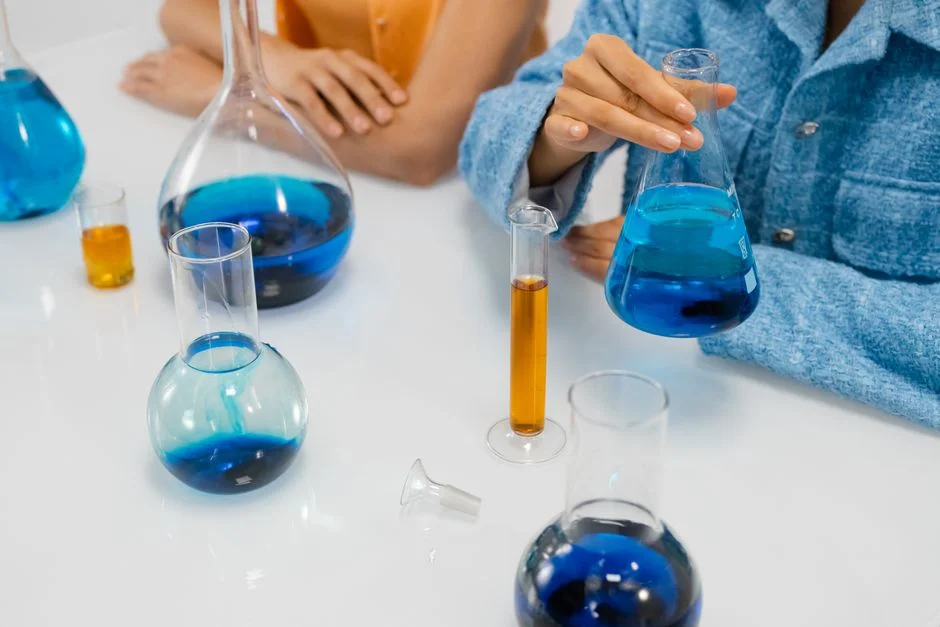
Chemical coagulation is the lowest-capex route to knock down suspended and colloidal COD, and the supplied research gives a real data set to anchor expectations. On pistachio wastewater, Al2(SO4)3·18H2O reached 39.5% COD removal at pH 8.0 with a 1000 mg/L dose; FeCl3·6H2O reached 42.9% at pH 6.0 with 4000 mg/L; and Fe(SO4)·7H2O reached 36.7% at pH 6.0 with 1000 mg/L (Research Square pistachio pre-treatment study, 2021). The same study makes the limit explicit: when each of these coagulants is paired with UP150 ultrafiltration, the combined permeate COD removal only reaches 82.0% — coagulation is a pre-treatment, not a finish.
Fenton oxidation (Fe²⁺/H2O2 at low pH) is the chemical step that actually oxidises refractory organics rather than just flocculating them, which is why it slots between coagulation and biological or membrane polish on many textile and pharmaceutical trains. No Fenton-specific number is present in the supplied research, so the buyer must request the H2O2:COD ratio, Fe²⁺ dose (mg/L), reaction pH, reaction time and target residual COD from any vendor quoting a Fenton skid. Reproducible dosing at plant scale is the failure mode most often seen in 2026, which is the case for tying Fenton and coagulation to a HydropureWater automatic chemical dosing system that holds the Fe²⁺/H2O2 ratio within the band the jar test defined.
Electrochemical Methods: Electrocoagulation and Electrooxidation
Electrocoagulation is the highest single-pass remover on oily and refractory industrial streams in the supplied data. Muslim & Asel (2023) report 99.5% COD removal and 94.2% oil removal from a synthetic petroleum wastewater (initial COD 710 mg/L, initial oil 95 mg/L) using 4 aluminium and 4 iron electrodes, 2 cm inter-electrode gap, 12 cm submergence, pH 7, 50 min, 10.5 V, 0.5 g/L NaCl, with effluent TSS 73 mg/L and energy consumption 12 kWh/m³. The pistachio study (Research Square 2021) provides a second anchor on a different matrix: Al–Al electrocoagulation at 100 A/m² and pH 4.0 reached 63.9% COD, Fe–Fe at 50 A/m² and pH 4.0 reached 56.1%, BDD–Pt electrooxidation at 200 A/m² reached 61.2% COD, and graphite–Pt at the same current density reached 42.2%.
Mechanistically, electrocoagulation generates the coagulant in situ — Al³⁺ from sacrificial aluminium anodes or Fe²⁺ from iron anodes — together with H2 bubbles that float emulsified oil and colloids, which is why it performs on feeds where biology fails. Electrooxidation at BDD or graphite anodes directly mineralises refractory organics via hydroxyl radicals, but the energy cost per kg COD removed scales with influent COD and chloride content. Electrode passivation and cathode scaling are the dominant operating headaches and the reason a vendor must be asked for current density (A/m²), electrode material and grade, expected electrode life (h or kg-Al/kg-COD), and confirmed kWh/m³ at the actual plant feed before any capex commitment.
Membrane Polishing: UF, NF and RO
Membranes are the polishing layer that turns any upstream method into reuse-quality water, and the pistachio pre-treatment study (Research Square 2021) gives the cleanest head-to-head data set. Raw wastewater through UP150 ultrafiltration alone reached 42.2% COD rejection; chemical coagulation followed by UP150 reached 82.0%; electrocoagulation + UP150 reached 86.4%; electrooxidation + UP150 reached 89.8%; NF270 alone on the raw feed reached 80.5%; and NF90 alone reached 96.0% COD rejection — with all three pre-treatment + UP150 combinations pushing NF90 permeate COD removal into the 96.6–98.6% band. The pattern is consistent: tighter the membrane, higher the rejection, but faster the fouling without a pre-treatment train.
UF is the workhorse pre-filter that strips oil, turbidity and suspended COD ahead of NF or RO, and an RO stage is what closes the loop on a reuse-grade effluent. The relevant equipment endpoints are the HydropureWater UF system for the pre-filter duty and the HydropureWater industrial RO system for the final reuse barrier. Membranes should not be sold as a stand-alone COD strategy — fouling from oil, hardness and refractory organics is rapid without a coagulant, EC, Fenton or biological pre-treatment in front — and a vendor quoting membrane-only COD removal should be asked for feed COD (mg/L), oil & grease (mg/L), turbidity (NTU), target recovery (%) and target permeate COD (mg/L) before the design is frozen.
COD Removal Methods Compared Side by Side
The table below consolidates only the numbers present in the supplied research. Where the supplied research is silent — notably on biological A/O and MBR percent removal — the cell is left qualitative and flagged so the buyer knows the figure must come from jar tests, pilot trials or vendor guarantees on the actual plant feed. The capex/opex direction is read from the same evidence: biological is the lowest-energy and lowest unit-cost workhorse, electrochemical has high removal but electrode replacement and kWh cost, chemical coagulation has low capex but sludge and reagent handling, and membrane has high capex offset by the highest single-step rejection.
| Method | Reported COD removal (supplied research) | Feed / conditions | Energy / chemical intensity | Sludge or waste stream | Best-fit influent (qualitative) |
|---|---|---|---|---|---|
| Biological A/O + CAS | Not reported in supplied research — request from vendor | Readily biodegradable industrial streams | Lowest energy per kg COD removed | Waste activated sludge | High-flow biodegradable COD, low toxicity, low salinity |
| MBR (biology + UF/MF) | Not reported in supplied research — request from vendor | Biodegradable COD with tight TSS/turbidity limit | Low energy plus membrane air-scour | Waste activated sludge + spent membrane cleaning solution | Biodegradable COD + reuse or tight surface-water discharge |
| Chemical coagulation (Al or Fe salts) | 39.5% (Al2(SO4)3·18H2O, 1000 mg/L, pH 8); 42.9% (FeCl3·6H2O, 4000 mg/L, pH 6); 36.7% (Fe(SO4)·7H2O, 1000 mg/L, pH 6) — Research Square 2021, pistachio | Pistachio wastewater, single-stage jar test | High reagent dose (1000–4000 mg/L) | Metal hydroxide sludge | Suspended and colloidal COD pre-treatment, not stand-alone |
| Fenton oxidation (Fe²⁺/H2O2) | Not reported in supplied research — request H2O2:COD ratio, Fe²⁺ dose, pH, target residual COD | Refractory organics, low pH operation | Moderate to high reagent cost | Iron hydroxide sludge | Refractory COD as pre- or post-biological step |
| Electrocoagulation (Al–Al or Fe–Fe) | 99.5% COD on petroleum wastewater (Muslim & Asel 2023, 4 Al + 4 Fe, 2 cm gap, 12 cm submergence, pH 7, 50 min, 10.5 V, 0.5 g/L NaCl, 12 kWh/m³); 63.9% Al–Al and 56.1% Fe–Fe on pistachio wastewater at 100 A/m² and 50 A/m², pH 4.0 (Research Square 2021) | Oily petroleum and food-processing streams | 12 kWh/m³ on the Muslim & Asel 2023 case; electrode wear scales with feed COD | Metal hydroxide sludge | Emulsified oil, colloidal COD, refractory or toxic streams |
| Electrooxidation (BDD–Pt or graphite–Pt) | 61.2% COD at 200 A/m² (BDD–Pt); 42.2% at 200 A/m² (graphite–Pt) — Research Square 2021, pistachio | Refractory organics, original pH 4.3 | Higher kWh/m³ than EC at the same current density | Minimal sludge; anode scaling | Refractory organics, polishing before biological or membrane |
| UF (UP150) alone | 42.2% COD rejection — Research Square 2021, raw pistachio feed | Raw pistachio wastewater | Moderate transmembrane pressure | Concentrate stream | Pre-filter ahead of NF/RO, not a stand-alone COD process |
| NF (NF90) alone | 96.0% COD rejection — Research Square 2021, raw pistachio feed | Raw pistachio wastewater | Higher pressure than UF | Concentrate stream | Tight discharge limit or pre-RO step |
| RO | Not reported in supplied research — request from vendor on the specific feed | Pre-treated feed, typically after UF and/or NF | High pressure, high energy per m³ permeate | Brine concentrate requiring disposal or further treatment | Reuse-grade effluent, ZLD schemes, boiler-feed makeup |
The table is a planning aid, not a substitute for jar tests on the actual plant effluent or a bench- or pilot-scale electrocoagulation / electrooxidation cell at the same current density, electrode geometry and feed the full-scale unit will see.
How to Choose the Right COD Removal Train in 2026
Match the train to the influent, not the marketing. For a biodegradable, high-flow stream with no refractory or toxic character, an A/O or MBR stage alone is usually enough; if the discharge cap is tight or the plant has a reuse target, the same biological effluent can be polished with NF or RO, and the pistachio data shows NF90 alone hitting 96.0% COD rejection on a raw feed (Research Square 2021). For a refractory, oily or toxic stream — petroleum desalter effluent, certain pulp & paper condensates, food-processing waste with high phenol — electrocoagulation or electrooxidation goes in front as the pre-treatment, with Muslim & Asel (2023) reporting 99.5% COD at 12 kWh/m³ on a synthetic petroleum feed and the pistachio study (Research Square 2021) reporting 66.0% COD for Al–Al EC + UP150. For a tight reuse target or a zero-liquid-discharge (ZLD) scheme, the realistic 2026 train is EC or Fenton pre-treatment → biological or UF → RO, with the EC + UP150 + NF90 stack from the pistachio data reaching 98.6% COD removal as the closest published analogue.
2026 compliance drivers in the EU, the U.S. and water-stressed regions are tightening sewer-pretreatment limits, expanding ZLD obligations and pushing harder on industrial water reuse, all of which favour a hybrid train over a single method. Oil and grease must come off first in almost every oily or food matrix, which is why a HydropureWater DAF system in front of any downstream COD train is the standard protection for the biological, membrane and electrochemical stages that follow. Buyers comparing trains for the specific matrices in this guide can also refer to the 2026 electroplating wastewater COD removal guide, the 2026 anodizing wastewater COD removal guide, the 2026 detergent wastewater COD removal guide and the Honolulu petroleum pretreatment compliance case for matrix-specific extensions of the same decision framework.
Frequently Asked Questions
What does a COD removal system actually cost in 2026, and what should we ask for in a quotation?
Capex class and opex vary widely with influent COD, flow, target effluent COD and the method selected, so any single number is misleading. The supplied research gives directional anchors only — biological is the lowest-energy workhorse, electrocoagulation on petroleum ran at 12 kWh/m³ (Muslim & Asel 2023), and chemical coagulation consumed 1000–4000 mg/L of reagent per litre of feed (Research Square 2021). The procurement check is to require an itemised quote covering electrode replacement (kg-Al or kg-Fe per kg COD removed), membrane replacement (elements per year and unit cost), chemical consumption (kg H2O2, kg Fe²⁺, kg Al3+ per m³), sludge handling (kg dry solids per m³) and energy (kWh/m³ at the design flow), and to reject any quote that does not state all five against the actual plant feed characterisation.
How do we pick the right supplier for a COD removal retrofit?
Supplier selection should be driven by pilot data on the actual plant effluent and by verifiable reference installs on the same matrix. The Muslim & Asel (2023) work was done in a 2 L electrocoagulation cell and the pistachio pre-treatment study (Research Square 2021) used bench-scale jar and membrane cells — both are the right scale to demand from a shortlist before any capex commitment. The procurement check is to require (a) a bench- or pilot-scale test report on the actual influent at the design flow, (b) at least two reference sites running the same train on the same matrix, and (c) written guarantees on effluent COD, kWh/m³, electrode or membrane life and chemical consumption, with liquidated-damages language tied to those numbers.
Do we need a pilot trial, or is vendor literature enough to commit capex?
A pilot trial is non-negotiable for any refractory, oily or toxic stream because the supplied research shows COD removal swinging from 42.2% (graphite–Pt electrooxidation, Research Square 2021) to 99.5% (Al/Fe electrocoagulation on petroleum, Muslim & Asel 2023) depending on electrode material and matrix. The engineering check is to run a jar test for coagulation and Fenton, a bench-scale electrocoagulation or electrooxidation cell at the same current density the full-scale unit will see, and a flat-sheet UF/NF/RO trial on the pre-treated effluent, then size the full-scale unit from those results rather than from generic vendor curves.
What compliance risk should we plan for when the discharge limit is tight?
Compliance risk is matrix-specific and is set by the local regulation, not by a generic percent-removal target. The U.S. 40 CFR 133 secondary treatment regulation (cited in the Safari et al. 2016 reference list) and surface-water caps such as Egyptian Law 48/1982 both impose mg/L COD ceilings that vary by receiving body, by industry and by plant size, and the chosen method's effluent COD must be verified against the actual local rule before the design is frozen. The engineering check is to obtain the written discharge permit limit in mg/L COD (and BOD, TSS, oil & grease where applicable), design the train to stay below the 95th-percentile operating point rather than the average, and require the vendor to guarantee performance at the design minimum and maximum influent conditions rather than at a single test point.