What Makes Anodizing Wastewater Hard to Treat for COD
Mixed anodizing coating wastewater is not a generic metal-finishing stream. Drag-out from sulfuric acid anodizing baths brings high dissolved aluminum and sulfate, while seal, rinse, and cleaning chemistries add COD and push pH across a wide range during a single shift. The Turk et al. (2025) study in Water Environment Research (DOI 10.1002/wer.70166) used exactly this matrix to compare electrocoagulation (EC) and electrooxidation (EO), tracking COD, dissolved aluminum, and sulfate as simultaneous responses rather than a single surrogate parameter. That choice matters because residual aluminum and sulfate are themselves sewer-discharge parameters, not just operational nuisances.
Engineers who size a unit operation off a one-time COD number usually get caught when Type II and Type III lines run in parallel and the bath chemistry drifts. A defensible 2026 design basis therefore needs at least 12 months of COD, total dissolved Al, sulfate, pH, and flow data covering both line types before any bidder is asked to quote. The same Turk et al. (2025) study reports Box-Behnken model R² values above 0.95 for all three responses in both EC and EO, which means influent characterization can be turned into a reproducible operating set-point instead of a rule-of-thumb. Generic biological or chemical trains fail here because the high aluminum and sulfate loading interfere with both bacterial activity and conventional coagulant chemistry, and that interference is the core reason an electrochemical anchor has to sit at the front of the 2026 train.
Electrocoagulation vs Electrooxidation: The 2026 Default for Mixed Anodizing Effluent
On the same mixed anodizing coating feed, Box-Behnken-optimized EC reached 94.5% COD removal while EO reached 90.8% (Turk et al., Water Environment Research, Sept 2025, DOI 10.1002/wer.70166). EC removed 98.5% of dissolved aluminum versus 92.0% for EO, and EC removed 85.0% of sulfate versus 72.0% for EO. The explicit conclusion in the abstract is that EO did not meet the discharge standard for sulfate on this feed while EC did, which is the single most important sentence in the paper for any engineer sizing a 2026 anode-side unit operation. Both processes were modeled with R² > 0.95 for all three responses, so the comparison is statistically defensible rather than a single bench run.
For engineers who need an energy benchmark, the closest published figure in the supplied research is 12 kWh/m³ for electrocoagulation of a 710 mg/L oily refinery feed at 99.5% COD removal (Muslim & Asel, Wasit University, 2023, DOI 10.31185/ejuow.vol11.iss1.433). That number is useful as a directional benchmark, but it is not an anodizing result and must not be presented as one. The Turk et al. (2025) study reports optimized current, pH, and time but does not publish a kWh/m³ figure in the abstract, so each bidder must be required to state both kWh/m³ and kWh per kg COD removed at the proposed voltage.
| Parameter | Electrocoagulation (Al anodes) | Electrooxidation (BDD/oxide anodes) |
|---|---|---|
| Feed matrix | Mixed anodizing coating wastewater (Turk et al., 2025) | Mixed anodizing coating wastewater (Turk et al., 2025) |
| COD removal | 94.5% | 90.8% |
| Dissolved Al removal | 98.5% | 92.0% |
| Sulfate removal | 85.0% | 72.0% |
| Discharge-standard pass on sulfate | Yes | No |
| Box-Behnken model R² | > 0.95 (all responses) | > 0.95 (all responses) |
| Energy anchor in supplied research | 12 kWh/m³ on a 710 mg/L oily feed (Muslim & Asel, 2023) — not an anodizing figure | Not published in supplied research |
The head-to-head data closes the door on EO as a stand-alone sewer-discharge solution for this matrix. EO still has a defensible 2026 role as a downstream polish in front of an MBR or RO when a plant wants an extra refractory COD cut, but it cannot be sold as the primary COD, Al, and sulfate step. EC with aluminum anodes is the default 2026 anode-side choice for mixed anodizing coating wastewater, sized to the Box-Behnken optimum from Turk et al. (2025) rather than a generic areal current density.
Building a 2026 Anodizing COD-Removal Train Around the EC Anchor
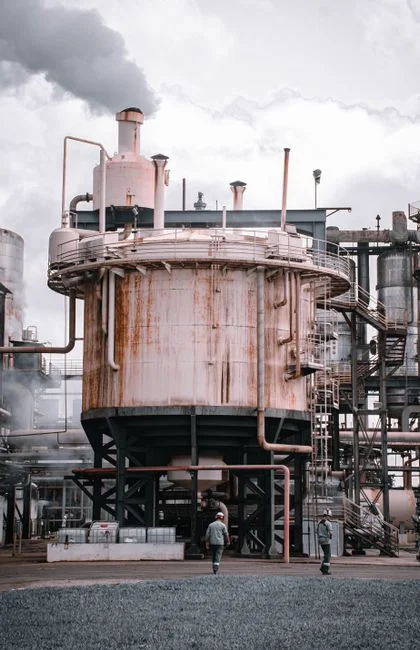
The defensible 2026 block-flow is equalization → DAF or lamella primary → electrocoagulation → biological (MBR) or membrane polish (UF/RO) → discharge or reuse, with an automatic chemical dosing system feeding both the primary clarifier and any pH-correction step. The DAF or lamella step is the right place to strip oil, FOG, and floatable solids before the EC reactor, because the Turk et al. (2025) study assumes an influent that is already representative of the bath, not a feed loaded with tramp oil; an anodizing-line DAF unit sized to peak FOG protects the anode surface and keeps the EC current density inside the Box-Behnken window.
The EC stage is the workhorse, with the 94.5% / 98.5% / 85.0% removal profile from Turk et al. (2025) (Sept 2025, DOI 10.1002/wer.70166) used as the credit the engineer hands to the bidder. The biological or membrane polish is what lifts the train to a reuse loop, and a submerged MBR polish built around a PVDF flat-sheet MBR module decouples SRT from HRT and pushes effluent toward sub-50 mg/L COD. When reuse is mandatory, the final barrier is an industrial RO polish; when the discharge target is just sewer compliance, the MBR alone may be enough and the RO is omitted. Chemical dosing has to be PLC-controlled and flow-paced, because influent swings in mixed anodizing coating wastewater drive the dose, not a fixed recipe.
| Stage | Unit operation | Function in the train | Anchor in supplied research |
|---|---|---|---|
| 1 | Equalization | Flow and load buffer; protects downstream stages from bath dumps | Turk et al. (2025) characterizes influent variability as a design input |
| 2 | DAF or lamella primary | Strip oil, FOG, and floatable solids ahead of the EC reactor | Turk et al. (2025) optimized EC on a clarified mixed anodizing feed |
| 3 | Electrocoagulation (Al anodes) | COD, Al, and sulfate workhorse | 94.5% COD, 98.5% Al, 85.0% sulfate (Turk et al., 2025) |
| 4 | Submerged MBR (PVDF flat-sheet) | Reuse-target polish; decouples SRT from HRT | Discharge envelope in Turk et al. (2025) is the MBR feed |
| 5 | RO (only if reuse is mandatory) | Final barrier for sub-50 mg/L COD rinse reuse | Discharge/reuse split is a project decision, not a research result |
| 6 | Plate and frame filter press | Dewater EC sludge to a defined dry-solids target | Sludge yield is project-specific and must be requested from bidders |
The order matters as much as the unit choice. EC has to come before the biological step because it knocks out dissolved aluminum and most of the sulfate, both of which would otherwise suppress the biomass. RO has to come after the MBR, not after EC directly, because residual floc and TSS from an EC reactor will blind an RO membrane inside a week.
Energy, Sludge, and Operating-Cost Anchors You Can Hand a Supplier
The only directly cited kWh/m³ figure in the supplied research is 12 kWh/m³, reported for electrocoagulation of a 710 mg/L oily refinery feed at 99.5% COD removal and 94.2% oil removal with aluminum anodes at 10.5 V and 50 minutes (Muslim & Asel, Wasit University, 2023). That number is not an anodizing result and must be presented to a supplier as a benchmark, not a guarantee. The Turk et al. (2025) EC vs EO study (Sept 2025, DOI 10.1002/wer.70166) reports optimized current, pH, and time but does not publish a kWh/m³ figure in the abstract, so the engineer should require every bidder to state both kWh/m³ and kWh per kg COD removed at the proposed voltage and current density.
Electrocoagulation with aluminum anodes generates an aluminum-rich sludge that has to be dewatered before disposal, and a plate and frame filter press sized to a stated dry-solids target is the standard step. The exact sludge yield is feed-specific and not in the supplied research, so it must be requested as a quoted line item, not assumed. Hand each bidder the same five-line ask: stage-by-stage removal credits for COD, Al, and sulfate; kWh/m³ and kWh/kgCOD at the proposed voltage; sludge yield and dry-solids target; a guaranteed discharge or reuse number in writing; and the chloride or electrolyte dose that drives the current efficiency. This mirrors the supplier-comparison framework documented in the 2026 industrial COD/BOD removal buyer guide.
Two practical rules follow. First, the energy number is only as good as the current efficiency behind it, and current efficiency on an EC reactor is set by chloride and conductivity, not just voltage. Second, the only way to keep a kWh/m³ promise defensible on mixed anodizing coating wastewater is to log current, voltage, and electrolysis time on the rectifier and to compare it against the Box-Behnken set-point from Turk et al. (2025).
How to Specify the Anodizing EC System in 2026

A copy-paste specification starts with the reactor. Specify aluminum anode and cathode configuration, an inter-electrode spacing of 2 cm as used in the Muslim & Asel (2023) oily-feed study, and a power supply rated for the Box-Behnken current and time range from Turk et al. (2025) at the project influent. The reactor should be sized off the Box-Behnken optimum, not off a generic areal current density rule, and the PLC-controlled chemical dosing skid for pH and chloride adjustment has to be in the same skid envelope so the dose tracks the current.
State the target matrix up front. Hand every bidder the influent envelope — COD, dissolved Al, sulfate, pH, and flow — and the discharge envelope, including the local sewer COD and sulfate limits and any reuse target. Where rinse-water reuse is mandatory, the reuse loop typically requires sub-50 mg/L COD and that target becomes the design driver for the MBR and RO stages. Require a PLC-controlled rectifier with logged current, voltage, and electrolysis time so the Box-Behnken model from Turk et al. (2025) can be reproduced on site rather than approximated by a sales engineer.
For plants running a mixed anodizing coating line with hard-to-treat sulfate, lock in EC as the primary and reserve EO only as a downstream polish, because EO alone failed the sewer sulfate standard on the same feed in Turk et al. (2025) at the Box-Behnken optimum. Cross-reference the primary and biological sizing choices with the DAF vs lamella clarifier decision guide and the DAF removal rates and applications guide when the primary step is being justified to management. For non-anodizing high-strength streams, the related high-strength industrial COD removal engineering guide shows the same train-building logic applied to a different influent.
Frequently Asked Questions
What is the recommended 2026 unit operation for COD removal in mixed anodizing coating wastewater?
Electrocoagulation with aluminum anodes, anchored to the Box-Behnken optimum from Turk et al. (2025, DOI 10.1002/wer.70166), which delivered 94.5% COD, 98.5% aluminum, and 85.0% sulfate removal on the same feed. EO should be reserved as a downstream polish, because EO alone failed the sewer sulfate standard on that feed.
What is the defensible 2026 block-flow an engineer can paste into a P&ID?
Equalization → DAF or lamella primary → electrocoagulation → submerged MBR (PVDF flat-sheet) → RO (only if reuse is mandatory) → plate and frame filter press on the EC sludge. Each stage has a documented role: DAF strips FOG and floatables, EC is the COD/Al/sulfate workhorse, MBR lifts the train toward sub-50 mg/L COD, and RO is the reuse barrier.
How should a buyer compare supplier bids on energy and operating cost for an anodizing EC system in 2026?
Request kWh/m³ and kWh per kg COD removed at the proposed voltage and current density, the aluminum-rich sludge yield in kg dry solids per m³ treated, the target dry-solids cake from the filter press, and a guaranteed discharge or reuse COD and sulfate number in writing. The supplied research gives a directional energy benchmark of 12 kWh/m³ on a 710 mg/L oily feed (Muslim & Asel, 2023) and a 94.5% COD anchor on mixed anodizing coating wastewater (Turk et al., 2025), but neither is a guaranteed bid price; the buyer should require each bidder to back-quote those numbers at the project influent.
How does a buyer pick the right supplier for a 2026 anodizing COD upgrade?
Pick a supplier who will put the five-line ask in writing — influent and discharge envelopes, stage-by-stage COD/Al/sulfate credits, kWh/m³, sludge yield, and a guaranteed reuse or discharge number — and who can supply the EC reactor, primary DAF or lamella, MBR, and RO as an integrated train rather than four separate vendors. Ask for a reference list of metal-finishing or anodizing installations with comparable influent COD, dissolved Al, and sulfate, and verify the reference against the same five-line ask before signing.