Why Starch Wastewater Is a Different Engineering Problem
Starch processors generate 10–20 m³ of high-COD wastewater for every tonne of starch produced, and the organic fraction is predominantly readily biodegradable carbohydrates (blog.anaerobic-digestion.com, S4). That combination—large volume, very high concentration, fast-degradable substrate—separates starch effluent from generic food-and-beverage wastewater and disqualifies designs that work for dairy or brewery streams. Even after a well-run biological train, secondary effluent typically sits at 200–250 mg/L COD with 150–200 NTU turbidity, which sets the polishing duty before any reuse or discharge decision (blog.anaerobic-digestion.com, S4).
Corn, wheat, and cassava/potato starch effluents differ enough in nutrient profile, COD strength, and hydraulic signature that a reactor tuned for one will underperform on another, so source identification is the first engineering step (blog.anaerobic-digestion.com, S4). The 2026 operating environment has tightened: discharge limits are moving down, uncontrolled decomposition from open lagoons releases methane directly to the atmosphere, and non-compliant plants face financial penalties and reputational exposure that procurement now prices into contracts (blog.anaerobic-digestion.com, S4).
Three consequences follow for the engineer. First, equalisation is not optional — raw starch streams arrive in surges tied to washing, steeping, and separation campaigns, and biology downstream cannot ride those spikes. Second, physicochemical pre-treatment must do more than polish; it has to strip the suspended and colloidal load that would otherwise blind an anaerobic granular bed. Third, the cost of getting the reactor choice wrong shows up immediately in energy bills and sludge volumes, because aerobic-only polishing of raw effluent drives operating costs out of range.
The 2026 Treatment Train at a Glance
A defensible 2026 starch train is staged in five blocks, each justified by what it removes and what it protects downstream. The objective is to push the bulk of COD removal into the cheapest, energy-recovering step (anaerobic digestion) and reserve aeration and membranes for the polishing work they do best.
| Stage | Unit operation | Function | Expected COD at outlet (illustrative envelope) |
|---|---|---|---|
| 1 — Pre-treatment | Screening, grit removal, flow and load equalisation | Dampen hydraulic and organic shocks, protect downstream equipment | Raw COD preserved, variability cut |
| 2 — Physicochemical conditioning | Coagulation/flocculation (aluminium sulfate or ferric chloride) + sedimentation, often paired with a DAF system for starch wastewater pre-treatment | Strip suspended and colloidal load, protect anaerobic biomass | TSS cut, colloidal COD reduced |
| 3 — Anaerobic primary | IC, UASB, or EGSB reactor | COD removal >89.2% with biogas generation | ~200–1,000 mg/L COD (post-digestion) |
| 4 — Aerobic polishing | Activated sludge, SBR, or MBBR | Strip residual BOD, ammonia, TSS to discharge envelope | ~200–250 mg/L COD range as secondary effluent |
| 5 — Optional membrane polish | MBR or UF, e.g. an MBR system for starch wastewater polishing | Reuse-grade water, tight TSS/turbidity compliance, RO protection | Effluent TSS and turbidity driven to reuse envelope |
Each stage serves a specific role in protecting the downstream biological processes. Stage 1 is screening, grit removal, and equalisation sized for the peak campaign flow, not the average — equalisation is what makes the downstream reactor selection defensible (blog.anaerobic-digestion.com, S4). Stage 2 uses coagulation and flocculation with aluminium sulfate or ferric chloride followed by sedimentation to aggregate fine colloids into settleable flocs, reducing turbidity and the load that would otherwise reach the anaerobic bed (blog.anaerobic-digestion.com, S4). A DAF or clarifier selection for food and beverage plants decision is usually made here based on how much oil and floatable solids the upstream process contributes. Stage 3 is the workhorse: an IC, UASB, or EGSB reactor, where full-scale wheat starch sugar service has demonstrated COD removal above 89.2% with biogas generation as a co-product (blog.anaerobic-digestion.com, S4). Stage 4 is aerobic polishing (activated sludge, SBR, or MBBR) sized for the post-anaerobic load, not the raw influent, which shrinks both aeration energy and surplus sludge. Stage 5 is reserved for sites with reuse targets or very tight TSS/turbidity limits that a conventional clarifier cannot reliably meet.
Reactor Comparison: IC vs UASB vs EGSB for Starch Effluent
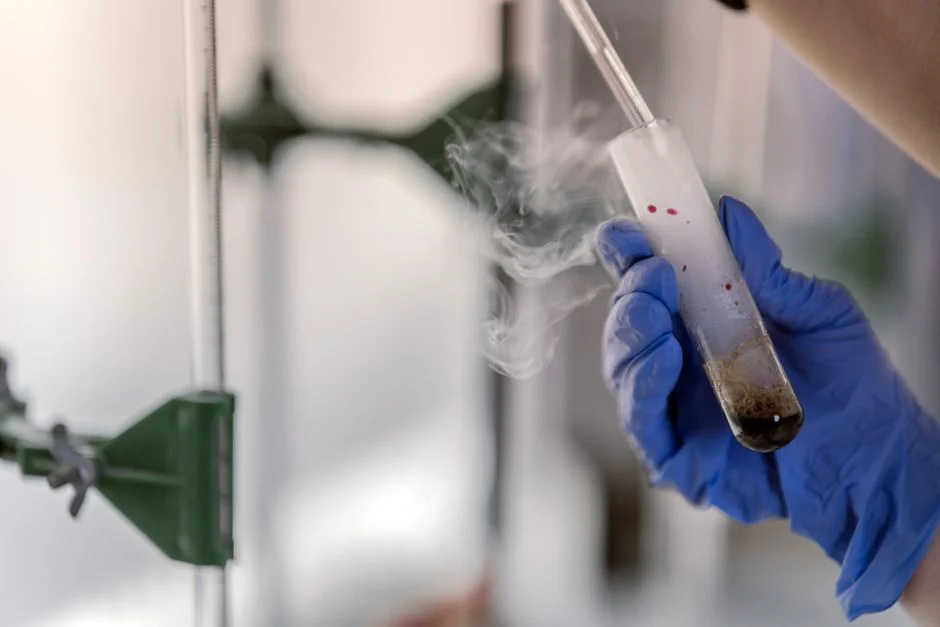
Raw COD removal capability is the baseline expectation for these reactor families, as all three routinely exceed 89% COD removal in documented starch service. The IC reactor on wheat starch sugar wastewater (4,000 m³/d design) has been recorded above 89.2% COD removal and 0.4 m³ biogas per kg COD removed (blog.anaerobic-digestion.com, S4). The decision driver is temperature, footprint, influent variability, and operator experience, and the engineer defending the choice in a design review needs that trade-off spelled out.
| Reactor | Mixing / hydraulics | Footprint | Best fit on starch effluent | Documented starch performance |
|---|---|---|---|---|
| IC (Internal Circulation) | Biogas-lift internal loop, no external mixing energy | Tall, narrow — small footprint | Sites with constrained footprint, stable high-strength feed, scope for biogas use | 89.2%+ COD removal, 0.4 m³ biogas/kg COD on wheat starch sugar at 4,000 m³/d (S4) |
| UASB | Upflow through dense granular sludge blanket | Moderate | Consistent flow and composition after equalisation; broad track record in starch plants | Strong COD removal in starch service across multiple sites (S4) |
| EGSB | Higher upflow velocity, expanded/fluidised sludge bed | Moderate, similar envelope to UASB | Lower-temperature sites, weaker or partially inhibitory streams, enhanced mass transfer priority | Strong COD removal in starch service; favoured where mass transfer is limiting (S4) |
| Multi-stage (phase-separated) anaerobic | Hydrolysis/acidogenesis and methanogenesis in separate vessels | Larger, more vessels | Starch campaigns with frequent load spikes; higher stability margin required | Improved stability and COD removal under variable loads (S4) |
Engineers must match reactor hydraulics to the specific constraints of the starch facility. The IC reactor's tall, narrow profile suits sites where land is constrained, and the biogas-lift internal loop keeps the granular bed in contact with substrate without external mixing energy (blog.anaerobic-digestion.com, S4). UASB remains widely deployed in starch plants because of its simplicity and the depth of operational experience behind it, particularly where equalisation has stabilised the feed (blog.anaerobic-digestion.com, S4). EGSB operates at higher upflow velocities that expand and fluidise the granular bed, improving substrate–biomass contact and making it the preferred choice where lower temperatures or weaker/partially inhibitory streams are in play (blog.anaerobic-digestion.com, S4). Multi-stage anaerobic digestion, which splits hydrolysis/acidogenesis from methanogenesis into separate vessels, is the configuration to specify when load spikes from campaign operation threaten single-vessel stability (blog.anaerobic-digestion.com, S4).
Polishing and Reuse: When Aerobic, MBR, or UF Is Justified
The polishing stage receives a much weaker stream after anaerobic digestion has already removed the bulk of the COD. Aerobic polishing with activated sludge, SBR, or MBBR is the default because the load has already been cut by roughly 89%, which shrinks aeration energy and surplus sludge volume relative to aerobic-only operation (blog.anaerobic-digestion.com, S4). When the discharge or reuse target demands reliable TSS and turbidity compliance beyond what a conventional clarifier can deliver, an MBR is the justified step, specified as an MBR system for starch wastewater polishing. Where the site needs RO protection or product-process water reuse, UF after biology is the correct move because it removes the residual colloids that foul RO membranes — a UF system for starch effluent reuse or RO pre-treatment sized on the post-aerobic sidestream. The engineer should also plan for membrane fouling from day one; membrane fouling troubleshooting for MBR and RO systems is a routine operating cost line.
Electrochemical polishing is a useful benchmark for specific wastewater types. On petroleum refinery wastewater, electrocoagulation with paired aluminium and iron electrodes reached 99.5% COD removal at an energy cost of 12 kWh/m³ (Wasit University, S1). Translated to starch, that energy intensity is incompatible with the volumes a starch plant runs, so electrochemistry belongs on the watch list for niche polishing duties rather than as a default starch train component.
Energy, Sludge, and the Operating-Cost Picture
Anaerobic digestion transforms treatment from a cost burden to a strategic asset. Aerobic-only systems consume 0.5–1.0 kWh of electricity per kilogram of COD removed with no energy recovery, while anaerobic systems recover that energy as biogas (blog.anaerobic-digestion.com, S4). At 0.4 m³ of biogas per kilogram of COD removed (blog.anaerobic-digestion.com, S4), a plant running a 4,000 m³/d IC reactor on wheat starch sugar wastewater is moving enough biogas to feed a CHP unit and shift the treatment plant from a cost centre toward an energy asset.
| Cost line | Aerobic-only baseline | Anaerobic + aerobic polishing | Source |
|---|---|---|---|
| Energy for COD removal | 0.5–1.0 kWh per kg COD removed, no recovery | Net energy positive when biogas is used in CHP | blog.anaerobic-digestion.com (S4) |
| Biogas yield | None | 0.4 m³ per kg COD removed (wheat starch sugar, 4,000 m³/d IC) | blog.anaerobic-digestion.com (S4) |
| Surplus biological sludge | High volume, less stable | Lower volume, more stable, easier to dewater | blog.anaerobic-digestion.com (S4) |
| Sludge dewatering unit | Typically plate-and-frame filter press for starch plant sludge | Same press typically used; lower throughput demand | blog.anaerobic-digestion.com (S4) |
Management of biological solids is a primary driver of long-term expenditure. Anaerobic biomass grows slowly, so the plant produces less surplus sludge than an aerobic-only system, and the sludge that is produced is more stable and easier to dewater, which reduces disposal cost and complexity (blog.anaerobic-digestion.com, S4). Coagulant and polymer dosing for the physicochemical stage must be specified correctly — automatic chemical dosing for starch wastewater coagulation keeps doses on target when influent solids swing with the production campaign. For dewatering, screw press energy performance should be reviewed alongside plate-and-frame selection; the screw press energy efficiency for sludge dewatering comparison is the right document to put next to the press datasheet in a design review. Daily operating discipline is best tracked through wastewater plant dashboard KPIs for COD and turbidity tracking, because the 89%+ COD removal target is only credible if it is being measured every shift.
Frequently Asked Questions
What COD removal efficiency should we expect from an anaerobic reactor on starch effluent?
Documented full-scale performance on
Frequently Asked Questions
What COD removal efficiency can a full-scale IC reactor deliver on starch wastewater?
A full-scale Internal Circulation (IC) reactor typically achieves COD removal efficiencies ranging from 85% to 92% when treating starch wastewater. These systems are designed to handle high organic loading rates, often exceeding 20-30 kg COD/m³·d, while maintaining stable granular sludge beds despite the high concentrations of suspended solids and rapidly degradable carbohydrates characteristic of the industry.
How much biogas is produced per kg of COD removed in a starch wastewater anaerobic digester?
Under optimal mesophilic conditions, the theoretical methane yield is approximately 0.35 Nm³ CH₄ per kg of COD removed. In practical starch wastewater applications, accounting for biomass synthesis and thermal losses, the actual biogas production typically ranges from 0.30 to 0.40 Nm³ per kg of COD removed, with a methane content generally between 65% and 75%.
Should I choose an IC, UASB, or EGSB reactor for a corn or wheat starch plant?
For high-strength starch wastewater, the IC reactor is generally preferred over UASB or EGSB systems due to its superior biomass retention and tolerance for high hydraulic upflow velocities. While UASB reactors are cost-effective for lower-strength streams, their footprint requirements are significantly larger; EGSB reactors offer high kinetics but require complex influent distribution systems that can be prone to clogging from starch residues. IC reactors provide the best balance of volumetric efficiency and operational stability for the high-load, cold-start-prone environments of corn and wheat processing.
Is an MBR polishing step justified after anaerobic digestion of starch wastewater?
An MBR (Membrane Bioreactor) polishing step is technically justified if the facility must meet stringent discharge standards, such as COD levels below 50 mg/L or nitrogen/phosphorus removal for sensitive water bodies. While anaerobic digestion effectively reduces the bulk organic load, it does not achieve high-level nutrient removal or complete polishing of recalcitrant colloids; an MBR ensures a consistent, high-quality effluent suitable for industrial water reuse or direct regulatory compliance.
What is the typical payback when a starch plant replaces aerobic-only treatment with anaerobic digestion plus biogas reuse?
Replacing an energy-intensive aerobic-only system with an anaerobic-aerobic hybrid process typically yields a capital expenditure payback period of 2.5 to 4 years. This timeframe is driven by the dual economic benefit of significantly reduced aeration energy consumption—which accounts for 50-70% of operational costs in aerobic systems—and the monetization of biogas for steam generation or onsite power, which offsets natural gas or grid electricity purchases.