What Biodiesel Wastewater Actually Is
Biodiesel wastewater (BDW) is the hot-water wash stream that follows the transesterification step in a biodiesel plant, and it carries residual biodiesel, soap, salts, methanol, un-reacted oil and glycerol, which is the main by-product of the reaction (Fosso-Kankeu et al., 2018, Eminent Association of Pioneers). Across the published studies this stream spans an order of magnitude: the jar-test feed in (Fosso-Kankeu et al., 2018) was pH 8.15, turbidity 728 NTU, COD 14,370 mg/L, while the raw characterization used by (Ahmadi et al., 2018, Applied Water Science) reported COD 305,500–403,540 mg/L, TOC 54,000–110,000 mg/L, BOD 210,400 mg/L and grease/oil 217,294–25,252 mg/L.
Both feeds are unsafe for normal drainage. Plain activated sludge is a poor match for BDW because high oil, free methanol and glycerol are inhibitory, foam at the aeration tank, strip oxygen transfer and push the food-to-microorganism ratio far above the band a conventional plant can absorb. That is why the rest of this article is structured as three stages: oil and suspended-solids removal, primary COD reduction, and polishing, because no single unit operation in the three studies hits the 95%+ COD removal on its own.
Step 1: Oil, Grease and Suspended Solids Removal
Raw BDW carries up to 217,294 mg/L of grease and oil and turbidity as high as 728 NTU (Ahmadi et al., 2018; Fosso-Kankeu et al., 2018), which is well beyond the load a clarifier or API separator will handle. A dissolved air flotation (DAF) unit is the standard front end because it floats free oil, FOG and colloids as a concentrated layer that can be skimmed to sludge handling rather than passed forward to biology or electrocoagulation. This front end is what makes the rest of the train work: removing oil upstream protects EC electrodes from passivation, prevents fouling of MBBR carriers, and reduces the COD load on downstream coagulation, which is the same logic (Lee et al., 2026, Sci Rep) demonstrates implicitly when MBBR pre-treatment lifts downstream FeSO4 coagulation COD removal from 13.35% to 34.29% (more than 2.5×). For a buyer's checklist, the DAF should be sized to peak wash-water flow including clean-in-place cycles, with an air-to-solids ratio tuned to the FOG fraction actually present, and the float routed to a dedicated sludge line. More detail on the mechanism is given in this engineering walkthrough of how DAF machines remove FOG and suspended solids, and the equipment side is covered by an industrial DAF unit for FOG and suspended solids.
Step 2: Primary COD Reduction — Electrocoagulation, MBBR or Chemical Coagulation
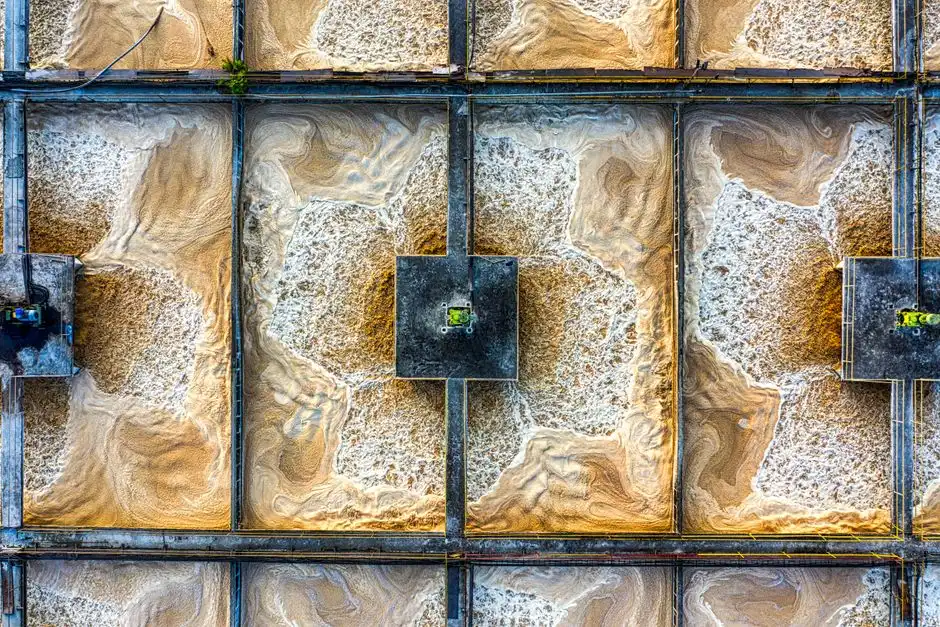
The heart of the train is the primary COD cut, and the three published processes on BDW have very different operating windows and removal bands.
Electrocoagulation on raw BDW at initial COD ~400,000 mg/L and TOC ~98,000 mg/L was operated in a dipolar Fe/Al reactor with 1 g/L NaCl as supporting electrolyte (Ahmadi et al., 2018, Applied Water Science). At a current density of 0.3226 mA/cm² the Fe electrode reached 91.74% COD and 91.79% TOC removal, and Al reached 90.94% COD and 91.98% TOC. Raising current density from 0.3226 to 1.9355 mA/cm² only nudged the Fe band from 91.74% to 92.55% COD (91.79–92.25% TOC) and the Al band from 90.94% to 92.22% COD (91.98–92.20% TOC). The strongest single result came from extending electrolysis: COD removal with Fe rose from 60.33% at 0.5 min to 92.73% at 5 min, with TOC tracking 60.40% → 92.94%. Increasing NaCl from 1 to 10 g/L pushed Fe COD removal from 91.40% to 95.47% (TOC 91.79–94.82%) and Al COD from 89.69% to 94.60%. Energy consumption is the counterweight: minimum specific energy was 0.000066 kWh/kg COD for Fe and 0.000266 kWh/kg TOC at 0.3226 mA/cm², and specific energy climbed steeply with time, from 0.0000048 to 0.000306 kWh/kg COD for Fe between 0.5 and 5 min. The operational lesson is that pushing electrolysis past the knee of the curve burns energy for diminishing COD returns.
MBBR was run as a three-month continuous pilot on BDW with fluctuating influent (Lee et al., 2026, Sci Rep). Average removal was 74.79% COD and 81.37% TOC. The carrier biofilm was dominated by Bacteroidetes, Saccharibacteria_TM7, Proteobacteria and Firmicutes, with Saccharimonas, Chryseobacterium and Proteiniphilum as the key genera. The decision-relevant finding is the polishing step downstream: after MBBR, FeSO4 coagulation COD removal jumped from 13.35% to 34.29%, a 2.5× lift, with parallel gains in TOC and SS. The authors attribute this to biological modification of the wastewater that improves particle aggregation in the coagulant stage. For sizing, the S2 pilot conditions are the only published MBBR anchor for BDW and should be requested by name from suppliers; the equipment-side reference is the MBBR configuration for high-strength industrial wastewater guide.
Chemical coagulation and flocculation was tested by jar tests on BDW at pH 8.15, COD 14,370 mg/L, turbidity 728 NTU, with 10–50 mg/L synthesized polymer (Fosso-Kankeu et al., 2018, Eminent Association of Pioneers). The non-hydrophobic polymer reached about 68% COD removal, the hydrophobic polymer about 56%. The hydrophobic variant preferentially pulled un-reacted oil, while the non-hydrophobic variant removed the hydrophilic organics, and pH rose as flocculant dose increased, which matters for any downstream reuse or RO step. This is a polishing or roughing step, not a stand-alone solution for raw BDW. More broadly, electrocoagulation and electrooxidation for industrial COD removal shows how EC bands compare on other high-strength streams.
| Process (source) | Feed COD | Operating window | Reported COD removal |
|---|---|---|---|
| Electrocoagulation, Fe electrode (Ahmadi et al., 2018) | ~400,000 mg/L | 0.3226–1.9355 mA/cm², 1 g/L NaCl, 0.5–5 min | 91.74–92.73% |
| Electrocoagulation, Al electrode (Ahmadi et al., 2018) | ~400,000 mg/L | Same as above | 90.94–91.32% |
| MBBR, pilot, 3 months (Lee et al., 2026) | Fluctuating BDW | Pilot conditions per S2 | 74.79% average |
| FeSO4 coagulation, post-MBBR (Lee et al., 2026) | MBBR effluent | FeSO4 jar test | 34.29% (vs 13.35% without MBBR) |
| Non-hydrophobic polymer jar test (Fosso-Kankeu et al., 2018) | 14,370 mg/L | 10–50 mg/L polymer | ~68% |
| Hydrophobic polymer jar test (Fosso-Kankeu et al., 2018) | 14,370 mg/L | 10–50 mg/L polymer | ~56% |
Practical guidance: for very high COD (>100,000 mg/L) at small-to-medium flows, EC with Fe delivers the steepest single-step reduction. For larger flows or plants that already operate a biological step, MBBR is the workhorse and conditions the water for coagulation. Flocculation is paired with either, not used alone on raw BDW.
Step 3: Polishing and Sludge Handling
Polishing on BDW is normally a second coagulation stage (FeSO4, PAC or polymer), and the MBBR + FeSO4 result (Lee et al., 2026, Sci Rep) shows that polishing is biologically conditioned, not just chemically tuned: FeSO4 COD removal rose from 13.35% to 34.29% after MBBR. Because the polymer dose also pushes pH upward on BDW (Fosso-Kankeu et al., 2018, Eminent Association of Pioneers), the polishing stage must include pH correction before discharge or any downstream RO/reuse step. Sludge from BDW is oily, low-density and hard to dewater; a plate-and-frame filter press is the standard for the DAF float and the EC/coagulation sludge, with polymer conditioning upstream. Do not return this sludge to the bioreactor or the EC cell: oil will re-load the train. The relevant equipment items are a plate-and-frame filter press for oily BDW sludge and a PLC-controlled coagulant and polymer dosing skid for the polishing chemistry.
Building a Biodiesel Wastewater Treatment Train in 2026
The only published evidence that ties these unit operations together on BDW is the Lee et al. (2026, Sci Rep) MBBR + FeSO4 polish, the Ahmadi et al. (2018, Applied Water Science) EC window, and the Fosso-Kankeu et al. (2018, Eminent Association of Pioneers) jar-test polymer band. A realistic train for a typical BDW stream is: DAF (oil/FOG removal) → equalization with pH control → MBBR (primary COD cut, ~74.79% COD per S2) → FeSO4 coagulation polishing (~34% incremental COD on MBBR effluent) → clarifier/lamella → sludge dewatering. For very high COD and smaller flows, the alternative is: DAF → equalization → electrocoagulation with Fe electrodes at 0.3226–1.9355 mA/cm² with ~1 g/L NaCl (COD cut up to ~92.73% per Ahmadi et al., 2018) → pH correction and secondary clarifier → optional MBBR polishing → sludge dewatering. A integrated MBR system for biological COD reduction is an option where the plant wants a tighter effluent for cooling-tower makeup or partial reuse rather than sewer discharge, and a lamella clarifier for coagulated BDW solids closes the solid-liquid split ahead of the filter press.
| Train stage | Equipment | Anchored to |
|---|---|---|
| Oil/FOG removal | DAF | Fosso-Kankeu et al. (2018); Lee et al. (2026) downstream lift |
| Primary COD cut (high-flow path) | MBBR | Lee et al. (2026) 74.79% COD, 81.37% TOC |
| Primary COD cut (high-COD path) | EC, Fe electrode, 0.3226–1.9355 mA/cm², 1 g/L NaCl | Ahmadi et al. (2018) 91.74–92.73% COD |
| Polishing | FeSO4 coagulation, pH correction | Lee et al. (2026) 34.29% post-MBBR; Fosso-Kankeu et al. (2018) pH shift |
| Solids separation | Lamella clarifier | Standard for coagulated BDW solids |
| Sludge dewatering | Plate-and-frame filter press + polymer dose | Low-density oily BDW sludge |
Defer to the supplier: electrode material (Fe vs Al), EC plate count, MBBR carrier fill ratio and DAF air-to-solids ratio. All four are driven by site-specific influent characterization, not by generic municipal parameters.
Frequently Asked Questions
Which process gives the lowest total cost for biodiesel wastewater COD removal: EC or MBBR?
EC with Fe electrodes delivers the largest single-step COD cut in the published BDW data, up to 92.73% (Ahmadi et al., 2018, Applied Water Science), but it also carries the highest specific energy at long electrolysis times (0.000306 kWh/kg COD for Fe at 5 min). MBBR averaged 74.79% COD removal at pilot scale and lifts downstream FeSO4 coagulation to 34.29% (Lee et al., 2026, Sci Rep), which is much lower OPEX on chemicals. The choice is fundamentally CAPEX (reactor, rectifier, plate count) versus OPEX (power, electrodes, polymer). For a credible budget, request itemized quotations for the EC reactor, the MBBR and the DAF separately, and ask each vendor to size against the current-density band 0.3226–1.9355 mA/cm² and the S2 MBBR pilot conditions rather than against generic municipal parameters.
How do I size an EC or MBBR unit for my biodiesel plant?
The cleanest published sizing anchors are the EC current-density window of 0.3226–1.9355 mA/cm² with 1 g/L NaCl supporting electrolyte (Ahmadi et al., 2018, Applied Water Science) and the MBBR pilot conditions in (Lee et al., 2026, Sci Rep) that delivered 74.79% COD and 81.37% TOC. Send each vendor your own 24-hour composite BDW characterization (COD, TOC, BOD, grease/oil, pH, conductivity, methanol) and ask them to size against those bands and against your peak wash-water flow, not against catalogue defaults. Validate polymer choice with a jar test in the 10–50 mg/L band reported by (Fosso-Kankeu et al., 2018, Eminent Association of Pioneers) before locking in a dose.
Is MBBR plus FeSO4 polishing enough for sewer discharge, or do I need a reuse step?
All three studies (Fosso-Kankeu et al., 2018, Eminent Association of Pioneers; Lee et al., 2026, Sci Rep; Ahmadi et al., 2018, Applied Water Science) emphasize that raw BDW is unsafe for normal drainage. Whether the MBBR + FeSO4 polish path is acceptable depends on your local discharge limit and on the downstream target: sewer, surface water, or cooling-tower makeup. Confirm the limit with your regulator before choosing the polishing train, and note that the S2 polish result is an incremental 34.29% on MBBR effluent, not an absolute number against a discharge standard.
Which equipment items have the longest lead time in a biodiesel wastewater train, and how do I pick a supplier?
DAF skids, automatic chemical dosing skids, MBBR carriers and plate-and-frame filter presses are typically the longest-lead items because they are fabricated or custom-procured to the plant's flow and FOG load. Ask each supplier for documented BDW or comparable high-strength FOG references and pilot data, not just catalogue curves, and require that sizing be anchored to the current-density or HRT bands published in the sources above. Request a process guarantee tied to a specific influent band rather than a generic turnkey number.