Why Minsk Data Centers Need a Locally-Adapted Blowdown Strategy
A 100 MW data center can use up to 2 million liters of water per day, a scale that makes blowdown recycling a baseline engineering requirement rather than a sustainability extra (IDE Tech). Generic global blowdown guides under-serve a Belarusian project because they ignore the local climate, the Svislach basin water balance, and the way EU-customer ESG pressure is layered on top of national discharge rules.
Minsk sits in a humid continental climate: winters are long and cold, summers are mild. That has two direct consequences for a treatment train. First, outdoor evaporation ponds — the typical ZLD finishing step in arid markets — are not viable for most of the year and carry real freeze risk even in shoulder seasons, so brine must be handled mechanically, thermally, or in covered MVC units rather than left to the sun. Second, lower winter evaporation rates raise the relative importance of blowdown volume management, pushing the design toward higher cycles of concentration and tighter control of scaling chemistry.
Belarusian projects also face a regulatory and commercial double layer. National water-use and discharge rules govern what can be sent to the Svislach or to municipal sewer, while Western hyperscale and colocation tenants typically require annual water-use and reuse reporting aligned with EU-style disclosure frameworks. A reuse-equipped design is therefore a commercial requirement, not a CSR add-on. Finally, makeup water drawn from municipal or Svislach-fed supplies is comparatively soft, which lowers baseline scaling risk on the cooling tower itself but raises the rate at which dissolved solids accumulate as cycles climb, because the soft water picks up corrosion products and airborne dust with little buffering capacity. A Minsk-specific specification has to account for all four of these drivers at once.
What Cooling Tower Blowdown in Minsk Actually Looks Like
Cooling tower blowdown is the controlled purge that keeps dissolved solids, corrosion byproducts, and biological growth from overwhelming a recirculating cooling loop. Its volume is set by the cycles of concentration the operator chooses to run, and its quality is set by the makeup water source, the treatment program, and accumulated airborne contamination. Cooling-tower blowdown in a typical data center runs at a TDS of 1,200–6,000 mg/L, about 4–8× the makeup water, depending on cycles of concentration (Genesis Water Tech). At 4 cycles of concentration, roughly 25–30% of makeup water is rejected as blowdown (Genesis Water Tech). Suspended solids — corrosion products, biofilm fragments, and airborne particulates — typically run 10–50 mg/L, even with basin filtration in place (Genesis Water Tech). Those four numbers — TDS range, blowdown fraction, suspended solids — are the starting point for any Minsk mass balance.
Beyond bulk TDS, the engineer has to plan around three families of contaminants. Scaling minerals — calcium, magnesium, silica, and alkalinity — concentrate with cycles and govern the maximum recovery an RO can sustain before antiscalant programs and CIP frequency become uneconomic. Treatment chemicals — biocides, corrosion inhibitors, scale inhibitors, and dispersants — accumulate in proportion to cycles; legacy chromate or high-phosphate programs create particular reuse and discharge headaches. Biological content — planktonic bacteria, algae, and biofilm-forming organisms — must be neutralized before any membrane or polishing step, both to protect the membrane and to prevent carryover of live organisms into humidification or washdown reuse streams. The table below summarizes the parameter ranges a Minsk engineer should plan against when sizing pretreatment.
| Parameter | Typical CTBD Range | Source |
|---|---|---|
| TDS | 1,200–6,000 mg/L (≈4–8× makeup) | Genesis Water Tech |
| Blowdown fraction at 4 cycles | ≈25–30% of makeup flow | Genesis Water Tech |
| Suspended solids | 10–50 mg/L | Genesis Water Tech |
| Key scaling species | Ca, Mg, silica, alkalinity | Genesis Water Tech |
| Legacy chemical risks | Chromates, high-phosphate programs | Genesis Water Tech |
| Biological content | Planktonic bacteria, algae, biofilm | Genesis Water Tech |
Reference Treatment Train for a Minsk Data Center
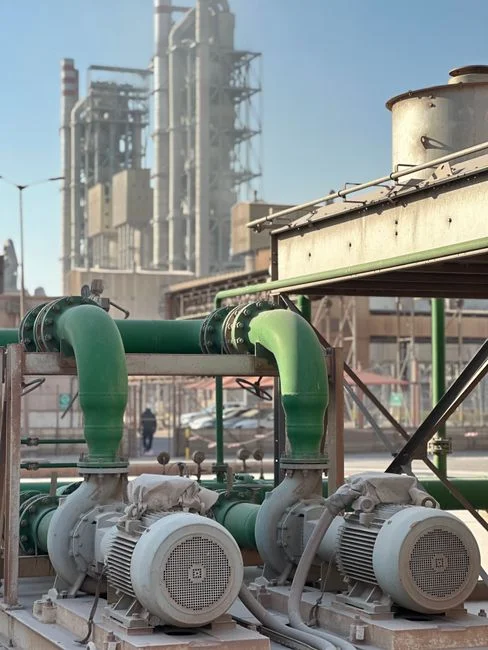
The standard 2026 architecture for a Minsk hyperscale or colocation site combines side-stream mechanical filtration, ultrafiltration, reverse osmosis, and a covered MVC brine concentrator, with a final permeate polish before water returns to the cooling loop or is reused for humidification, washdown, or landscape irrigation. Each step is sized to a specific duty, and the steps are not optional — skipping pretreatment is the most common reason RO and MVC units underperform in the field. The reference train, with parameters lifted from the research, runs as follows.
- Side-stream / self-cleaning mechanical filtration at 10–25 micron. Self-cleaning spiral or screen filters treat a continuous side-stream of recirculating water, sized to 1–5% of total circulation flow depending on system conditions, and remove suspended solids, biological loading, and corrosion products before they accumulate in the basin (Genesis Water Tech). Capital cost for typical data center installations runs US$50,000–200,000 depending on flow.
- Ultrafiltration at 0.01–0.1 micron as RO pretreatment and biological barrier. UF operates at 10–30 psi with 90–95% recovery, backwashing with permeate, and chemical cleaning every 1–3 months (Genesis Water Tech). It cuts turbidity and SDI to a level RO membranes can tolerate, and it removes bacteria, viruses, and high-molecular-weight organics that would otherwise foul the RO.
- Reverse osmosis at 150–400 psi for bulk salt removal. RO removes 95–99% of dissolved solids and produces permeate of 10–50 mg/L TDS, suitable for direct return to the cooling tower as high-purity makeup or for blending with standard makeup to push cycles higher (Genesis Water Tech). On CTBD specifically, conventional brackish-water RO plateaus at 75–80% recovery before scaling becomes unmanageable (IDE Tech), so conservative local recovery plus antiscalant and CIP discipline is the default. An integrated ultrafiltration system ahead of an industrial RO system is the standard pairing.
- Brine management with covered MVC. Mechanical vapor compression at 95–98% recovery turns the RO concentrate into distillate below 10 mg/L TDS and a 20–30% dissolved-solids concentrate for further handling or solidification (Genesis Water Tech). For a Minsk site, the MVC must be enclosed or indoor, because winter ambient conditions will otherwise collapse the heat balance. Pretreatment with a multi-media filter ahead of the RO protects the membranes from upset events and is standard in packaged skids.
- Permeate polish and disinfection. RO and MVC permeate is disinfected (typically UV) and, if used for humidification, may be passed through a final polish stage to meet the tighter purity requirements of air-handling units. This is also the logical point to take a sub-stream for sanitary reuse or landscape irrigation after local approval.
| Stage | Key Parameters | Source |
|---|---|---|
| Side-stream filtration | 10–25 micron; 1–5% of circulation flow | Genesis Water Tech |
| Ultrafiltration | 0.01–0.1 micron pore; 10–30 psi; 90–95% recovery | Genesis Water Tech |
| Reverse osmosis | 150–400 psi; 50–85% recovery; permeate 10–50 mg/L TDS; CTBD plateau 75–80% | Genesis Water Tech; IDE Tech |
| MVC brine concentrator | 95–98% recovery; distillate <10 mg/L TDS; concentrate 20–30% DS | Genesis Water Tech |
Sizing the Train for a Realistic Minsk Hyperscale Load
The only absolute water-use figure in the research is the 2 million liters per day for a 100 MW facility (IDE Tech). That is a useful anchor for a Minsk hyperscale design because the rest of the mass balance can be built on top of it. At 4 cycles of concentration, about 25–30% of makeup is rejected as blowdown (Genesis Water Tech), so the order-of-magnitude blowdown flow a Minsk engineer has to size RO and MVC against is in the high hundreds of thousands of liters per day for a 100 MW site. Below that, the sizing logic still applies: pick the cycles target, derive the blowdown fraction, then size the RO to the blowdown flow at the chosen local recovery.
For a 50,000 GPD blowdown RO unit, installed capex runs US$250,000–500,000 and operating cost US$1.50–3.00 per 1,000 gallons treated, including energy, chemicals, membrane replacement, and maintenance (Genesis Water Tech). Pushing cycles of concentration higher cuts blowdown volume but raises TDS and silica scaling risk, which is the exact regime where high-recovery integrated systems — for example an architecture operating at around 95% overall recovery with permeate silica near 1 mg/L — earn their premium (IDE Tech). For Minsk, the realistic question is not whether to push cycles up, but how far to push them before the antiscalant chemistry and CIP frequency start to dominate operating cost. RO and UF membrane elements should be specified with cold-climate-tolerant materials and stocked locally to avoid long import waits.
Belarusian Compliance, Discharge Permits and ESG Reality
Reuse is driven by both Belarusian rules and Western tenant ESG expectations, and the two layers do not always agree on numbers. In water-stressed regions, direct discharge fees already exceed US$5–15 per 1,000 gallons, and some jurisdictions cap discharge TDS below 1,500 mg/L — effectively prohibiting concentrated blowdown discharge without treatment (Genesis Water Tech). Belarusian facilities should plan against that benchmark even where local rules are looser, because hyperscale tenants typically require annual water-use and reuse reporting aligned with EU-style disclosure frameworks, and the permit review is where the tougher number is going to surface. Chloride, sulfate, and total dissolved solids are the parameters that most often force a ZLD or near-ZLD decision on a Minsk site.
Sanitary wastewater from the data center building is handled separately, usually via a packaged biological plant, and must meet Belarusian hygienic norms before any reuse or discharge. For new builds, a packaged underground integrated sewage treatment unit or an MBR system sized to the building population is the conventional approach, with the MBR route preferred where the operator wants a single polished effluent suitable for landscape irrigation or toilet flushing. On the blowdown side, the permit conversation should start from the assumption that chloride, sulfate, and TDS will be the binding constraints, not BOD or ammonia, because the blowdown stream carries essentially no organic load.
Cold-Climate Design, O&M and Procurement Checklist for Belarus
A Minsk specification is not just a flowsheet; it is a winterization problem. All outdoor piping, basins, and chemical dosing lines need frost protection; covered or indoor brine tanks are mandatory in a Minsk winter. Insulation and enclosure of the MVC or thermal evaporator unit is required to keep distillate production stable when ambient temperatures fall well below zero, and the heat balance of an outdoor unit will collapse if the vapor lines are not trace-heated. The control philosophy should be automatic chemical dosing for antiscalant, biocide, and pH correction, with PLC monitoring of conductivity, flow, and differential pressure across each membrane stage, and the PLC should alarm on both high and low ambient temperature excursions.
Spare-parts planning should cover RO and UF membrane elements, filter cartridges, and pressure-vessel components, with local stocking in Minsk to avoid long import waits. A 2026 specification checklist a Minsk engineer can lift into a design review includes the following items.
| Checklist Item | Specification Input |
|---|---|
| Target cycles of concentration | Operator decision; drives blowdown volume |
| Permeate TDS target | 10–50 mg/L typical for cooling-tower makeup (Genesis Water Tech) |
| Recovery target | 75–85% conventional; up to ~95% with high-recovery architecture (IDE Tech) |
| Brine disposal pathway | MVC to solid waste, crystallization, or approved off-site hauler |
| Peak winter ambient design temperature | Site-specific; drives enclosure and trace-heating scope |
| Grid power quality for high-pressure pumps | Voltage stability and UPS coverage for RO and MVC |
| Automatic chemical dosing | Antiscalant, biocide, pH correction via an automatic chemical dosing skid |
| Disinfection of permeate | UV sterilizer on permeate line for humidification and reuse |
For the disinfection step, an in-line UV sterilizer sized to the permeate flow is standard and avoids the chlorine residual that would otherwise damage stainless-steel humidification components. Broader corrosion prevention in wastewater equipment is also a Minsk-specific concern because de-icing salt use on the site perimeter will accelerate external corrosion of any outdoor carbon-steel piping or skids. Engineers designing adjacent projects can compare the Minsk approach with data center blowdown treatment in Vadodara or data center blowdown treatment in Diyarbakir for a sense of how the same flowsheet changes between a hot, water-stressed climate and a cold, continental one; the same logic underpins a packaged sewage treatment design for the sanitary side.
Frequently Asked Questions
What does a blowdown RO system for a 5–10 MW Minsk colocation hall typically cost?
A 50,000 GPD blowdown RO unit is the typical reference size, with installed capex of US$250,000–500,000 and operating cost of US$1.50–3.00 per 1,000 gallons treated, including energy, chemicals, membrane replacement, and maintenance (Genesis Water Tech). For a 5–10 MW colocation hall the actual unit will usually be smaller, so the right next step is to ask the supplier for a sized quotation against your specific blowdown flow, target cycles of concentration, and permeate TDS target, rather than scaling the 50,000 GPD number linearly.
Should a Minsk data center use a packaged MBR for sanitary wastewater alongside the blowdown train?
Yes, for most new builds. Sanitary wastewater is a separate stream from cooling-tower blowdown and is conventionally handled by a packaged biological plant; an MBR system delivers a single polished effluent suitable for landscape irrigation or toilet flushing, which helps the reuse numbers an EU-style tenant ESG report will ask for. The two trains should be designed by the same integrator so that the MBR effluent, if reused, does not conflict with the cooling-loop chemistry.
What is the realistic lead time for RO and UF skids into Belarus?
The research does not give a specific lead-time figure, so the actionable check is to ask the supplier for a written lead time covering the RO skid, the UF skid, the MVC unit, and the spare-membrane kit, with milestones against the Minsk winter shutdown and against any local content or certification requirements. Confirm whether the skids ship fully piped and wired or require field assembly, and whether the supplier stocks RO and UF membrane elements locally in Minsk to avoid a long import wait on consumables.
Is a high-recovery RO architecture justified for a Minsk site, or is conventional 75–80% recovery enough?
Conventional BWRO plateaus at 75–80% recovery on CTBD before scaling becomes unmanageable (IDE Tech), which is usually sufficient for a first-pass design. High-recovery architectures, for example systems operating at around 95% overall recovery with permeate silica near 1 mg/L (IDE Tech), earn their premium when cycles of concentration are pushed hard, when discharge fees and ESG pressure make every cubic meter of blowdown expensive, or when the site is water-constrained. The decision is therefore a project-specific trade-off between capex, cycles target, and discharge pathway, and the right check is to ask the supplier for a side-by-side mass balance and ten-year cost for both options against your actual makeup water analysis.