Start With the Wellington Project Brief, Not the Catalogue
Locking the design for a containerized MBR sewage treatment plant in the Wellington region begins with the use-case, not the equipment list. A permanent hillside subdivision, a holiday camp on the south coast, a construction camp or a marae each carries a different occupancy profile, a different peak-to-average flow ratio and a different effluent pathway, and these three numbers set the size of every vessel downstream.
The Wellington-specific complication is hydrology: the region's steep, high-rainfall catchments push peak wet-weather flow well above the dry-weather baseline, so the engineer must define ADWF and PWWF separately before looking at a vendor table. The second decision is the consent envelope. Discharge to the Wellington Water network, irrigation reuse on-site, or discharge to land or water under a Greater Wellington Regional Council permit will each set a different BOD, TSS and nutrient target, and the MBR must be sized to hit that target reliably. The same approach used for sizing a containerized MBR STP in Yangon applies in principle, but the climate, voltage and consent inputs change.
For most Wellington residential and camp projects, vendor packages such as Pure Aqua's MBR-C are at their most cost-effective when the daily flow is reasonably steady and the effluent target is close to reuse quality. Highly seasonal camp loads (a full camp in January, near-empty in July) need buffering volume outside the container so the biological stage is not cycled between feast and famine. Confirm that buffer before any container count is locked.
Calculate Average and Peak Hydraulic Load
Hydraulic sizing is the first half of the calculation, and it is where Wellington's climate tends to break vendor rules-of-thumb. The Pure Aqua MBR-C documentation uses approximately 50 gallons per capita per day as a vendor sizing aid for population estimates; the engineer should re-validate that figure against local water-meter data or a New Zealand design guideline before relying on it, because it is a U.S. rule-of-thumb, not an NZS value.
- Establish the design population. For a permanent residential community this is the occupancy at full build-out; for a camp it is the peak occupied bed count plus day-visitor allowance, not the certificate of title capacity.
- Multiply by the per-capita flow assumption to get ADWF in litres per day, then convert to m³/day.
- Add non-domestic inputs: camp kitchens, laundries, staff quarters, ablution blocks, commercial tenants. Each has its own unit-flow that must be added to the domestic base before the bioreactor is sized.
- Apply a peaking factor to convert ADWF into PWWF. The factor must reflect the site's inflow and infiltration (I&I) behaviour, not a textbook residential value, because Wellington's older combined or partially separated networks routinely push peak flows well above typical peaking factors.
- Translate the design m³/day into m³/hour and compare it against the candidate MBR's nominal daily throughput. Pure Aqua's MBR-C is offered in 40-ft and 20-ft high-cube containers sized for different capacities, and MENA-Water documents that one 40-ft ISO container can filter up to approximately 1,200 m³/day, which is the ceiling rather than the typical camp-scale size.
If the calculated PWWF is close to or above the candidate MBR's nominal capacity, the engineer should reduce PWWF at source (I&I remediation, stormwater separation, flow equalisation) rather than oversize the membrane container, because the membrane area and aeration tank are the cost drivers, not the peak pump.
Size the Biological Stage on BOD and Nutrient Load
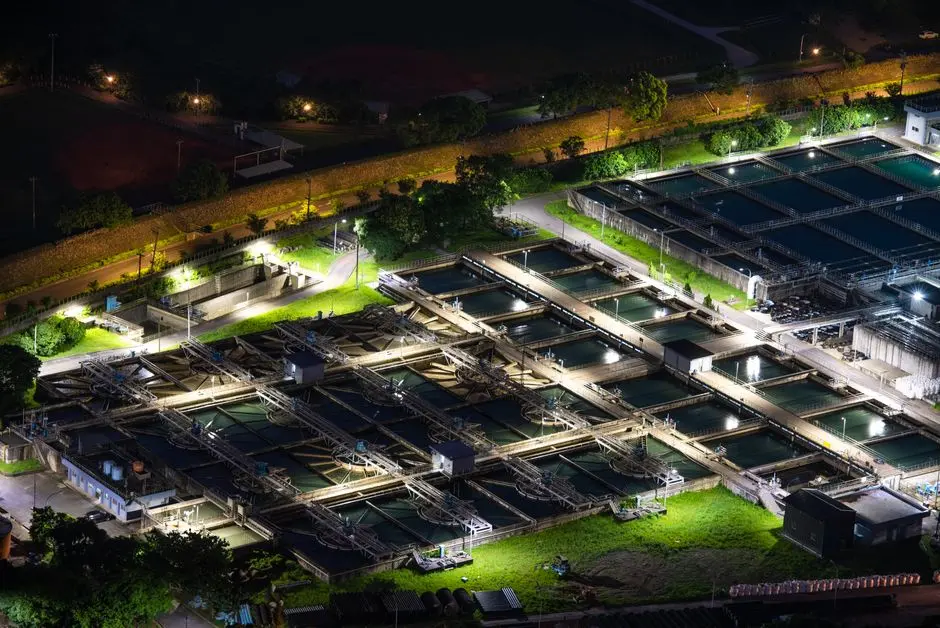
Biological sizing is the second half of the calculation, and it is the step that decides whether the chosen container has enough aeration tank volume and membrane area for Wellington conditions. Calculate the design BOD and nitrogen load in kg/day from the per-capita flow and the assumed per-capita loadings; this is the input that sets the required mixed-liquor suspended solids (MLSS) and hydraulic retention time (HRT). MBR plants operate at significantly higher MLSS than conventional activated sludge because the ultrafiltration membrane retains all biomass; the MENA-Water and HUBER descriptions both identify higher biomass concentration and the elimination of a secondary clarifier as the two defining process advantages of an MBR over conventional treatment.
If the project requires denitrification — which is common for any Wellington site discharging to a sensitive receiving environment or targeting irrigation reuse — confirm the MBR includes an anoxic zone ahead of the aeration tank. The Pure Aqua MBR-C list of options shows the anoxic zone for NO₃ removal as an add-on rather than a default, so this needs to be specified at RFQ stage, not assumed from a catalogue page.
Then check the design temperature assumption. The Pure Aqua MBR-C documentation states an operating range of 68–86 °F (20–30 °C) with a design point of 68 °F (20 °C). Wellington winter sewage can run cooler than 20 °C, which slows biological kinetics, reduces nitrification rate and effectively demands either a larger aeration tank, a longer HRT, or a covered and insulated container envelope. The engineer must request winter sewage temperature data from the operator of a comparable Wellington site (or assume a value from a New Zealand design guideline) and reflect that in the tankage sizing, not in the membrane area, which is governed by flux and temperature separately. The biological and membrane choices are kept distinct in a well-specified package such as the HydropureWater MBR membrane bioreactor system, where the membrane module can be specified against the hydraulic load while the tankage is sized against the load and temperature.
Match the Result to a Container Configuration
Once the design flow, BOD load and temperature are locked, the calculation has to be translated into a physical container choice. MENA-Water describes containerized MBR package plants as available in standardised ISO sizes, with one 40-ft ISO container documented to filter up to approximately 1,200 m³/day. That number is the documented ceiling from the vendor, not the right size for a Wellington camp — the actual selection depends on the load just calculated, the chosen configuration, and the ancillaries the engineer has chosen to keep inside the container footprint.
Two configurations are documented in the MENA-Water material. The fully integrated I-Version places all process equipment inside the container and suits mobile or rapidly redeployed sites, which makes it a reasonable default for a seasonal camp. The U-Version keeps aeration inside the container but puts the buffering in underground tanks, which suits a permanent Wellington residential site where a buried flow-equalisation tank can damp out wet-weather peaks before the membranes see them.
The Pure Aqua MBR-C documentation lists the standard ancillaries that ride with the container: 40-ft or 20-ft high-cube ISO shell, insulated container walls, drum-screen pre-treatment at 1.5 mm perforation, aeration tank with fine-bubble diffusers for biomass growth, submerged hollow-fibre UF membrane modules with coarse-bubble diffusers for air-scour, built-in membrane cleaning system, and a PLC with optional remote monitoring. Each of these is a standard line item that the engineer can either accept, upgrade, or supplement with an upstream GX series rotary mechanical bar screen where the influent character warrants defence-in-depth.
| Parameter | Pure Aqua MBR-C (vendor rating) | Wellington residential / camp condition | Re-specification required? |
|---|---|---|---|
| Container size | 20-ft or 40-ft high-cube ISO | Depends on calculated design flow | Select by m³/day after PWWF |
| UF membrane pore size | 0.04 µm (hollow fibre PVDF) | 0.04 µm acceptable for irrigation / network discharge | No change to pore size |
| Pre-treatment screen | Drum screen, 1.5 mm perforation | Camp lint / fibre may warrant upstream bar screen | Add rotary bar screen if influent is dirty |
| Electrical supply | 460 V / 3-phase / 60 Hz | 230 / 400 V, 50 Hz NZ mains | Yes — NZ-configured build or step-down transformer |
| Design temperature | 68 °F (20 °C) | Wellington winter sewage typically cooler than 20 °C | Yes — insulated enclosure, larger tankage, or both |
| Operating temperature range | 68–86 °F (20–30 °C) | Winter may fall below lower bound | Confirm with vendor; may require heating or insulation |
| Anoxic zone for denitrification | Add-on, not default | Required for many reuse / discharge consents | Yes — specify at RFQ |
| Daily throughput (1 × 40-ft reference) | Up to ~1,200 m³/day (MENA-Water) | Most Wellington residential / camp projects are well below this | Use as ceiling, not as design point |
The final row of the table is the most important for procurement: the 1,200 m³/day figure is documented as a vendor ceiling, and a Wellington engineer should be cautious of any supplier that quotes a 40-ft container at a much lower specific capacity without explaining the membrane area, flux and number of trains that justify the number. The membrane modules themselves, such as the HydropureWater DF-series flat sheet MBR membrane module, are typically specified separately from the container envelope, and the module count is what fixes the real hydraulic ceiling.
Plan for Pre-treatment, Reuse and Sludge Handling
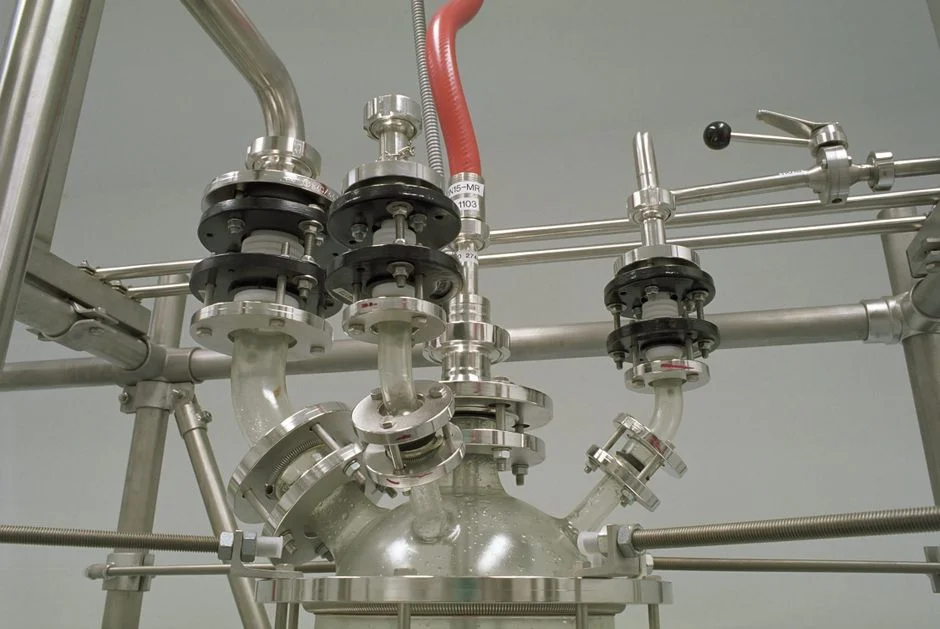
A containerized MBR is the centre of a treatment train, not a stand-alone appliance, and three peripheral decisions change the size and the site layout. The first is headworks screening. The drum screen on the Pure Aqua MBR-C (1.5 mm perforation) protects the UF membranes from ragging and is a sensible baseline; for a camp with high lint, fibre or food waste, an upstream rotary bar screen is worth specifying as defence-in-depth so the drum screen does not become the maintenance bottleneck.
The second is effluent reuse or polishing. MENA-Water notes that containerized MBR effluent is suitable for irrigation, and a Wellington project targeting landscape or sports-field reuse typically adds a chemical-free disinfection step. The HydropureWater UV sterilizer range provides that disinfection without producing chlorinated by-products and without the storage risk of chlorine dosing on a remote camp site.
The third is sludge handling. MBRs produce less waste activated sludge than conventional plants because of higher MLSS and longer sludge age, but they still produce sludge that has to be removed. A HydropureWater plate and frame filter press on the sludge line reduces hauling volume, which matters for a remote camp where sludge truck access is a constraint.
One load-reducing tactic worth quantifying: MENA-Water notes that grey-water systems can reduce the freshwater demand by up to 40% on the freshwater side by recycling shower and wash-basin water. On a camp layout, segregating grey-water can therefore drop the required MBR hydraulic capacity by a measurable amount, sometimes enough to drop the design by one container tier. The engineer should evaluate grey-water segregation before locking the container count, not after.
Wellington Compliance, Seismic and RFQ Checklist
The sizing calculation is only half the procurement task; the consenting and resilience inputs are what turn a vendor quote into a defensible Wellington installation. The first check is the consent pathway. Discharge to the Wellington Water network, or any trade-waste connection, is handled through Wellington Water; discharge to land, water or any groundwater soakage is handled through Greater Wellington Regional Council. The two agencies set different effluent quality targets, and the MBR size, or the polishing step downstream, has to be matched to whichever target governs.
The second check is seismic and site constraints. Wellington sits in a high seismic hazard zone, and the container must be specified with restraint and bracing appropriate to NZS 1170.5. The container pad must be level, with vehicle access for periodic desludging, and the engineer should not assume the vendor's standard shipping-container tie-down is sufficient for a permanent installation on a hillside.
The third check is the RFQ itself. The vendor's standard U.S. data sheet does not supply Wellington-specific numbers, so the engineer must put the following on the enquiry: design ADWF, design PWWF, design BOD and nitrogen load, design winter wastewater temperature, target effluent quality from the consent, electrical supply (230/400 V, 50 Hz), available footprint, irrigation or discharge consent, seismic restraint requirement, and remote-monitoring scope. A supplier that can answer all of these with documented, not generic, numbers is the supplier worth shortlisting.
Where the supplied research has no number — for example, a Wellington-specific peak factor or a specific consent limit — the engineer must obtain that value from Wellington Water, Greater Wellington Regional Council or a current New Zealand design guideline rather than rely on the vendor catalogue. The containerized MBR is a well-understood product; the Wellington-specific inputs are what determine whether the design is defensible.
Frequently Asked Questions
What does a containerized MBR sewage treatment plant actually cost for a small Wellington community or camp?
The supplied research does not provide a price for a containerized MBR, and any number quoted without a defined design flow, effluent target and seismic specification is unreliable. A buyer should request a budget indication tied to a specific design ADWF, PWWF and effluent consent, and ask the supplier to itemise the container, membrane modules, pre-treatment, controls and seismic bracing separately so the cost driver is visible.
How do I choose a supplier for a containerized MBR in New Zealand?
Shortlist suppliers that can provide a documented New Zealand reference or a NZ-configured build (230/400 V, 50 Hz, seismic restraint to NZS 1170.5) and that can answer the Wellington-specific RFQ inputs listed above with documented values. A supplier that can only quote against its U.S. data sheet has not yet done the engineering work the Wellington project requires, and that is the most reliable selection filter the research supports.
What wastewater temperature should I design for in Wellington?
The Pure Aqua MBR-C is documented with a design point of 20 °C and an operating range of 20–30 °C, but Wellington winter sewage can run cooler than 20 °C. The buyer must request winter sewage temperature data from the operator of a comparable Wellington site (or a New Zealand design guideline) and pass that to the supplier so the tankage and insulation are sized against the real lower bound, not the vendor's reference value.
Is a 20-ft or 40-ft container the right starting point for a camp of 50–100 people?
The supplied research does not provide a population-to-container-size conversion for camps in this range; the Pure Aqua MBR-C documentation uses a U.S. rule-of-thumb of 50 gpd per capita, and the MENA-Water documentation cites up to 1,200 m³/day in one 40-ft container. The defensible approach is to calculate design ADWF and PWWF from the occupancy and unit-flow assumptions above, convert to m³/day, and then ask the shortlisted supplier to match a container configuration to that specific number rather than pick the container first and reverse-engineer the population.