
What a Murfreesboro Fab Plant Is Actually Discharging
A Murfreesboro fab floor drain is a four-phase mixture: free oil, emulsified oil, suspended metal fines, and dissolved metals (Fe, Zn, Cr, Ni, Cu, Cd, Pb), per the local DAF vs clarifier comparison for Murfreesboro fab wastewater. Each phase needs a different removal mechanism, which is why a single gravity clarifier frequently fails on this stream. The EPA Process Design Manual for Suspended Solids Removal (1975, EPA 625/1-75-003a) classifies free oil, emulsified oil, and chemical floc outside the "settleable" fraction a clarifier is designed for (Chapter 7.1).
Free oil floats because its specific gravity is 0.85–0.92 and never traverses a settling column. Emulsified oil is stabilized by surfactant at droplet sizes of 1–20 µm and behaves as a colloid, not a settleable particle (EPA manual Chapter 1.2). On top of that, hydroxide floc from chromium reduction and nickel precipitation at pH 9–10 is gelatinous and holds 10–20× its dry weight in water.
Typical operating ranges for a mixed floor drain entering pretreatment (HydropureWater field data, 2026): oils 50–500 mg/L, total dissolved metals 5–200 mg/L, TSS 100–1,000 mg/L, pH swinging between 2 and 12 across batch dumps. Cyanide appears wherever alkaline cyanide plating is still in use and must be destroyed before metals precipitation to avoid resolubilizing precipitates downstream. The four contaminant families do not all respond to the same chemistry: oils need physical separation or chemical break, hex chrome needs reduction, cyanide needs oxidation, and dissolved metals need pH-driven precipitation.
The 2026 Regulatory Stack: 40 CFR Part 433 on Top of MWSD
The 2026 design envelope for a Murfreesboro fab is the intersection of 40 CFR Part 433 (Metal Finishing) and the City of Murfreesboro Sewer Use Ordinance enforced by MWSD, and the more stringent of the two controls on every parameter. Federal categorical limits at 40 CFR Part 433 set the floor for Cd, Cr, Cu, Pb, Ni, Ag, Zn, and TTO, while the local MWSD baseline cited for 2026 adds oil and grease, TSS, and pH caps plus ceilings on individual metals.
40 CFR Part 433 covers the Metal Finishing point source category, which includes forming, finishing, forging, foundry, metal spraying, and machining wash operations co-located with plating or anodizing lines, per the US fabricated metals pretreatment train and 40 CFR Part 433 framework. A stamping-only shop that ships dry parts to a separate finisher is generally outside the category; a facility running its own zinc, nickel, or chromic acid tank is inside it. Part 433 splits limits into PSES (Pretreatment Standards for Existing Sources) and PSNS (Pretreatment Standards for New Sources), and PSNS is often applied to existing plants as a conservative local baseline.
Local limits developed under 40 CFR 403.5 are always at least as stringent as categorical standards and typically add O&G, TSS, and pH caps plus copper, nickel, zinc, lead, and silver ceilings. EPA is conducting a 2026 rulemaking on PFAS discharges from chrome finishing facilities (Docket EPA-HQ-OW-2022-0869) per the EPA Metal Finishing Effluent Guidelines page; no numerical PFAS limit is in force yet, so a 2026 design should plan a future polish skid rather than install one now.
| Parameter | 40 CFR Part 433 categorical (PSES/PSNS, daily-max) | MWSD 2026 baseline (daily-max, confirm with MWSD) | Controlling limit for design |
|---|---|---|---|
| Oil & grease | Not specified at federal level | 100 mg/L | MWSD |
| TSS | Not specified at federal level | 250 mg/L | MWSD |
| pH | Not specified at federal level | 6–9 | MWSD |
| Total chromium | PSES 2.77 mg/L; PSNS 1.71 mg/L (1-day max) | 5 mg/L | Federal categorical |
| Hexavalent chromium | PSES 0.21 mg/L; PSNS 0.11 mg/L (1-day max) | 0.5 mg/L | Federal categorical |
| Lead | PSES 0.69 mg/L; PSNS 0.43 mg/L (1-day max) | 1 mg/L | Federal categorical |
| Cadmium | PSES 1.20 mg/L; PSNS 0.26 mg/L (1-day max) | 0.5 mg/L | MWSD (tighter of 0.5 vs PSNS 0.26 — confirm) |
| Nickel | PSES 3.98 mg/L; PSNS 2.38 mg/L (1-day max) | 5 mg/L | Federal categorical |
| Copper | PSES 3.38 mg/L; PSNS 2.07 mg/L (1-day max) | 5 mg/L | Federal categorical |
| Zinc | PSES 2.61 mg/L; PSNS 1.48 mg/L (1-day max) | 5 mg/L | Federal categorical |
Each row reflects the 2026 baseline; PSES/PSNS one-day-max values are reproduced from the EPA Metal Finishing categorical rule, and the MWSD column is the local baseline cited for 2026, to be confirmed with MWSD before any equipment purchase. The design must meet the more stringent of the two on every parameter, and MWSD can apply the categorical limit during a slug-load event even if the local limit is nominally looser.
The Standard Murfreesboro Pretreatment Train
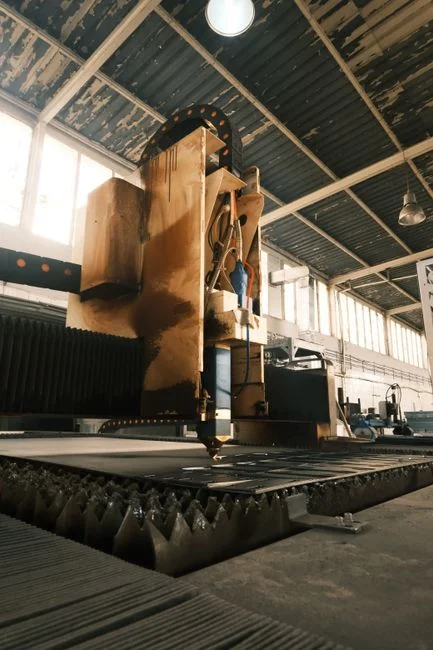
The engineered train below is the standard sequence a Murfreesboro fabricated metals plant uses to hit PSNS-equivalent POTW limits, with the chemistry and outlet spec at each stage. Skipping a stage produces a predictable failure downstream, so the order is not a suggestion.
- Equalization: pH 6–9 smoothed, flow CV < 0.5. Plating shops run batch dumps, so equalization is not optional — it is the unit operation that makes the chemistry downstream work at all. A rotary mechanical bar screen upstream keeps rags, wipes, and tramp metal out of the sludge train, which is the single most common cause of premature press-cloth failure.
- Oil and grease removal: free oil skimmed, emulsified oil broken chemically or by DAF. Without this step, oil coats floc and downstream precipitation fails because the metal-hydroxide particles cannot agglomerate.
- Hexavalent chrome reduction: sodium metabisulfite (or ferrous sulfate) at pH 2–3, ORP held at roughly 250–300 mV. Trivalent Cr then precipitates as Cr(OH)₃ in the pH 8.5–9.5 precipitation stage, where Cr(VI) hydroxide would otherwise remain soluble.
- Optional cyanide oxidation: NaOCl where alkaline cyanide plating is in use; must precede metals precipitation or the cyanide resolubilizes the precipitates downstream.
- Hydroxide precipitation of dissolved metals: pH 9–10 for Ni, Cu, Zn, with NaOH or H₂SO₄ for pH trim on a PLC-controlled automatic chemical dosing skid. Feedforward (flow-paced) and feedback (pH/ORP) control on the skid is what holds the window.
- DAF or lamella clarification: float or settle the metal-rich floc. A Dissolved Air Flotation (DAF) system couples oil removal, TSS removal, and float-sludge thickening to 2–4% solids in a single vessel; a lamella clarifier polisher is acceptable downstream only after oil has been removed upstream.
- pH neutralization to 6–9: final step before the POTW, with alarm and shutdown interlocks on pH excursion, ORP out of range, and high TSS that divert flow back to the equalization basin header so a chemistry upset does not become a discharge violation.
| Stage | Chemical / mechanism | Outlet spec | Failure mode if skipped |
|---|---|---|---|
| Equalization | Mechanical mixing, pH trim | pH 6–9, flow CV < 0.5 | Downstream chemistry oscillates; precipitation fails on slug loads |
| O&G removal | Skim + chemical break / DAF | O&G < 100 mg/L | Oil coats floc, fouls DAF, breaks sludge dewatering |
| Cr(VI) reduction | Na₂S₂O₅ at pH 2–3, ORP 250–300 mV | Cr(VI) < 0.11 mg/L (PSNS) | Cr(VI) passes through; precipitation does not occur |
| Cyanide oxidation | NaOCl at pH > 10 | Free CN < detection | CN resolubilizes Ni, Cu, Cd precipitates |
| Metals precipitation | NaOH to pH 9–10 | Dissolved Ni, Cu, Zn within PSNS | Dissolved metals pass to POTW |
| DAF / lamella | Air flotation or inclined plates | TSS < 250 mg/L | Sludge carryover; TSS excursion |
| pH neutralization | H₂SO₄ / NaOH trim | pH 6–9 | POTW violation; pipe corrosion |
Sizing the DAF for a 50 gpm Murfreesboro Fab
DAF is governed by three knobs: hydraulic surface loading 4–20 m/h depending on model and floc density, air-to-solids ratio 0.005–0.060 with 0.02 a typical design point, and recycle rate 10–30% of forward flow. Pushing A/S higher produces a drier float but costs blower power and can shatter fragile floc; pushing recycle rate higher improves TSS removal but dilutes the chemistry and inflates equalization demand. A 50 gpm fab stream is the typical Murfreesboro design point and lands in the 48–66 gpm packaged skid class.
DAF performance on a conditioned fab stream per DAF Corp 2026: 85–98% TSS removal and 90–95% FOG removal. Float sludge out of the DAF runs 2–4% dry solids and dewateres to 25–35% on a plate and frame filter press; a belt press is cheaper and continuous but caps out around 22% dry solids on metal hydroxide. A high-molecular-weight cationic emulsion polymer at 2–3 mg/L is a defensible baseline after pH adjustment, and overdosing is the single most common cause of DAF underperformance.
A packaged skid DAF in the 48–66 gpm class carries 2026 installed CAPEX of $80,000–$180,000 in 304SS with a footprint of roughly 25–35 m², per the Murfreesboro DAF sizing reference. A 50 gpm DAF unit typically needs ~25–40 m² including the chemical skid; a comparable clarifier with oil skimmer needs ~50–80 m², and that floor area is a real differentiator in retrofit fab shops where every square metre is leased. Sludge hauling cost in the Murfreesboro area runs $0.08–$0.15 per gallon in 2026, and moving from 1% to 3% float solids cuts the volume hauled by roughly two-thirds on the same metals mass.
| Equipment option (50 gpm, 304SS) | Installed CAPEX (2026) | Footprint | Float / underflow solids | Annual OPEX driver |
|---|---|---|---|---|
| Packaged skid DAF (SigmaDAF COMPACT / DAF Corp FC-60 class) | $80,000–$180,000 | 25–35 m² | 2–4% float | Polymer 1–5 mg/L + air + moderate hauling |
| Rectangular DAF, 100 gpm class (DAF Corp RC UniMax) | Higher than skid; quote from vendor | Larger than skid | 2–4% float | Same drivers as skid DAF |
| Lamella clarifier only (no oil removal upstream) | Lower than DAF | ~50–80 m² with oil skimmer | < 1% underflow | Sludge hauling dominates (3–4× water mass on same metals) |
| Lamella clarifier + upstream CPI oil skimmer | Lamella plus CPI hardware | ~50–80 m² | < 1% underflow | Sludge hauling still dominates |
CAPEX band and footprint figures are the 2026 baseline from the Murfreesboro DAF sizing reference and should be confirmed against current vendor quotes before procurement. The 2–4% float-solids specification is the line item that defends the DAF CAPEX against a cheaper clarifier on a 5–10 year OPEX horizon, because hauled-water volume drops by a factor of three to four on the same metals mass.
Which Train for Which Shop: A 2026 Decision Framework
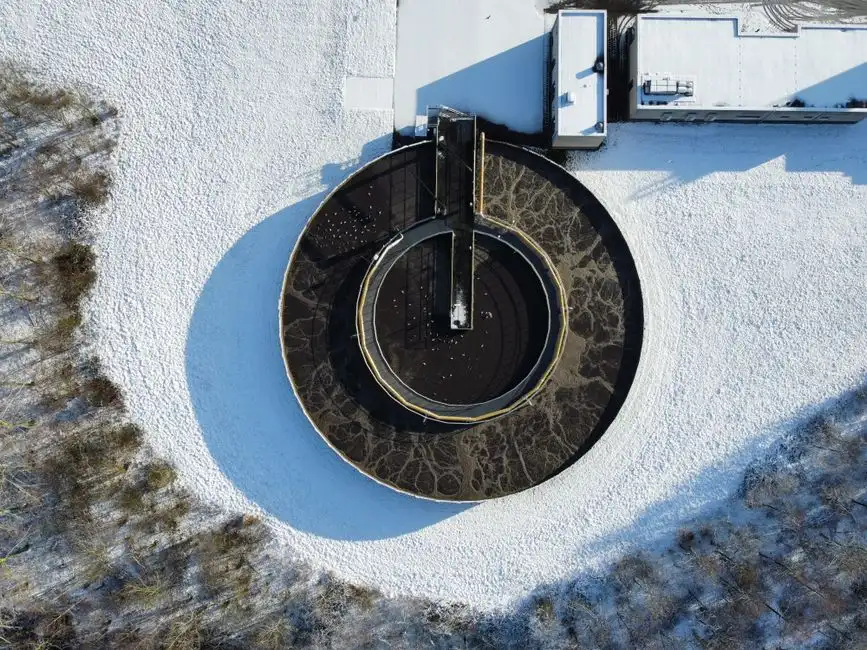
The four-shop matrix below maps process mix to train configuration, so a buyer can match the equipment to the actual floor in under a minute. The DAF must be sized to peak flow at the 433 categorical limits, not only at the local POTW limits, because MWSD can apply the more stringent of the two during a slug-load event.
| Shop profile (Murfreesboro fab) | Engineered train |
|---|---|
| Stamping + welding only, no plating | Equalization → DAF → pH neutralization → POTW |
| Stamping + welding + light plating (Zn, Ni) | Equalization → DAF → pH 9–10 precipitation → lamella polish → pH neutralization → POTW |
| Hard chrome or decorative chrome | Equalization → Cr(VI) reduction at pH < 3 → pH 9 precipitation → DAF → lamella polish → pH neutralization → POTW |
| Rinse water only, oil pre-removed in parts washer | Equalization → lamella clarifier → pH neutralization → POTW |
For the typical Murfreesboro fab shop running stamping plus a small plating line, the train reads: equalization → DAF → chemical precipitation at pH 9–10 → small lamella clarifier polisher → pH neutralization → discharge. A single DAF after chemical precipitation is sufficient to meet 100 mg/L O&G and 250 mg/L TSS for a typical fab stream; a clarifier alone is not. For comparison with a peer-market design point, the Apopka-area fabricated metals pretreatment playbook applies the same four-shop matrix to a different POTW envelope.
Permit, Sampling, and Future-Proofing the 2026 Design
The procurement-week checklist below is what a Murfreesboro buyer walks into the MWSD conversation with. An industrial wastewater discharge permit from MWSD under the City Sewer Use Ordinance is required, and the design must be confirmed against 40 CFR Part 433 categorical standards. TDEC involvement is typically limited to zero-discharge surface-water review; POTW discharges are enforced locally.
- Sample a full week of composite flow before specifying equipment, because plating shops run batch dumps and a 4-hour composite that misses the Friday afternoon dump will undersize the equalization basin.
- Confirm current O&G, TSS, and metal limits with MWSD before procurement; the 100 mg/L O&G and 250 mg/L TSS daily-max values cited for 2026 are the baseline, not a guarantee.
- Confirm the categorical one-day-max and monthly-average numbers for Cd, Cr, Cu, Pb, Ni, Ag, Zn, and TTO against the current 40 CFR Part 433 tables before sizing chemical feeds.
- Plan a polish skid (anion exchange or GAC for PFAS, an MBR integrated wastewater treatment system for BOD/COD tightening or rinsewater reuse, an RO water purification system for sub-ppm TDS) as a bolt-on rather than a retrofit when the next rule lands.
- Closed-loop zero liquid discharge is rarely economic for a fabricated metals plant unless water scarcity or specific reuse economics support the capital.
Frequently Asked Questions
What federal and local limits control a 2026 Murfreesboro fab discharge?
40 CFR Part 433 (Metal Finishing) sets PSES and PSNS one-day-max and monthly-average limits for Cd, Cr, Cu, Pb, Ni, Ag, Zn, and TTO, and the City of Murfreesboro Sewer Use Ordinance enforced by MWSD adds O&G 100 mg/L daily max, TSS 250 mg/L daily max, pH 6–9, and ceilings on individual metals including Cr(VI) 0.5 mg/L, per the 2026 baseline. The design must meet the more stringent of the two on every parameter, and local limits developed under 40 CFR 403.5 are always at least as stringent as the categorical standards. Confirm current values with MWSD before procurement, because the cited numbers are the 2026 baseline, not a guarantee.
What is the 2026 CAPEX band for a packaged DAF sized to a 50 gpm Murfreesboro fab?
A packaged skid DAF in the 48–66 gpm class (SigmaDAF COMPACT, DAF Corp FC-60 pilot) carries 2026 installed CAPEX of $80,000–$180,000 in 304SS with a footprint of roughly 25–35 m², per the Murfreesboro DAF sizing reference. OPEX drivers are polymer at 1–5 mg/L, compressed-air energy for the recycle pump, and sludge hauling at $0.08–$0.15 per gallon in 2026. Request a vendor quote with the A/S ratio, recycle rate, and float-solids spec written in, plus a polymer consumption curve at your design flow, before signing the PO.
Which train configuration matches which fab process mix?
Stamping and welding only needs equalization → DAF → pH neutralization → POTW. Stamping plus light plating (Zn, Ni) adds pH 9–10 precipitation and a lamella polish. Hard chrome or decorative chrome adds a Cr(VI) reduction step at pH below 3 ahead of precipitation. Rinse water only with oil pre-removed in a parts washer can use equalization → lamella clarifier → pH neutralization, per the four-shop matrix in the Murfreesboro sizing reference. The DAF must be sized to peak flow at the 433 categorical limits, not only at the local POTW limits, because MWSD can apply the more stringent of the two during a slug-load event.
What are the DAF sizing parameters and the Cr(VI) reduction chemistry a buyer should verify?
DAF is governed by hydraulic surface loading 4–20 m/h, air-to-solids ratio 0.005–0.060 with 0.02 a typical design point, and recycle rate 10–30% of forward flow; DAF Corp 2026 specifies 85–98% TSS removal and 90–95% FOG removal on a conditioned fab stream. Hexavalent chrome is reduced to trivalent chrome using sodium metabisulfite (or ferrous sulfate) at pH 2–3, with ORP held at roughly 250–300 mV; the trivalent form then precipitates as Cr(OH)₃ in the pH 8.5–9.5 precipitation stage, where Cr(VI) hydroxide would otherwise remain soluble. The 2026 EPA PFAS rulemaking scoped to chrome finishing facilities (Docket EPA-HQ-OW-2022-0869) has no numerical limit in force yet, so design the train so a polish skid can be bolted on later rather than installing one now. Request the A/S, recycle rate, ORP setpoint, and float-solids spec in writing from the vendor before signing the PO.