Why Laurens-Area Fabricated Metals Plants Need a Two-Layer Compliance Strategy
A fabricated metals line near Laurens, South Carolina does not meet its 2026 sewer-discharge obligation by complying with one rule. It must clear two stacked limits: the federal categorical standard at 40 CFR Part 433 (Metal Finishing), which divides into PSES for existing sources and the tighter PSNS for new sources, and the local Laurens POTW limits developed under 40 CFR 403.5, which are always at least as stringent as the federal table and frequently tighter on copper, nickel, zinc, lead, silver, oil & grease, TSS, and pH (HydropureWater, 2026-01).
The federal rule covers forming, finishing, forging, foundry, metal spraying, and machining-wash operations co-located with plating or anodizing lines; a stamping-only shop that ships dry parts to a separate finisher generally sits outside the category, while a facility running its own zinc, nickel, or chromic acid tank is inside it. Most POTW pretreatment programs enforce PSNS-equivalent local limits on all industrial users as a conservative baseline, so an existing plant should still design to PSNS numbers rather than the looser PSES. The plant has to meet whichever limit is stricter on each parameter, which is why the design envelope is built from the Laurens POTW table, not the federal table alone.
| Compliance layer | Authority | Scope | Why it is binding in Laurens |
|---|---|---|---|
| Federal categorical | 40 CFR Part 433 (Metal Finishing) | Cd, Cr, Cu, Pb, Ni, Ag, Zn, total toxic organics; PSES existing / PSNS new | Sets the national floor; PSES or PSNS applies whenever the activity is in the category |
| Local limits overlay | 40 CFR 403.5 (POTW-developed) | Tightens Cu, Ni, Zn, Pb, Ag; adds oil & grease, TSS, pH caps | Always at least as stringent as categorical; sets the binding number on most metals in practice |
| Future PFAS rule | EPA 2026 rulemaking scoped to chrome finishing | No numerical limit published | Drives 2026 design posture, not 2026 capital spend |
The Compliance Matrix: Regulated Parameters and Where the Number Comes From
The single most useful exercise a Laurens plant engineer can run before sizing equipment is a parameter-by-parameter comparison of the federal PSES/PSNS table against the current Laurens POTW local-limits letter. The matrix below is the generic shape of that comparison for a metal-finishing discharger; the actual numerical limits in the Laurens permit must be pulled from the current POTW local-limits document and the current 40 CFR Part 433 table, because both are revised on different cycles and a wrong number is the fastest path to a Notice of Violation (HydropureWater, 2026-01). Federal 40 CFR Part 433 sets categorical limits for cadmium, chromium, copper, lead, nickel, silver, zinc, and total toxic organics. The Laurens POTW local limits typically tighten Cu, Ni, Zn, Pb, and Ag, and add oil & grease, TSS, and pH caps that the categorical rule does not set. Hexavalent chromium is regulated both as a categorical metal and as a process-specific parameter that must be reduced before discharge, because Cr(VI) hydroxide would otherwise remain soluble in the precipitation stage. Where the local limit is silent on a parameter, the federal PSES or PSNS number is the binding floor; the matrix makes that fallback visible at audit time.
| Parameter | Typical federal source (40 CFR 433) | Typical local source (Laurens POTW, 40 CFR 403.5) | Binding number in 2026 |
|---|---|---|---|
| Cadmium | PSES/PSNS daily-max and monthly-avg | Usually tracks federal | Whichever is stricter |
| Total chromium | PSES/PSNS daily-max and monthly-avg | Often tighter, with Cr(VI) flagged separately | Local where tighter |
| Copper | PSES/PSNS | Almost always tighter locally | Local Laurens number |
| Lead | PSES/PSNS | Almost always tighter locally | Local Laurens number |
| Nickel | PSES/PSNS | Almost always tighter locally; this is the parameter most often bumped at Laurens-area shops | Local Laurens number |
| Silver | PSES/PSNS | Usually tighter locally | Local Laurens number |
| Zinc | PSES/PSNS | Usually tighter locally | Local Laurens number |
| Total toxic organics | PSES/PSNS | Tracks federal | Federal |
| Oil & grease | Not set categorically | Local cap, typically 100–200 mg/L | Local Laurens number |
| TSS | Not set categorically | Local cap | Local Laurens number |
| pH | Not set categorically | Local band, typically 6.0–9.0 | Local Laurens number |
The nickel row is the one most Laurens-area fabricated-metals shops actually trip. A stamping or hard-chrome job shop with even a small nickel-plating or electroless-nickel tank will exceed PSNS on nickel in a single rinse dump if hydroxide precipitation is not dialed in, and the local cap is what the enforcement letter cites.
The Four Contaminant Families Driving Pretreatment Design

Every fabricated metals floor drain, regardless of the specific process mix, generates the same four response families (HydropureWater, 2026-01). Free and emulsified oils come from stamping lubricants, machining coolants, and drawing compounds, and they respond to physical separation or chemical break, not pH adjustment. Dissolved heavy metals (Zn, Ni, Cu, Cr, Pb, Cd) come from plating rinsewater and acid pickling, and they respond to pH-driven hydroxide precipitation once they are in the right oxidation state. Hexavalent chromium from chromic acid anodizing, hard chrome, and conversion coating is the most process-specific family: it has to be chemically reduced to trivalent chrome first, or it stays soluble through the entire precipitation stage and arrives at the discharge outfall still as Cr(VI). Cyanide, where alkaline cyanide plating of zinc, copper, cadmium, or silver is still in use, must be oxidized before metals precipitation or it resolubilizes the precipitates downstream and re-mobilizes the metals the upstream chemistry just removed. Total suspended solids from grinding swarf, casting sand, and hydroxide floc carryover are handled by DAF or lamella after the chemistry is right, never before. The mental model matters because trying to drop all four families into one reaction stage produces an effluent that fails on at least one parameter and usually on three.
Operating Envelope: What a Laurens Floor Drain Actually Looks Like
HydropureWater field data (2026) for a mixed floor drain entering pretreatment at fabricated metals sites shows oils at 50–500 mg/L, total dissolved metals at 5–200 mg/L, TSS at 100–1,000 mg/L, and pH swinging between 2 and 12 across batch dumps. A stamping cell may hold pH at 7 with low metals; a hard chrome line will spike Cr(VI) above 50 mg/L and drop pH below 2 on a rinse dump. Plating shops run batch dumps, not steady flow, so equalization is the unit operation that makes the chemistry downstream work at all. The single most common design error is to size equalization from a 4-hour composite that misses the Friday afternoon dump; a full week of 24-hour composite sampling is the minimum input for any credible basin volume. The table below makes the swing visible; site-specific numbers will vary, but the order-of-magnitude swing is the design driver.
| Parameter | Stamping cell (low end) | Hard-chrome rinse dump (high end) | Design implication |
|---|---|---|---|
| Oils (mg/L) | 50 | 500 | Oil/grease removal sized for the high end |
| Total dissolved metals (mg/L) | 5 | 200 | Precipitation reactor and polymer dose sized for the high end |
| Cr(VI) (mg/L) | <0.1 | >50 | Reduction stage sized for the chrome line's peak dump |
| TSS (mg/L) | 100 | 1,000 | DAF or lamella hydraulic loading set for the high end |
| pH | ~7 | <2 to >12 swings | Equalization sized to capture the full swing band |
The Engineered Train: Unit Operations in Sequence
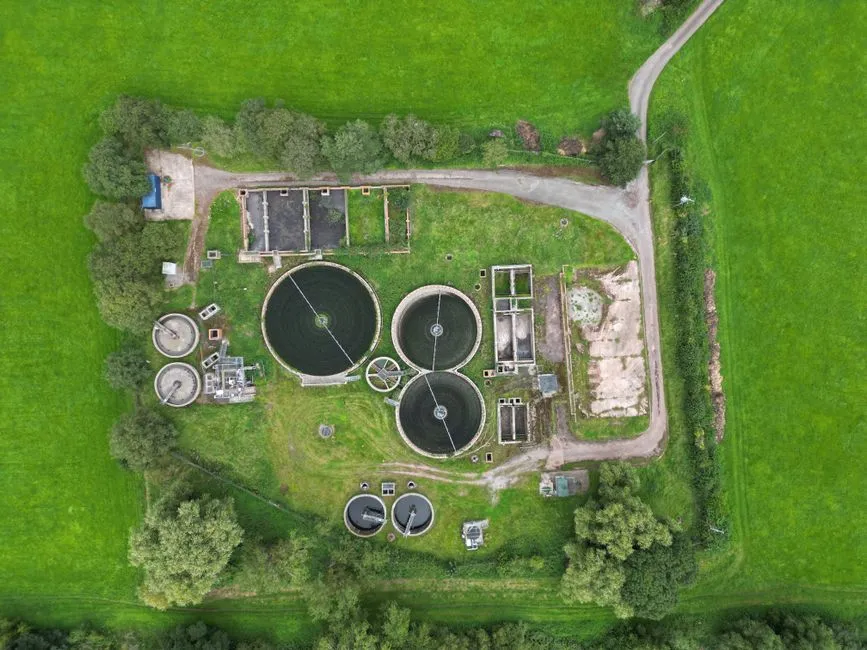
The treatment train a Laurens-area fabricated metals plant uses to hit PSNS-equivalent POTW limits is a fixed sequence, and each step has a defined purpose, outlet spec, and failure mode if it is skipped (HydropureWater, 2026-01). A rotary mechanical bar screen upstream of equalization keeps rags, wipes, and tramp metal out of the sludge train, which is the single most common cause of premature press-cloth failure downstream. Equalization smooths pH into the 6–9 band and pulls the flow coefficient of variation below 0.5; sizing hinges on capturing the full batch-dump profile, not the daily average. Oil/grease removal follows, typically a corrugated-plate interceptor or a DAF pre-stage. Hexavalent chrome reduction uses sodium metabisulfite (or ferrous sulfate) at pH 2–3 with ORP controlled around 250–300 mV; the trivalent form then precipitates as Cr(OH)₃ in the pH 8.5–9.5 stage. Where alkaline cyanide plating is in use, NaOCl alkaline chlorination oxidizes cyanide to cyanate and then to CO₂ and nitrogen, and that step must precede metals precipitation or it resolubilizes the precipitates downstream. Hydroxide precipitation of dissolved metals at pH 8.5–9.5 with NaOH feeds a DAF system for metal-finishing wastewater or a high-efficiency sedimentation tank for solids separation. A skid-mounted automatic chemical dosing system runs feedforward (flow-paced) and feedback (pH/ORP) control on a PLC, with calibration columns and stroke-count totalizers on every pump; dosing blind is the most common route to an effluent excursion. pH trim brings the stream into the POTW discharge band, and final polishing is added only when the local limit is tighter than PSNS, the plant reuses rinsewater, or a new rule forces it.
DAF sizing is where pretreatment design succeeds or fails. The three knobs are hydraulic surface loading (4–20 m/h depending on model and floc density), air-to-solids ratio (A/S, 0.005–0.060 with 0.02 a typical design point), and recycle rate (10–30% of forward flow). Pushing A/S higher produces a drier float but costs blower power and can shatter fragile floc; pushing recycle rate higher improves TSS removal but dilutes the chemistry and inflates equalization demand. The design envelope is summarized below.
| DAF parameter | Operating range | Typical design point | Failure mode if pushed too far |
|---|---|---|---|
| Hydraulic surface loading | 4–20 m/h | Selected from jar tests and floc density | High rate resuspends floc; low rate wastes footprint |
| Air-to-solids ratio (A/S) | 0.005–0.060 | 0.02 | High A/S shatters fragile floc and costs blower power |
| Recycle rate | 10–30% of forward flow | Set by effluent TSS target | High recycle dilutes chemistry and inflates EQ demand |
| Float solids (out of DAF) | 2–5% dry solids | ~3% | Low float solids overload downstream dewatering |
Sludge Handling: How the Metals Leave the Building
Floated metal-hydroxide sludge typically runs 2–5% dry solids out of the DAF and dewaters to 25–35% with a plate and frame filter press for metal hydroxide sludge. A belt press is cheaper and continuous but caps out around 22% dry solids on metal hydroxide; if the hauler is paying by wet ton, plate and frame pays back. Alarm and shutdown interlocks on pH excursion, ORP out of range, and high TSS should automatically divert flow back to the equalization basin header so a chemistry upset does not become a discharge violation. Sludge handling closes the mass balance — letting the floated floc sit in a sump or get hauled as a liquid is a second compliance problem, not a solution, and a hauler that rejects a wet load forces the issue back onto the plant floor.
When Polishing Is Required: Reuse, Tighter Local Limits, and the 2026 PFAS Question
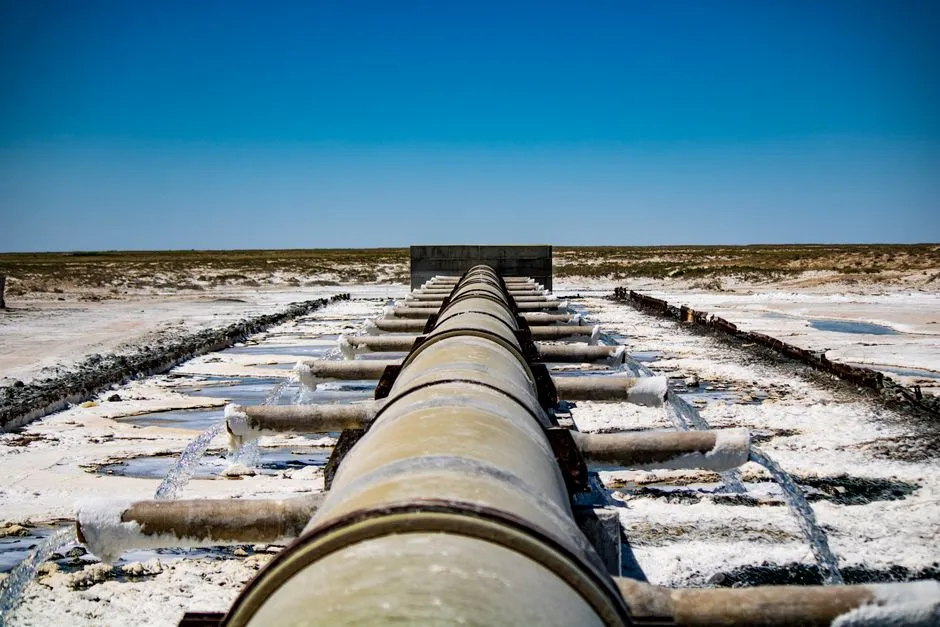
Most fabricated metals plants hit sewer limits with the train above and never need a polishing step. The cases that do are predictable: the Laurens POTW tightens local limits below PSNS, the plant reuses rinsewater and needs RO-quality feed, or a new rule forces it (HydropureWater, 2026-01). For BOD/COD tightening or water reuse, a submerged PVDF MBR for reuse and tighter discharge limits delivers sub-1 μm filtration and stable effluent that can be sent to cooling tower makeup or rinsewater reclaim. For sub-ppm TDS or specific metal caps (nickel <0.1 mg/L for some reuse specs, for example), an RO system is required, and the multi-media filter upstream must hold SDI15 below 3 or the RO membranes fail early. The 2026 PFAS question is the freshest design input: EPA has a live rulemaking scoped to chrome finishing facilities as of 2026 with no numerical limit published. The correct 2026 move is to design the train so an anion-exchange or GAC polish skid can be bolted on later, not to install it now and pay to operate it ahead of any actual limit. Closed-loop zero liquid discharge is rarely economic for a fabricated metals plant unless water scarcity or a specific reuse-economics case supports the capital. For a closer look at the bolt-on decision and the cost logic, see the POP-compliant PFAS removal buyer's guide for 2026, and for a comparable Upstate-style compliance frame on a different process, see fabricated metals plants near Springfield, MA meeting 2026 pretreatment limits.
Permit and Recordkeeping Checklist for Laurens-Area Plants
The items below are the ones that actually trigger a Notice of Violation if they are missing, based on the compliance posture described in HydropureWater (2026-01) and the federal categorical frame.
- Confirm whether 40 CFR Part 433 applies to the specific operation mix; a stamping shop that ships only dry parts to a separate finisher is generally outside the category, while a facility running its own zinc, nickel, or chromic acid tank is inside it.
- Pull the current Laurens POTW local limits and compare parameter-by-parameter against the federal PSES and PSNS tables; design to the stricter number on each row.
- Maintain a written sampling plan covering a full week of 24-hour composite flow before specifying equalization, so the design captures the Friday afternoon dump and not just the weekday average.
- Keep calibration records and stroke-count totalizers for each chemical dosing pump; dosing blind is the most common route to an effluent excursion.
- Document the alarm and shutdown interlock test schedule for pH, ORP, and TSS so a chemistry upset cannot become a discharge violation.
- For a similar primer on primary solids capture upstream of pretreatment, see primary sedimentation tank design and performance for 2026; for an analogous compliance frame on a different metals sector, see mining and metals plants near Halo meeting 2026 pretreatment limits.
Frequently Asked Questions
What capital range should a Laurens-area fabricated metals plant budget for a 2026 pretreatment train that hits PSNS-equivalent local limits?
The honest answer is that the budget depends on flow, influent concentrations, and whether the plant reuses water, and the supplied research does not publish a 2026 price list. What a buyer should request from any vendor is a line-item proposal keyed to a one-week composite sample, a stated equalization residence time, a stated DAF hydraulic loading and A/S ratio, and a stated sludge dewatering target dry-solids percentage. Without those four numbers attached to a quote, the buyer is comparing scopes, not prices, and the lowest proposal is almost always the one with the thinnest equalization basin.
How do I pick a pretreatment equipment supplier for a Laurens POTW permit, and what should I ask the shortlist?
Pick a supplier that will bench-test the chemical dosing interlocks on a skid before shipment, supply calibration columns and stroke-count totalizers on every pump, and provide a documented equalization sizing basis tied to a one-week composite sample. Ask each bidder for the same three documents: a P&ID with the interlock logic shown, a basis-of-design memo naming the A/S ratio and hydraulic surface loading used, and a reference list of at least two metal-finishing sites currently discharging under a categorical permit. A bidder who cannot produce those three is not yet a credible shortlist for a 40 CFR Part 433 site.
Why does the local Laurens POTW limit matter if the federal categorical standard already covers my metals?
Because 40 CFR 403.5 local limits are always at least as stringent as the federal table and in practice tighten the parameters most often exceeded at fabricated metals sites — copper, nickel, zinc, lead, and silver — plus oil & grease, TSS, and pH (HydropureWater, 2026-01). The plant must meet whichever limit is stricter on each parameter, so the design envelope is built from the Laurens POTW table, not the federal table alone.
Should I install a PFAS polish skid in 2026 or wait for the EPA rulemaking to publish a number?
Wait. EPA has a live 2026 rulemaking scoped to chrome finishing facilities with no numerical PFAS limit published (HydropureWater, 2026-01). The correct 2026 design posture is to route the train so an anion-exchange or GAC polish skid can be bolted on later, and to record that decision in the basis-of-design memo so the future install is a planned change rather than an emergency retrofit.