Why Little Chute Food & Beverage Plants Are Re-evaluating Activated Sludge in 2026
Little Chute sits inside the Fox River corridor in Outagamie County, Wisconsin, where a long history of cheese, dairy, paper, and specialty food processing has shaped the wastewater profile of every industrial discharger along the river. The Lower Fox River has carried combined industrial and municipal discharge for more than a century, and that history is the reason Wisconsin regulators continue to tighten residual and nutrient limits under NR 211 and NR 243. Plant engineers working in cheese, dairy, brewery, and bakery operations across Little Chute, Kaukauna, and Appleton now face 2026 compliance reviews that look harder at residuals even where flow-based effluent limits are stable.
The wastewater those plants generate is not municipal in character. Cheese whey dumps push lactose and protein loads above 5,000 mg/L COD in minutes. Brewery clean-in-place (CIP) cycles send caustic, acid, and high-temperature rinses through the equalization basin in a single shift. Bakery washwater carries suspended flour and sugar that swing FOG readings overnight. A conventional activated sludge basin designed for steady municipal-style loading often loses its solids blanket during those spikes, and the operator takes the permit risk on the back end.
For a Little Chute plant engineer, the question is not "which technology is better in the abstract" but "which technology matches my F&B sub-stream, my site footprint along the Fox River corridor, and my 2026 compliance risk under NR 211 and NR 243." This article evaluates these options based on those site-specific operational requirements.
How MBR and CAS Actually Work in a Food & Beverage Plant
Conventional activated sludge (CAS) is a two-stage biological and physical system. Microorganisms in an aeration basin consume BOD and COD, converting organic matter into water, carbon dioxide, and new biomass; a downstream clarifier then settles that biomass so treated water can overflow to disinfection or discharge. The health of the microbial community depends on dissolved oxygen, pH, temperature, and nutrient balance, and any shock to those parameters slows the system or strips solids over the weir. According to the process explanation in the Racoman MBR guide (racoman.com, 2025), MBR replaces the clarifier with submerged microfiltration (MF) or ultrafiltration (UF) membranes whose pore sizes of 0.1 to 0.01 micrometers physically retain bacteria, viruses, and most suspended solids while treated water passes through.
The practical difference for an F&B plant is what happens during a whey dump or a brewery CIP spike. A CAS clarifier can lose its sludge blanket when biomass is washed out with the surge; the operator then sees TSS and BOD climb in the effluent for hours. An MBR has no clarifier. All biomass stays inside the bioreactor, and the membrane barrier keeps effluent quality consistent even when influent swings, because the physical barrier does not depend on settleability (racoman.com, 2025).
Because MBR decouples hydraulic retention time (HRT) from solids retention time (SRT), the reactor can hold a much higher mixed liquor suspended solids (MLSS) concentration than CAS. Higher MLSS means a smaller aeration basin for the same organic load, which is the engineering reason MBR systems shrink the site footprint. It also means slow-growing nitrifiers are retained inside the system, which improves ammonia removal on high-strength food streams (racoman.com, 2025).
MBR vs CAS for F&B Wastewater: Side-by-Side Comparison
The trade-offs below are the ones a Little Chute plant engineer should weigh against permit limits, footprint, and operator skill. Numbers and ranges that are not present in the supplied research are flagged as qualitative so you can request them directly from suppliers during quotation.
| Parameter | Conventional Activated Sludge (CAS) | Membrane Bioreactor (MBR) |
|---|---|---|
| Effluent TSS and BOD | Qualitative range for well-operated CAS; no specific numeric value supplied in research. Performance depends on clarifier settleability during shock loads. | Near-reuse-quality effluent free from suspended solids and pathogens, produced by 0.1 to 0.01 μm MF/UF membranes (racoman.com, 2025). |
| Footprint | Separate aeration basin, clarifier, and sludge-return structures; largest site area of the two options. | Verified 60% smaller footprint than conventional systems at the 10 to 2,000 m³/day scale, per the integrated MBR membrane bioreactor system catalog data (HydropureWater verified product catalog, 2026). |
| Biomass control and MLSS | MLSS limited by clarifier settleability; risk of sludge washout during shock loads. | High MLSS retained inside the bioreactor; HRT and SRT decoupled; tolerant of high-strength F&B loads (racoman.com, 2025). |
| Operator skill and tasks | Familiar to municipal-trained operators; routine wasting and DO control. | Adds membrane cleaning, integrity testing, and aeration scouring; the DF series PVDF flat sheet MBR module uses an integrated aeration box for continuous scouring (HydropureWater verified product catalog, 2026). |
| Reuse potential | Usually requires tertiary polishing (sand filter, UF, RO) before any reuse. | Effluent suitable for irrigation, industrial process water, and direct potable reuse with additional treatment (racoman.com, 2025). |
| Energy demand | Lower total energy per m³ in most cases; qualitative comparison, specific kWh figures not supplied in research. | Additional air required for membrane scouring; DF series flat sheet is stated to use 10 to 20× less energy than external cross-flow systems (HydropureWater verified product catalog, 2026). |
| F&B shock-load response | Clarifier can lose solids blanket during whey, CIP, or sugar dumps; effluent TSS rises for hours. | Membrane barrier holds effluent consistent regardless of influent variation (racoman.com, 2025). |
For a broader procurement-cost view beyond this technical matrix, the MBR cost per m³ 2026 guide walks through the budgetary items a Wisconsin F&B plant should request from vendors.
Which F&B Sub-Stream Pushes You Toward MBR
Different food and beverage waste streams stress activated sludge in different ways. The matrix below maps each common Little Chute sub-stream to the technology that handles it most defensibly, with the caveat that every site should confirm its own peak loads before sizing.
| F&B sub-stream | Characteristic load | Preferred path | Why |
|---|---|---|---|
| Cheese and dairy (whey, CIP) | Very high BOD/COD, lactose surges, pH swings, FOG | MBR with DAF pretreatment | High-MLSS operation and consistent effluent quality protect NR 211/243 discharge limits during whey dumps when a CAS clarifier can be stripped. |
| Breweries and beverage bottling | Large daily flow swings, CIP-caustic spikes, warm temperature | MBR | Membrane barrier keeps effluent consistent regardless of influent variation, which is exactly the profile brewery CIP generates (racoman.com, 2025). |
| Bakery and confectionery | High carbohydrate and sugar load, rapid biomass growth, seasonal campaigns | CAS with disciplined wasting, or MBR during peak campaigns | CAS handles this if sludge wasting is disciplined; MBR simplifies clarifier risk in seasonal campaigns. See the confectionery wastewater COD removal 2026 guide and the bakery wastewater COD removal 2026 guide for matching design data. |
| Starch, fruit, vegetable, and specialty food | Seasonal campaigns, high TSS, variable pH | MBR with screening pretreatment | Removes the need for a separate tertiary clarifier and produces reuse-quality water for washdown loops; the starch wastewater COD removal 2026 guide covers matching design data. |
For every sub-stream, request the following from suppliers before sizing either system: peak versus average COD and BOD, FOG load, CIP chemical profile, temperature range, and the specific effluent limits written into your 2026 Wisconsin DNR permit. The F&B 2026 pretreatment compliance playbook covers the documentation side of that data request.
Decision Framework: When CAS Still Wins in Little Chute
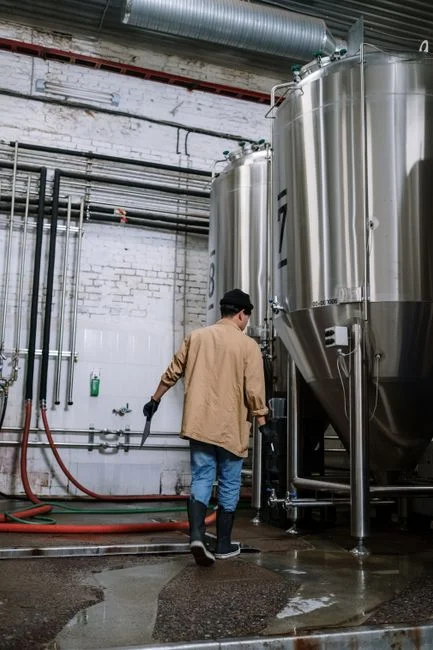
CAS is not a legacy loser in this comparison. It is the right answer when the site reality matches three conditions that are common in the Fox River corridor.
First, if your existing aeration basin and clarifier are structurally sound, your 2026 Wisconsin DNR permit does not require sub-1-micrometer effluent, and you have land to expand, retrofitting CAS with better diffusers, dissolved-oxygen control, and disciplined sludge wasting is usually the lower-CAPEX path. Pretreatment improvements such as a DAF system for FOG and suspended solids and a rotary mechanical bar screen often close the gap to compliance without touching the basin.
Second, if your plant does not have a water-reuse target — process water, boiler feed, washdown loops — and discharges to a municipal sewer under a simple pretreatment permit, CAS plus good screening and DAF typically suffices.
Third, if your operator team has no membrane experience and the budget cannot absorb membrane CIP chemicals, replacement modules, and integrity testing, CAS avoids a new maintenance burden. Membrane cleaning is a defining MBR operational task, and the cost of that learning curve is real (racoman.com, 2025).
Sizing and Spec Checklist for an F&B MBR in Little Chute
Use this list as a procurement action sheet before you ask any vendor for a quote. Every line ties back to a verified catalog fact, a regulatory input you must obtain, or a decision the supplier has to make in writing.
- Capacity band. Verify your design flow against the 10 to 2,000 m³/day envelope of integrated MBR systems, per the verified product catalog (HydropureWater, 2026).
- Membrane specification. Confirm PVDF material, 0.1 μm pore size, and submerged flat-sheet or hollow-fiber configuration. The DF series flat sheet delivers 0.1 μm with continuous aeration scouring and individually replaceable elements at 80 to 225 m² and 32 to 135 m³/day per module (HydropureWater verified product catalog, 2026).
- Footprint. Budget for the verified 60% footprint reduction versus CAS, and confirm the basin footprint fits your Little Chute site with access left for module replacement (HydropureWater verified product catalog, 2026).
- Pretreatment. Pair the MBR with rotary bar screening and DAF for FOG and suspended solids to protect membrane life; confirm sizing against your peak flow.
- Compliance data to request in writing. Effluent TSS, BOD, COD, turbidity, and fecal-coliform guarantees at both design flow and peak flow, plus stated membrane life and CIP chemical consumption. No specific numeric guarantees were supplied in the research, so request these directly from each shortlisted vendor and compare them line by line.
Frequently Asked Questions
What is the realistic budget for an MBR versus a CAS retrofit at a Little Chute F&B plant?
No specific cost figures for MBR versus CAS retrofits at Wisconsin F&B plants were supplied in the research. Instead of asking for a per-m³ number in advance, request each shortlisted vendor to quote on the same basis: your verified design flow, your peak flow, your required effluent limits, and a 10
Frequently Asked Questions
Is MBR better than conventional activated sludge for a food and beverage plant in Little Chute, WI?
For Food and Beverage (F&B) facilities in Little Chute, Membrane Bioreactor (MBR) technology is generally superior to Conventional Activated Sludge (CAS) due to its ability to handle high-strength, variable organic loads common in dairy and brewery waste. While CAS relies on gravity-based secondary clarifiers that are sensitive to sludge bulking and biomass density, MBR uses physical membrane filtration to ensure complete solids retention, allowing for higher Mixed Liquor Suspended Solids (MLSS) concentrations typically ranging from 8,000 to 15,000 mg/L.
How much smaller is an MBR footprint compared to CAS for a 500 m³/day food plant?
An MBR system typically requires 50% to 70% less physical footprint than a CAS system for a 500 m³/day flow. Because MBR eliminates the need for large secondary clarifiers and operates at significantly higher biomass concentrations, the total tank volume required for biological treatment is reduced, often allowing the entire process to fit into a modular or containerized configuration that minimizes civil construction costs.
What effluent quality can a 0.1 μm MBR membrane guarantee for brewery or dairy wastewater in 2026?
A 0.1 μm pore size membrane acts as a physical barrier that guarantees an effluent total suspended solids (TSS) concentration of less than 1 mg/L and a turbidity of less than 0.2 NTU. This level of filtration effectively removes almost all bacteria and significant portions of viruses, consistently producing effluent with a Biological Oxygen Demand (BOD) below 5 mg/L, which is ideal for meeting stringent Wisconsin Department of Natural Resources (WDNR) discharge limits or for onsite water reuse applications.
Should I retrofit my existing CAS basin or buy a new MBR system for a cheese whey wastewater stream?
Retrofitting an existing CAS basin to an MBR system is often the most cost-effective approach for high-strength streams like cheese whey, provided the existing tank structure is sound. By converting the existing aeration basin into an MBR bioreactor and installing submerged membrane cassettes, you can increase the hydraulic capacity and organic loading rate of the plant by two to three times without expanding the physical footprint, which is critical if site space in Little Chute is constrained.
What information do I need to send a supplier to get a sized MBR quote for a food and beverage plant in Little Chute?
To receive an accurate MBR quote, you must provide your average and peak daily flow rates (m³/day or GPD), the chemical oxygen demand (COD) or BOD concentrations of the raw influent, and the total nitrogen and phosphorus levels. Additionally, specify the discharge requirements set by local Little Chute or regional wastewater authorities, the temperature range of the influent, and any existing tank dimensions if you are considering a retrofit project.