What Confectionery Wastewater Actually Looks Like
Confectionery wastewater is one of the strongest food-industry effluents a process engineer will encounter, and the variability across plants is wide enough that equipment must be specified against a defined envelope, not a single number. The 2023 review by Szulc and Cydzik-Kwiatkowska in Energies (published 2023-01) documented COD between 2,500 and 20,025 mg O₂/L, BOD₅ from 500 to 8,000 mg O₂/L, NH₄-N of 30–120 mg N/L, and TP of 3.2–157 mg P/L, with an acidic pH near 5 driven by readily fermentable sugars.
The same review noted that confectionery plants typically discharge on the order of 300–500 m³ of wastewater per month, so even modest plants generate continuous high-load flows. The contaminant mix is broader than just sugar: the influent carries dissolved sugars, coarse impurities, emulsified fat particles, organic colloids and solutes, surfactants, dyes, and other chemical additives (Szulc and Cydzik-Kwiatkowska, 2023-01).
A single-plant snapshot from the Egyptian Journal of Chemistry (Abdel-Rahman et al., 2022) anchors that envelope in measured numbers: a confectionery, chocolate, and bakery factory in El-Obour Industrial City averaged raw COD of 5,396 mg/L, BOD₅ of 2,526 mg/L, and TSS of 908 mg/L, with limited nutrients at 55 mg TKN/L and 3.3 mg TP/L. Because the suspended fraction is small relative to the dissolved COD, most of the organic load is bioavailable, which is the single most important design fact in the table below.
| Parameter | Range / value | Source |
|---|---|---|
| COD | 2,500–20,025 mg O₂/L | Szulc and Cydzik-Kwiatkowska, 2023-01 |
| BOD₅ | 500–8,000 mg O₂/L | Szulc and Cydzik-Kwiatkowska, 2023-01 |
| TSS | 908 mg/L (El-Obour plant average) | Abdel-Rahman et al., 2022 |
| NH₄-N | 30–120 mg N/L | Szulc and Cydzik-Kwiatkowska, 2023-01 |
| TP | 3.2–157 mg P/L (3.3 mg/L at El-Obour) | Szulc and Cydzik-Kwiatkowska, 2023-01; Abdel-Rahman et al., 2022 |
| pH | ~5 (acidic) | Szulc and Cydzik-Kwiatkowska, 2023-01 |
| Plant flow | ~300–500 m³/month | Szulc and Cydzik-Kwiatkowska, 2023-01 |
| Global market | USD 186.50 billion (US, 2022); 3.03% annual growth | Szulc and Cydzik-Kwiatkowska, 2023-01 |
The market figure is not engineering data, but it tells the procurement committee why the wastewater problem is expanding: the global confectionery sector reached USD 186.50 billion in 2022 and is expected to grow at 3.03% annually (Szulc and Cydzik-Kwiatkowska, 2023-01). Larger plants and more product variety mean wider influent swings, which directly shapes how the next three sections are written.
Why COD Removal Is the Design Driver, Not BOD or Nutrients
COD — not BOD₅ or nutrient concentrations — sets equipment sizing for this stream, because the bulk of the organic load is readily fermentable. At the El-Obour plant, BOD₅ of 2,526 mg/L against COD of 5,396 mg/L implies a biodegradable share of roughly 47% (Abdel-Rahman et al., 2022), high enough that any sizing assumption of BOD ≈ COD will understate reactor volume and aeration demand. A high-rate anaerobic stage sized to the actual COD load is therefore more load-appropriate than a long-aerobic conventional activated sludge plant designed for the same raw influent.
The nutrient profile changes the biological design in a different way. NH₄-N of 30–120 mg N/L and TP of 3.2–157 mg P/L (Szulc and Cydzik-Kwiatkowska, 2023-01) are low relative to the COD, so the wastewater is biodegradable but nutrient-limited; most of the nitrogen and phosphorus needed for biomass growth must come from recycle streams, chemical dosing, or co-treatment, not from the raw influent. The same review concludes that anaerobic digestion of confectionery wastewater does not significantly remove nitrogen or phosphorus, so any TN or TP discharge limit must be addressed downstream of the anaerobic stage, not within it.
The acidic pH near 5 (Szulc and Cydzik-Kwiatkowska, 2023-01) is a control parameter, not just a curiosity. Acid-phase fermentation in poorly buffered equalization tanks can pull pH further down and inhibit methanogens in the downstream reactor. The design consequence is that equalization must include pH monitoring and either controlled feed or alkali dosing, and the anaerobic reactor must be sized with enough alkalinity reserve to absorb the volatile fatty acid pulse from a batch CIP discharge.
Pretreatment Train: Screening, FOG Removal, and Equalization
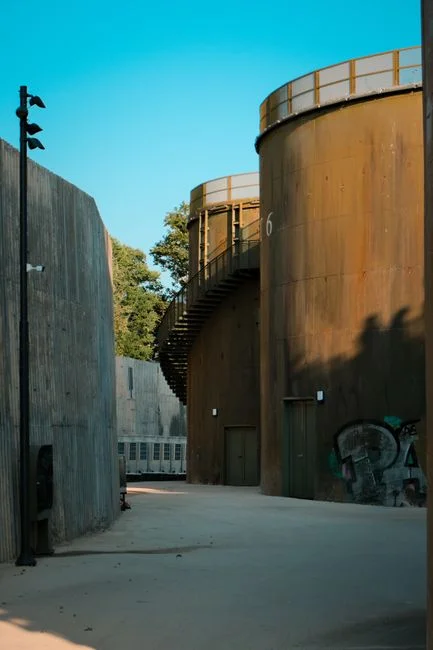
The three unit operations that consistently protect every downstream stage on confectionery streams are a rotary bar screen at headworks, a DAF unit for fats/oils/grease and floatables, and a buffered equalization tank with pH control. Coarse and fine screening come first because confectionery wash-down carries fibrous debris, packaging residues, and other coarse impurities (Szulc and Cydzik-Kwiatkowska, 2023-01); without a rotary mechanical bar screen for headworks, pumps, mixers, and any downstream membrane rack up rags and force unscheduled shutdowns.
FOG and floatable removal sits next, justified directly by the contaminant list — emulsified fat particles and surfactants (Szulc and Cydzik-Kwiatkowska, 2023-01). Dissolved air flotation is the standard unit operation for this fraction in food and beverage plants because it lifts emulsified oil and attached solids to the surface as a float that can be skimmed, instead of pushing that load into an anaerobic reactor where it can coat biomass and float a sludge blanket. A dissolved air flotation (DAF) system for FOG and floatable removal is the second piece that maps directly to this stream.
Equalization handles both flow and load. The cited 300–500 m³/month plant-level discharge (Szulc and Cydzik-Kwiatkowska, 2023-01) is small in absolute terms, but batch cooking and CIP cycles produce strong diurnal swings that destabilize anaerobic biomass if fed directly. Buffering the feed, monitoring pH, and providing mixing without aeration are the minimum functions a pretreatment equalization tank must deliver before the primary biological stage.
Primary Biological Stage: Choosing Between UASB, EGSB, AnMBR, and Labyrinth Reactors
The primary biological stage is where COD removal performance is won or lost, and the 2023 review (Szulc and Cydzik-Kwiatkowska, 2023-01) gives enough peer-reviewed data points to make a defensible choice rather than a vendor-led one. UASB and two-stage anaerobic systems have been documented at about 98% COD removal, the latter at an overall OLR of 12.5 g/L·d. EGSB reactors have reached about 88% COD removal at OLR of 2.9 ± 0.8 g COD/L·d, with average biogas production of 1,730 m³/d reported in the same review. Anaerobic membrane bioreactors (AnMBR) have achieved up to 99% COD removal across an OLR range of 1.1–7.9 g COD/L·d. Ultrasound-assisted anaerobic treatment has been reported at 85.46% COD removal. Conventional anaerobic filter performance sits in the 80–96% range at OLR 2–4.67 g COD/L·d.
The innovative labyrinth-flow bioreactor reported in the same study (Szulc and Cydzik-Kwiatkowska, 2023-01) is a different point on the trade-off curve: COD removal of 75.4 ± 1.5% at OLR 5.0 g COD/L·d and 75.0 ± 0.6% at OLR 6.0 g COD/L·d, with methane production of 94.7–97.1 L CH₄/d and a CH₄ content in biogas of up to 70.1 ± 0.7%. That configuration is the one to specify when the design driver is energy recovery rather than maximum COD cut, and the design, sizing, and procurement logic for this reactor class is covered in a separate UASB reactor design guide for high-COD wastewater.
| Reactor type | Reported COD removal | OLR / operating range | Source |
|---|---|---|---|
| UASB | ~98% | Not specified in source range cited | Szulc and Cydzik-Kwiatkowska, 2023-01 |
| Two-stage anaerobic | ~98% | 12.5 g COD/L·d overall | Szulc and Cydzik-Kwiatkowska, 2023-01 |
| EGSB | ~88% | 2.9 ± 0.8 g COD/L·d | Szulc and Cydzik-Kwiatkowska, 2023-01 |
| AnMBR | Up to 99% | 1.1–7.9 g COD/L·d | Szulc and Cydzik-Kwiatkowska, 2023-01 |
| Labyrinth-flow anaerobic | 75.4 ± 1.5% to 75.0 ± 0.6% | 5.0–6.0 g COD/L·d; 94.7–97.1 L CH₄/d | Szulc and Cydzik-Kwiatkowska, 2023-01 |
| Anaerobic + ultrasound pretreatment | 85.46% | Not specified in source | Szulc and Cydzik-Kwiatkowska, 2023-01 |
| Anaerobic filter | 80–96% | 2–4.67 g COD/L·d | Szulc and Cydzik-Kwiatkowska, 2023-01 |
The decision rule in plain terms: a high OLR and a space-constrained site favor UASB or EGSB; strict supernatant quality or a reuse target favors AnMBR; an energy-recovery emphasis with moderate OLR favors a labyrinth or conventional UASB paired with CHP. The market context for that energy-recovery case is laid out in the biogas-from-wastewater market data for 2026, which is useful for committee-level justification. None of these anaerobic options replaces a polishing stage; nitrogen and phosphorus removal must still be designed downstream (Szulc and Cydzik-Kwiatkowska, 2023-01). For reuse-quality effluent, an MBR membrane bioreactor for polishing anaerobic effluent is the conventional next step.
Polishing and Reuse: MBR, Conventional Aeration, and RO
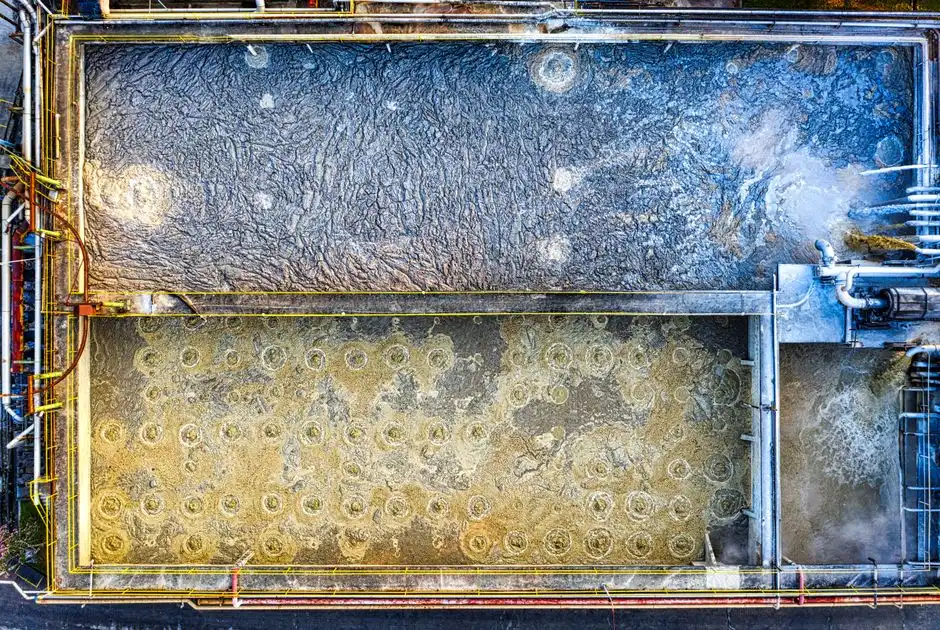
The polishing stage is sized to the residual COD, TSS, nutrients, and any color or surfactant traces carried through the anaerobic reactor, not to the raw influent. AnMBR and EGSB effluents are already low in TSS, so a downstream MBR is effectively a residual-COD and nutrient polishing step rather than a solids-separation step. A vendor-published case from Aquacycl claims microbial fuel-cell-based treatment handles BOD higher than conventional technologies with up to 95% removal and no chemical dosing (Aquacycl, undated commercial page), which is a useful framing for the no-chemical reuse case, but it is a vendor figure rather than a peer-reviewed confectionery result, so it should be treated as marketing context, not a design basis.
Specify an MBR when discharge TSS limits are tight, when the plant wants to reuse effluent for wash-down or boiler feed, or when an RO system is being added downstream and needs a low-SDI feed. The relevant demand backdrop is captured in the MBR market outlook for 2026, which is useful for budgeting conversations. For full process-water reuse, an industrial RO system for process-water reuse is the unit that closes the loop, but only when boiler or cooling economics justify the energy and concentrate disposal cost. The supplied research does not give a peer-reviewed COD-removal number for an MBR-on-confectionery-effluent train, so request site-specific pilot data before specifying, and do not assume a 95% figure from another industry transfers to this one.
2026 Selection Framework: A Four-Step Decision Path
Step 1 is characterize. The published envelope is COD 2,500–20,025 mg O₂/L (Szulc and Cydzik-Kwiatkowska, 2023-01), and the El-Obour plant sits at 5,396 mg/L (Abdel-Rahman et al., 2022). The plant's actual values can fall anywhere in that 4× range, so a fresh characterization of COD, BOD₅, TSS, TKN, and TP on a representative production day is the first procurement deliverable, not an assumption.
Step 2 is pretreat. The three units that consistently protect the downstream train on confectionery streams are a rotary bar screen, an equalization tank with pH control, and a DAF for FOG and floatables. The contaminant list — sugars, emulsified fats, surfactants, dyes, coarse impurities (Szulc and Cydzik-Kwiatkowska, 2023-01) — is what justifies this triplet, not vendor preference.
Step 3 is choose the primary biology by OLR target and reuse goal. A high-OLR, energy-recovery site fits a UASB or labyrinth configuration (75–98% COD removal per Szulc and Cydzik-Kwiatkowska, 2023-01). Strict supernatant quality or a reuse target fits an AnMBR (up to 99% per the same source). A low-OLR site with a footprint constraint fits an EGSB (~88% per the same source). The reactor does not have to be selected before pretreatment is fixed.
Step 4 is polish. Use MBR for reuse or tight TSS, conventional aeration for biodegradable residual only, and RO only when boiler/cooling economics justify the energy and concentrate handling. Always size to actual post-anaerobic COD and ammonia, not raw values. For an integrated packaged plant where the committee wants a single skid, an integrated water purification system can package biological and membrane stages, and a multi-media filter for ultrapure water is the typical RO pre-stage.
| Step | Decision | Trigger / evidence |
|---|---|---|
| 1. Characterize | Confirm raw COD, BOD₅, TSS, N, P on a production day | Envelope 2,500–20,025 mg/L COD (Szulc and Cydzik-Kwiatkowska, 2023-01) |
| 2. Pretreat | Bar screen + equalization with pH control + DAF | Contaminant list: fats, sugars, surfactants, debris (Szulc and Cydzik-Kwiatkowska, 2023-01) |
| 3. Primary biology | UASB / labyrinth for energy; AnMBR for reuse; EGSB for footprint | 75–99% COD removal range (Szulc and Cydzik-Kwiatkowska, 2023-01) |
| 4. Polish | MBR for TSS/reuse; aeration for residual; RO only if reuse economics justify | AnMBR/EGSB effluent already low in TSS (Szulc and Cydzik-Kwiatkowska, 2023-01) |
Frequently Asked Questions
What capital cost should we plan for a UASB or AnMBR treating confectionery wastewater?
The supplied research does not include a price for either reactor, so any number given now would be an assumption. The defensible procurement action is to request a budget estimate tied to your measured OLR (g COD/L·d) and the post-anaerobic COD target, then compare offers on the same HRT and volumetric loading basis. Reactor selection should be driven by the OLR-vs-removal data in this guide, not by a headline equipment cost.
Which supplier or technology should we shortlist for the biological stage?
Shortlist on documented performance, not on marketing claims. Ask each vendor for peer-reviewed or plant-referenced COD removal at your OLR band, the methane yield at that OLR, and a site-specific pilot proposal on your wastewater. Confirm the proposed reactor is in the 75–99% COD removal band reported in the 2023 Energies review, and confirm in writing that nitrogen and phosphorus removal are not assumed from the anaerobic stage alone.
What is the realistic lead time and what compliance risk do we face if we delay?
The supplied research does not give a lead time for a UASB, EGSB, AnMBR, or MBR system. The compliance risk is more concrete: with raw COD up to 20,025 mg/L (Szulc and Cydzik-Kwiatkowska, 2023-01), discharging untreated to a municipal sewer can exceed both COD and FOG discharge limits, so the real procurement question is the schedule of characterization and pilot work, not the equipment delivery alone. Request a written project schedule that includes the characterization week, pilot duration, and commissioning window before signing.
Can anaerobic treatment alone get us to reuse, or do we need MBR/RO?
Anaerobic treatment alone does not get to reuse on this stream. Even at 98–99% COD removal (Szulc and Cydzik-Kwiatkowska, 2023-01), the post-anaerobic COD is still in the hundreds of mg/L, and nitrogen and phosphorus are not removed by anaerobic digestion. To reuse effluent for wash-down, boiler feed, or cooling, the train needs an MBR polishing step and, for boiler-quality water, an RO pass — request reuse-grade pilot data from the polishing-stage vendor before specifying.