Why Tainan's Climate Reshapes the Blowdown Math
A 2026 hyperscale data center in Tainan needs a humid-subtropical cooling-blowdown train sized for 285,000–850,000 L/day of blowdown on a 100 MW reference site, because high ambient wet-bulb keeps cycles of concentration in the 4–6 window and drives TDS up to 1,200–6,000 mg/L (per the Genesis Water Technologies envelope cited in the Hydropure Taichung guide, applied to Tainan's wet-bulb profile). The process train is equalization → side-stream filtration → UF → LSI-controlled antiscalant dosing → industrial RO at 150–400 psi and 50–85% recovery → MVC for the concentrate, lifting total system recovery to 85–95%. Effluent must meet the Taiwan Water Pollution Control Act TDS cap near 2,000 mg/L to sewer and the tighter consent-dependent limit set by the Tainan EPB EIA scoping document — request the exact consent temperature ΔT and TDS from the Tainan EPB before specifying.
Tainan sits in the same humid-subtropical belt as Taichung, where ambient wet-bulb stays high for most of the year, and that single fact compresses the cooling-tower approach range well below what arid-site benchmarks (Phoenix, Singapore outdoor) would predict. Operators cannot push cycles of concentration aggressively without the Langelier Saturation Index drifting positive, so more blowdown is produced per MWh of IT load than a dry-climate design would generate at the same COC (per the climate logic in the Hydropure Taichung guide, applied to Tainan's wet-bulb profile).
Quantifying the load: a 100 MW reference site at PUE 1.2 yields 2,000 MWh/day of IT energy; at the 1.8 L/kWh WUE benchmark that is 3,600,000 L/day of total cooling water demand (per the mass-balance method used in the Hydropure Taichung guide, applied to a 100 MW Tainan reference site). With evaporative losses absorbing roughly 60% and COC held in the 4–6 window, blowdown lands in the 285,000–850,000 L/day band — the figure that sizes the skid and the equalization tank before the engineer picks a membrane. Hyperscale AI campuses independently consume 1.14–1.70 million L/day at typical operating density (Ecologix, cited in the Hydropure Taichung guide), confirming the order of magnitude for an AI-leaning Tainan build.
Blowdown Chemistry: TDS, Carry-Over Chemicals, and the RO Pump-Pressure Link
Blowdown from a Tainan cooling tower running COC 4–6 will arrive at the treatment skid with TDS between 1,200 and 6,000 mg/L (per the Genesis Water Technologies envelope cited in the Hydropure Taichung guide, applied to Tainan). The wide range is driven by Taiwan Power Company grid-mix-derived municipal makeup, which swings with seasonal reservoir drawdown; confirm the site COC with a water balance before specifying RO recovery, because the osmotic pressure of a 6,000 mg/L feed is roughly double that of a 1,200 mg/L feed and the operating pressure has to follow (per the feed-chemistry analysis in the Hydropure Taichung guide, applied to Tainan's municipal supply).
Treatment-chemical carry-over — biocides, molybdate-based corrosion inhibitors, and phosphonate antiscalants — accumulates in blowdown and constrains direct reuse unless the polishing pass is sized to break those species down. Antiscalant dosing and pH adjustment follow, controlled by inline LSI/RSI sensors holding the Langelier index in the −0.5 to +0.5 window (Ecologix, cited in the Hydropure Taichung guide) to prevent both scale and under-deposit corrosion through the cooling-tower basin. The cooling-tower makeup TDS preference below 500 ppm (Ecologix) is the technical argument for recycling RO permeate rather than dumping blowdown: permeate at 10–50 mg/L blends cleanly with municipal makeup, drops the basin TDS, and lets the operator push COC back up to 5–6 without tripping LSI.
| Parameter | Low-COC End (CoC 4) | High-COC End (CoC 6) | Design Implication |
|---|---|---|---|
| Feed TDS to RO skid | ~1,200 mg/L | ~6,000 mg/L | High-pressure pump must follow the water balance, not a generic spec |
| Approximate osmotic pressure | ~1× baseline | ~2× baseline | RO operating pressure scales with the high end of the feed envelope |
| LSI control band | −0.5 | +0.5 | Inline LSI sensor gates antiscalant/pH dosing; do not push past +0.5 |
| Antiscalant target | Phosphonate blend at lower TDS | Phosphonate or polymeric, recalibrated for higher silica scaling risk | Select chemistry against the 6,000 mg/L envelope to avoid under-dosing at peak CoC |
| Carry-over species of concern | Residual biocides, low-level inhibitor residuals | Concentrated biocides, molybdate inhibitors, phosphonates | Polishing pass must address inhibitor and biocide residuals before reuse |
The Unit-Operation Train, in Order
The unit operations run in the order below, sized for the 285,000–850,000 L/day blowdown band on a 100 MW reference site. Equalization comes first and is sized to the full band; the equalization tank is the buffer that lets the downstream skids run at steady state through COC swings. Side-stream filtration — typically the first lever pulled to push COC from 4 to 6 — runs $50,000–$200,000 (Genesis Water Technologies, cited in the Hydropure Taichung guide) and is the cheapest single intervention for reducing blowdown volume. A UF pretreatment skid ahead of the RO protects the membranes from carry-over solids and biological fouling, followed by a PLC-controlled antiscalant and pH dosing skid gated by the LSI sensor.
The industrial RO system then runs at 150–400 psi and 50–85% recovery on blowdown, with permeate at 10–50 mg/L TDS (Genesis Water Technologies, cited in the Hydropure Taichung guide) sent to a permeate storage tank and blended into cooling-tower makeup. The RO concentrate feeds a mechanical vapor compression (MVC) unit: a 35 m³/day concentrate feed to MVC produces roughly 33 m³/day of distillate at 15–25 kWh/kgal energy draw (Genesis Water Technologies, cited in the Hydropure Taichung guide), which lifts total system recovery into the 85–95% band — the threshold most ZLD-flavoured consent orders in Taiwan now reference. The distillate is clean enough to blend back into cooling-tower makeup, and the MVC brine is reduced to 20–30% dissolved solids — small enough to haul or feed a crystallizer (per the MVC economics in the Hydropure Taipei guide, applied at equivalent capacity).
| Unit Operation | Role in the Train | Sizing / Operating Window |
|---|---|---|
| Equalization tank | Buffers 285,000–850,000 L/day band; steadies downstream skids through COC swings | Sized to the full blowdown envelope plus surge margin |
| Side-stream filtration | Reduces suspended solids to enable higher CoC | First lever when pushing CoC from 4 to 6 |
| UF pretreatment | Protects RO membranes from carry-over solids and biological fouling | 12–35 m³/h |
| LSI-controlled dosing | Holds Langelier index in −0.5 to +0.5; gates antiscalant and pH trim | Inline LSI/RSI sensor feedback |
| Industrial RO | Produces 10–50 mg/L TDS permeate; sends concentrate to MVC | 150–400 psi; 50–85% recovery |
| MVC on RO concentrate | Lifts total system recovery to 85–95% | ~35 m³/d concentrate → ~33 m³/d distillate at 15–25 kWh/kgal |
| MVC brine handling | 20–30% dissolved solids; haul off-site or feed a crystallizer | Volume small enough to manage by truck or downstream crystallizer |
Taiwan Regulatory Floor and Tainan EPB Overlay
At the national level, the Water Pollution Control Act and its EIA effluent standards set the floor: TDS discharged to a public sewer is generally capped near 2,000 mg/L, and direct discharge to a receiving water body is held to a tighter, consent-dependent limit set by the EIA scoping document (per the regulatory floor in the Hydropure Taichung guide, applied at the Taiwan national level). The Tainan EPB layers a consent order on top, and in practice the Tainan EPB issues consent for hyperscale data centers with a temperature differential limit above the receiving water, sized to the cooling-tower discharge temperature; verify the exact number against the consent order rather than rely on a generic value (per the local-overlay logic in the Hydropure Taichung guide, applied to Tainan EPB industrial-zone practice).
A February 2026 TNFD case study flagged blowdown salts, heavy metals, biocides, and inhibitors as the mismanaged water-quality risk class the consent will test against (per the Water Utility Report summary of the TNFD case study). Cumulative-load risk in the Tsengwen/Agongdian basin matters: when multiple facilities share a downstream municipal treatment plant, the EIA scoping will ask for cumulative discharge volumes, expected chemistry, pretreatment requirements, and an assessment of whether the receiving WWTP has the headroom. The supplied research describes the basin context qualitatively but does not quantify a Tainan-specific cumulative-load threshold; request the basin's current WWTP headroom from the Tainan EPB before sizing the discharge path.
CAPEX, OPEX, and Payback Math for a 100 MW Tainan Build
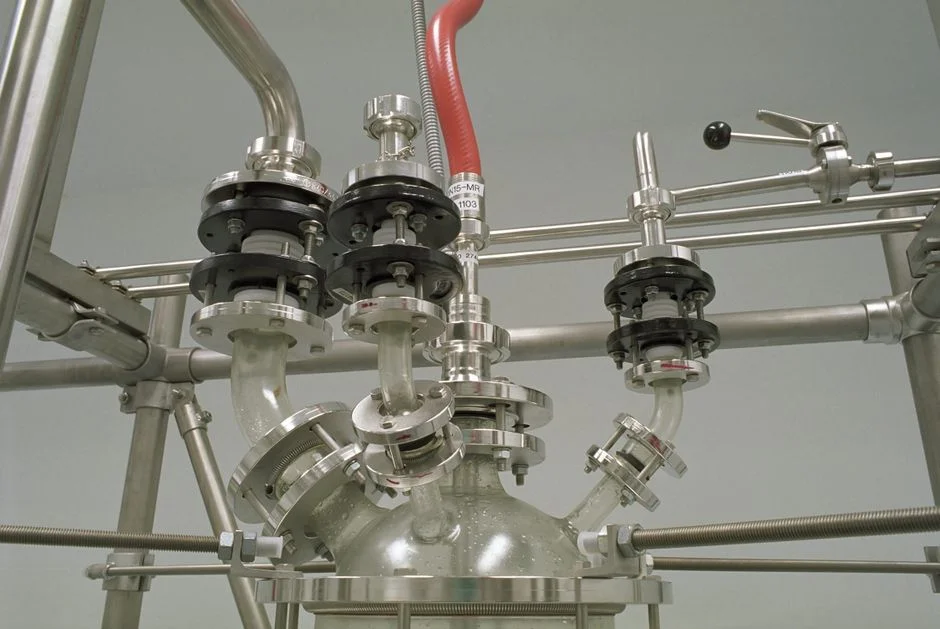
The line items below are the bands the supplied research supports; the missing Tainan-specific inputs are flagged so the procurement team can request them rather than assume a value.
| Line Item | Supplied Band (100 MW Tainan Reference) | Input to Request Before Locking the Number |
|---|---|---|
| Industrial RO unit (~50,000 GPD ≈ 190 m³/day) | $250,000–$500,000 installed CAPEX; OPEX $1.50–$3.00/kgal | Tainan-specific electricity tariff from Taiwan Power Company |
| UF pretreatment skid (12–35 m³/h) | $80,000–$220,000 | Site feed-water turbidity profile to confirm membrane area |
| Side-stream filtration (if pushing CoC 4 → 6) | $50,000–$200,000 | Target CoC window from the water balance |
| Spare RO and UF membrane elements | Not separately quoted in the supplied research | Replacement interval at Tainan feed TDS; request vendor MTBF |
| Discharge-fee avoidance (Genesis Water Technologies) | $5–$15/kgal on 400,000 L/day → $2,000–$6,000/day, $730,000–$2.2M/yr | Tainan EPB sewer surcharge to confirm the avoidance value |
| MVC operating cost driver | 15–25 kWh/kgal distillate energy draw | Same Taipower tariff request; size against RO concentrate, not raw blowdown |
Discharge-fee avoidance of $5–$15 per kgal (Genesis Water Technologies, cited in the Hydropure Taichung guide) on a 400,000 L/day blowdown stream works out to $2,000–$6,000/day, or $730,000–$2.2M/yr — well above the RO OPEX line item (per the discharge-fee math in the Hydropure Taichung guide, applied to a 100 MW Tainan build). The supplied research gives installed CAPEX and discharge-fee bands but does not include a Tainan-specific electricity tariff or Tainan EPB sewer surcharge; request both from Taiwan Power Company and the Tainan EPB before finalising the business case. For a useful cross-check on dry-climate economics, the arid-climate Riyadh data center blowdown guide shows the contrast in water-cost-driven payback; for closed-loop chemistry detail, the closed-loop cooling water treatment reference documents the LSI/COC relationship in more depth.
Frequently Asked Questions
What cycles of concentration and LSI window should we lock into the design for a Tainan hyperscale site?
Hold cycles of concentration in the 4–6 window and the Langelier Saturation Index between −0.5 and +0.5 (Ecologix, cited in the Hydropure Taichung guide). Pushing above CoC 5–6 without advanced treatment creates scaling and microbiologically influenced corrosion that operators then pull back, eroding the very water savings the higher CoC was meant to deliver (Genesis Water Technologies, 2026).
How does feed TDS change the RO high-pressure pump specification for a Tainan build?
RO pump pressure scales with feed TDS: a 6,000 mg/L blowdown needs roughly double the osmotic pressure of a 1,200 mg/L blowdown, so the high-pressure pump specification must follow the water balance, not a generic 150–400 psi window (per the feed-chemistry analysis in the Hydropure Taichung guide, applied to Tainan). Commission the water balance first, then select the pump against the upper end of the envelope.
What is a defensible Tainan EPB consent-readiness checklist before the RFQ goes out?
Before issuing the RFQ, request four items from the Tainan EPB: the consent temperature ΔT above the receiving water, the EIA scoping TDS limit, the cumulative-basin load allocation against the downstream WWTP, and any consent conditions on biocide and inhibitor residuals (per the local-overlay logic in the Hydropure Taichung guide, applied to the Tainan EPB's industrial-zone practice). Permit lead time depends on the Tainan EPB consent order; a hyperscale data center consent typically bundles the EIA scoping TDS limit, the discharge temperature ΔT, and cumulative-basin load — start the EIA dialogue before RFQs.
What does a Tainan 100 MW blowdown treatment train cost, and what inputs are missing from the supplied research?
The supplied research supports $250,000–$500,000 installed for the industrial RO unit treating roughly 50,000 GPD (≈190 m³/day) of blowdown, $80,000–$220,000 for the UF pretreatment skid at 12–35 m³/h, and $50,000–$200,000 for a side-stream filtration upgrade if pushing CoC from 4 to 6 is in scope (per the CAPEX bands in the Hydropure Taichung guide, applied to a 100 MW Tainan reference site). The supplied research does not include a Tainan-specific electricity tariff or a Tainan EPB sewer surcharge — request both from Taiwan Power Company and the Tainan EPB before locking the OPEX line, since those two inputs drive the realised payback.