Why Taichung's climate reframes the entire blowdown case
Taichung sits in a humid subtropical belt where ambient wet-bulb stays high for most of the year, and that single fact compresses the cooling-tower approach range well below what arid-site benchmarks (Phoenix, Singapore outdoor) would predict. Operators cannot push cycles of concentration (COC) aggressively without the Langelier Saturation Index (LSI) drifting positive, so more blowdown is produced per MWh of IT load than a dry-climate design would generate at the same COC (per the climate logic in the Kaohsiung cooling-blowdown engineering guide, applied to Taichung's wet-bulb profile).
Quantifying the load against that climate: hyperscale AI campuses consume 1.14–1.70 million liters per day at typical operating density (Ecologix), and the 1.8 L/kWh Water Usage Effectiveness (WUE) benchmark applied to a 100 MW site at Power Usage Effectiveness (PUE) 1.2 gives 2,000 MWh/day of IT energy and 3,600,000 L/day of total cooling water demand. With evaporative losses absorbing roughly 60% and COC held in the 4–6 window, blowdown lands in the 285,000–850,000 L/day band, which sizes the skid and the equalization tank before the engineer picks a membrane (per the cooling-water mass-balance approach in the Kaohsiung engineering guide, applied to Taichung).
The southwest monsoon (May–September) drives atmospheric deposition into the tower basin, producing turbidity excursions of 20–100 NTU that have to be planned into the pretreatment train rather than treated as anomalies (per the monsoon driver in the Kaohsiung engineering guide, applied to Taichung's southwest-monsoon exposure). Biofouling on Reverse Osmosis (RO) membranes follows first-order kinetics with k = 0.1–0.5 h⁻¹ (Ecologix), which means Taichung's humidity-driven biofilm pressure is a sizing input for biostabilization and biocide selection, not a side issue. The Central Taiwan Science Park cluster's proximity to Taichung, combined with the TSMC Hsinchu Science Park precedent (on-site reclaim of cooling-tower blowdown now standard for fabs drawing more than 5,000 CMD), sets the social and regulatory expectation any new Taichung hyperscale build will be measured against (per the Hsinchu precedent discussed in the Kaohsiung engineering guide, applied to mid-Taiwan industrial-zone context).
What the blowdown actually looks like when it hits the skid
Blowdown from a Taichung cooling tower running COC 4–6 will arrive at the treatment skid with Total Dissolved Solids (TDS) between 1,200 and 6,000 mg/L (per the Genesis Water Technologies envelope cited in the Kaohsiung engineering guide). The wide range is driven by Taiwan Power Company grid-mix-derived municipal makeup, which swings with seasonal reservoir drawdown; confirm the site COC with a water balance before specifying RO recovery, because the osmotic pressure of a 6,000 mg/L feed is roughly double that of a 1,200 mg/L feed and the operating pressure has to follow (per the feed-chemistry analysis in the Kaohsiung engineering guide, applied to Taichung's municipal supply).
Suspended solids typically run 10–50 mg/L from basin carry-over and corrosion products, and turbidity excursions of 20–100 NTU are common during the southwest monsoon. Scaling minerals — calcium, magnesium, silica, and alkalinity — concentrate by the COC factor, which is why LSI control with a self-cleaning rotary bar screen on the inlet side and antiscalant dosing on the RO feed is non-negotiable. Biological load is the hidden driver: biofouling on RO membranes follows first-order kinetics with k = 0.1–0.5 h⁻¹ (Ecologix), so planktonic bacteria, algae, and biofilm fragments will colonize any reuse loop without biocide or UV polishing.
Treatment-chemical carry-over — biocides, molybdate-based corrosion inhibitors, and phosphonate antiscalants — accumulates in blowdown and constrains direct reuse unless the polishing pass is sized to break those species down. The supplied research has no Taichung-specific measured feed, so for a final design the engineer must request a four-week site characterization of the municipal makeup plus a basin sample; the working envelope is the 1,200–6,000 mg/L TDS band with COC and monsoon turbidity excursions as design drivers (per the characterization gap flagged in the Kaohsiung engineering guide, applied to Taichung's local supply).
The consent frame: Water Pollution Control Act plus the Taichung EPB overlay
At the national level, the Water Pollution Control Act and its Environmental Impact Assessment (EIA) effluent standards set the floor: TDS discharged to a public sewer is generally capped near 2,000 mg/L, and direct discharge to a receiving water body is held to a tighter, consent-dependent limit set by the EIA scoping document (per the regulatory floor described in the Kaohsiung engineering guide, applied at the Taiwan national level). The engineer should always quote the exact TDS and temperature numbers from the consent order when finalising the P&ID rather than rely on a generic value.
The Taichung Environmental Protection Bureau (EPB) layers a consent order on top, and in practice the Taichung EPB issues consent for hyperscale data centers with a temperature differential limit above the receiving water, sized to the cooling-tower discharge temperature; verify the exact number against the consent order rather than rely on a generic value (per the local-overlay logic in the Kaohsiung engineering guide, applied to the Taichung EPB's industrial-zone practice). Hyperscale builds over 5 MW IT load are now routinely scoped into the EIA review pathway, and the EIA submission increasingly requires a water-balance and reuse plan as a condition of consent — which shifts RO from a permit nice-to-have into a permit deliverable (per the EIA review threshold in the Kaohsiung engineering guide, applied to Taichung's hyperscale scoping).
The cooling-tower makeup TDS preference below 500 ppm (Ecologix) is the technical argument for recycling RO permeate rather than dumping blowdown: permeate at 10–50 mg/L blends cleanly with municipal makeup, drops the basin TDS, and lets the operator push COC back up to 5–6 without tripping LSI (per the makeup-TDS target cited in the Kaohsiung engineering guide, applied to Taichung's basin chemistry). The supplied research confirms the national framework and the local-overlay logic but does not provide a project-specific TDS or temperature limit for any given Taichung site; the buyer must request a copy of the project's specific consent and the EIA scoping decision from the Taichung EPB before locking RO recovery.
Process train for a Taichung hyperscale cooling-blowdown skid
The unit operations run in the order below, sized for the 285,000–850,000 L/day blowdown band on a 100 MW reference site. Coarse screening first: a 5–10 μm self-cleaning rotary bar screen removes debris, biofilm fragments, and monsoon-driven atmospheric particulate that would otherwise foul downstream RO. Antiscalant dosing and pH adjustment follow, controlled by inline LSI/RSI sensors holding the Langelier index in the −0.5 to +0.5 window (Ecologix) to prevent both scale and under-deposit corrosion through the cooling-tower basin.
PVDF hollow-fiber UF pretreatment skid in the 2,000–40,000 L/h class drops the Silt Density Index (SDI) below 3, which is what the RO membrane warranty requires; automatic backwash and air scour keep transmembrane pressure stable across the monsoon swings. The industrial RO system then runs at 150–400 psi and 50–85% recovery on blowdown, with permeate at 10–50 mg/L TDS (Genesis Water Technologies) sent to a permeate storage tank and blended into cooling-tower makeup. RO concentrate either recycles upstream to the equalization basin or feeds an optional Mechanical Vapor Compression (MVC) polisher running at 95–98% recovery with distillate below 10 mg/L TDS, which lets the site target partial or full zero liquid discharge (ZLD) where the Taichung EPB sewer allocation is constrained. Pair the RO skid with a PLC-controlled antiscalant and pH dosing skid so LSI and Oxidation-Reduction Potential (ORP) stay inside the membrane manufacturer's warranty window without operator babysitting (per the unit-operations train in the Kaohsiung engineering guide, applied to Taichung's climate and consent envelope).
| Parameter | Value / Range | Source / Driver |
|---|---|---|
| Site COC envelope | 4–6 | LSI limit, humid-subtropical wet-bulb (Kaohsiung engineering guide, applied to Taichung) |
| Blowdown TDS | 1,200–6,000 mg/L | Genesis Water Technologies (cited in Kaohsiung engineering guide) |
| Suspended solids | 10–50 mg/L | Basin carry-over (Kaohsiung engineering guide) |
| Monsoon turbidity excursion | 20–100 NTU | Southwest monsoon, May–Sep (Kaohsiung engineering guide, applied to Taichung) |
| UF membrane class | 0.01–0.1 μm PVDF hollow-fiber | Kaohsiung engineering guide |
| UF flow class | 2,000–40,000 L/h | Kaohsiung engineering guide |
| UF SDI target | < 3 | RO membrane warranty (Kaohsiung engineering guide) |
| RO operating pressure | 150–400 psi (150–200 psi at COC 4; 250–400 psi at COC 6) | Feed TDS / osmotic pressure (Kaohsiung engineering guide) |
| RO recovery | 50–85% (75–85% at COC 4; 60–70% at COC 6 without MVC) | Antiscalant, scaling ceiling (Kaohsiung engineering guide) |
| RO permeate TDS | 10–50 mg/L | Genesis Water Technologies (cited in Kaohsiung engineering guide) |
| MVC recovery / distillate TDS | 95–98% / < 10 mg/L | Genesis Water Technologies (cited in Kaohsiung engineering guide) |
| LSI control window | −0.5 to +0.5 (dosing tuned to 0–0.3) | Ecologix (cited in Kaohsiung engineering guide) |
| Makeup TDS preference | < 500 ppm | Ecologix (cited in Kaohsiung engineering guide) |
| Biofouling rate constant | k = 0.1–0.5 h⁻¹ | Ecologix (cited in Kaohsiung engineering guide) |
| 100 MW blowdown band | 285,000–850,000 L/day | PUE 1.2 / WUE 1.8 L/kWh (Kaohsiung engineering guide, applied to Taichung) |
| 100 MW RO permeate capacity | 12–35 m³/h | Blowdown band × recovery (Kaohsiung engineering guide, applied to Taichung) |
Where reuse mandates push you past straight RO: the MVC polisher
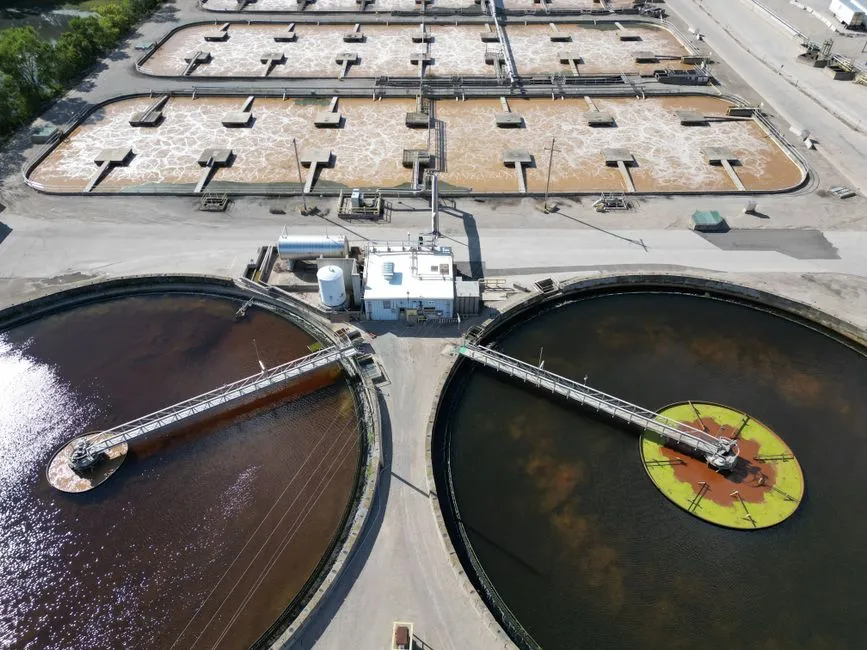
Where the EIA water-balance and reuse plan forces a higher overall recovery, an MVC unit sized to the RO concentrate stream makes the difference (per the MVC logic in the Kaohsiung engineering guide, applied to Taichung's EIA-driven reuse plans). A 35 m³/day RO concentrate feed to MVC produces roughly 33 m³/day of distillate at 15–25 kWh/kgal energy draw (Genesis Water Technologies), which lifts total system recovery into the 85–95% band — the threshold most ZLD-flavoured consent orders in Taiwan now reference.
MVC brine concentrators add $1–3 million for 10,000–30,000 GPD capacity (Genesis Water Technologies) and are typically only deployed where a reuse mandate or Taichung EPB sewer allocation forces a near-ZLD outcome. The distillate is clean enough to blend back into the cooling-tower makeup, and the MVC brine is reduced to 20–30% dissolved solids — small enough to haul or feed a crystallizer (per the MVC economics in the Taipei cooling-blowdown engineering guide, applied at equivalent capacity). For Taichung projects where the EIA water-balance and reuse plan is the binding consent deliverable, specify the MVC polish even if the first year runs at lower recovery: it is cheaper to oversize the concrete pad than to retrofit the vapor line later.
Costed case for a 100 MW Taichung hyperscale build
Capital cost is dominated by the RO unit and, if the EIA reuse plan mandates it, the MVC polisher. A side-stream filtration upgrade — typically the first lever pulled to push COC from 4 to 6 — runs $50,000–$200,000 (Genesis Water Technologies) and is the cheapest single intervention for reducing blowdown volume. A UF pretreatment skid sized to 12–35 m³/h lands in the $80,000–$220,000 installed range. The industrial RO unit treating roughly 50,000 GPD (≈190 m³/day) of blowdown sits at $250,000–$500,000 installed with OPEX of $1.50–$3.00 per kgal (per the CAPEX and OPEX bands in the Kaohsiung engineering guide, applied to a 100 MW Taichung reference site).
MVC brine concentrators add $1–3 million for 10,000–30,000 GPD capacity (Genesis Water Technologies) and are only deployed where a reuse mandate forces a near-ZLD outcome. The payback math is straightforward at hyperscale flow rates: discharge-fee avoidance of $5–$15 per kgal (Genesis Water Technologies) on a 400,000 L/day blowdown stream works out to $2,000–$6,000/day, or $730,000–$2.2 million per year — well above the RO OPEX line item (per the discharge-fee math in the Kaohsiung engineering guide, applied to a 100 MW Taichung build). Simple payback on the RO skid alone typically falls in the 18–36 month band, and the UF skid pays back faster because it lets the operator push COC up before any other equipment is added.
The supplied research gives installed CAPEX and discharge-fee bands but does not include a Taichung-specific electricity tariff or sewer surcharge; request these from Taiwan Power Company and the Taichung EPB before finalising the business case.
| Line item | Capacity / scope | CAPEX (installed) | OPEX / payback | Source |
|---|---|---|---|---|
| Side-stream filtration upgrade | Push COC 4 → 6 | $50,000–$200,000 | Cheapest blowdown-volume lever | Genesis Water Technologies (cited in Kaohsiung engineering guide) |
| UF pretreatment skid | 12–35 m³/h | $80,000–$220,000 | Faster payback than RO (enables higher COC) | Kaohsiung engineering guide |
| Industrial RO unit | ≈50,000 GPD (≈190 m³/day) | $250,000–$500,000 | OPEX $1.50–$3.00/kgal; payback 18–36 months | Genesis Water Technologies (cited in Kaohsiung engineering guide) |
| MVC brine concentrator | 10,000–30,000 GPD | $1,000,000–$3,000,000 | Distillate 15–25 kWh/kgal; 85–95% system recovery | Genesis Water Technologies (cited in Kaohsiung engineering guide) |
| Discharge-fee avoidance | 400,000 L/day blowdown | — | $5–$15/kgal → $730,000–$2.2M/yr offset | Genesis Water Technologies (cited in Kaohsiung engineering guide) |
P&ID audit checklist a Taichung EPC can run before issue
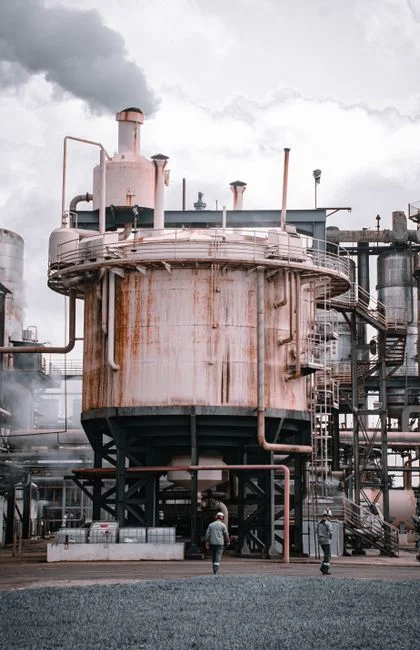
The following checks turn the article into a working tool the EPC can run on the P&ID before issue, against the climate, feed, and consent envelope set above.
- Confirm the site water balance and site-specific COC against the supplied research's 4–6 envelope before specifying RO recovery, and quote the actual consent TDS and temperature numbers in the P&ID notes rather than generic values (per the COC envelope in the Kaohsiung engineering guide, applied to Taichung).
- Verify the LSI control window on the PLC-controlled antiscalant and pH dosing skid is set to −0.5 to +0.5 with a documented clean-in-place (CIP) trigger (per the LSI window cited in the Kaohsiung engineering guide).
- Confirm the UF SDI target is below 3 to keep the RO membrane warranty intact (per the SDI target in the Kaohsiung engineering guide).
- Confirm dechlorination (sodium bisulfite or UV) sits before the RO feed and the discharge point, per Taiwan industrial wastewater rules on oxidizing biocide (per the dechlorination practice described in the Taipei cooling-blowdown engineering guide).
- Confirm the equalization tank is sized to absorb monsoon turbidity excursions of 20–100 NTU without starving the UF (per the monsoon driver in the Kaohsiung engineering guide, applied to Taichung).
- Confirm the permeate blend ratio is documented to keep cooling-tower makeup TDS below 500 ppm (per the makeup-TDS preference cited in the Kaohsiung engineering guide).
- Confirm the EIA water-balance and reuse plan is referenced in the consent submission for sites over 5 MW IT load (per the EIA threshold in the Kaohsiung engineering guide, applied to Taichung's hyperscale scoping).
| P&ID check | Acceptance value / document | Source / driver |
|---|---|---|
| Site COC vs. envelope | 4–6, confirmed in water balance | Kaohsiung engineering guide, applied to Taichung |
| LSI control window on dosing skid | −0.5 to +0.5; CIP trigger documented | Ecologix (cited in Kaohsiung engineering guide) |
| UF SDI target | < 3 | RO membrane warranty (Kaohsiung engineering guide) |
| Dechlorination before RO and discharge | Sodium bisulfite or UV | Taiwan industrial wastewater rules (Taipei cooling-blowdown engineering guide) |
| Equalization tank sizing | Absorbs 20–100 NTU monsoon excursions | Monsoon driver, Kaohsiung engineering guide applied to Taichung |
| Permeate blend ratio | Cooling-tower makeup TDS < 500 ppm | Ecologix (cited in Kaohsiung engineering guide) |
| EIA reference in consent submission | Water-balance and reuse plan for > 5 MW IT | EIA threshold, Kaohsiung engineering guide applied to Taichung |
Frequently Asked Questions
What CAPEX envelope should a 100 MW Taichung data center budget for the cooling-blowdown train?
For a 100 MW reference site, budget $250,000–$500,000 installed for the industrial RO unit treating roughly 50,000 GPD (≈190 m³/day) of blowdown, $80,000–$220,000 for the UF pretreatment skid sized to 12–35 m³/h, and an additional $50,000–$200,000 for a side-stream filtration upgrade if pushing COC from 4 to 6 is part of the scope (per the CAPEX bands in the Kaohsiung engineering guide, applied to a 100 MW Taichung build). If the EIA reuse plan forces a near-ZLD outcome, layer in $1–$3 million for an MVC brine concentrator at 10,000–30,000 GPD. Request a Taichung-specific electricity tariff from Taiwan Power Company and the Taichung EPB sewer surcharge before locking the OPEX line, since neither is in the supplied research.
How should UF and RO be split between supplier packages for a hyperscale Taichung skid?
Split the supply at the SDI handoff: the UF pretreatment skid is specified to deliver RO feed at SDI < 3 with flow in the 12–35 m³/h class on 0.01–0.1 μm PVDF hollow-fiber membranes, while the RO skid is specified independently against feed TDS (1,200–6,000 mg/L), recovery (50–85%), and permeate TDS (10–50 mg/L) targets (per the UF/RO split logic in the Kaohsiung engineering guide). Two separate supply packages let the EPC hold each vendor to a single membrane-warranty interface; confirm the antiscalant and pH dosing skid interfaces with both packages via shared PLC tags, and require the RO supplier to warranty performance at the UF outlet's documented SDI rather than at a generic feed spec.
How is the cooling-tower COC sized against Taichung's humid subtropical wet-bulb?
Hold the site COC in the 4–6 window so LSI stays inside the −0.5 to +0.5 control band; pushing above 6 in Taichung's humid subtropical wet-bulb risks biological and scaling excursions without advanced treatment (per the COC envelope in the Kaohsiung engineering guide, applied to Taichung's climate). Confirm the site COC with a four-week water balance of the municipal makeup plus basin sample, since the supplied research has no Taichung-specific measured feed, and verify that the side-stream filtration upgrade is in scope before the operator attempts to push past 6 COC.
What is the lead time risk on the MVC polisher if the Taichung EPB consent forces a near-ZLD outcome mid-project?
MVC brine concentrators in the 10,000–30,000 GPD class add $1–$3 million and carry a longer fabrication and shipping lead time than the RO or UF skids (per the MVC economics in the Kaohsiung engineering guide, applied to Taichung). For Taichung projects where the EIA water-balance and reuse plan is the binding consent deliverable, oversize the concrete pad and specify the vapor line tie-in points during the initial P&ID review even if the first year runs at lower recovery, because retrofitting the vapor line after the consent is issued typically costs more in schedule than the MVC skid itself. Request the vendor's confirmed fabrication and delivery window in writing before placing the RO order, since the supplied research does not provide a Taichung-specific lead-time figure.