Why Containerized MBR Is the Default for Nairobi Residential and Camp Projects
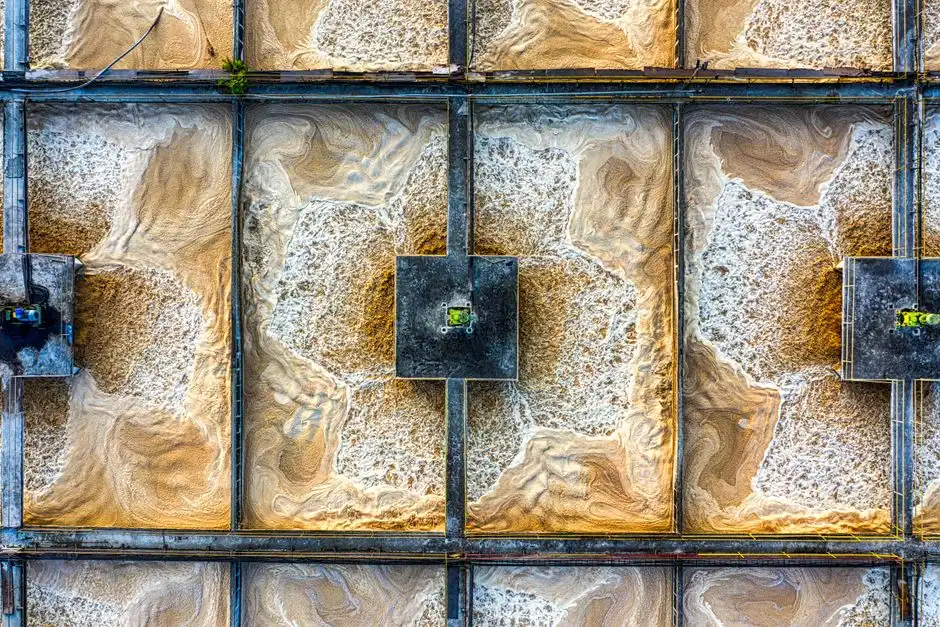
A membrane bioreactor (MBR) is a suspended-growth biological reactor paired with an ultrafiltration membrane cassette that replaces the secondary clarifier of a conventional activated sludge (CAS) train. Because the membrane cassette does the solid–liquid separation, the biological tank can run at higher mixed liquor suspended solids, which compresses the footprint by up to 50% versus CAS, the primary reason MBR is specified in space-constrained Nairobi infill and camp sites (PCI Membranes, pcimembranes.com). Containerized MBR packages are pre-assembled inside ISO containers (20-ft and 40-ft high-cube formats), enabling Plug & Play installation and transport to sites with limited access, which fits the logistics profile of Nairobi camps and remote gated estates (MENA-Water, mena-water.com; Pure Aqua, pureaqua.com).
The core technology inside a containerized MBR is a PVDF hollow-fiber ultrafiltration membrane with a nominal pore size of 0.04 µm, mounted on stainless frames and kept clean by continuous coarse-bubble diffuser aeration at the base of the membrane module (Pure Aqua, pureaqua.com). The result is an effluent that is essentially free of suspended solids, with reduced bacterial and viral content, suitable for irrigation, toilet flushing or as reverse osmosis feed, directly supporting the reuse objectives found in Nairobi residential and camp masterplans (PCI Membranes). For procurement, this is the engineering case for choosing a containerized MBR package plant over a conventional concrete STP: smaller footprint, factory quality-tested skids, and reuse-ready effluent in a single ISO footprint.
Step 1 — Convert Population and Per-Capita Demand into Daily Flow
The first defensible number in any sizing memo is daily flow, and the defensible method is population multiplied by per-capita demand, then adjusted by a peak factor. The MBR package-plant reference of 50 gallons per day (≈190 L) per capita used by Pure Aqua's MBR-C is a working starting point (Pure Aqua, pureaqua.com). This figure should be overlaid with the project's actual potable-water use data where available, because Nairobi residential consumption patterns vary sharply by estate type and camp duty cycle.
The second decision is the peak factor. Residential communities in Nairobi typically run 1.3–1.5× the average diurnal flow, while shift-based camps can swing to 1.5–2.0× because occupancy compresses into defined windows. The two equations a vendor must size against are:
- Q_avg = Population × per-capita demand (m³/day)
- Q_peak = Q_avg × peak factor (m³/day)
The table below applies the 50 gpd (≈190 L) reference across common Nairobi occupancy bands so the engineer can pick the row that matches the project before opening vendor discussions.
| Project type | Design population | Per-capita demand | Q_avg (m³/day) | Suggested peak factor | Q_peak (m³/day) |
|---|---|---|---|---|---|
| Boutique residential block | 150 | 190 L/d | 29 | 1.3 | 37 |
| Mid-rise residential estate | 500 | 190 L/d | 95 | 1.4 | 133 |
| School / commercial campus | 1,000 | 190 L/d | 190 | 1.3 | 247 |
| NGO camp (shift-based) | 800 | 190 L/d | 152 | 1.8 | 274 |
| Large institutional camp | 2,000 | 190 L/d | 380 | 1.8 | 684 |
Before sending these numbers to a vendor, the project engineer must still collect the qualitative inputs the research does not quantify: the actual occupancy pattern (24-hour residential versus shift-based camp), any industrial, kitchen or trade-waste loading, and whether greywater is separated. These are not optional, because they determine whether the per-capita demand used above is realistic and whether an anoxic or pre-treatment stage is required. The Pure Aqua 50 gpd reference is a screening number; the project-specific figure must be confirmed from site data.
Step 2 — Match Flow to a 20-ft or 40-ft ISO Container MBR
Containerized MBR plants ship in 20-ft and 40-ft high-cube ISO containers, with pre-engineered mechanical equipment and plant control included in the package (Pure Aqua, pureaqua.com; MENA-Water, mena-water.com; HUBER, huber-se.com). The format dictates logistics on a Nairobi site, because 20-ft units are easier to deliver into tight infill lanes while 40-ft units maximize throughput per container. The 1,200 m³/day-per-40-ft-container figure demonstrated by MENA-Water is a useful upper-bound screening reference, not a guaranteed capacity: a 40-ft ISO container from MENA-Water has been demonstrated to filter more than 1,200 m³/day, while a smaller 20-ft unit covers the lower end of the boutique-residential band. The MENA-Water package family is explicitly stated to scale from a few m³/day up to thousands of m³/day, so the same vendor family can cover a small Nairobi estate or a large institutional camp (HUBER, huber-se.com; MENA-Water, mena-water.com).
Mapping the Step 1 flow figures to container format gives the engineer a first-pass envelope:
- 20-ft HC unit: approximately 25–150 m³/day range based on Pure Aqua's MBR-C table and MENA-Water's 1,200 m³/40-ft scaling; a 60 m³/day boutique residential block fits a single 20-ft unit (Pure Aqua, pureaqua.com).
- 40-ft HC unit: approximately 150–1,200 m³/day range; a 200 m³/day NGO camp train can be met by a single 40-ft unit, while larger institutional camps above 700 m³/day will need multiple 40-ft trains in parallel (MENA-Water, mena-water.com).
The next decision is membrane area versus container count, because two different 40-ft trains may have different internal tankage, cassette counts and aeration sizing for the same nominal flow. Container count is a logistics answer; membrane area is a performance answer. Step 3 is where the engineer separates a credible proposal from a flow number in a container.
Step 3 — Validate Membrane Area, Membrane Type and Aeration Sizing
A credible MBR proposal must substantiate the m³/day claim with membrane area, cassette count, and aeration sizing. The baseline is submerged hollow-fiber PVDF UF cassettes. PCI Membranes' HF cassette family covers S12 up to 480 m², S40 up to 1,600 m², U12 up to 624 m² and U40 up to 2,080 m², with each cassette made of either 12 or 40 modules at two module heights (1,948 mm S-type, 2,448 mm U-type) (PCI Membranes, pcimembranes.com). The cassette count and module size are how a vendor substantiates a flow claim inside a 20-ft or 40-ft envelope. Pure Aqua's MBR-C also specifies hollow-fiber UF at 0.04 µm nominal pore size, confirming that 0.04 µm PVDF is the working standard for this class of package plant (Pure Aqua, pureaqua.com).
For tougher influents, tubular modules are an alternative. PCI's A8 tubular modules deliver 27 m² (3 m length) or 36 m² (4 m length) per 8" element, with PVDF tubes at 100k or 200 kDa MWCO and a GRP shroud for chemical resistance (PCI Membranes). This geometry is the right reference if a Nairobi camp site carries trade-waste, kitchen effluent or other high-FOG loading that the hollow-fiber baseline is not designed to handle. For most Nairobi residential and camp projects, however, the hollow-fiber submerged cassette is the appropriate baseline, and the engineer should verify the cassette family as part of the vendor's datasheet. The detailed module selection is documented in the submerged MBR membrane module specification.
| Parameter | Submerged hollow-fiber (PCI HF series) | Tubular PVDF (PCI A8) | Pure Aqua MBR-C reference |
|---|---|---|---|
| Membrane material | PVDF | PVDF | PVDF (TIPS) |
| Pore size / MWCO | 0.02 µm | 100k or 200 kDa | 0.04 µm nominal |
| Module / element area | S12 up to 480 m²; S40 up to 1,600 m²; U12 up to 624 m²; U40 up to 2,080 m² | 27 m² (3 m) or 36 m² (4 m) per 8" element | Containerized HF cassette |
| Cleaning regime | Air-scour plus periodic chemical clean | Air-scour plus chemical clean | Built-in air scoring; 1–2 maintenance clearings per year (MENA-Water) |
| Typical influent | Municipal / camp strength | Tough / industrial / high-FOG | Municipal and industrial |
Continuous coarse-bubble aeration at the base of the membranes keeps the filter surface clean and is what reduces chemical cleaning to one or two maintenance clearings per year (MENA-Water, mena-water.com). The engineer should also confirm that the proposal includes an anoxic zone for denitrification where the Nairobi discharge or reuse target requires nitrate control; the Pure Aqua MBR-C options list explicitly includes an anoxic zone for NO₃ removal (Pure Aqua, pureaqua.com). For projects that push into higher fouling risk or variable influent, the methodology in this MBR membrane fouling troubleshooting guide is the right next read.
Step 4 — Apply Nairobi-Specific Adjustments to the Sized Train
Nairobi's highland climate sits comfortably inside the MBR-C operating envelope. Pure Aqua's MBR-C declares a design temperature of 68 °F (20 °C) and an operating range of 68–86 °F (20–30 °C) (Pure Aqua, pureaqua.com), which aligns with Nairobi's ambient conditions, so no major biological derating is needed. The design point should still be declared in the datasheet because a tropical lowland site would require a different derate; for Nairobi, the 20–30 °C band is a safe assumption.
Power is the second Nairobi-specific adjustment. The standard MBR-C electrical supply is 460 V/3Ph/60 Hz (Pure Aqua, pureaqua.com), which is a US-spec baseline. For Nairobi, the engineer must confirm that the vendor can re-terminate to 415 V/3Ph/50 Hz and specify standby pumps for the intermittent grid profile. The Pure Aqua options list already includes standby pumps for redundancy, which is the right reference feature for any Nairobi proposal. If the site is off-grid or unstable, the proposal should also confirm the motor control center can accept generator or hybrid input.
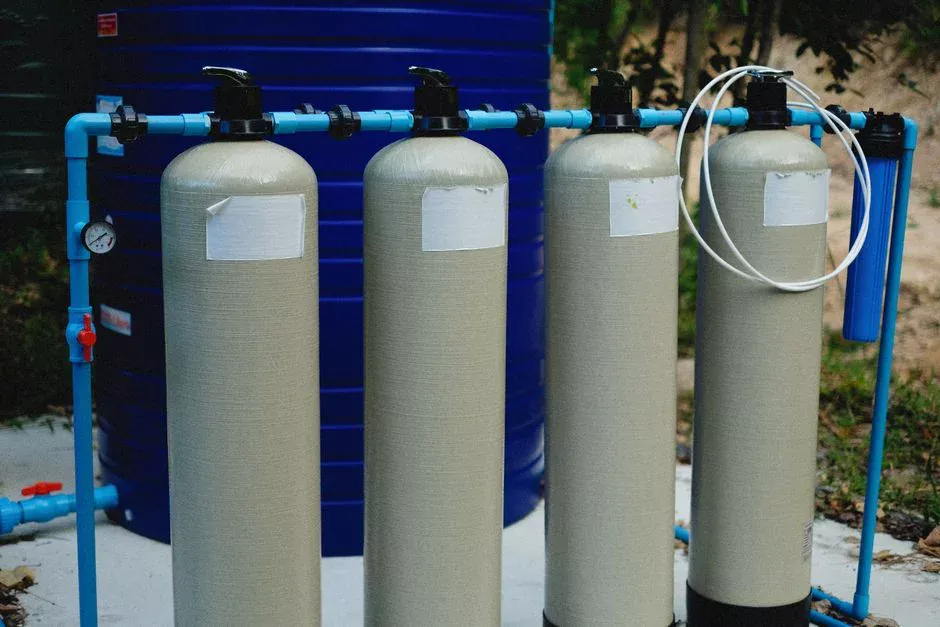
The reuse objective drives the polishing step. MBR effluent is suitable for irrigation, toilet flushing or RO feed, which supports the water-reuse targets in Nairobi residential and camp masterplans (PCI Membranes, pcimembranes.com; MENA-Water, mena-water.com). For direct discharge, the engineer should still confirm local EMCA/KEBS and Nairobi City Water sewer discharge limits and request a remote-monitoring option to evidence compliance, a feature that MENA-Water and HUBER explicitly support from a back office (HUBER, huber-se.com; MENA-Water, mena-water.com). Where toilet-flushing or irrigation reuse is targeted, a downstream UV disinfection polishing step closes the pathogen barrier. Finally, the MBR train produces a waste activated sludge stream that still requires dewatering, typically with a sludge dewatering filter press downstream; flag this to the project's sludge line so the overall plant is sized, not just the MBR container.
Step 5 — Build a Pre-Purchase Sizing Checklist for the Vendor
The final step is converting the sizing memo into a single-page artefact the engineer can send to suppliers. The data the vendor must receive up front: design population, average and peak daily flow, influent BOD/COD/TSS ranges, discharge or reuse target, available footprint, electrical supply (415 V/3Ph/50 Hz for Nairobi) and ambient temperature range. The data the vendor must return: container count and ISO size, membrane model and total membrane area in m², cassette configuration, aeration blower size, anoxic zone inclusion, standby pump provision and remote-monitoring scope.
What to verify contractually: factory quality testing (Pure Aqua and MENA-Water both pre-test at the factory), plug-and-play commissioning support, membrane cleaning regime, and remote-monitoring support from the back office (HUBER, huber-se.com; MENA-Water, mena-water.com). The engineer should also request reference plants in East Africa of comparable scale, because cold-chain logistics for membrane spares in Nairobi affect long-term OPEX. For a regional sizing reference, the MENA regional MBR sizing comparison shows how a different climate and reuse objective shift the parameter set, and the Tokyo containerized MBR sizing guide shows how a colder climate with a similar containerized architecture changes the cassette and aeration choice. Where raw sewage screening is needed on site, the MBR train should be paired with a rotary mechanical bar screen to protect the membranes from rag and grit carryover.
Frequently Asked Questions
What per-capita flow should I use to size a containerized MBR for a Nairobi residential block?
Use 50 gallons per day (≈190 L) per capita as a screening reference, consistent with the Pure Aqua MBR-C sizing table, and overlay the project's actual potable-water consumption. Apply a peak factor of 1.3–1.5× for residential and 1.5–2.0× for shift-based camps before sending Q_avg and Q_peak to the vendor.
How much does a containerized MBR cost for a Nairobi camp, and what inputs do I need to request?
The research does not publish a Nairobi-specific price for a 20-ft or 40-ft MBR container. The engineer should request a budget quote keyed to Q_peak, influent BOD/COD/TSS, reuse objective, container count, membrane area, standby pumps, and remote monitoring, and ask the vendor to break out factory testing, commissioning, membrane spares and shipping to Nairobi separately. Without those inputs a quotation cannot be compared between vendors.
Which supplier selection criteria matter most for a Nairobi project?
Confirm the vendor can re-terminate to 415 V/3Ph/50 Hz, supply standby pumps, offer remote monitoring from a back office, and provide East African reference plants of comparable scale. MENA-Water and Pure Aqua both publish containerized MBR product lines with these features, but local reference plants and spares logistics are the differentiator a Nairobi buyer should verify before shortlisting.
What is the compliance risk if I discharge containerized MBR effluent directly to the Nairobi sewer?
MBR effluent is essentially free of suspended solids and significantly reduced in bacteria and viruses, but the engineer must still confirm compliance with EMCA, KEBS and Nairobi City Water sewer discharge limits for BOD, COD, total nitrogen and any reuse-specific parameters. Where the site targets irrigation or toilet flushing, a UV polishing step and documented remote-monitoring records are the standard evidence package a regulator will expect.