What a containerized MBR STP actually delivers for a Tokyo site
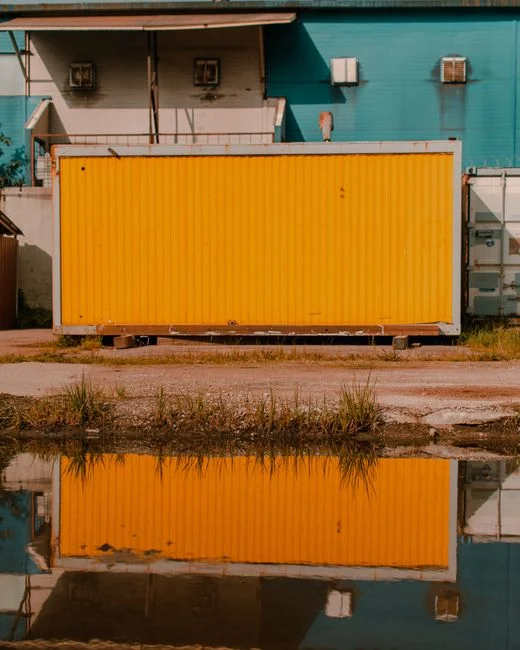
A containerized membrane bioreactor (MBR) is a sewage treatment plant in which all tanks and equipment are housed inside an ISO freight container, delivered as a single factory-assembled unit that connects to the inlet, outlet, and power on site (Dynatec Systems). The format is described as "plug-and-play," limits civil work at the site, and can be relocated between sites with relative ease (Dynatec Systems). The membrane filtration stage produces permeate with biochemical oxygen demand (BOD), total suspended solids (TSS), TKN, and ammonia well below typical discharge limits, and the out-of-basin configuration allows the cassette to be retrofitted to circular, rectangular, above-ground, or below-ground bioreactors (Dynatec Systems).
For a Tokyo condominium, dormitory, serviced apartment, or a short-term construction or camp site, the headline advantages are short site work on small lots, mobility when a temporary camp closes, and a single controlled factory acceptance test before delivery. The trade-off is fixed envelope: the ISO container ceiling fixes the maximum tank depth, so sizing discipline matters more, not less, than for a built-in-place plant. The membrane system is also straightforward to expand by adding more cassettes or skids, which is useful when a residential block phases up or a camp extends its schedule (Dynatec Systems).
Step 1: Derive average and peak flow for residential and camp use
Average sewage flow (Qavg) in KLD is the first input to every STP design, and the preliminary peak flow is calculated as Qp = Qavg × peak factor (DMC Education, 2026-08). For residential blocks, derive Qavg from the design population multiplied by a per-capita sewage factor. Construction camps and dormitories add a surge factor because daytime occupancy and shift-change showers concentrate the load; the project-specific sewage-flow pattern should be used to refine the hydraulic peak instead of relying on a fixed multiplier (DMC Education, 2026-08). A preliminary peak factor range of 2.0–2.5 is reasonable for small residential and camp projects, with the actual hydraulic peak established from the project's sewage-flow pattern (DMC Education, 2026-08).
Before locking the flow, collect the design population, occupancy schedule, any on-site canteen or laundry that raises BOD, and whether the camp is seasonal. Seasonal operation changes the SRT and MLSS design window and may require a longer equalization HRT to absorb idle-week storage. The supplied research does not publish a Japan-specific per-capita figure, so the per-capita factor and any rainwater or infiltration allowance must be confirmed with the local Tokyo sewerage bureau; do not invent a value.
| Parameter | Symbol | Unit | Typical preliminary value |
|---|---|---|---|
| Average flow | Qavg | KLD | Project-specific |
| Peak factor | PF | — | 2.0–2.5 |
| Peak flow | Qp | KLD | Qavg × PF |
Step 2: Set preliminary influent and effluent quality targets
For domestic sewage, a conservative working envelope is pH 7.5–8.5, TSS 300 mg/L, BOD 400 mg/L, COD 500 mg/L, which matches the published 200 KLD reference design and is suitable for residential and camp flows (CPG Consultants, via Scribd, 2025-09). Indicative MBR effluent targets used in the same reference are BOD <5 mg/L, TSS near nil, COD <20 mg/L, turbidity <2 mg/L, and unobjectionable odor (CPG Consultants, via Scribd, 2025-09). DMC Education lists indicative design targets of BOD ≤10 mg/L, TSS ≤5 mg/L, COD <30 mg/L, low turbidity, and an application-specific fecal coliform value, but flags these as design targets rather than universal statutory limits (DMC Education, 2026-08).
For projects that discharge to a Tokyo sewer, the binding limits are set by the Tokyo Metropolitan Government Bureau of Sewerage and the local sewerage bureau that accepts the discharge; these must be confirmed before finalizing tank volumes and membrane area. Where the treated water is reused for toilet flushing or landscape irrigation, add a pathogen target (e.g., fecal coliform) and a UV dose requirement to the effluent specification, because reuse rules in Japan are stricter than sewer discharge rules.
Step 3: Size the biological reactors and membrane area
Size the equalization tank for a preliminary HRT of approximately 6–8 hours, using Veq = Q × HRT with freeboard and mixing allowance, in order to absorb peak flow and load shocks (DMC Education, 2026-08). For the biological stage, use the food-to-microorganism framework F/M = BOD Load / (V × X / 1,000), with a target F/M of 0.08–0.15 kg BOD/kg MLSS·day and an MBR MLSS window of 8,000–12,000 mg/L (DMC Education, 2026-08). The CPG Consultants reference design uses MLSS 3,000–6,000 mg/L for its conventional MBR; the higher MBR MLSS range is what enables a smaller container footprint, because the same food load is processed in a smaller aeration volume (CPG Consultants, via Scribd, 2025-09). Hold SRT in the 20–40 day range to stabilize nitrification and reduce excess sludge; excessive SRT raises MLSS, mixed-liquor viscosity, oxygen demand, and membrane-fouling risk (DMC Education, 2026-08).
Size the membrane area from Membrane Area = Permeate Flow / Flux, using a design flux of 15–25 LMH and verifying against the selected membrane cassette (DMC Education, 2026-08). The CPG module reference is PVDF, 0.1 µm pore size, design flux 25 LMH, suction-side operation at 100–300 mmHg, with an effective area of 20 m² per module (CPG Consultants, via Scribd, 2025-09). Track TMP online: a rising TMP at a 0.1–0.4 bar baseline signals fouling, poor air scouring, excessive MLSS or viscosity, or excessive operating flux (DMC Education, 2026-08). A specification built around a packaged HydropureWater integrated MBR system should be checked against these published ranges before order placement.
| Parameter | Symbol | Unit | Typical preliminary value |
|---|---|---|---|
| MBR MLSS | X | mg/L | 8,000–12,000 |
| F/M ratio | — | kg BOD/kg MLSS·day | 0.08–0.15 |
| SRT | — | days | 20–40 |
| Membrane flux | J | LMH | 15–25 |
| TMP | TMP | bar | 0.1–0.4 |
| Equalization HRT | — | hours | ~6–8 |
Step 4: Air, oxygen, blowers and pumping

Estimate oxygen demand as O₂ ≈ 1.2–1.5 × BOD removed, then convert to air flow using Air Flow = O₂ Required / (OTE × 0.232), where 0.232 is the oxygen mass fraction in air and OTE is the diffuser oxygen transfer efficiency (DMC Education, 2026-08). BOD removed is calculated as BOD Removed = Q × (S₀ − Sₑ) / 1,000, and the final blower capacity must add membrane air-scour requirement and an operating margin (DMC Education, 2026-08). Two separate air streams are required: process air for the fine-bubble diffusers in the aeration tank, and a dedicated membrane air-scour blower whose capacity is set by the cassette supplier (CPG Consultants, via Scribd, 2025-09).
Set a preliminary blower discharge pressure around 500–700 mbar and then add static water depth, diffuser loss, pipeline loss, and the membrane air-scour requirement before fixing the final blower spec (DMC Education, 2026-08). Size the permeate pump for Qp (m³/hr) at a total head equal to static head plus friction loss plus membrane/TMP head, and consider VFD control to stabilize flux and TMP (DMC Education, 2026-08). On a dense Tokyo residential site, reliability must-haves are duty/standby arrangement for blowers and permeate pumps, low-noise operation, and DO-based aeration control.
Step 5: Pack the process into a container layout
Walk the process left-to-right inside the container: bar screen → oil and grease separator → equalization → anoxic → aeration → MBR cassette → UV → treated water tank, with the sludge line running MBR → sludge holding → filter press (DMC Education, 2026-08; CPG Consultants, via Scribd, 2025-09). Twenty-foot ISO containers suit flows up to roughly 50–80 m³/day and 40 ft units cover the higher residential range; out-of-basin membranes enable simple retrofit to existing bioreactors and expansion by adding cassettes (Dynatec Systems). For Tokyo-specific site constraints, the container should accommodate an acoustic enclosure for blowers, ventilation with carbon filtration for odor control toward neighbors, and a service access corridor wide enough for cassette change-out. Plan for above-grade placement where groundwater is high, or skid/crawler mounting where the container must be moved between camp phases.
Ancillary equipment is not optional. A GX series rotary bar screen protects the membranes from fibrous material, an automatic chemical dosing skid handles pH correction and membrane cleaning, a DF series flat-sheet MBR cassette provides the membrane stage, and a plate and frame filter press dewaters the waste activated sludge. The MBR process alone does not eliminate the need for sludge handling.
| Container | Indicative flow band | Typical use | Notes |
|---|---|---|---|
| 20 ft ISO | Up to ~50–80 m³/day | Small dormitory or camp, single container process stream | Compact envelope; check cassette submergence against ISO height |
| 40 ft ISO | Higher residential flow | Condominium, serviced apartment, multi-container plant | Allows equalization, anoxic, aeration, MBR, UV, and treated-water tank in one frame |
Tokyo-specific sizing risks: footprint, noise, odor, groundwater, winter
Tokyo residential lots are small; the containerized MBR limits civil work and enables above-grade or trailer-mounted layouts, but the envelope still fixes tank depth, so confirm the cassette supplier's maximum submergence against the chosen ISO height. Noise is dominated by blowers; require low-noise blowers, an acoustic enclosure, and a night-time dB limit consistent with the local ward's residential standards. Even with well-operated biological treatment, an empty equalization tank in a residential block can draw complaints; specify a cover, a vent stack with carbon filtration, and a minimum draw pattern to prevent septicity.
High groundwater in parts of Tokyo rules out deep buried tanks; favor above-grade containerized layouts with structural skids rated for buoyant uplift when empty. Cold winter air reduces aeration tank temperature, raises mixed-liquor viscosity, and shifts oxygen-transfer efficiency; verify diffuser OTE at the design low temperature, not at 20°C, and confirm that the membrane supplier's flux and viscosity limits still hold. Engineers familiar with the same envelope logic in other dense Asian cities can adapt patterns from sizing a containerized MBR STP in Jakarta or the Bandung equivalent to Tokyo's tighter noise and groundwater envelope.
Compliance, commissioning and what to ask a supplier
Compliance: confirm the treated-water targets and discharge point with the Tokyo Metropolitan Government Bureau of Sewerage and the local sewerage bureau before ordering; treat the indicative MBR targets (BOD ≤10 mg/L, TSS ≤5 mg/L, COD <30 mg/L) as a design starting point only, not a binding limit (DMC Education, 2026-08). Permit path: identify whether the project needs a building permit for the container, an effluent permit for discharge, and any construction noise permit for installation; camps and temporary sites have a different permit timeline than permanent residential blocks.
Before delivery, insist on a factory acceptance test with clean-water flux verification on every cassette; containerized MBRs meet discharge requirements as easily as a non-containerized system only if the cassettes are tested before ship-out (Dynatec Systems). Supplier questions to put in writing: per-cassette treated-water capacity, design flux at the design TMP, scour-air requirement per m² of membrane, chemical cleaning protocol, expected membrane life, and standby philosophy for blowers and permeate pumps. Documentation to request: hydraulic profile, P&ID, electrical load list, instrumentation list (pH, DO, MLSS, TMP, permeate flow, tank level, blower pressure, temperature), and an operating manual in Japanese or with Japanese translation support. Procurement should also confirm the sludge dewatering line and budget for a plate and frame filter press sized to the MBR waste-activated-sludge production.
Frequently Asked Questions
What flow range fits a 20 ft vs 40 ft containerized MBR, and what population does that serve in Tokyo?
A 20 ft ISO container is the natural envelope for small flows in the lower part of the 10–500 m³/day band targeted in this article, while a 40 ft ISO container accommodates the higher residential and dormitory flows. The exact population served depends on the per-capita sewage factor, which the supplied research does not publish for Tokyo; confirm the per-capita figure with the local sewerage bureau and derive population from Qavg ÷ per-capita factor. For camps, also add a surge factor for daytime occupancy and shift-change showers before sizing the equalization tank.
What cost items should be budgeted for a containerized MBR STP in Tokyo, and which line items are commonly missed?
Budget the container, cassettes, blowers, permeate and transfer pumps, UV or alternative disinfection, an automatic chemical dosing skid, a GX series rotary bar screen, and a plate and frame filter press for sludge, plus factory acceptance testing, shipment, installation, commissioning, and the first year of consumables. Commonly missed items are acoustic enclosures for blowers, carbon filtration on the vent stack for odor control, structural skids rated for buoyant uplift where groundwater is high, instrumentation spares, and the operating manual translated into Japanese. Because the supplied research does not publish a Tokyo price benchmark, request a written quotation with each of these line items called out separately rather than relying on a lump sum.
What questions should we put to a containerized MBR supplier before we accept their proposal?
Ask for per-cassette treated-water capacity at the design TMP, design flux, scour-air requirement per m² of membrane, chemical cleaning protocol and chemical consumption rate, expected membrane life, standby philosophy for blowers and permeate pumps, and confirmation that the cassette maximum submergence fits inside the chosen ISO height. Also request a hydraulic profile, P&ID, electrical load list, instrumentation list, and a factory acceptance test plan that includes clean-water flux verification on every cassette. Suppliers whose documentation addresses the Tokyo sewerage bureau's discharge point and the ward's noise and odor expectations will be easier to permit.
Which Japan authority sets the discharge limits for a residential or camp STP in Tokyo, and how do we confirm them before ordering?
The Tokyo Metropolitan Government Bureau of Sewerage and the local sewerage bureau that accepts the discharge set the binding limits for sewer discharge, and the local ward handles building, noise, and odor permits. Confirm the discharge point, the applicable limits, and any reuse-specific pathogen targets in writing before finalizing tank volumes and membrane area, and treat the indicative MBR targets (BOD ≤10 mg/L, TSS ≤5 mg/L, COD <30 mg/L) as a design starting point rather than a binding limit (DMC Education, 2026-08). Where treated water is reused, the reuse rules in Japan are stricter than sewer discharge rules and must be checked separately.
What is a realistic lead time from order to commissioned operation for a containerized MBR in Tokyo?
Containerized plants shorten the on-site phase because tanks, blowers, cassette frames, and control panels are factory-assembled, but the overall schedule is still set by cassette manufacturing, factory acceptance testing, sea or air freight, customs clearance into Japan, site preparation, and the local permit timeline (Dynatec Systems). Because the supplied research does not publish a Tokyo-specific lead time, request a milestone schedule from the supplier with the cassette manufacturing window, FAT date, shipment date, customs clearance estimate, and the permit-dependent installation window identified separately. Camps and temporary sites typically have a different permit timeline than permanent residential blocks, so the installation window should be confirmed against the project-specific permit path.