
What Makes a Treatment System 'Advanced' for a Private Utility
Advanced wastewater treatment for a private or investor-owned utility (IOU) means any unit process layered on top of primary sedimentation and conventional chlorination — typically a high-rate primary (dissolved air flotation or lamella clarification), a high-rate biological stage (membrane bioreactor, moving bed biofilm reactor, or sequencing batch reactor), tertiary membrane filtration (ultrafiltration), and a non- or low-chemical disinfection finish such as chlorine dioxide, UV, or ozone. The classification is not about novelty; it is about whether the train can meet a consent-decree schedule, a PFAS limit, or a reuse contract.
The IOU operating environment makes that bar higher than at a typical industrial plant. Over 10% of the U.S. population is served by private water and wastewater providers, and the 20 leading IOUs operate in 36 states serving about 5% of the U.S. population, according to American Water and Bluefield Research. Four pressures are pushing that footprint toward advanced trains in 2026: PFAS compliance mandates, infrastructure deficits, workforce shortages, and federal funding uncertainty (Bluefield Research). Because IOUs are rate-regulated, new capital has to defend itself on footprint, automation, and lifecycle OPEX, not first-cost alone — a constraint that shapes every equipment choice downstream. A useful cross-reference for the procurement framing is the package vs conventional STP framework, which sets out the same trade-off for plant owners weighing factory-built versus site-built trains.
Headworks and Pretreatment: Screens, DAF, and Lamella Clarifiers
Headworks is where the train either earns its reliability or spends the rest of its life recovering from ragging and scum events. A rotary mechanical bar screen is the first unit process on virtually every modern private-utility plant because continuous-duty fine screening protects downstream pumps, valves, and biological reactors from rags, plastics, and fibrous debris — the rotary mechanical bar screen is the typical spec point for unattended sites where an operator cannot clear a blinded screen before the flow shifts to peak.
Between the screen and the biological stage, the primary clarification choice sets the FOG and colloidal load the aeration basin has to absorb. A DAF pretreatment unit is the right primary when the collection system carries high FOG, food-and-beverage, or petroleum service-area flows, and is typically offered in 13 standard models covering roughly 4–300 m³/h. A lamella clarifier is preferable when footprint dominates the site constraint: surface loadings of 20–40 m/h collapse the clarifier footprint dramatically, and lamella designs are often reported to cut coagulant consumption versus a conventional clarifier. For a private operator weighing a DAF retrofit against a lamella retrofit, the deciding variables are FOG fraction, peak factor, and the available footprint — not headline flow.
| Equipment | Typical hydraulic range | Best-fit driver | Operator-skill demand |
|---|---|---|---|
| Rotary mechanical bar screen | Site-specific, sized to peak daily flow | Rag and debris control ahead of pumps and membranes | Low (self-cleaning discharge) |
| DAF | 4–300 m³/h (13 standard models) | High FOG / colloidal load, food & beverage catchments | Moderate (pressurization, saturator) |
| Lamella clarifier | Surface loading 20–40 m/h | Footprint-constrained sites, lower coagulant use | Moderate (sludge withdrawal) |
Two operational points worth flagging before the train moves downstream: dual overload protection and self-cleaning discharge on the bar screen are non-negotiable for unattended sites, and primary-stage polymer selection should be locked in during piloting, not after delivery, because the wrong polyacrylamide will burn an entire MBR cassette within a season.
Biological Stage: MBR, MBBR, or Conventional Activated Sludge

The biological stage is the single biggest determinant of effluent quality, footprint, and downstream CAPEX. An integrated MBR system combines activated sludge with submerged PVDF membranes at a typical 0.1 µm pore size and is the highest-effluent-quality option, delivering near-reuse-quality effluent in a footprint reported as roughly 60% smaller than conventional activated sludge (CAS) at 10–2,000 m³/day. Where the utility wants to retain an existing aeration basin, an MBBR conversion with carrier media avoids membrane replacement cost but does not give the same effluent consistency as an MBR. CAS remains the lowest-CAPEX path, but it carries a higher operator-skill requirement — a direct conflict with the IOU workforce-shortage driver identified by Bluefield Research.
For modular or phased deployments, the flat-sheet MBR module is the typical spec point because individual elements can be replaced without pulling the cassette, and the energy profile is materially better than external cross-flow systems. Selection also drives whether a separate tertiary filter is required: MBR effluent typically does not need an additional sand or media filter, while CAS and MBBR usually do — and that decision changes the UF sizing downstream.
| Biological option | Effluent quality class | Footprint class | Operator-skill demand | Implied tertiary |
|---|---|---|---|---|
| MBR (submerged PVDF) | Reuse-ready (low TSS, low turbidity) | Small (~60% of CAS at 10–2,000 m³/day) | Moderate (membrane CIP) | Often none for non-reuse; UF if polishing for RO |
| MBBR (carrier media) | Good, but variable | Moderate (retrofits existing basin) | Moderate | Sand or media filter typically required |
| CAS | Conventional secondary | Largest | High (MLSS control, wasting) | Tertiary filtration or polishing required |
Two practical notes: biological-stage selection should be locked before the tertiary RFQ goes out, because the wrong pairing shows up as membrane fouling six months after startup, not on the P&ID. For an operator looking to compare this against package alternatives, the package vs conventional STP framework is a useful adjacent read.
Tertiary Filtration and Reuse: UF and RO Polishing
After MBBR or CAS, a UF tertiary filtration system is the default polish step. Typical UF specifications in this class run 0.03 µm PVDF hollow-fiber membranes with 2,000–40,000 L/h module capacities, turbidity tolerance up to 300 ppm on the feed side, and automatic backwash with air scour — features that matter when the upstream biological stage is variable. RO polishing is only justified when the utility is selling reuse water to a high-purity industrial customer or facing a reuse-to-potable consent decree; industrial RO systems in this class report recoveries up to roughly 95%.
Membrane and filter consumables are a procurement risk that private operators tend to underestimate. Specifying a cartridge and element range of roughly 10–40 inches, with stainless and FRP pressure vessels, and confirming compatibility with incumbent suppliers is the minimum a utility should expect from any vendor quoting the tertiary step. Water reuse is increasingly a revenue line for IOUs rather than a compliance cost, and tertiary selection should be evaluated against that revenue, not purely against OPEX. For utilities also weighing nutrient compliance, the COD/BOD removal buyer guide covers the upstream process decisions that feed this polishing step.
Disinfection: Chlorine Dioxide, UV, and Ozone
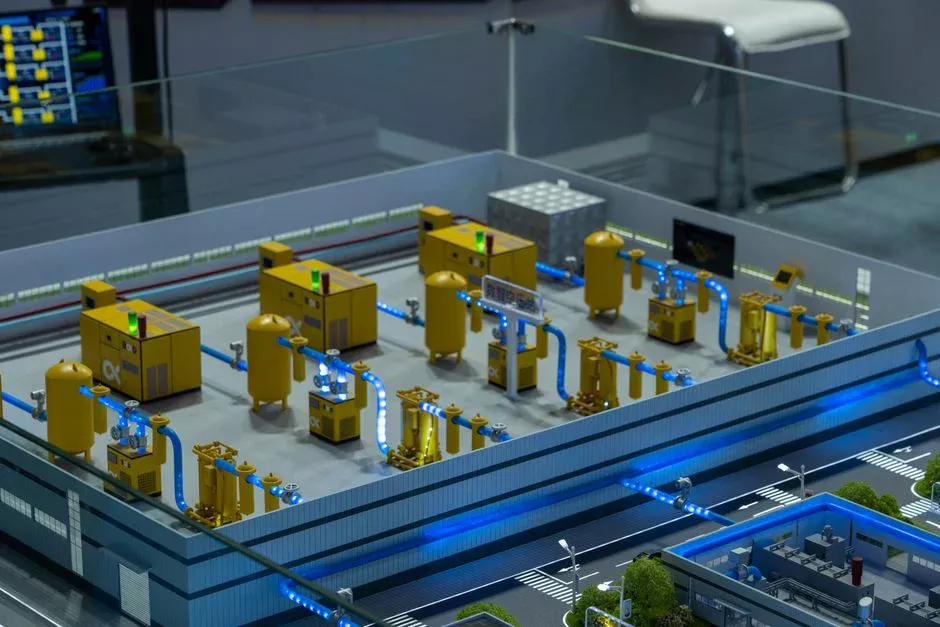
Disinfection choice has to match the effluent quality goal, the utility's chemical-handling policy, and any residual constraint in the receiving water. An on-site chlorine dioxide generator is the typical spec point where the utility needs a residual in a long distribution system and must avoid regulated DBPs; on-site generation in this class scales from 50 g/h manual units up to 20,000 g/h automated systems, with stated compliance with EPA standards, the EU Drinking Water Directive 98/83/EC, and WHO Guidelines. UV is the right finish where the utility wants a chemical-free step and is concerned about chlorine-resistant organisms such as Cryptosporidium and Giardia, with no by-products and no taste change. Ozone is preferred where oxidation of colour, odour, or trace organics is needed alongside disinfection.
One non-obvious link: disinfection choice can force a tertiary upgrade. If UV transmission falls below the operating threshold because the upstream clarifier or biological stage is under-performing, the operator is forced back to the UF spec, which loops the design back to the previous section. A useful compliance-side reference for utilities tracking residual and reporting requirements is the automatic sampler compliance guide.
Sludge Handling and Chemical Dosing for Utility Operators
Sludge handling and chemical dosing are the side streams that determine whether the train actually runs reliably in an unattended utility setting. A plate and frame filter press is the standard line item — filter areas 1–500 m² with manual, hydraulic, or fully automatic PLC control — and it should be on the RFQ from day one, not added later as a change order. Chemical dosing is the control system for the entire train: PLC-controlled injection of coagulants, flocculants, pH adjusters, and specialty chemicals, skid-mounted and pre-wired for fast installation.
For fully buried or trailer-mounted sites, an integrated A/O plant in the 1–80 m³/h range can replace open activated-sludge basins and eliminate much of the routine chemical handling. The IOU workforce-shortage driver (Bluefield Research) pushes the design toward skid-mounted, factory-tested dosing packages that reduce commissioning time and operator skill requirements on day one — a real cost in a rate case where every operator hour is justified against a tariff.
Technology Comparison for Private Utility Operators
No single technology wins. The right answer for a private utility is the train whose bottleneck unit process matches the binding constraint — footprint, consent decree, reuse revenue, or operator availability. The table below condenses the earlier sections into a procurement-side decision aid.
| Technology | Typical hydraulic range | Effluent quality class | Footprint class | Automation / operator skill |
|---|---|---|---|---|
| MBR | 10–2,000 m³/day (integrated systems) | Reuse-ready | Small | High automation, moderate membrane-CIP skill |
| DF-series MBR module | 32–135 m³/day per module | Reuse-ready | Small | High automation, replaceable elements |
| DAF | 4–300 m³/h (13 standard models) | Primary (FOG/colloid removal) | Compact | Moderate |
| Lamella clarifier | 20–40 m/h surface loading | Primary | Small | Moderate |
| UF | 2,000–40,000 L/h | Tertiary polish | Compact | High automation (backwash) |
| MBBR | Site-specific retrofit | Good but variable | Moderate | Moderate |
| Conventional activated sludge | Site-specific | Conventional secondary | Largest | High operator-skill demand |
CAPEX and OPEX figures are project-specific and should be requested from suppliers with a defined scope, not extrapolated from generic ranges. The 2026 capital environment — driven by PFAS compliance, infrastructure deficits, and consolidation across the 20 leading IOUs in 36 states (Bluefield Research) — means that vague pricing on the RFQ will produce vague answers.
Sizing, Procurement, and Supplier Selection in 2026
The minimum data a private operator should send with an RFQ: design and average daily flow, peak hydraulic factor, influent BOD/COD/TSS/FOG, target effluent limits, reuse requirement (if any), available footprint, and operator staffing level. Without these, vendors will quote to the wrong envelope and the comparison will fail at the bid review.
The minimum a supplier should be able to confirm in writing: reference plants of similar size, a non-single-sourced membrane or media supply chain, a named PLC platform, a factory acceptance test scope, and commissioning support. The 2026 long-lead items are typically PVDF membranes, FRP pressure vessels, and UV lamps — confirm supplier stocking position before signing. Because IOU capital is often approved as a multi-site programme rather than a single project (per the consolidation pattern described by Bluefield Research), the supplier should be able to support phased rollouts, not just one plant. A practical cross-check is the consumables and valves range carried by the supplier, since a multi-vendor parts inventory is a reasonable proxy for a supplier's ability to keep a multi-site fleet in service.
| RFQ input | Why it matters |
|---|---|
| Design and average daily flow | Sets the duty point for every unit process |
| Peak hydraulic factor | Defines equalization and overflow requirements |
| Influent BOD/COD/TSS/FOG | Drives biological sizing and primary selection |
| Target effluent limits | Anchors the train to consent-decree and PFAS obligations |
| Reuse requirement | Determines whether RO polishing is in scope |
| Footprint | Forces MBR vs MBBR vs CAS decision |
| Operator staffing level | Drives automation and skid-mounted dosing scope |
Red flags to screen: any vendor that will not name reference plants, that single-sources membranes, that cannot document PLC platform and FAT scope, or that quotes a price without a defined influent matrix. Those are the suppliers that turn a 2026 RFQ into a 2027 change order.
Frequently Asked Questions
What is the right advanced wastewater treatment train for a private utility in 2026?
There is no universal answer. The defensible default is a rotary bar screen, DAF or lamella primary, MBR or MBBR biological stage, UF tertiary, and chlorine dioxide, UV, or ozone disinfection, with sludge dewatering and chemical dosing on a single PLC platform. The right train is the one whose bottleneck unit process matches the utility's binding constraint — footprint, consent decree, reuse revenue, or operator availability — and that decision is project-specific.
How much does an advanced wastewater treatment system cost for a private utility in 2026?
CAPEX and OPEX are project-specific. A buyer should request a budget envelope from each shortlisted vendor with a defined scope — design and average daily flow, peak factor, influent matrix, effluent limits, reuse requirement, footprint, and operator staffing level — rather than relying on generic industry ranges. The Bluefield Research 2025 finding that infrastructure deficits and PFAS mandates are driving IOU capital investment confirms the spending environment, but does not substitute for a scoped quote.
How do I select a supplier for a 2026 advanced treatment upgrade?
Screen for written confirmation of reference plants at a similar hydraulic range, a non-single-sourced membrane or media supply chain, a named PLC platform, a factory acceptance test scope, and commissioning support. The supplier should be able to support multi-site rollouts, since IOU capital is often approved as a programme rather than a single project.
What are the longest lead-time items in a 2026 advanced wastewater RFQ?
Long-lead items in 2026 are typically PVDF membranes, FRP pressure vessels, and UV lamps. Buyers should confirm supplier stocking positions and qualify a secondary source before signing, because a single-source consumable line is the most common cause of unplanned downtime on a private-utility plant.