Package wastewater treatment plants achieve 92-97% COD removal in 30-50% less footprint than conventional civil plants, using pre-engineered MBBR or SBR modules. Conventional plants handle 500+ m³/h with lower OPEX, while package systems (typically 1-200 m³/h) cut CAPEX by 20-40% and install in 7-14 days versus 6-12 months for civil construction. Energy use runs 0.8-1.2 kWh/m³ for package plants and 0.5-0.8 kWh/m³ for civil plants; sludge output is 0.3-0.5 kg/m³ versus 0.2-0.4 kg/m³. Both can meet CPCB and EPA discharge limits, but high-TDS effluent usually needs RO pre-treatment on either system.
Direct Answer: Package vs Conventional Wastewater Treatment Plants
A package STP is a factory-built, skid- or container-mounted system (typically 1-200 m³/h) that ships complete and commissions in 7-14 days, cutting CAPEX by 20-40% versus civil construction. A conventional STP is a site-built concrete plant (50-5000+ m³/h) with lower long-term OPEX but 6-12 month build times and 0.5-0.8 kWh/m³ energy use at scale. Choose package for fast deployment, small-to-medium flows, and tight sites; choose conventional for large flows, nutrient removal, or 25-30 year asset life.
Why Industrial Buyers Are Switching to Package Wastewater Treatment Plants
Civil construction delays cost industrial projects an average of 15% over budget and extend timelines by 3-6 months. A textile factory in Gujarat reportedly saved 38% CAPEX and eight months by choosing a pre-engineered package STP over traditional civil work. That delay penalty hits project ROI directly, so modular wastewater treatment units win on speed for many industrial buys.
Regulatory pressure adds to the shift. Many Indian plant permits and package STP designs target BOD below 10 mg/L and TSS below 30 mg/L, and most package plants ship with those parameters in the design envelope. That shortens the approval path for factories when the named standard matches the design. According to the CPCB annual report, 62% of new industrial STPs commissioned in India between 2023-2024 were package systems, reflecting how fast compact STP for factories has become the default for new plants.
Engineering Specs: Package vs Conventional Plants Side-by-Side
Package wastewater treatment plants cut footprint and installation time; conventional plants win on large capacity and long-term OPEX at high flow. The core difference between package plant vs conventional treatment plant is design philosophy: pre-engineered modularity versus site-built civil works.
Key Engineering Parameters Comparison
| Parameter | Package STP | Conventional STP | Notes |
|---|---|---|---|
| Capacity Range | 1-200 m³/h | 50-5000+ m³/h | Package systems often scalable via parallel units. |
| Footprint | 0.2-0.5 m²/m³ | 0.8-1.5 m²/m³ | Package plants are compact, often underground or containerized. |
| COD Removal | 92-97% | 85-95% | MBBR or SBR-based package plants achieve high removal. |
| TSS Removal | 95-98% | 90-95% | Efficient clarification/filtration in package units. |
| Energy Consumption | 0.8-1.2 kWh/m³ | 0.5-0.8 kWh/m³ | Conventional plants benefit from economies of scale. |
| Sludge Production | 0.3-0.5 kg/m³ | 0.2-0.4 kg/m³ | Higher biomass concentration in MBBR/SBR can lead to slightly more sludge. |
| Installation Time | 7-14 days | 6-12 months | Pre-fabricated units vs extensive civil work. |
| Modularity | Pre-engineered, expandable | Custom-designed, fixed capacity | Package systems allow for phased expansion. |
| Pre-treatment Requirements | Screening, oil & grease trap, equalization | Screening, grit removal, equalization | Both require pre-treatment for typical industrial effluent. |
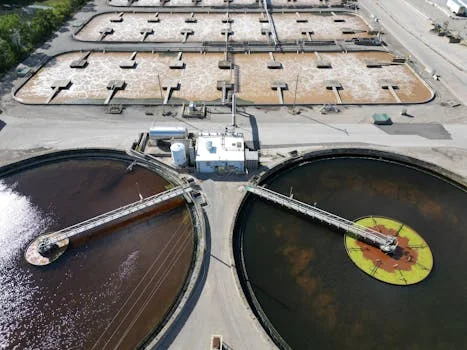
Package plants, particularly MBR systems for high-efficiency package wastewater treatment, compress the traditional multi-stage train. A typical MBBR package plant runs primary screening, equalization, an optional anaerobic stage, an anoxic tank, an MBBR bioreactor with aeration and media, a secondary clarifier or direct MBR filtration, and disinfection. A conventional activated sludge plant uses large primary clarifiers, extensive aeration basins, secondary clarifiers, and often a separate sludge facility. Package plants reduce or integrate civil structures, which shrinks site work and shortens package plant installation time. Most plants we size in the 20-80 m³/h band run near the lower end of the package energy range when equalization is sized correctly.
Compliance and Industrial Suitability: Which System Meets Your Effluent Standards?

Meeting the named discharge standard is the first procurement filter, and the package versus conventional choice often turns on wastewater strength and variability. Package plants suit many industrial sites where space is tight and deployment is urgent, but high-strength or complex streams still need careful process design.
Compliance Standards by System Type
| Standard | Package STP | Conventional STP | Notes |
|---|---|---|---|
| CPCB 2025 (India) | Meets most parameters (BOD <10, TSS <30 mg/L) | Meets most parameters, requires robust design | Both can comply; package plants often pre-certified for common flows. |
| EPA NPDES (USA) | Achieves secondary treatment levels | Achieves secondary & often tertiary levels | Package plants may need additional polishing for stricter permits. |
| EU Urban Waste Water Directive 91/271/EEC | Meets basic requirements for small discharges | Designed for comprehensive compliance, including nutrient removal | Conventional systems are standard for large municipal/industrial flows in EU. |
| WHO Guidelines (Irrigation) | Requires disinfection for safe reuse | Requires disinfection for safe reuse | Both systems need tertiary treatment (e.g., UV, chlorination) for reuse. |
According to 40 CFR 133.102, U.S.Package and conventional plants can both reach that secondary floor; stricter NPDES permits may still need polishing. Industrial effluent with TDS above 2000 mg/L typically needs reverse osmosis pre-treatment on either train, because biological processes stall under high salinity. For variable loads in food or beverage plants, package SBR units absorb 30-50% load swings more readily than continuously operated conventional basins. Where space is tight, WSZ series underground package STP for industrial effluent or containerized skids open sites that rule out open-tank civil layouts. For hazardous contaminants such as heavy metals or pharmaceuticals, conventional plants with specialized tertiary treatment (activated carbon, advanced oxidation) are often mandatory. A pharmaceutical plant in Hyderabad ran a hybrid train: compact MBBR for BOD reduction, then conventional activated sludge with advanced oxidation for API effluent under CPCB norms.
Cost Breakdown: CAPEX, OPEX, and ROI for Package vs Conventional Plants
A full CAPEX and OPEX review drives industrial wastewater treatment CAPEX OPEX decisions when finance asks for payback proof. Package plants usually cost less up front, but energy, labor, and hidden delay costs can flip the ranking over five years.
Cost Comparison (2025 USD) for a 50 m³/h System
| Cost Category | Package STP | Conventional STP | Notes |
|---|---|---|---|
| CAPEX (Equipment + Civil) | $80,000-$120,000 | $150,000-$250,000 | Package CAPEX is lower due to pre-fabrication and reduced civil work. |
| Installation | $5,000-$10,000 | $30,000-$80,000 | Significantly faster and less labor-intensive for package units. |
| Land Cost (if applicable) | $0 (underground options) | $20,000-$50,000 | Conventional plants require substantial land area. |
| Permitting/Approvals | $2,000-$5,000 | $10,000-$30,000 | Civil plant delays can inflate permitting costs and extend approval processes. |
| Annual OPEX (Energy, Chemicals, Labor) | $12,000-$18,000 | $8,000-$12,000 | Conventional plants often benefit from economies of scale in energy/labor for larger flows. |
| Maintenance (5-year lifecycle) | $15,000 | $25,000 | Package systems have fewer civil structures, but component replacement may be specialized. |
| Downtime Cost (annual) | $0 (modular redundancy) | $5,000-$20,000 (civil repairs) | Modular package systems can have redundant units, minimizing production loss. |
Hidden costs deserve a line item. Civil plant delays often stretch construction by 6-12 months and can add 10-20% to project budgets through extra labor, supervision, and lost production. Build a simple ROI sheet with plant capacity, local energy cost, discharge fees, and reuse savings before you lock the bid. For more detailed regional cost benchmarks and compliance guidelines for package STPs, use our dedicated guide.
Decision Framework: Which System Fits Your Project?

Pick the system against your budget, timeline, footprint, and named discharge limit together, not against a generic feature list. Scenario scoring beats brochure claims when two bids look close on paper.
Decision Matrix: System Selection by Scenario
| Scenario | CAPEX Budget | Timeline | Footprint Constraints | Effluent Quality (BOD/TSS) | Compliance Standards | Future Scalability | Recommended System & Justification |
|---|---|---|---|---|---|---|---|
| 1. Greenfield industrial plant (50 m³/h) | Low-Moderate | Urgent (6 months) | Moderate | Standard industrial (pre-treated) | CPCB 2025 | High | Package STP: Low CAPEX, fast deployment, modular for future expansion. |
| 2. Hospital wastewater (20 m³/h) | Low | Urgent (3 months) | High | Pathogens, pharmaceuticals | EPA/EU/WHO | Moderate | Package STP: Compact, rapid install, designed for specific contaminants. |
| 3. Municipal upgrade (500 m³/h) | High | Flexible (12-24 months) | Low | High BOD/TSS, nutrient removal | EU Directive, strict CPCB | Moderate | Conventional STP: Optimized for large flows, long lifespan, robust nutrient removal. |
| 4. Remote mining camp (100 m³/h) | Moderate | Urgent (4 months) | High (portable) | Mining process water (low organic) | Local EPA | Low-Moderate | Package STP (Containerized): Quick deployment, minimal civil work, relocatable. |
| 5. Food processing (variable load, 30-80 m³/h) | Moderate | Urgent (6 months) | Moderate | High organic, pH fluctuations | CPCB 2025, specific industry norms | High | Package SBR Plant: Excellent for variable loads, compact, meets CPCB norms for organics. |
Three red flags signal the wrong system choice. First, if effluent consistently exceeds 3000 mg/L TDS, neither system works well without specialized RO pre-treatment. Second, if flow exceeds 200 m³/h and you stack parallel package units without a clear modularity need, unit economics erode quickly. Third, if you have ample land, a flexible timeline, and want the lowest long-term wastewater treatment OPEX for very large flows, a package system is rarely the cheapest life-cycle answer. For more on how package plants compare to other healthcare wastewater solutions, consult our specialized guide.
Selection Checklist Before You Buy
Run through these points with your engineering team before signing a PO:
- Confirmed peak and average flow in m³/h, with at least a 30% design margin.
- Influent characterization including BOD, COD, TSS, TDS, pH, temperature, and any industry-specific contaminants.
- Discharge limit mapped to a named standard (CPCB 2025, EPA NPDES, EU UWWTD 91/271/EEC, or local).
- Available footprint, including headroom for crane access and container delivery.
- Power supply reliability and target energy use in kWh/m³ at design load.
- Operator skill level and whether PLC/SCADA remote monitoring is required.
- 5-year lifecycle cost including membrane or media replacement, not just purchase price.
Next Step
Send your influent analysis, site layout, and target discharge standard for a sized proposal and budget band. Request a package or conventional STP quotation with flow rate, effluent profile, and site constraints, and we will return a selection recommendation, P&ID, and CAPEX/OPEX estimate within five working days.
Frequently Asked Questions
Can package plants handle industrial wastewater with high TDS?
Package plants generally struggle with TDS above 2000 mg/L without reverse osmosis pre-treatment. Conventional systems with advanced tertiary treatment usually suit high-salinity textile or tannery effluent better, because biological activity falls off sharply past that threshold. Size RO and brine handling before you lock either biological train.
What is the lifespan of a package STP versus a conventional plant?
Package plants typically run 15-20 years with proper maintenance, since modular components like MBBR media can be replaced individually. Conventional civil plants with robust concrete structures generally last 25-30 years or more. That gap matters in whole-of-life cost models when discount rates and replacement cycles are explicit.
Do package plants require less operator attention?
Yes. Package plants are built for higher automation, often with PLC control and remote monitoring, which cuts the need for continuous on-site staffing. Conventional plants, especially larger municipal-scale units, typically need 24/7 on-site staff for aeration, sludge management, and process adjustments. Skill level still drives reliability on either system.
Can I expand a package plant later?
Yes. Package plants are modular, so adding parallel units or upgrading components can lift capacity by 50-100% without major civil work. Conventional plants usually need significant upfront overdesign to absorb future growth, because expansion typically means new basins and structural work. Plan hydraulic tie-ins early if phased capacity is likely.
Which system is better for zero-liquid-discharge projects?
Neither package nor conventional plants alone achieve ZLD; both typically serve as pre-treatment stages. ZLD needs downstream evaporators, crystallizers, or further membrane steps. Package plants are often chosen for the pre-treatment phase in ZLD trains because of compact footprint and rapid deployment on constrained industrial sites.
Related Equipment
The following HydropureWater products are engineered for the wastewater challenges discussed above:
- compact hospital wastewater treatment systems meeting EPA/EU standards — view specifications, capacity range, and technical data
Need a customized solution? Request a free quote with your specific flow rate and pollutant parameters.