Why Mbuji-Mayi Is a Different Cooling-Water Problem
A data center in Mbuji-Mayi cannot be designed against a transposed Lubumbashi, Kinshasa, or Bengaluru template. The city sits on the Kasai diamond-mining platform, where the Mbuji-Mayi Supergroup carbonate stratigraphy and its kimberlite megacryst suites (Pivin et al., 2008; Delpomdor & Préat, 2012, 2013a, 2013b) fix the source-water profile to a carbonate-buffered system that is chemically and geologically distinct from a copperbelt or Cauvery feed.
The site's regulatory environment compounds that: the parallel Lubumbashi data center water treatment guide notes Haut-Katanga has limited formal industrial discharge infrastructure, and the constraint is more pronounced in Kasaï-Central, where no documented industrial discharge framework covers a hyperscale or edge data center. The municipal supply is intermittent, so evaporative makeup cannot be treated as a guaranteed utility input the way it is in Council Bluffs, Iowa, or The Dalles, Oregon, the two reference US cases in Lawrence Berkeley National Laboratory's 2024 WUE framing. The grid cannot be relied on to feed a parasitic cooling load, so the site has to absorb both the cooling architecture decision and the full pretreatment, chemistry, blowdown, and discharge package that evaporative cooling commits the operator to.
That package has to be sized for a smaller node than a Lubumbashi copperbelt campus. A representative Mbuji-Mayi facility sits in the 5–10 MW edge-to-mid-hyperscale band, which is a different flow envelope from a 100 MW Haut-Katanga or Karnataka campus. Without a confirmed source-water analysis for the Kasai-Central feed, no cycles target, blowdown flow, or discharge design is defensible to a lender, insurer, or an enterprise customer running CDP water disclosure.
Source-Water Risk: The Inputs You Must Demand Before FEED
Lawrence Berkeley National Laboratory's 2024 US benchmark — approximately 17 billion gallons of data center cooling water consumed in 2023, a figure the same lab expects to double or quadruple by 2028 — is the WUE comparison any new African facility will be measured against, but the operating constraints behind that number do not transfer to Mbuji-Mayi until the local feed is characterized. The first engineering deliverable is not a train; it is a sampling campaign.
Demand a minimum two-season sampling program on the candidate makeup source, covering total dissolved solids, calcium and magnesium hardness, silica, alkalinity, iron and manganese, residual chlorine, turbidity, and microbiological counts — the same parameter set the parallel Lubumbashi data center water treatment guide lists as the precondition for any defensible design. Karst-influenced carbonate catchments over the Mbuji-Mayi Supergroup can produce hardness and alkalinity swings that exceed the textbook 4–8× cycles-of-concentration envelope (Valicor) unless the makeup softener is sized with margin. If the source is mining-influenced — a realistic condition for any industrial borehole in the Kasai platform — screen for residual metals, sulfate, and suspended solids above the 10–50 mg/L benchmark cited for CTBD (Genesis Water Tech, 2026) so the upstream train is not undersized. Treat the resulting profile as the only defensible input to cycles-of-concentration, blowdown flow, and discharge design.
| Parameter | Why it matters at Mbuji-Mayi | Source |
|---|---|---|
| Total dissolved solids (TDS) | Sets RO feed osmotic pressure and the interstage boosting design | Bengaluru 2026 guide (CTBD 1,200–6,000 mg/L at 4–8× CoC) |
| Calcium and magnesium hardness | Drives antiscalant dose and the CaSO₄ scaling ceiling at 75–80% RO recovery | IDE-Tech, 2026 |
| Silica | Hard ceiling on RO recovery on a carbonate-buffered Kasai feed | IDE-Tech, 2026 |
| Alkalinity | LSI control and acid dosing demand on the makeup line | CRB Water practice |
| Iron and manganese | Side-stream filter rating and fouling risk on the RO pretreatment | CRB Water practice |
| Residual chlorine | Membrane compatibility and biocide program selection | Lubumbashi 2026 guide |
| Turbidity and suspended solids | DAF and multimedia filter loading | Genesis Water Tech, 2026 (10–50 mg/L CTBD benchmark) |
| Microbiological counts | Defines the chlorine dioxide or UV dose on the cooling loop | Lubumbashi 2026 guide |
| Residual metals, sulfate (mining-influenced source) | Pre-RO screening to protect membrane life and discharge consent | Genesis Water Tech, 2026 |
Cooling Architecture and Cycles of Concentration
Cycles of concentration (CoC) is the operational lever that fixes blowdown flow before any equipment is ordered: the higher the CoC target, the smaller the blowdown stream, but the higher the mineral concentration that the downstream train must handle. Over time, evaporative losses account for roughly 80% of total makeup demand and blowdown the remaining 20%, per Valicor's analysis of evaporative cooling systems, so cooling architecture — not blowdown treatment — is the biggest water-saving lever on the site.
Evaporative cooling uses roughly 10% less energy than air cooling, which is meaningful on a 100 MW load, but on a Kasaï-Central grid that 10% energy penalty has to be weighed against the cost of a full pretreatment, chemistry, and blowdown package and the discharge headache that comes with evaporative cooling. A 100 MW facility can require up to 2 million L/day of makeup (IDE-Tech, 2026), and a 1 MW traditional air-cooled hall has been benchmarked at 26 million L/year of evaporative loss (Oxford, 2024), so even a 5 MW edge node in Mbuji-Mayi will generate a measurable blowdown stream that the plot has to handle on-site. Without softening, the CoC target in a carbonate Mbuji-Mayi feed would have to sit at a level that wastes water and inflates blowdown; with a side-stream softener on the cooling makeup line, the operator can run more cycles, cut blowdown volume, and stay inside the cooling tower's scale window (CRB Water practice carried over from the parallel Lubumbashi data center water treatment guide).
| Cycles of concentration (CoC) | Blowdown share of makeup (approximate) | Implication for downstream train |
|---|---|---|
| 3 | ~25% | Lowest mineral loading, largest blowdown volume; RO membrane area sized to flow, not concentration |
| 4–6 | ~15–20% | Standard envelope for CTBD; conventional BWRO at 75–80% recovery is feasible on a softened Kasai feed |
| 7–8 | ~10–12% | Approaches silica and CaSO₄ scaling ceiling; concentrate management or partial ZLD becomes mandatory |
Cooling Tower Blowdown Treatment Train
Cooling tower blowdown (CTBD) is mineral-concentrated, not heavily organic or biological, so the treatment train targets suspended solids, hardness carryover, residual treatment chemicals, and — if the water is being reused — microbiological control. The unit operations below are the standard response to that load.
A DAF unit for cooling tower blowdown pretreatment ahead of filtration drops the load on any downstream polishing stage and stabilizes the effluent against swings in chemical carryover. Multimedia filtration ahead of RO and cooling makeup is the standard first step for any makeup stream destined for RO or for cooling systems sensitive to particulate fouling (CRB Water practice). The side-stream softener on the cooling makeup line sets the cycles target and protects the downstream membranes from hardness breakthrough. Conventional brackish water RO plateaus at 75–80% recovery on CTBD before silica and calcium sulfate scaling take the system offline (IDE-Tech, 2026); an industrial RO system for blowdown reuse paired with a fluidized-bed salt precipitator or a mechanical vapor compression (MVC) evaporator on the concentrate pushes overall recovery to 90–95%, with permeate silica near 1 mg/L reported in the IDE field case (IDE-Tech, 2026). A chlorine dioxide generator for microbiological control handles the disinfection needed before the water re-enters the cooling loop or is reused for toilet flushing or landscape irrigation, and the same UV sterilizer used on the cooling makeup stream can be specified to standardize spares and operator training across both packages. Where discharge options are limited — which is the realistic base case for a Mbuji-Mayi industrial plot — this train produces reuse-quality water for cooling makeup, with the RO concentrate sent to an evaporation pond or a small partial-ZLD stage.
Sanitary Wastewater From On-Site Staff
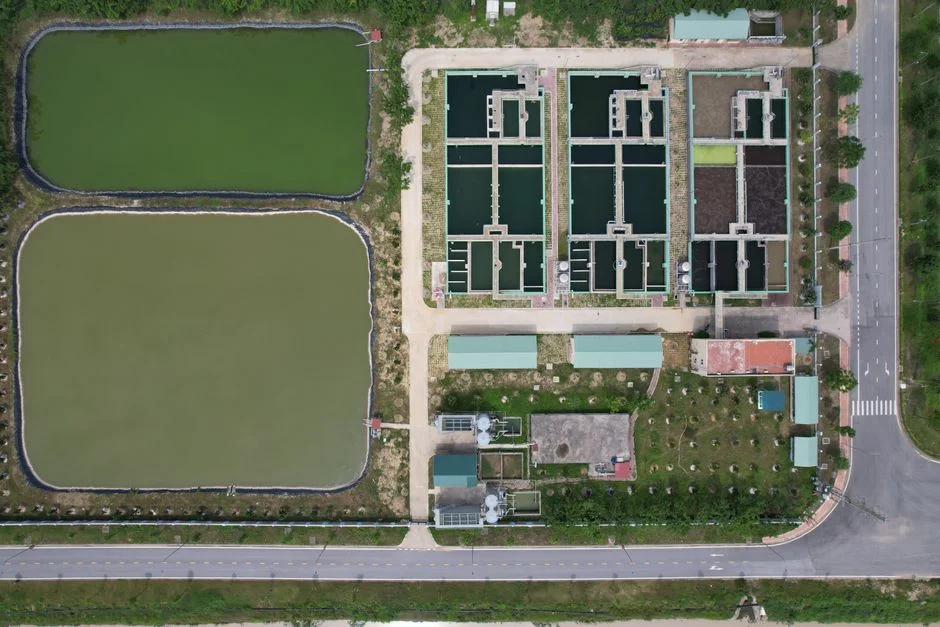
A data center campus in Mbuji-Mayi will generate a continuous sanitary stream from on-site staff — typically low-strength and low-flow compared with the cooling loop, but still requiring treatment before discharge or reuse. Underestimating it is a common planning error: the sanitary stream runs 24/7 regardless of IT load, it carries biological loading the cooling blowdown train is not designed to handle, and the operator must log flow and quality continuously to meet local and customer reporting requirements.
A packaged biological treatment unit — a packaged MBR for the on-site sanitary stream or an A/O contact oxidation system — is the standard fit: compact footprint, automated operation, and effluent quality suitable for on-site reuse in landscape irrigation, toilet flushing, or cooling-tower makeup blending. Disinfection of the sanitary effluent — UV or chlorine dioxide — is required before any reuse or surface discharge, and the same UV sterilizer used on the cooling makeup stream can be specified to standardize spares and operator training across both packages.
Blowdown Endpoint Matrix for Mbuji-Mayi
One site rarely fits one train. Most Mbuji-Mayi projects will evaluate three or four endpoints against Kasaï-Central consent conditions, the hyperscaler's WUE target, and the CAPEX ceiling. The table below sets the realistic options side by side; the qualitative narrative below it explains the local fit.
Endpoint A — sewer or evaporation pond — is the lowest CAPEX path, but Kasaï-Central has no mature industrial discharge framework and municipal plants are not designed to accept mineral-concentrated cooling blowdown. Endpoint B is reuse-only (UF + RO at 60–80% recovery, permeate to cooling makeup, concentrate to evaporation pond or sewer), which aligns with the conventional brackish water RO ceiling (IDE-Tech, 2026) and is sized for a 5–10 MW Mbuji-Mayi node against the 30 m³/day benchmark for a 30 MW facility and the 100–200 m³/day band for 100 MW campuses cited in the Bengaluru 2026 guide. Endpoint C is reuse plus partial ZLD (UF + RO plus fluidized-bed salt precipitator or MVC evaporator at 90–95% recovery, IDE field case with permeate silica near 1 mg/L), required where the consent pathway refuses high-TDS discharge. Endpoint D is full ZLD with crystallizer, which removes sewer capacity from the project critical path but adds imported-equipment lead time of 18–24 months (parallel finding from the Bengaluru 2026 guide). The Endpoint A configuration typically pairs with a high-efficiency sedimentation tank upstream to drop suspended solids before any downstream polishing.
| Endpoint | Recovery | Typical train | Fit for Mbuji-Mayi |
|---|---|---|---|
| A — Sewer or evaporation pond | None (pass-through or pond) | Sedimentation; optional multimedia filtration | Lowest CAPEX; constrained by absent industrial discharge framework |
| B — Reuse only | 60–80% | UF + RO; permeate to cooling makeup, concentrate to pond or sewer | Aligns with BWRO ceiling; fits 5–10 MW node CTBD flow |
| C — Reuse + partial ZLD | 90–95% | UF + RO + fluidized-bed salt precipitator or MVC evaporator | Suits sites where consent refuses high-TDS discharge |
| D — Full ZLD with crystallizer | 95–99% | UF + RO + brine concentrator + crystallizer | No-discharge sites; 18–24 month imported MVC lead time |
Commissioning Timeline and Supplier Selection
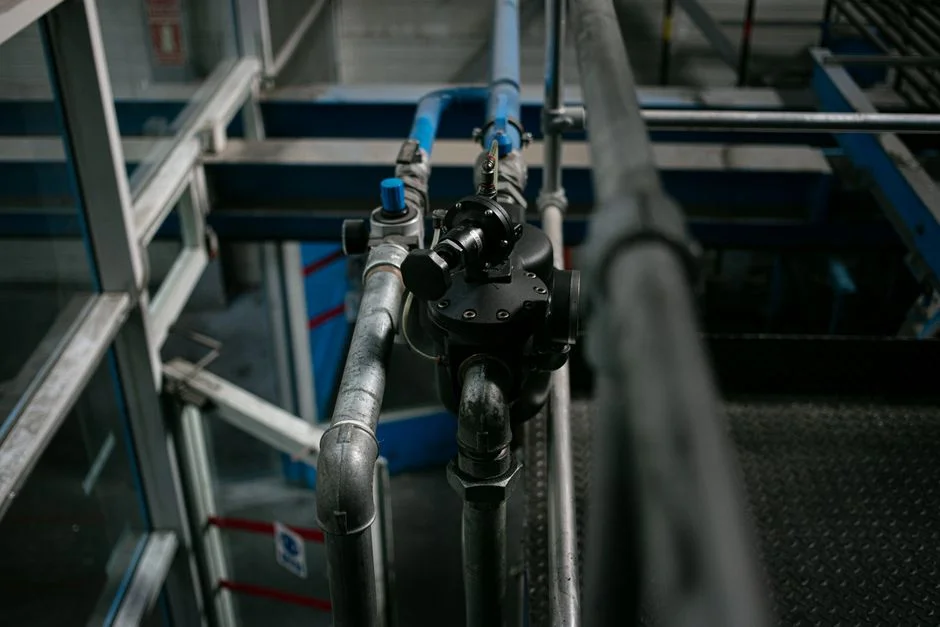
Months 0–3 cover the foundation: baseline CTBD characterization across at least two operating cycles-of-concentration bands, the local consent application package, a pilot trailer run for antiscalant selection against the actual Mbuji-Mayi feed, and integration of any rainwater harvesting potential into the makeup water balance so that stormwater is not double-counted as a separate consent stream. Months 3–9 are mechanical: train commissioning, RO membrane break-in under controlled recovery ramp, biocide compatibility testing against the chosen cooling chemistry, and SCADA integration with the building management system so WUE is reported in real time rather than reconstructed monthly. Months 9–12 close the compliance loop with third-party stack and effluent monitoring, a cross-check on any reused water that touches humidification or worker-contact systems, quarterly sludge characterization, and finalization of the O&M contract with membrane-replacement cycles locked in.
Procurement is where Mbuji-Mayi projects typically fail the FEED test. Look for a supplier with documented experience on mining-influenced source water, intermittent supply, and tropical cooling loads, and who can deliver a single integrated package — pretreatment, cooling chemistry, blowdown handling, and sanitary treatment — rather than four separate vendors to coordinate. The parallel tropical-jungle benchmark in the parallel Manaus tropical-jungle data center guide and the parallel Caribbean framing in the parallel Santo Domingo data center guide both surface the same procurement filter: single-vendor integration, not a parts list.
Frequently Asked Questions
What CAPEX should a 5–10 MW Mbuji-Mayi data center budget for a packaged blowdown train?
CAPEX depends on the four decisions in the endpoint matrix — cooling architecture, cycles of concentration, blowdown endpoint, and sanitary stream sizing — and on the source-water analysis the site has not yet completed. The Bengaluru 2026 guide places a 50 m³/day reuse-only UF + RO package (Train A) at ₹1.8–2.8 Cr and a $250K–500K benchmark for a 50,000 GPD RO system, with a reuse-plus-partial-ZLD package (Train B) at ₹4–6 Cr. For a 5–10 MW Mbuji-Mayi node, expect a qualitative premium over those numbers for a mining-influenced carbonate feed and the absence of a local industrial discharge framework; request a sized proposal from a supplier with documented mining-influenced feed experience before locking the budget.
What is the lead time for the thermal stage if Endpoint C is selected?
Imported MVC evaporator skids carry an 18–24 month lead time, per the Bengaluru 2026 guide. On a Mbuji-Mayi schedule, that means the thermal stage must be ordered before the building is weather-tight, and the FEED team needs to commit to Endpoint C at the same time as the consent pathway is fixed, not after.
How should a procurement team filter suppliers for a Mbuji-Mayi project?
Filter on three items: documented experience on mining-influenced source water, references that include intermittent supply and tropical cooling loads, and the ability to deliver a single integrated package — pretreatment, cooling chemistry, blowdown handling, and sanitary treatment — rather than four separate vendors to coordinate. The procurement checklist in the parallel Lubumbashi data center water treatment guide applies, with the Kasaï-Central addition that the supplier must be able to support a feed profile that is carbonate-dominated and intermittently available, not copperbelt-style.
What is the consent and discharge risk in Kasaï-Central for a Mbuji-Mayi data center?
The research corpus does not document a formal industrial discharge framework in Kasaï-Central province comparable to a US Clean Water Act permit or an India KSPCB Consent to Operate, and Haut-Katanga's own framework is described as limited. Treat the consent pathway as a qualitative checklist: confirm the receiving environment for any sewer or evaporation-pond discharge, lock the cycles-of-concentration and antiscalant program against the documented feed profile, and require third-party stack and effluent monitoring from month 9 onward so the documentation trail exists before a regulator asks for it. Inputs a buyer must obtain from local counsel and the project site include the current provincial discharge position, the receiving-water classification, and any hyperscaler-specific water reporting obligations.