Why Depok data centers treat blowdown as a license-to-operate issue
Depok sits inside the Jabodetabek metro and inherits Greater Jakarta's structural water stress: limited PDAM allocation, documented industrial-estate shortfalls, and groundwater extraction correlated with land subsidence across North and West Jakarta (hydropurewater.com, 2025). The same source frames this as a license-to-operate problem rather than a sustainability question — paying for more PDAM water is not a viable long-term strategy because the supply is structurally capped and the regulator is pushing operators toward measured, reclaimed, or recycled supply.
Citing global benchmarks, IDPRO chairman Hendra Suryakusuma puts hyperscale data centers at 1–5 million liters per day, with the figure heavily concentrated in evaporative cooling systems; a 100 MW reference facility is documented at up to 2 million L/day (thejakartapost.com via asianews.network, 2025-03; ide-tech.com, 2026). Most of Indonesia's existing installed base still runs chilled water plus cooling towers rather than air-side economizers, so blowdown is the dominant wastewater stream on those sites (thejakartapost.com via asianews.network, 2025-03). The policy response is already visible: AWS signed on as the first tenant of the Greenland International Industrial Center (GIIC) reclaimed-water program in Cikarang, launched January 2025 with 8,000 m³/day capacity and a ~60% reuse rate, supplied in compliance with Permenkes No. 02/2023 and PP No. 66/2014 (esgnews.com, 2025). For a 5–20 MW Depok build, the qualitative implication is that the site needs an explicit water strategy covering PDAM, groundwater, and a reclaimed partnership — not a single source selection — and blowdown treatment sits inside that strategy rather than next to it.
Sizing blowdown: the cycles-of-concentration math a Depok engineer can defend
Cycles of concentration (CoC) is the ratio of dissolved solids in the circulating cooling water to dissolved solids in the make-up water, and the blowdown fraction as a share of make-up is approximately 1 / (CoC − 1) — the single formula a planner should run vendor claims through before signing any cycle target (genesiswatertech.com, 2025). At 4 CoC, blowdown is 25% of make-up; at 6 CoC, it is 20%. The 4→6 jump is a 5 percentage-point reduction, or a 20% reduction in blowdown volume, not 50% — a misread that consistently appears in sustainability targets (genesiswatertech.com, 2025). A typical data center cooling tower operating at 4 cycles of concentration loses ~25–30% of make-up to blowdown; a facility using 10 million gallons monthly translates to 2.5–3 million gallons discharged (genesiswatertech.com, 2025). For a 5–20 MW Depok build on evaporative cooling, cooling make-up is roughly 50,000–200,000 L/day, of which 20–25% exits as blowdown at a conservative 4 CoC (hydropurewater.com, 2025). Blowdown TDS is typically 1,200–6,000 mg/L (4–8× make-up) and suspended solids 10–50 mg/L depending on cycles of concentration and source water quality; direct discharge fees in water-stressed regions exceed $5–15 per thousand gallons, and some jurisdictions set TDS limits below 1,500 mg/L (genesiswatertech.com, 2025). Above 5–6 CoC, biological and scaling risk rise sharply without advanced side-stream treatment, so most Depok sites land in the 4–6 CoC band, supported by chemistry plus side-stream filtration or UF (genesiswatertech.com, 2025).
What goes into the blowdown stream: a Depok-specific water-quality checklist
Blowdown water quality varies significantly with make-up source, treatment chemistry, and operational parameters, and a Depok engineer needs an influent spec a vendor can size against. Elevated TDS is typically 4–8× higher than make-up water, ranging from 1,200 to 6,000 mg/L depending on cycles of concentration and source water quality (genesiswatertech.com, 2025). Scaling minerals — concentrated calcium, magnesium, silica, and alkalinity — create precipitation risks that complicate treatment and reuse applications (genesiswatertech.com, 2025). Treatment chemicals — biocides, corrosion inhibitors, scale inhibitors, and dispersants — accumulate in blowdown streams; legacy systems using chromates or high-phosphate chemistries present particular challenges for reuse or discharge (genesiswatertech.com, 2025). Suspended solids — corrosion products, biofilm fragments, and airborne particulates — accumulate despite basin filtration, typically 10–50 mg/L (genesiswatertech.com, 2025). Biological content — planktonic bacteria, algae, and biofilm-forming organisms — must be addressed in any recovery system, and blowdown streams are not sterile even when the cooling loop is well-maintained (genesiswatertech.com, 2025). The Depok-specific inputs a buyer should request from the site are a dated make-up analysis (PDAM vs shallow well vs reclaimed), documented seasonal variation, materials of construction for the cooling loop, and the chemicals currently dosed, because a defensible design starts from a defensible water balance (beta.co.id, 2025).
The Depok cooling-blowdown treatment train, block by block
A defensible Depok water system has three distinct engineering deliverables, and they should be specified, procured, and operated as separate work packages rather than one blended chemistry contract (hydropurewater.com, 2025). Conflating make-up conditioning, chemistry control, and blowdown handling is the single most common specification error on Indonesian data-center retrofits, and it shows up as either scale on heat exchangers or excessive blowdown. Open and closed loops cannot share one chemistry program or one water specification, and dosing should be automatic with conductivity- and volume-based control rather than manual feed (beta.co.id, 2025).
| Stage | Block | Inlet spec (target) | Outlet spec (target) | Notes |
|---|---|---|---|---|
| 1 | Intake screening + multi-media filter | Raw source water (PDAM, ground, or reclaimed) | Turbidity/TSS reduced 95%+; SDI low enough to protect RO | Drops turbidity and TSS before any softener or membrane |
| 2 | Twin-tank industrial water softener | MMF filtrate | Ca/Mg hardness reduced; partial alkalinity drop | Enables 4–6 CoC without runaway CaCO₃ scale |
| 3 | Side-stream filtration or UF pretreatment skid | Cooling-tower circulating water | Suspended solids controlled; SDI compliant | Keeps blowdown chemistry-limited, not clarity-limited |
| 4 | High-recovery industrial RO system | Pretreated blowdown (or side-stream) | ~95% recovery; permeate silica ~1 mg/L | Convert blowdown to make-up; cut freshwater intake |
| 5 | Discharge polishing | RO concentrate or bypass blowdown | pH 6–9; TSS < 30 mg/L; residual per permit | Meet Permenkes 02/2023 and PP 66/2014 limits |
Stage 1 is intake screening and a multi-media filter for RO pretreatment, sized to drop turbidity and TSS before any downstream softener or membrane. Stage 2 is a twin-tank industrial water softener sized to the make-up flow, dropping calcium and magnesium hardness plus a fraction of alkalinity so the cooling tower can run 4–6 CoC without runaway CaCO₃ scale. Stage 3 is either side-stream filtration or a UF pretreatment skid for cooling-tower side-stream, keeping suspended solids in check so blowdown volume is governed by chemistry rather than by a clarity excursion. Stage 4 is the high-recovery industrial RO system, where conventional BWRO caps at 75–80% recovery on CTBD because silica, CaCO₃, and CaSO₄ reach scaling limits and high-recovery designs reach ~95% overall recovery with permeate silica around 1 mg/L (ide-tech.com, 2026). Stage 5 is discharge polishing via a on-site chlorine dioxide generator for any reuse path plus a TSS guard, sized with a PLC-controlled chemical dosing skid for pH correction and residual control, with target parameters pH 6–9, TSS < 30 mg/L, residual per permit (hydropurewater.com, 2025).
Choosing RO recovery: conventional BWRO, high-recovery designs, and when ZLD makes sense
Conventional brackish-water RO typically caps at 75–80% recovery on cooling-tower blowdown because silica, calcium carbonate, and calcium sulfate reach scaling limits (ide-tech.com, 2026). RO provides the most comprehensive single-stage treatment, removing 95–99% of dissolved solids, hardness, silica, and most treatment chemicals; permeate TDS typically ranges from 10–50 mg/L, suitable for direct return to cooling towers as high-quality make-up (genesiswatertech.com, 2025). High-recovery CTBD reuse systems address three challenges simultaneously — sparingly soluble salts, osmotic pressure limits, and scaling chemistry — by combining membrane separation with controlled salt precipitation and dynamic membrane operation (ide-tech.com, 2026). Mechanical vapor compression (MVC) achieves 95–98% water recovery from concentrate streams, producing distillate with TDS below 10 mg/L; capital costs $1–3 million for systems processing 10,000–30,000 GPD, energy 15–25 kWh per 1,000 US gallons of distillate (genesiswatertech.com, 2025). Full ZLD combines RO (70–80% recovery) with evaporative concentration and a crystallizer, achieving 95–99% overall water recovery; capital $3–8 million for data center applications, operating costs $5–15 per thousand gallons treated (genesiswatertech.com, 2025). The qualitative decision logic: if the project requires reuse or a tight discharge envelope, an RO stage is mandatory; hyperscale-grade RO packages carry roughly 3–4× higher per-gallon capex when applied to sub-10 MW sites, so for a 5–20 MW Depok build, modular right-sized high-recovery industrial RO system skids usually win (genesiswatertech.com, 2025).
The Depok compliance spine: Permenkes 02/2023, PP 66/2014, and AMDAL/UKL-UPL
Permenkes No. 02/2023 sets water-quality parameters for any water that touches human-use or industrial reuse pathways, including reclaimed-water supply (esgnews.com, 2025). PP No. 66/2014 governs water-resource allocation and conservation, and applies to data-center make-up sourcing as well as discharge (esgnews.com, 2025). Facility-level discharge runs through the AMDAL/UKL-UPL environmental impact assessment pathway administered by the local environmental agency (beta.co.id, 2025). The PROPER rating program overlays day-to-day compliance reporting, and a WUE disclosure cadence is increasingly expected by the same authority (beta.co.id, 2025). The Depok implication: a 2026 build should co-develop a WUE reporting cadence with the local environmental authority during permitting, because Indonesian operators rarely disclose water data today and the next regulatory tightening is foreseeable (esgnews.com, 2025). A separate domestic wastewater stream from offices, NOC, and staff areas should be routed through a compact biological package STP — it is a different permit pathway and effluent profile from the industrial blowdown train, and conflating them is a common compliance error (beta.co.id, 2025). For sizing logic on the domestic STP side, a containerized MBR STP sizing guide for Jakarta provides a defensible baseline, and broader Jakarta sewage treatment equipment supplier selection criteria apply equally to a Depok procurement.
Depok procurement matrix: matching treatment blocks to equipment
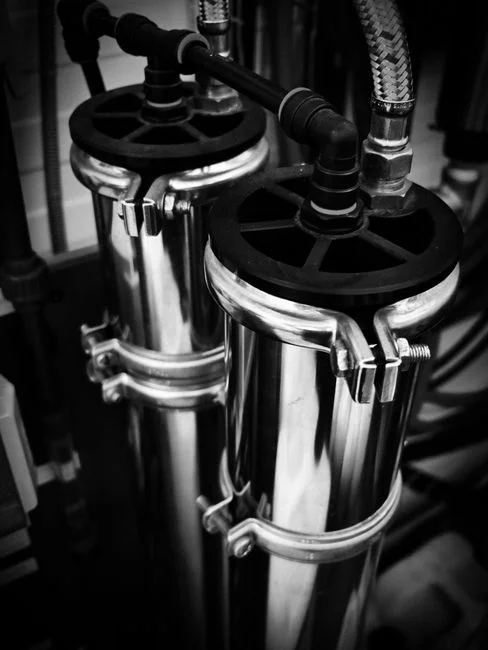
The matrix below is a procurement summary, not a quote sheet — the engineering selection still needs site-water analysis, peak ambient wet-bulb, and a CoC target locked in first (hydropurewater.com, 2025). Closed-loop chemistry (nitrite/molybdate inhibitor, non-oxidizing biocide) is a chemical program, not a piece of equipment, and should be specified under a separate water-chemistry scope with its own monitoring cadence — conductivity, inhibitor level, dissolved iron/copper, and bacterial counts — rather than bundled into the equipment supply (beta.co.id, 2025).
| Treatment block | Required? | Sizing logic | Selection trigger |
|---|---|---|---|
| Intake screening + MMF | Always (PDAM, ground, or reclaimed) | Peak make-up flow + 10% margin | Target CoC ≥ 4 with chemistry-only control |
| Twin-tank softener | Always at 4–6 CoC | Make-up flow × regeneration frequency | Enable 4–6 CoC without runaway CaCO₃ scale |
| UF or side-stream filtration | Conditional | 1–5% of circulation flow | CoC ≥ 5 or biological risk is a concern |
| Industrial RO | Conditional | Permeate demand + peak blowdown | Reuse required or discharge limits tight |
| Automatic chemical dosing skid | Always | Conductivity- and volume-based control | Open-loop chemistry automation |
| Closed-loop chemistry program | Always (closed loops) | System volume + inhibitor loss | Separate scope, not bundled with equipment |
| Domestic STP | Always (offices, NOC) | Occupancy load | Separate permit pathway from industrial train |
Procurement-side, RO selection should be triggered only when reuse is required or discharge limits are tight; for a 5–20 MW Depok site, modular right-sized skids — including a UF pretreatment skid for cooling-tower side-stream and a PLC-controlled chemical dosing skid — usually win on payback and on operability with a small facilities team (hydropurewater.com, 2025). Domestic STP and industrial blowdown train should be procured as separate packages because they sit on different permit pathways (beta.co.id, 2025). For reference on cooling-tower blowdown treatment in a different dense Asia-Pacific context, the Manaus data center cooling blowdown treatment guide documents a comparable train with different source-water chemistry.
Frequently Asked Questions
What is a defensible CoC target for a 5–20 MW Depok build?
Most 5–20 MW sites land in the 4–6 CoC band, with chemistry plus side-stream filtration or UF (genesiswatertech.com, 2025). The blowdown fraction follows 1 / (CoC − 1) — 25% at 4 CoC, 20% at 6 CoC. Above 6 CoC, biological and scaling risk rise sharply without advanced treatment; below 4 CoC, freshwater demand becomes a permit issue in Jabodetabek.
Is conventional BWRO enough, or do we need high-recovery or ZLD?
Conventional BWRO caps at 75–80% recovery on cooling-tower blowdown because silica, CaCO₃, and CaSO₄ reach scaling limits (ide-tech.com, 2026). High-recovery designs that combine RO with controlled salt precipitation reach ~95% overall recovery with permeate silica around 1 mg/L (ide-tech.com, 2026), and the resulting permeate is suitable for blending back into cooling-tower make-up. For a 5–20 MW Depok build, the request to the supplier is the inlet water analysis plus the peak ambient wet-bulb; the equipment vendor needs those before quoting a recovery target or a ZLD scope. A 50,000 GPD RO skid treating blowdown can cost $250,000–500,000 installed, with operating costs of $1.50–3.00 per thousand gallons treated (genesiswatertech.com, 2025).
What is the compliance pathway for discharge and reuse?
Facility-level discharge is handled through the AMDAL/UKL-UPL environmental impact assessment process, with day-to-day compliance running through the PROPER rating program and WUE reporting (beta.co.id, 2025). Water-quality parameters follow Permenkes No. 02/2023, and water-resource allocation runs under PP No. 66/2014 (esgnews.com, 2025). Reclaimed-water partnerships such as GIIC's 8,000 m³/day program in Cikarang are already a permitted compliance route (esgnews.com, 2025).
How should a procurement manager shortlist blowdown-treatment suppliers for a Depok site?
Ask the supplier to commit in writing to a CoC band of 4–6 with the supplied make-up analysis, to an inlet/outlet parameter table aligned to the table above (pH 6–9, TSS < 30 mg/L, RO permeate silica ~1 mg/L), and to a control architecture that separates open and closed loops (hydropurewater.com, 2025; beta.co.id, 2025). Request a reference list of installed cooling-tower blowdown skids in Indonesia or comparable climates, and a lead-time confirmation on the softener, UF, and RO skids as separate line items rather than a single packaged price. A supplier that bundles closed-loop chemistry into the equipment supply, or that cannot show evidence of independent open-loop dosing control, is a compliance risk on a Depok site (beta.co.id, 2025).