Jakarta’s Sewage Crisis: Why Equipment Selection Matters in 2025
Jakarta’s sewerage coverage rate is estimated at less than 10% in 2025, a deficit that forces over 90% of industrial plants and commercial developments to manage wastewater on-site or risk administrative fines reaching IDR 5 billion under Jakarta Governor Regulation No. 122/2015. For a factory manager in the Pulogadung or Marunda industrial estates, the choice of sewage treatment equipment is no longer a matter of simple procurement; it is a critical hedge against regulatory shutdowns and rising water costs. The city pushes forward with the 15-zone Jakarta Sewage Improvement Project, and the demand for high-efficiency systems has surged, yet many operators remain trapped by legacy equipment that fails to meet the stringent effluent limits of Minister of Environment Regulation No. 68/2016.
The scale of the challenge is best illustrated by the Jakarta Sewage Improvement Project’s Construction Zone 1. This high-density area requires a massive 240,000 m³/day capacity, a project recently awarded to Sumitomo Electric using advanced Membrane Bioreactor (MBR) technology. However, for mid-sized industrial operators (50–500 m³/day), the high CAPEX of a municipal-scale MBR is often unjustifiable. In these cases, Dissolved Air Flotation (DAF) or Anoxic/Oxic (A/O) systems provide more balanced cost-to-performance ratios. Choosing the wrong technology often leads to the "Jakarta effluent gap"—where a system designed for lower standards fails to handle the high Chemical Oxygen Demand (COD) and Fats, Oils, and Grease (FOG) typical of local industrial discharge.
Common supplier risks in the Jakarta market include significant permit delays, a lack of local Operations and Maintenance (O&M) support, and equipment that cannot consistently achieve COD levels below 50 mg/L. Jakarta transitions toward a "Sponge City" model, emphasizing water reuse. This makes the engineering specs of your equipment—specifically its ability to produce high-clarity permeate—the deciding factor in your facility's long-term operational viability.
MBR vs DAF vs A/O: Engineering Specs Compared for Jakarta Projects
Membrane Bioreactor (MBR) systems typically achieve a footprint reduction of 60% compared to conventional activated sludge processes, making them the preferred choice for Jakarta’s land-constrained urban zones. By integrating biological degradation with membrane filtration, MBRs eliminate the need for secondary clarifiers. For large-scale projects like the 2025 Jakarta Zone 1 plant, the use of PTFE (Polytetrafluoroethylene) membranes is critical. These membranes offer superior tensile strength and chemical resistance, maintaining a flux rate that ensures Total Suspended Solids (TSS) remain below 10 mg/L and COD below 50 mg/L, comfortably exceeding national standards. When evaluating MBR systems for Jakarta’s high-density zones, engineers must account for an energy intensity of 0.6–1.2 kWh/m³ and a sludge yield of approximately 0.2–0.4 kg TSS/kg BOD removed.
For industries dealing with high organic loads and lipid concentrations, such as food processing or textiles, Dissolved Air Flotation (DAF) serves as a robust primary or secondary treatment stage. DAF systems operate by introducing micro-bubbles that attach to flocculated particles, lifting them to the surface for mechanical skimming. HydropureWater DAF systems are engineered to remove 92–97% of FOG and 85–95% of TSS. In Jakarta’s high-humidity environment, corrosion resistance is paramount; high-grade stainless steel (SUS304 or 316) is the standard for long-term durability. Utilizing DAF systems for Jakarta’s FOG-heavy wastewater allows for hydraulic loading rates of 4–8 m/h, significantly faster than sedimentation tanks, though it requires precise chemical dosing of polyaluminum chloride (PAC) at 5–10 mg/L to maintain efficiency.
The Anoxic/Oxic (A/O) process remains the workhorse for municipal and industrial projects where land is available and budgets are tighter. The process relies on a two-stage biological circuit: an anoxic zone for denitrification and an oxic zone for nitrification and COD removal. With Mixed Liquor Suspended Solids (MLSS) maintained between 3,000 and 5,000 mg/L, A/O systems achieve 85–92% COD removal. While the footprint is larger than MBR, the energy consumption is significantly lower, typically 0.3–0.6 kWh/m³. Implementing A/O systems for mid-sized Jakarta projects often involves underground "package" configurations, which mitigate odor issues and preserve surface land for other facility uses.
| Parameter | MBR (Membrane Bioreactor) | DAF (Dissolved Air Flotation) | A/O (Anoxic/Oxic) |
|---|---|---|---|
| Effluent COD (mg/L) | < 50 | 150–300 (pre-treatment) | 50–100 |
| Effluent TSS (mg/L) | < 10 | < 30 | 20–50 |
| FOG Removal Rate | Moderate (requires pre-treatment) | 92–97% | Low (requires pre-treatment) |
| Footprint Requirement | Minimal (0.5 m²/m³/d) | Moderate | High (1.5 m²/m³/d) |
| Energy Use (kWh/m³) | 0.6–1.2 | 0.2–0.4 | 0.3–0.6 |
| Best Use Case | Water Reuse, Urban Jakarta | Food/Oil Processing | Municipal/General Industrial |
Moving forward, evaluating the right technology for your needs becomes crucial.
CAPEX and OPEX Breakdown: How Much Does Sewage Treatment Equipment Cost in Jakarta?
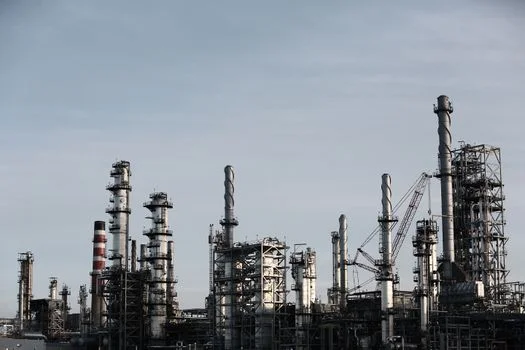
Capital expenditure (CAPEX) for sewage treatment equipment in Jakarta ranges from $50,000 for small-scale A/O plants to over $20 million for large-scale municipal MBR installations. These costs are heavily influenced by local economic factors, including import duties (typically 10–15% for high-end membrane modules) and the complexity of civil works in Jakarta’s alluvial soil. For an industrial buyer, the "cost per cubic meter treated" is the most reliable metric. MBR systems command the highest CAPEX at $500–$2,000 per m³ of daily capacity, whereas DAF and A/O systems are more economical, ranging from $200–$800 per m³. However, the higher initial investment in MBR is often offset by its ability to facilitate industrial water reuse, which can save factories thousands of dollars in municipal water tariffs (currently IDR 10,000–15,000/m³).
Operational expenditure (OPEX) is driven by three primary factors: energy, chemicals, and maintenance. In Jakarta, where electricity prices for industrial users are relatively stable but significant, the 1.2 kWh/m³ requirement of an MBR can become a major line item. Conversely, DAF systems have lower energy needs but higher chemical costs, with coagulants and flocculants adding $0.05–$0.20 per m³ to the budget. Membrane replacement is the "hidden" cost of MBR; depending on the influent quality and cleaning protocols, membranes must be replaced every 5–8 years, costing roughly $0.10–$0.30 per m³ of treated water over the system's lifecycle. Understanding how Jakarta’s industrial wastewater standards compare to healthcare sector requirements can help procurement managers identify where high-spec equipment is mandatory versus where more economical solutions suffice.
| Cost Category | A/O System | DAF System | MBR System |
|---|---|---|---|
| CAPEX Range (Jakarta) | $50K – $2M | $80K – $3M | $500K – $20M |
| CAPEX per m³ | $200 – $600 | $300 – $800 | $500 – $2,000 |
| Energy Cost (OPEX) | Low ($0.03/m³) | Low ($0.02/m³) | High ($0.08/m³) |
| Chemical Cost (OPEX) | Low | High ($0.15/m³) | Medium |
| Payback Period | 5–7 Years | 4–6 Years | 3–5 Years (with reuse) |
Zero-Risk Supplier Selection: A Jakarta Buyer’s Checklist
Technical due diligence for Jakarta-based projects requires a mandatory review of pilot test data reflecting local influent characteristics, as standard "clean water" test results from overseas manufacturers rarely translate to Jakarta’s high-COD sewage. When evaluating a sewage treatment equipment supplier in Jakarta, the first "red flag" is the absence of a local service team. Given the city’s traffic and logistical challenges, a supplier without a 24/7 hotline and a Jakarta-based spare parts inventory (especially for critical items like air diffusers, skimmer motors, and membrane cleaning chemicals) can lead to weeks of downtime. Buyers should demand a performance guarantee that includes specific penalties—often 5–10% of the contract value—if the effluent fails to meet Minister of Environment Regulation No. 68/2016 during the commissioning phase.
Compliance verification must extend beyond the liquid effluent to sludge management. Under Jakarta Governor Regulation No. 122/2015, the disposal of untreated biological sludge is strictly prohibited. Your supplier must provide a clear pathway for sludge stabilization or dewatering (e.g., integrated filter presses). Verify the membrane warranty for MBR systems; a standard 5-year pro-rated warranty is the industry benchmark. If a supplier cannot provide references from similar industrial sectors in Indonesia—such as a textile plant in West Java or a food facility in Bekasi—they are likely ill-equipped for the specific chemical complexities of your waste stream. Comparing how Jakarta’s supplier selection compares to other Asian markets highlights that local O&M support is the single greatest predictor of project success in the region.
Jakarta’s Top 5 Sewage Treatment Equipment Suppliers: Engineering Specs and Project Portfolios
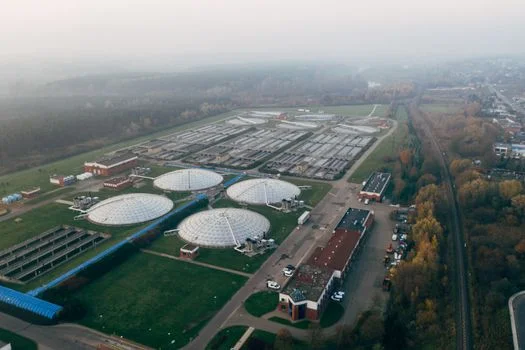
Sumitomo Electric stands as the dominant player in Jakarta’s large-scale municipal infrastructure, particularly following their record-breaking order for the Jakarta Sewage Improvement Project Zone 1. Their expertise lies in high-strength PTFE POREFLON™ membranes, which are engineered to handle the massive 240,000 m³/day flow required for the city’s most densely populated districts. For municipal authorities and large developers, Sumitomo offers a "gold standard" in MBR technology, though their CAPEX typically starts at $10 million, making them less accessible for smaller industrial applications.
For mid-market industrial and commercial projects, the landscape is more varied. Suppliers like Aquatec Maxcon and HydropureWater provide more flexible engineering solutions. HydropureWater, for instance, focuses on integrated MBR and DAF systems tailored for the food and textile sectors, offering CAPEX ranges from $50,000 to $5 million. This price point, combined with modular "package" designs, allows for rapid deployment in Jakarta’s industrial estates. Meanwhile, NIRA and OCCR Jakarta