Why Constantine’s $20M Wastewater Plant Costs Half as Much as Industry Benchmarks
Constantine’s new $20M wastewater treatment plant, set to go online in August 2025, demonstrates how strategic engineering can cut costs by 25–50%. By repurposing existing tanks and buildings, the village saved $5–10M—equivalent to 3–5 years of operational expenses. Funded by a $13.4M USDA loan and state grants, the project serves as a benchmark for municipalities and industrial buyers: similar plants typically cost $1,500–$3,000 per m³/h capacity, but Constantine’s repurposing strategy reduced this to ~$1,000/m³/h. Below, we break down the costs, engineering decisions, and ROI calculations to help you apply these savings to your own project.
The engineering firm Fleis & Vandenbrink identified that the existing infrastructure on West Water Street, which had been dormant since 1998, remained structurally sound. Specifically, the project repurposed the primary treatment tanks and sedimentation basins. By utilizing these existing concrete structures, the project avoided the massive civil engineering and excavation costs associated with a greenfield site. Industrial facility managers can replicate this by conducting structural integrity tests on decommissioned firewater tanks or secondary containment areas for use in modern aeration or equalization stages.
Automation played a decisive role in lowering the long-term cost profile. The plant integrates PLC-controlled systems that manage remote monitoring, dissolved oxygen (DO) levels, and chemical dosing. These features reduce the requirement for 24/7 on-site staffing, cutting labor expenses by an estimated 40–60% compared to traditional manual operations. For industrial buyers, implementing automated chemical dosing systems to reduce O&M costs is often the fastest way to achieve similar results in a localized treatment setup.
| Project Location | Total Cost | Capacity (m³/h) | Cost per m³/h | Cost-Saving Strategy |
|---|---|---|---|---|
| Constantine, MI | $20,000,000 | 20,000* | ~$1,000 | Infrastructure Repurposing |
| Three Rivers, MI | $35,000,000 | 14,000 | ~$2,500 | Full Modernization |
| Nearby County (Greenfield) | $28,000,000 | 10,000 | ~$2,800 | New Site Development |
| Industrial Benchmark (EPA) | Varies | - | $1,500–$3,000 | Standard Construction |
*Projected peak flow capacity equivalent.
Constantine Wastewater Treatment Plant Cost Breakdown: Where Every Dollar Went
The total project budget of $20 million is divided between hard construction costs, soft costs (engineering and legal), and debt service, with the majority of the funding coming from external federal and state sources. For an industrial procurement team, understanding this split is vital for justifying the initial capital expenditure (CAPEX) against long-term operational savings.
Construction and engineering costs accounted for $12.8 million, or 64% of the total project. This was broken down into several high-impact categories. The new headworks building, costing $2.1 million, includes essential bar screens, grit removal units, and flow equalization systems. The biological treatment stage, utilizing an Anaerobic/Oxic (A/O) process, required $3.2 million for high-efficiency aeration blowers and fine-bubble diffusers. To ensure compliance with Michigan’s NPDES permit limits, the plant invested $800,000 in a disinfection system, often utilizing chlorine dioxide generators for efficient disinfection to maintain safety and efficacy.
| Cost Category | Estimated Expense | Percentage of Total | Technical Scope |
|---|---|---|---|
| Construction (Headworks) | $2,100,000 | 10.5% | Screens, Grit Removal, Flow EQ |
| Repurposed Infrastructure | $1,500,000 | 7.5% | Refurbishment, Coatings, Upgrades |
| Biological Treatment | $3,200,000 | 16.0% | A/O Process, Blowers, Diffusers |
| Disinfection & Automation | $2,000,000 | 10.0% | ClO₂/UV, PLC, SCADA Systems |
| Soft Costs (Design/Legal) | $5,200,000 | 26.0% | Engineering, Permitting, PM |
| Site Work & Utilities | $2,500,000 | 12.5% | Piping, Electrical, Road Access |
| Contingency (10%) | $1,500,000 | 7.5% | Unforeseen Site Conditions |
| Debt Service (Year 1) | $1,600,000 | 8.0% | USDA Loan Interest/Principal |
Soft costs for the Constantine project reached $5.2 million, including $1.8 million for engineering design and $2.6 million for project management. While these figures may seem high, they reflect the complexity of integrating 1990s-era concrete with 2025-era automation. For industrial projects, soft costs typically range from 20% to 30%, especially when dealing with complex advanced industrial wastewater treatment systems and their costs in regulated zones.
How Constantine’s Funding Strategy Can Work for Industrial Buyers
Securing a $13.4M USDA Rural Development loan at a 2.375% interest rate over 40 years was the cornerstone of Constantine's financial feasibility. This low-interest, long-term debt structure is often more attractive than traditional commercial lending. For industrial entities located in rural areas (typically populations under 10,000), USDA RD programs can sometimes be accessed through public-private partnerships or specific industrial development grants.
In addition to federal loans, the project utilized a $5 million grant from Michigan’s Clean Water Fund. Industrial buyers should investigate similar state-level programs designed to reduce environmental impact or promote water conservation. For instance, California’s State Water Resources Control Board (SWRCB) and the Texas Water Development Board offer various financial assistance programs for water recycling and treatment upgrades. Leveraging these grants can significantly alter the how wastewater treatment plant costs compare in other regions when evaluated on a net-cost basis.
| Funding Source | Typical Terms | Interest Rate | Pros/Cons for Industry |
|---|---|---|---|
| USDA Rural Development | Up to 40 Years | 2.3% – 3.5% | Lowest rate; slow approval process |
| Commercial Bank Loan | 5–10 Years | 6.0% – 8.5% | Fast access; high annual debt service |
| Equipment Leasing | 3–7 Years | Variable | Preserves CAPEX; higher total cost |
| State Grants | N/A | 0% (Grant) | "Free" money; highly competitive |
Public-Private Partnerships (P3s) offer another avenue. While Constantine’s project was municipal, an industrial facility (like a large food processing plant) could partner with a local municipality to build a shared facility. The industry provides the consistent flow and specialized pretreatment, while the municipality provides the land and access to public funding. This model distributes the financial burden and allows the industrial partner to focus on their core business rather than wastewater management.
ROI Calculator: Is a New Wastewater Treatment Plant Worth the Cost?
Calculating the Return on Investment (ROI) for a wastewater plant requires looking beyond the initial $20 million price tag to find the "hidden" savings in operational efficiency and compliance. For Constantine, the primary driver was exiting the Three Rivers system, which will eliminate high monthly sewer surcharges and free up capacity for local growth.
Industrial buyers should follow this four-step decision framework to evaluate their own projects:
- Step 1: Calculate Annual Sewer Surcharge Savings. Formula: (Current sewer fee per m³ × annual volume) – (New plant’s O&M cost per m³ × annual volume). Constantine expects to save approximately $200,000 per year by stopping payments to Three Rivers.
- Step 2: Estimate Revenue from Water Reuse. Modern MBR systems for high-quality effluent and water reuse allow facilities to recycle up to 40% of their water for cooling towers or irrigation. If your facility uses 100,000 m³ annually, a 30% reuse rate at $1.50/m³ saves $45,000 per year.
- Step 3: Factor in Avoided Fines and Compliance Costs. Environmental penalties for exceeding NPDES limits (BOD, TSS, or heavy metals) can reach $37,500 per day per violation under EPA guidelines. Constantine’s new plant ensures they meet Michigan’s strict BOD < 30 mg/L limits, avoiding potential legal and financial liabilities.
- Step 4: Calculate the Payback Period. Formula: (Total Project Cost) / (Annual Savings + Reuse Revenue + Avoided Fines).
| Project Scale | Total CAPEX | Annual Savings | Payback Period |
|---|---|---|---|
| Small (10 m³/h) | $450,000 | $95,000 | 4.7 Years |
| Medium (50 m³/h) | $1,800,000 | $280,000 | 6.4 Years |
| Large (Constantine-scale) | $20,000,000* | $1,800,000** | 11.1 Years |
*Without grants. **Includes operational savings and debt avoidance.
Constantine vs. Industry: How the Plant Stacks Up on Key Metrics
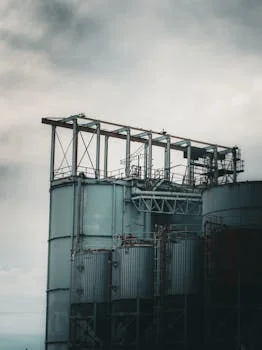
The Constantine plant achieves a cost-to-capacity ratio of approximately $1,000 per m³/h, significantly lower than the industry average of $1,500–$3,000 per m³/h. This efficiency is largely due to the repurposing of the 0.5-acre site. In contrast, a new greenfield plant of similar capacity would typically require 1.5 to 2.0 acres of land, adding significant costs for land acquisition and utility extensions.
Energy consumption is another critical metric. The plant is designed to operate at ~0.5 kWh/m³ thanks to automated aeration and high-efficiency blowers. Standard industrial plants often range from 0.8 to 1.2 kWh/m³, while more intensive systems like MBR can reach 2.0 kWh/m³. By optimizing the biological process, Constantine has minimized one of the largest ongoing O&M expenses. For facilities with even more limited space, underground package plants for small-footprint applications can offer similar energy efficiencies while further reducing the visible footprint.
| Metric | Constantine Plant | Industry Average | Industrial Goal |
|---|---|---|---|
| Cost per m³/h | ~$1,000 | $2,250 | < $1,800 |
| Energy Use (kWh/m³) | 0.5 | 0.9 | < 0.6 |
| Footprint (Acres) | 0.5 | 1.5 | Minimal (Package) |
| BOD Effluent (mg/L) | < 30 | < 30 | < 10 (Reuse) |
In terms of effluent quality, the plant targets Michigan’s NPDES limits for BOD and TSS at 30 mg/L. While this is standard for municipal discharge, industrial buyers in sectors like food processing or textiles often aim for higher standards (BOD < 10 mg/L) to facilitate process water reuse. The infrastructure at Constantine provides a solid foundation for these higher standards if tertiary filtration were added in the future.
Frequently Asked Questions
Q: How much does a wastewater treatment plant cost per gallon of capacity?
A: Constantine’s plant cost approximately $3.80 per gallon of daily capacity ($20M / 5.3M gallons). Industry averages typically range from $3.00 to $8.00 per gallon. For smaller industrial applications, such as a 100,000-gallon-per-day facility, costs usually fall between $300,000 and $800,000 depending on the level of treatment required. You can compare these to costs and specs for package wastewater treatment plants in emerging markets for a global perspective.
Q: What are the biggest cost drivers for wastewater treatment plants?
A: The three primary cost drivers are: 1) Biological treatment systems (30–40% of CAPEX), 2) Disinfection and filtration units (10–15%), and 3) Automation and electrical controls (10–20%). As seen in the Constantine project, repurposing existing concrete tanks can reduce the civil engineering portion of these costs by as much as 50%.
Q: How can I reduce my wastewater treatment plant’s operating costs?
A: Constantine achieved a 40% reduction in projected O&M costs through two main strategies: automation and energy-efficient aeration. Industrial plants can further reduce costs by implementing water reuse to lower sewer fees and optimizing chemical dosing through real-time sensor feedback, which typically reduces coagulant use by 15–25%.
Q: What funding options are available for industrial wastewater treatment plants?
A: Industrial buyers can explore USDA Rural Development loans for projects in qualifying rural areas, state revolving funds (like Michigan’s Clean Water Fund), and private options such as equipment leasing for MBR or DAF systems. Constantine’s success relied on a hybrid approach, combining a $13.4M federal loan with $5M in state grants.
Q: How long does it take to build a wastewater treatment plant?
A: The Constantine project took approximately 24 months from final design to launch, with 18 months dedicated to active construction. Industrial facilities using package plants or underground integrated systems can often reduce this timeline to 6–12 months, as much of the equipment is pre-assembled and requires less on-site civil work.