Why Multan Changes the Water Equation for Data Centers
Multan's hot semi-arid climate forces evaporative cooling towers to run at lower cycles of concentration than a Northern European or U.S. Northeast baseline, which directly inflates blowdown volume. According to a Genesis Water Technologies analysis of data-center blowdown, a cooling tower at 4 cycles of concentration loses roughly 25–30% of its makeup water to blowdown, and that fraction climbs further when higher wet-bulb conditions limit how far salts can be cycled (Genesis Water Technologies, 2026). The same source documents blowdown total dissolved solids (TDS) of 1,200–6,000 mg/L and suspended solids of 10–50 mg/L once concentration, makeup hardness and corrosion chemistry are factored in.
Makeup water in southern Punjab is typically drawn from the municipal network operated by Multan Development Authority / WASA or from deep tubewells, both of which produce hard groundwater with elevated calcium, magnesium, bicarbonate and silica. The specific Multan WASA or tubewell analysis must be requested at the site-assessment stage, because silica is the binding constraint on reverse-osmosis (RO) recovery in many southern-Punjab groundwaters and dictates how conservatively the cycles-of-concentration target must be set. Grid reliability is a third design input: critical blowdown pumps, RO high-pressure pumps, and any UV or chlorine-dioxide (ClO₂) disinfection skid need UPS or diesel backup, because membrane biofouling escalates during the multi-hour outages that remain routine in Multan.
Discharge is governed by the Pakistan Environmental Protection Act 1997 and reviewed by the Punjab Environmental Protection Agency through its consent-to-operate process. Data-center blowdown carrying elevated TDS, suspended solids, biocides and corrosion inhibitors will not qualify as "cooling water" under any generic consent, and framing the project around an early pre-application meeting with Punjab EPA is the only way to avoid a redesign late in the engineering cycle.
The Two Wastewater Streams a Multan Data Center Actually Produces
Specifying one "data-center wastewater" stream is a common early-stage scoping error. A Multan facility in practice produces two distinct streams, plus an optional third side stream, each with its own chemistry, peak load and treatment objective.
Stream 1 — Sanitary-industrial. Floor drains from server rooms, staff amenities, kitchenettes, and humidifier bleed from the white space. Modest volumetric load (typically 5–15 L/employee-day plus humidifier carryover) but variable in COD and BOD, and occasionally contaminated with glycol from chilled-water loops. Treatable with a packaged membrane bioreactor (MBR) or A/O train with disinfection, sized using a containerized MBR sizing guide.
Stream 2 — Cooling tower blowdown (CTBD). The largest volume, characterized by elevated TDS, scaling cations (Ca²⁺, Mg²⁺), silica, suspended solids, plus legacy biocides and corrosion inhibitors. Genesis Water Technologies reports blowdown TDS of 1,200–6,000 mg/L and suspended solids of 10–50 mg/L, with biocides, corrosion inhibitors, scale inhibitors and dispersants all accumulating in proportion to cycles of concentration (Genesis Water Technologies, 2026).
Stream 3 — RO reject from makeup water treatment (only if the makeup source is brackish tubewell water). Smaller flow but very high TDS, and it should be routed into the blowdown train rather than discharged as a separate stream to keep the consent surface to a single discharge point.
A Multan flow estimation proceeds as: compute evaporation loss at the design wet-bulb, set a cycles-of-concentration target (typically 4–6 for hard southern-Punjab groundwater), and size blowdown as a percentage of makeup water. The 25–30% blowdown at 4 cycles of concentration cited in the Genesis Water Technologies analysis is a useful sanity check (Genesis Water Technologies, 2026).
| Parameter | Sanitary-Industrial Stream | Cooling Tower Blowdown | RO Reject (if brackish makeup) |
|---|---|---|---|
| Typical flow band | 5–15 L/employee-day + humidifier carryover | 25–30% of makeup at 4 cycles of concentration | 15–50% of RO feed |
| TDS | 300–800 mg/L (municipal origin) | 1,200–6,000 mg/L | Often higher than blowdown |
| Suspended solids | 50–150 mg/L | 10–50 mg/L | Low (post-RO) |
| Key contaminants | COD, BOD, occasional glycol | Ca²⁺, Mg²⁺, silica, biocides, corrosion inhibitors | Concentrated dissolved salts |
| Treatment objective | Discharge or reuse (irrigation/toilet flush) | Reuse as cooling-tower makeup or compliant discharge | Merge into blowdown train |
Blowdown Treatment Train: From Side-Stream Filtration to Reverse Osmosis
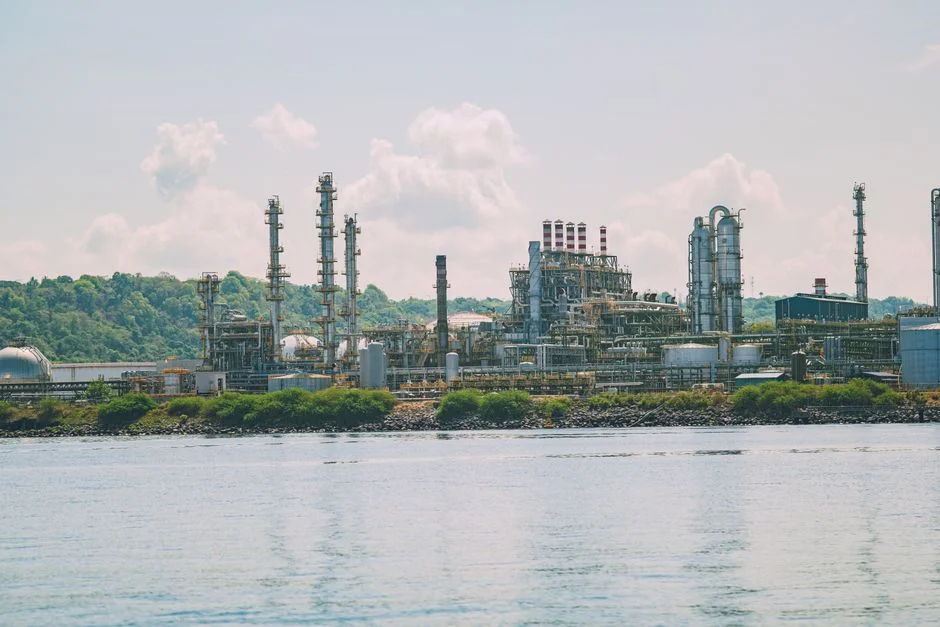
The standard 2026 train for a Multan cooling-tower blowdown line runs side-stream filtration, ultrafiltration (UF) pretreatment, and reverse osmosis, with the permeate returned to the cooling tower as high-quality makeup. A contingency brine-management step is sized into the back end from day one because the silica-rich local source water limits RO recovery in practice.
Stage 1 — Side-stream filtration. A continuous side-stream filter treats 1–5% of circulation flow at roughly 10–25 microns to keep suspended solids and biofilm fragments out of the rest of the train. Genesis Water Technologies places installed capital at $50,000–200,000 for typical data-center installations, with operating costs limited to solids disposal and routine maintenance (Genesis Water Technologies, 2026). A multi-media side-stream filter sized to local suspended-solids loading is the standard pick.
Stage 2 — Ultrafiltration. Hollow-fiber PVDF UF at 0.01–0.1 micron pore size removes bacteria, colloids and high-molecular-weight organics ahead of the RO membranes, operating at 10–30 psi with 90–95% recovery and chemical cleaning every 1–3 months. PVDF ultrafiltration pretreatment is the standard of record for blowdown trains that feed RO.
Stage 3 — Reverse osmosis. RO delivers 95–99% dissolved-solids removal, producing a permeate of 10–50 mg/L TDS suitable for direct return to the cooling tower (Genesis Water Technologies, 2026). Recovery in blowdown service typically runs 50–85%, limited by silica and CaSO₄ scaling. Genesis Water Technologies documents a 50,000 GPD blowdown RO at $250,000–500,000 installed with operating cost of $1.50–3.00 per thousand gallons treated, covering energy, chemicals, membrane replacement and maintenance. The local Multan industrial RO system selection should run at the conservative end of that recovery band until site-specific silica data is in hand.
Antiscalant chemistry must be coordinated with the cooling-water program. Non-phosphate, low-fouling formulations are preferred when blowdown will pass through RO, because legacy chromate or high-phosphate chemistries are explicitly flagged as a treatment challenge in the Genesis Water Technologies analysis. The Multan-specific constraint is silica: size RO recovery conservatively and budget either a polishing stage or a controlled silica-precipitation step in the brine line, which is the same problem addressed by IDE Technology's MAXH₂O Brine Desalter operating at around 95% recovery with permeate silica around 1 mg/L (IDE Technology, 2026).
| Stage | Function | Operating Range | Performance Anchor |
|---|---|---|---|
| Side-stream filtration | Remove suspended solids and biofilm fragments | 10–25 micron, 1–5% of circulation flow | $50,000–200,000 installed (Genesis Water Technologies, 2026) |
| Ultrafiltration | RO pretreatment: bacteria, colloids, high-MW organics | 0.01–0.1 micron, 10–30 psi, 90–95% recovery | Chemical clean every 1–3 months (Genesis Water Technologies, 2026) |
| Reverse osmosis | Dissolved-solids removal, permeate to cooling tower | 150–400 psi, 50–85% recovery, 95–99% rejection | Permeate 10–50 mg/L TDS; 50,000 GPD at $250,000–500,000; $1.50–3.00/kgal OPEX (Genesis Water Technologies, 2026) |
| Antiscalant program | Control CaCO₃, CaSO₄ and silica scaling | Dosed upstream of RO high-pressure pump | Non-phosphate, low-fouling formulations preferred (Genesis Water Technologies, 2026) |
What to Do With the Brine: Three End-Points for a Multan Facility
The brine end-point is the single largest cost driver in a Multan blowdown train, and it must be chosen before equipment is purchased. Three credible options exist for a 5 MW colocation hall in Multan, and the climate offers a fourth lever that most Western reference designs ignore.
Option A — Reuse as cooling-tower makeup. The highest-value option, with reuse achieving 60–85% recovery and a 60–85% reduction in freshwater draw (Genesis Water Technologies, 2026). Every kilogram of salt cycles back into the tower, however, which eventually pushes the system toward a brine-management step regardless of how efficient the upstream RO runs.
Option B — Discharge to municipal sewer under consent. Cheapest if Punjab EPA and Multan WASA will accept it. Direct discharge fees in water-stressed regions run $5–15 per thousand gallons, and some jurisdictions have already imposed TDS caps below 1,500 mg/L that effectively prohibit discharge of untreated blowdown (Genesis Water Technologies, 2026). The applicable Multan WASA limits and the Punjab EPA consent envelope must be confirmed before this option is locked in.
Option C — Near-ZLD or full ZLD. Mechanical vapor compression (MVC) evaporation at 95–98% recovery with distillate below 10 mg/L TDS, combined with a crystallizer for the final solid. Genesis Water Technologies places MVC capital at $1–3 million for 10,000–30,000 GPD and full ZLD at $3–8 million, with full-ZLD operating cost of $5–15 per thousand gallons treated (Genesis Water Technologies, 2026). Discharge-fee avoidance can offset part of the OPEX where equivalent fees apply, but a brine-concentration or evaporation step must be budgeted from day one for any hyperscale build beyond the 5 MW band.
Multan climate lever. Solar evaporation ponds are a legitimate, low-CAPEX option for the final brine cut given Multan's high pan-evaporation rate, but the land area required and the seasonality of monsoon rainfall must be evaluated. A lined pond train sized to the annual RO-concentrate volume, with monsoon-season storage, is a climate-appropriate alternative to MVC that several arid-region facilities use as a partial-ZLD step.
| End-Point | Recovery | Typical CAPEX (reference) | OPEX Signal | Multan Fit |
|---|---|---|---|---|
| Reuse as cooling-tower makeup | 60–85% freshwater reduction | Low (RO permeate tie-in only) | Lower than discharge; salt cycles back | Best first step; needs brine end-point |
| Municipal sewer discharge | No recovery | Lowest CAPEX | $5–15/kgal discharge fee (Genesis Water Technologies, 2026); TDS caps may apply | Confirm Multan WASA and Punjab EPA consent |
| MVC + crystallizer (ZLD) | 95–99% | $3–8M full ZLD (Genesis Water Technologies, 2026) | $5–15/kgal (Genesis Water Technologies, 2026) | For hyperscale build or where discharge is prohibited |
| Solar evaporation pond (partial ZLD) | Climate-dependent | Land and lining CAPEX only | Near-zero OPEX | Viable for final brine cut in Multan's hot semi-arid climate |
A reference case that anchors the upper end of this trade-off is the industrial high-recovery blowdown installation described by IDE Technology, where blending of cooling-tower blowdown, RO brine and process wastewater was treated in a Brine Desalter operating at around 95% recovery with permeate silica of about 1 mg/L (IDE Technology, 2026). The same architecture is directly applicable to a Multan facility whose silica-rich groundwater would otherwise cap conventional BWRO at the 75–80% recovery referenced in the same source.
Integrating the Sanitary-Industrial Train and Site Disinfection
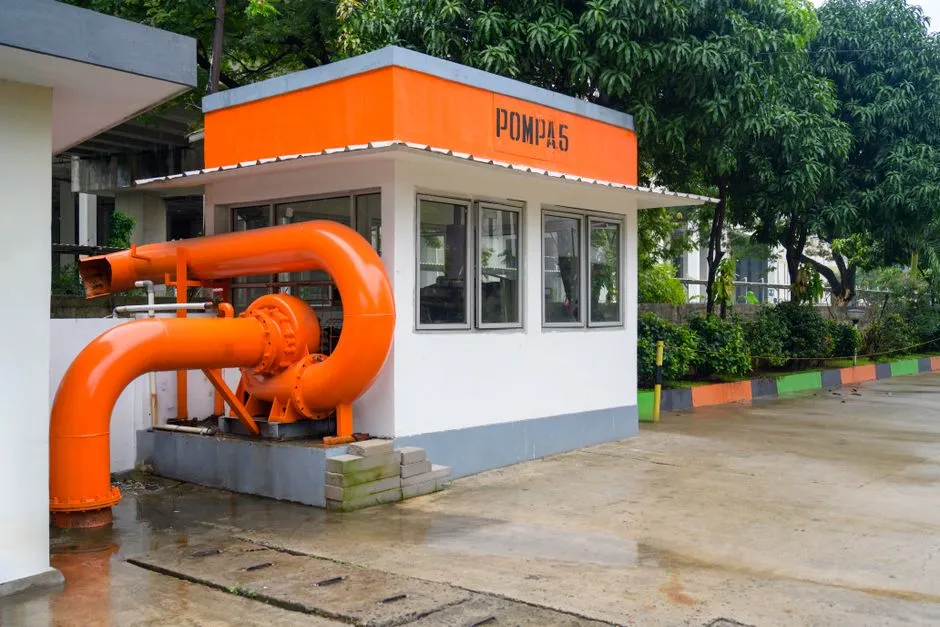
The sanitary-industrial line is smaller but it cannot be allowed to drop off the equipment list. A packaged biological train plus targeted disinfection covers humidifier, floor-drain and amenity flows without consuming the project's cooling-water budget.
Specify an A/O or MBR packaged plant sized to expected sanitary plus humidifier-bleed flow; in Multan, enclosed, below-grade or trailer-mounted packages reduce odor and heat load. An underground packaged MBR such as the WSZ underground integrated sewage treatment unit, or a packaged MBR sanitary train, matches the flow profile and the climate. Disinfection selection then becomes a coordination exercise: UV handles the sanitary-industrial effluent without by-products, while an on-site chlorine dioxide generator is preferred when the cooling-tower side also needs biocide control — the chemistries must be coordinated so residuals do not cycle back into the RO train. Sludge handling completes the line: a small plate-and-frame filter press sized to the sanitary sludge load avoids overspending on a full municipal dewatering train. Treated sanitary effluent is tied into cooling-tower makeup only if turbidity and TDS meet the cooling-water program; otherwise it is routed to landscape irrigation or toilet flushing to keep the freshwater draw down.
Cost Benchmarks and a Multan-Scale Ballpark
The Western cost bands cited by Genesis Water Technologies (2026) — side-stream filtration $50,000–200,000, 50,000 GPD RO $250,000–500,000 installed, MVC 10,000–30,000 GPD at $1–3 million, and full ZLD at $3–8 million — are reference points to be adjusted for Pakistani fabrication content, inland freight, membrane import duties, and PKR exposure. A regional cost breakdown for Central Asian builds documents the same scaling pattern: locally fabricated civil and mechanical scope lands inside the lower half of Western reference bands, while imported membrane elements, pressure vessels and specialty chemicals track global pricing. Operating-cost anchors are equally portable: $1.50–3.00/kgal for blowdown RO and $5–15/kgal for full ZLD, with discharge-fee avoidance of $5–15/kgal where equivalent fees apply (Genesis Water Technologies, 2026). A 5 MW colocation hall in Multan typically lands in the lower end of the side-stream filtration and RO bands; a 50+ MW hyperscale build must budget for a brine-concentration or evaporation stage from day one. Always carry a 20–30% contingency for Pakistani import duties on membrane elements, antiscalants and RO pressure vessels — the line items that will not be locally sourced.
Compliance, Permits and What the Punjab EPA Will Ask
The consent conversation should be opened before the process flow diagram is frozen. The Pakistan Environmental Protection Act 1997 establishes the review framework, and Punjab EPA operates the consent-to-operate process that a Multan data center will need before any blowdown leaves the site boundary. Engage Punjab EPA in a pre-application meeting to align on the discharge envelope — blowdown TDS, total suspended solids (TSS), heavy metals, and biocide residual limits — while the design still has the flexibility to respond. Discharge parameters typically scrutinized include pH, TDS, TSS, oil and grease, residual chlorine or ClO₂, chromium and zinc from legacy cooling-water programs, and thermal discharge if blowdown is sent to a surface drain. A Punjab industrial wastewater guide walks through the local IEE/EIA documentation and the equipment checklist that Punjab EPA reviews during consent evaluation.
Reuse of treated blowdown for cooling-tower makeup generally carries lighter regulatory friction than surface discharge, but a No-Objection Certificate (NOC) is still required for the intended end-use and the receiving cooling-water program must be on file. Build a one-page compliance matrix into the design package: each discharge point mapped to its parameter, limit, monitoring frequency and responsible instrument. That matrix is the single document that converts a process flow diagram into a consent-ready submission.
Frequently Asked Questions
What CAPEX should a 5 MW Multan colocation hall budget for the blowdown train?
Anchor on the Genesis Water Technologies (2026) cost bands: side-stream filtration $50,000–200,000, a 50,000 GPD RO at $250,000–500,000 installed, plus sanitary-industrial MBR and disinfection. A 5 MW Multan colocation hall typically lands in the lower end of the side-stream filtration and RO bands. Request a Multan-specific quote that itemizes membrane elements, pressure vessels and antiscalants separately, because these are the line items exposed to Pakistani import duties and PKR-denominated price movement.
How do I choose a supplier for a Multan data-center treatment train?
Shortlist suppliers that can demonstrate (a) prior RO references on silica-rich feedwater in the 1,200–6,000 mg/L TDS blowdown band, (b) a documented Pakistan or South Asia service footprint with membrane and antiscalant spares held locally, and (c) familiarity with the Punjab EPA consent-to-operate process. Ask each vendor for a reference site operating at comparable silica and TDS, and request a delivery lead-time quote for the membrane elements, pressure vessels and the high-pressure pump package so the import-duty exposure is visible before contract signature.
Can solar evaporation ponds replace MVC at a Multan hyperscale site?
Ponds are a credible, low-CAPEX option for the final brine cut in Multan's hot semi-arid climate, but they are a partial-ZLD step rather than a full ZLD replacement. The deciding inputs are land area, lining cost, monsoon-season storage volume and the Punjab EPA position on brine storage and solids removal. A lined pond train is most often paired with a smaller MVC or crystallizer polisher rather than used as a standalone ZLD solution; the same conclusion is implicit in the Genesis Water Technologies analysis of evaporation ponds as a "low-cost concentration" rather than a "zero discharge" step (Genesis Water Technologies, 2026).
What discharge parameters will Punjab EPA scrutinize on a Multan data-center consent?
pH, TDS, TSS, oil and grease, residual chlorine or ClO₂, chromium and zinc from legacy cooling-water programs, and thermal discharge if blowdown is sent to a surface drain. The exact limits are set during the pre-application meeting and confirmed in the issued consent. Submit a one-page compliance matrix with the IEE/EIA that maps each discharge point to its parameter, limit, monitoring frequency and responsible instrument — that matrix is the document that converts a process flow diagram into a consent-ready submission under the Pakistan Environmental Protection Act 1997.
Related Equipment
- packaged MBR sanitary train — specifications, capacity range, and technical data