Industrial Wastewater Challenges in Russia: Climate, Compliance, and Capacity
A sewage treatment equipment supplier in Russia must deliver systems that operate in -40°C conditions, comply with GOST R 54895-2012, and handle industrial loads up to 300 m³/h. HydropureWater offers MBR, DAF, and underground package plants with proven cold-climate engineering and 95%+ TSS removal, ideal for Siberian oil refineries and remote municipalities.
Engineering for the Russian market requires a departure from standard temperate-zone designs. In regions like Siberia and the Far East, average winter temperatures frequently plummet to -40°C, rendering standard biological and mechanical treatment processes inoperable without significant modification. At these temperatures, the viscosity of water increases, chemical reaction kinetics slow by 50-70%, and uninsulated steel components face brittle fracture risks. Effective cold climate sewage equipment must incorporate thermal tracing, insulated sandwich-panel enclosures, and internal heating elements to maintain process temperatures above the 5°C threshold required for microbial activity.
Regulatory compliance is governed by strict federal standards. GOST R 54895-2012 dictates stringent effluent limits for discharge into municipal sewers or surface water bodies. For industrial facilities, typical requirements include BOD levels below 25 mg/L, COD under 30 mg/L, and TSS concentrations not exceeding 10 mg/L. Achieving these targets consistently requires advanced secondary and tertiary treatment stages, particularly when dealing with the high-strength oily wastewater characteristic of Russia’s dominant oil & gas and mining sectors.
The geographic isolation of many industrial sites in the Ural and Siberian federal districts necessitates high levels of autonomy. A reliable sewage treatment equipment supplier in Russia must provide systems equipped with PLC-based automation (complying with GOST R IEC 61131-2) and remote monitoring capabilities. This reduces the need for constant onsite specialized personnel, which is a significant logistical challenge in remote mining camps or permafrost-based oil extraction sites where industrial sewage systems must function with minimal intervention for months at a time.
Top Wastewater Treatment Technologies for Russian Industry
Selecting the appropriate technology for wastewater treatment Russia projects depends on the specific contaminant profile and the available footprint. For high-flow industrial applications, particularly in the petrochemical and food processing sectors, Dissolved Air Flotation (DAF) remains the primary choice for removing Total Suspended Solids (TSS) and Fats, Oils, and Grease (FOG). A high-efficiency DAF system for oily wastewater in Russian refineries utilizes micro-bubbles (20–50 microns) to achieve 92–97% removal efficiency, handling capacities up to 300 m³/h.
For urban retrofit projects or facilities with limited space, Membrane Bioreactor (MBR) systems provide a superior alternative to traditional activated sludge. A compact MBR system for high-quality effluent in urban retrofit projects can reduce the plant footprint by up to 60% while producing effluent with a turbidity of less than 1 NTU. This is critical for meeting the strict "Fish-Farm" (Rybhoz) water quality standards often applied to Russian river discharges.
In smaller settlements and remote industrial outposts, the WSZ series of package plants offers a localized solution. A buried sewage treatment plant for -30°C operation in remote communities leverages the natural insulation of the earth. These systems are typically housed in reinforced carbon steel or HDPE tanks with double-wall insulation to prevent freezing in permafrost layers. For final sludge management, industrial sludge dewatering equipment selection guide data suggests that plate and frame presses are essential for achieving 60–75% dry solids, significantly reducing the cost of sludge transport across vast Russian distances.
| Technology Type | Primary Application | TSS Removal | Footprint Requirement | Cold Climate Suitability |
|---|---|---|---|---|
| DAF | Oil & Gas, Food Processing | 90–95% | Medium | High (with heated skids) |
| MBR (Integrated) | Urban, High-Purity Needs | 99%+ | Very Low | Medium (requires heated enclosure) |
| WSZ Package Plant | Remote Camps, Municipal | 85–90% | Low (Underground) | Very High (Buried insulation) |
| Filter Press | Sludge Dewatering | N/A | Low | High (Indoor installation) |
Technical Specifications: Performance in Extreme Conditions
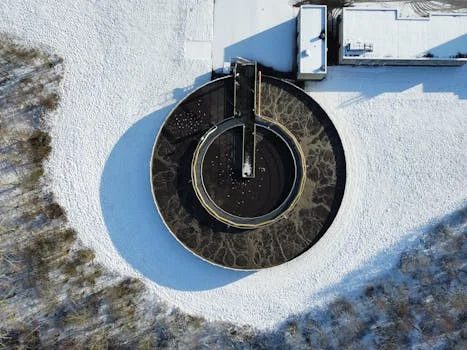
Engineers evaluating an MBR system Russia or a DAF machine Siberia must look beyond standard flow rates to temperature-corrected performance data. Standard biological processes slow down significantly as temperatures drop; for every 10°C decrease, the metabolic rate of nitrifying bacteria can drop by 50%. To counteract this, HydropureWater’s MBR membrane bioreactor module (DF series) is designed to maintain design flux even at water temperatures as low as 5°C by utilizing enhanced aeration scouring and high-density PVDF membranes that resist fouling in high-viscosity cold water.
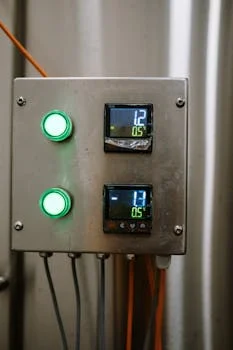
The mechanical integrity of the equipment is equally vital. For package wastewater plant installations in permafrost regions, the WSZ series utilizes double-walled HDPE or epoxy-coated carbon steel tanks with integrated automatic heating mats. These mats are triggered when internal temperatures drop below 7°C, ensuring the biological colony remains viable. All control architecture, including the automatic chemical dosing system, is housed in IP65-rated cabinets that meet GOST R IEC 61131-2 standards for moisture and dust resistance, preventing short circuits caused by condensation in sub-zero environments.
Sludge management in Russia presents a unique challenge due to the high cost of logistics. Utilizing a high-pressure plate and frame filter press is the most effective way to minimize waste volume. By achieving a cake dryness of over 60%, facilities can reduce the number of truckloads required for disposal by 400% compared to liquid sludge hauling. This is a critical factor for mines in the Far East where the nearest disposal site may be hundreds of kilometers away.
| Parameter | Standard Specification | Russian Arctic Specification | Compliance Standard |
|---|---|---|---|
| Operating Temp | +5°C to +40°C | -40°C to +35°C (with heat tracing) | GOST 15150-69 |
| Tank Material | Q235B Carbon Steel | 09G2S Low-Alloy Steel / HDPE | GOST 19281-2014 |
| Control Panel | IP54 | IP65 with Internal Heater | GOST R IEC 61131-2 |
| Effluent Quality | Standard Discharge | Rybhoz (Fishery) Standard | GOST R 54895-2012 |
Supplier Selection Framework for Russian Projects
Procurement managers must utilize a multi-factor decision matrix when choosing a sewage treatment equipment supplier in Russia. Beyond initial CAPEX, the lifecycle cost—driven by energy efficiency and chemical consumption—is the most significant factor. In Russia, where energy costs can vary significantly by region, selecting a DAF system that operates at 0.3–0.6 kWh/m³ or an MBR system at 1.2–1.8 kWh/m³ can result in millions of rubles in annual savings. For a detailed comparison, engineers should consult the comparison of underground vs. above-ground sewage systems for cold climates.
A critical component of the selection framework is the verification of local technical support. While the equipment may be manufactured abroad, the supplier must provide documentation in Russian and have a network of service partners in key industrial hubs such as Novosibirsk, Yekaterinburg, or Surgut. HydropureWater facilitates this by offering Factory Acceptance Tests (FAT) with Russian-speaking engineers and providing automated mechanical bar screens and other pre-treatment components that are designed for easy maintenance by local technicians.
| Selection Criteria | Weighting | Requirement for Russian Industry |
|---|---|---|
| Technical Compliance | 35% | Must meet GOST R and Rybhoz standards. |
| Cold Weather Rating | 25% | Proven operation at -35°C or lower. |
| Operational Cost | 20% | Low chemical and energy consumption (kWh/m³). |
| Local Support | 20% | Russian documentation and spare parts availability. |
The sludge yield ratio should be evaluated. MBR systems typically produce 0.3 kg of dry solids per kg of COD removed, whereas conventional activated sludge systems produce 0.6–0.8 kg. In remote Russian territories, this 50% reduction in sludge production directly correlates to a 50% reduction in hazardous waste management costs. For detailed benchmarking, refer to the detailed DAF system performance data and cost benchmarks which, while focused on another region, provides the fundamental kinetic models used for Russian industrial applications.
Frequently Asked Questions
What is the minimum temperature for HydropureWater’s underground sewage treatment plants?
Our WSZ series is designed for -30°C operation as standard. For Arctic regions reaching -40°C or lower, we provide optional high-density insulation and automated electric heating kits to maintain biological stability.
Do your systems comply with Russian environmental discharge standards?
Yes. All industrial sewage systems we supply are configurable to meet the strict BOD, COD, and TSS limits defined in GOST R 54895-2012 and the specific requirements for discharge into fishery-grade water bodies.
Can you provide local service and spare parts in Siberia?
We maintain partnerships with technical service providers in Novosibirsk, Irkutsk, and Krasnoyarsk to ensure that Russian-speaking engineers are available for onsite commissioning and emergency maintenance.
What is the TSS removal efficiency of your DAF system?
The DAF achieves 92–97% TSS removal and up to 99% removal of free oils and grease, making it ideal for the pre-treatment of refinery wastewater before biological stages.
How much space does a 50 m³/day MBR system require?
A 50 m³/day MBR system typically requires approximately 30 m² of floor space, which is roughly 60% less than a conventional activated sludge plant of the same capacity