Why a Water Audit Has to Come First
A water audit is the only defensible starting point for any program to reduce water consumption in manufacturing, because it converts an unknown plant water balance into quantified sub-process flows, water quality at each use point, and an inventory of reuse opportunities between streams. 2024 industry guidance (Medium, Nov 2024) treats the audit as the first step and the source of the baseline against which every later decision is measured; the same source recommends repeating audits on a regular cadence to track progress and optimize use over time. Top-ranking 2024 articles do not link audit outputs to specific treatment equipment, so this article will do that mapping explicitly later on.
The audit scope has to cover four boundaries: freshwater intake, in-plant process use, discharge, and loss points such as leaks, evaporation, and bleed streams. Inside those boundaries, the engineer needs to record flow by sub-process (cooling-tower makeup, rinse water, boiler feed, cleaning, scrubbers), water quality at each use point (TDS, hardness, organics, oil/grease where relevant), and the reuse potential between streams — that is, where a higher-purity stream is currently being applied where a lower-purity stream would suffice, or where a spent stream could be redirected to a less demanding use. A simple sketch plus a meter plan, not a complex model, is usually enough to expose the top ten losses and the top three reuse candidates.
Cadence matters because 2024 guidance emphasizes re-auditing to track progress; a single baseline audit without follow-up quickly becomes a report no one acts on. The deliverable from the first audit should be a ranked list of opportunities with rough water volumes, not a list of equipment quotations — the equipment only becomes a serious conversation once the audit has identified where water actually leaves the site and which streams are candidates for recovery.
Low-Capex Wins: Operational Discipline and Engagement
Operational discipline is the layer where most plants find their first 10–20% reduction without a capital requisition, and it is also the layer that sustains every later engineering and reuse investment. 2024 industry guidance (Medium, Nov 2024) lists employee training and engagement as critical to sustaining reductions and surfacing shop-floor ideas that an audit alone will not catch — operators see leaks, misused rinses, and sloppy valve positions that a meter plan will miss. The same source also names lean-manufacturing scheduling to spread water-intensive steps and lower peak demand; spreading batch rinses and CIP cycles across shifts flattens the daily draw without changing the chemistry.
Loss control sits beside training as a procedural lever: leak detection on distribution lines, sub-metering at major use points, and isolation valves that allow sections of the plant to be shut down without draining the header. The cited 2024 sources discuss these under the broader heading of process efficiency rather than as a separate workstream, but in practice they belong on the same checklist as nozzle replacement and shutoff-valve audits. Sub-metering in particular gives the audit a second function: it turns the re-audit from an estimate into a measured comparison.
Dry-cleaning and pre-rinse redesign are the qualitative end of this layer. Where it is feasible to brush, wipe, or blow off parts before a wet rinse, the savings come from removing the contaminant mechanically instead of dissolving it. The supplied research does not give numeric savings for these steps, so they should be evaluated against the audit output, not against a generic percentage.
Engineering Controls: High-Efficiency Cooling and Smarter Use
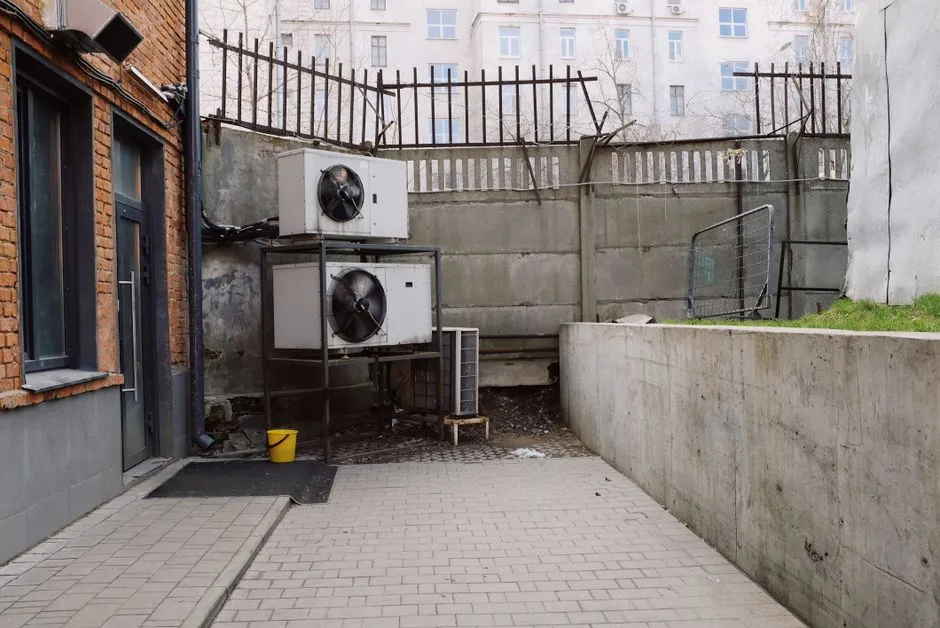
Once the operational layer has been exhausted, engineered upgrades form the next rung on the ladder. 2024 industry guidance (Medium, Nov 2024) names high-efficiency cooling systems as a direct path to lower overall water use; in most discrete and process plants, cooling-tower makeup and cooling-tower blowdown are the two largest water lines on the site, so any improvement here moves the headline number more than almost any other single change.
Counter-current rinsing and spray-nozzle optimization are widely used engineering controls that fall into the same capex class as nozzle replacement and header modifications. The supplied research does not publish numeric savings for these steps, so they belong on the engineering-controls list as items to evaluate in the audit against measured inlet flows and outlet contaminant loads. Segregating water qualities — running a higher-purity rinse only where the part specification demands it, and using lower-quality water for earlier rinse stages or for non-contact cooling — is a precondition for any reuse scheme, because reuse is only economic when the spent stream already meets the receiving use.
Where boilers or cooling towers dominate site use, an industrial water softener reduces cooling-tower blowdown and protects downstream heat-exchange surfaces. The softener is supporting equipment for the water-reduction strategy: lower cycles of concentration become practical, and the downstream membrane or polishing equipment sees a more stable feed.
Closing the Loop: Recycling, Reuse, and the Equipment That Enables It
Closed-loop recycling is named in 2024 industry guidance (Medium, Nov 2024) as a way to reuse water inside the same process, and treated-wastewater reuse for cooling, cleaning, or irrigation is named in 2024 guidance (Watearth), with enabling technologies listed as membrane filtration, reverse osmosis, and UV disinfection. The piece that 2024 guidance does not provide is the link between a specific reuse target and the specific equipment class that makes it work — which is the gap this section fills.
The mapping below is the core of that link. A Dissolved Air Flotation (DAF) system removes oil, grease, and suspended solids ahead of any cooling-tower or scrubber-makeup reuse, because oil carryover into a cooling tower is the most common cause of tower fouling and biological-control failure. An Ultrafiltration (UF) system handles colloidal solids and bacterial control ahead of RO or direct cooling reuse, and is the standard pretreatment step when the spent stream contains emulsified oils or fine particulates that would foul RO membranes. An MBR membrane bioreactor produces near-reuse-quality effluent from organic-laden streams at a smaller footprint than a conventional activated-sludge train, and is the usual choice for a facility that wants biological treatment and solids separation in one package. An industrial RO system is the polishing step for high-purity reuse (boiler feed, process rinse, or closed-loop cooling makeup); the HydropureWater product page describes industrial RO permeate recovery at up to 95% of the feed flow, and that figure is the published spec for the unit rather than a project-specific result. A lamella clarifier reduces chemical consumption by up to 30% per the same catalog, and functions as a low-footprint primary clarifier ahead of DAF or UF when the stream carries high settleable solids. UV or ClO₂ disinfection is the typical finishing step for recycled streams and is described in the Watearth source as part of the reuse treatment chain.
| Reuse target | Typical pre-treatment | Polishing / reuse step | Disinfection option |
|---|---|---|---|
| Cooling-tower makeup (oil/solids-bearing stream) | DAF → Lamella | UF (side-stream) or direct tower feed after filtration | UV or ClO₂ on the makeup line |
| Cooling-tower makeup (low-TDS, organic-bearing stream) | MBR | UF polish if tower cycles permit | UV |
| Boiler feed (high-purity) | Softener → DAF/UF | Industrial RO (up to 95% permeate recovery per product spec) | Not typically required pre-boiler |
| Process rinse (cosmetic / light contact) | DAF → UF | RO if the rinse specification requires it | UV or ozone on the loop |
| Site irrigation / non-contact reuse | Lamella or DAF | UF polish to control suspended solids | UV if worker exposure is plausible |
The published recovery and chemical-saving figures above are catalog specifications; specific project numbers — feed flow, recovery target, footprint, energy per cubic meter — have to come from the site audit and from vendor sizing against the measured influent.
Strategy-to-Equipment Mapping: Picking the Right Train

Once the audit has identified candidate streams and target reuse end uses, the next decision is which equipment train to procure. The table below reorganizes the engineering controls and reuse equipment by reuse target, so a buyer can walk into a vendor meeting with a defined scope rather than an open question.
| Reuse target | Train (pre-treatment → polishing) | Notes for the buyer |
|---|---|---|
| Cooling-tower makeup (oily wash water) | DAF → UF | Add side-stream filtration on the tower loop to control TSS under higher cycles of concentration. |
| Cooling-tower makeup (sanitary/organic) | MBR → UF polish | MBR footprint is smaller than conventional activated sludge; confirm ammonia load with the audit. |
| Boiler feed | Softener → UF → RO | RO permeate recovery is published up to 95% for the industrial RO unit; confirm with feed-water analysis. |
| Process rinse reuse | DAF → UF → RO (if spec requires) | Skip RO if the rinse specification allows UF-quality water. |
| Site irrigation / non-contact | Lamella or DAF → UF | Lamella clarifier published at up to 30% lower chemical use vs conventional clarifiers per the catalog. |
Specific flow rates, recovery numbers, and footprint values are not in the supplied research and have to be confirmed against the site mass balance and the vendor's engineering submittal. The role of this table is to fix the train selection; the numbers are the next conversation.
Offsetting the Water You Cannot Yet Eliminate
Even an aggressive internal program will leave a residual freshwater intake, and 2024 guidance (Watearth) is explicit that some of that residual can be addressed on-site and some off-site. Industrial water reuse and wastewater recycling are the two on-site levers named in the same source: treating the spent stream so it can re-enter the process or be applied to cooling, cleaning, or irrigation.
Off-site offsets described in the same 2024 guidance include groundwater recharge via percolation ponds, infiltration basins, or injection wells, which redirect treated wastewater or stormwater into aquifers to replenish depleted supplies. Nature-based solutions — floodplain restoration, wetland construction, bioswales, permeable pavement, and other low-impact-development measures — are listed in the same source as complementary stormwater capture and filtration measures. These are supplements to internal reduction, not substitutes for it; Watearth frames them explicitly as ways to balance water usage after on-site efficiency has been maximized. For an engineer building a 12-month plan, the practical takeaway is that the offset portfolio is reported separately from the freshwater intake reduction line, because they are different in kind and are not interchangeable in a mass balance.
A 90-Day Quick-Win Roadmap
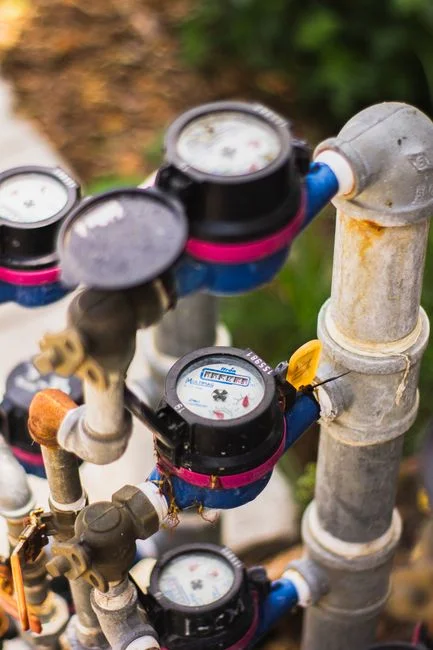
Days 1–30 are the baseline phase: sub-meter the major use points identified in the audit, complete a plant walk-down to confirm loss points, and launch the employee training program described in the 2024 Medium guidance. The deliverable at day 30 is a ranked opportunity list with measured flows, not a vendor quotation.
Days 31–60 are the low-capex engineering controls: replace the worst spray nozzles, fix the leaks flagged in the walk-down, and re-sequence the water-intensive batch steps to flatten peak demand as recommended in the 2024 lean-manufacturing guidance. These are changes that can be justified on the operating budget without a capex paper.
Days 61–90 are the scope phase for the first reuse train: take the audit output, select the train from the mapping table, and engage vendors on the equipment classes that match. The 2024 Watearth source also recommends regular re-auditing to track progress; build the next audit into the same 90-day window so the Q1 results feed the Q2 capex paper. For plants that need a longer commissioning view before they sign a PO, the 2026 commissioning duration guide for water and wastewater systems is a useful reference; for sites targeting a closed loop on a high-purity stream, the microelectronics wastewater treatment cost breakdown shows how capex and opex line up against reuse targets in a comparable sector. For plants that ultimately need to push toward zero liquid discharge, the zero-liquid discharge and evaporation crystallization guide covers the engineering boundary where reuse plus evaporation becomes the only remaining option.
Frequently Asked Questions
What is the first step to reduce water consumption in manufacturing?
Run a water audit that quantifies intake, sub-process flow, water quality at each use point, and reuse potential between streams. 2024 industry guidance (Medium, Nov 2024) treats the audit as the first step and the baseline against which every later decision is measured; the same source recommends repeating it on a regular cadence to track progress.
Which equipment class is used to treat wastewater for cooling-tower reuse?
A typical train is a Dissolved Air Flotation (DAF) system ahead of an Ultrafiltration (UF) system for oily or solids-bearing streams, or an MBR membrane bioreactor for organic-bearing streams, with UV or ClO₂ on the makeup line. 2024 guidance (Watearth) names membrane filtration, reverse osmosis, and UV disinfection as the enabling technologies for treated-wastewater reuse.
How much does it cost to set up a manufacturing water-reuse system?
The supplied research does not publish a generic capex or opex figure for water-reuse systems, and any quotation depends on the audit output: feed flow, contaminant load, target reuse quality, and discharge limits. A buyer should request a vendor engineering submittal that ties sizing, recovery, energy per cubic meter, and chemical consumption to the measured influent, rather than relying on a per-cubic-meter benchmark. For a worked cost-model example in a comparable sector, the microelectronics wastewater treatment cost breakdown shows the capex/opex line items a capex paper needs.
How do I choose a supplier for an industrial water-reuse or treatment system?
Match the supplier's equipment class to the train in the strategy-to-equipment table, then verify sizing against the site audit. Confirm that the supplier can supply the pre-treatment step (DAF, lamella, softener), the polishing step (UF, MBR, or industrial RO), and a disinfection option as an integrated train, and ask for a commissioning schedule and a reference list of similar feed-water installations before signing.
Related Equipment
- Industrial RO system — specifications, capacity range, and technical data