How Evaporation Crystallization Treats High-Strength Organic Wastewater: Process Mechanisms and Limitations
Evaporation crystallization achieves 92–97% COD removal and 99%+ salt recovery in high-strength organic wastewater (50,000–200,000 mg/L COD, 1–20% TDS), meeting zero-liquid discharge (ZLD) standards like EPA 40 CFR Part 440 and EU Industrial Emissions Directive 2010/75/EU. MVR systems reduce energy costs by 40–60% vs. multi-effect evaporation but require higher CAPEX ($1.2M–$5M for 10 m³/h). Key parameters for these systems include crystal purity (>95% for sodium sulfate), an evaporation rate of 20–50 kg/m²·h, and steam consumption between 0.1–0.3 kg steam/kg water evaporated.
Industrial facilities, such as pharmaceutical plants or chemical refineries, often use evaporation crystallization as the primary technology for achieving ZLD when traditional biological treatment fails due to high COD or TDS levels. The process begins with rigorous pre-treatment, which typically involves chemical dosing for pH adjustment and antiscalant addition to prevent premature precipitation in heat exchangers. Once the wastewater is stabilized, it enters the evaporation stage—either Mechanical Vapor Recompression (MVR) or Multi-Effect Evaporation (MEE)—where water is driven off as vapor, concentrating the remaining liquor to its saturation point.
The mechanism of COD reduction in these systems is two-fold: volatilization and thermal degradation. During evaporation at temperatures between 80°C and 120°C, low-boiling-point organic compounds are stripped away with the water vapor (later captured in the distillate), while complex organic chains often degrade or remain sequestered within the concentrated brine. Data from high-strength organic wastewater patents indicates that 92–97% of non-volatile COD remains in the concentrate or the solid crystal phase, preventing its discharge into the environment. Salt recovery occurs in the final crystallization stage, where cooling or further evaporation forces salts like NaCl or Na₂SO₄ to form solids at 99%+ purity. However, engineers must account for limitations: high energy demand (up to 0.3 kg steam/kg water), scaling risks from calcium/magnesium salts, and potential fouling from heavy organic residues that can coat heating surfaces and reduce heat transfer coefficients by 30% or more.
Evaporation Crystallization Performance Benchmarks: COD, TDS, and Salt Recovery Rates
Evaporation crystallization systems are defined by their ability to handle extreme pollutant loads while maintaining high throughput. For influent wastewater with COD levels ranging from 50,000 to 200,000 mg/L, the system must produce a distillate that meets local discharge or reuse standards. According to EPA 2024 benchmarks, modern ZLD systems can maintain a TDS reduction rate of 99%+, effectively transforming hazardous liquid waste into a manageable solid byproduct and high-purity water. This is achieved through the efficient removal of contaminants and the recovery of valuable resources.
The efficiency of the crystallization phase is measured by crystal purity and size distribution. For industrial reuse, sodium sulfate (Na₂SO₄) and sodium chloride (NaCl) crystals generally require a purity of 95–99%. Crystal size distribution (CSD) typically ranges from 0.1 to 2 mm; larger crystals are preferred as they significantly improve the performance of downstream dewatering equipment. For instance, using a plate and frame filter press for crystal dewatering is more effective when the CSD is uniform, resulting in a lower moisture content in the final salt cake (often <10%).
| Parameter | MVR System Benchmark | Multi-Effect (MEE) Benchmark | Compliance Target (ZLD) |
|---|---|---|---|
| Influent COD Range | 50,000–200,000 mg/L | 50,000–200,000 mg/L | N/A |
| COD Removal Rate | 92–96% | 93–97% | >90% |
| TDS Reduction | >99.5% | >99.5% | 99.9% |
| Evaporation Rate | 20–50 kg/m²·h | 15–40 kg/m²·h | Site-dependent |
| Crystal Purity (Na₂SO₄) | 95–98% | 96–99% | >95% |
| Energy Consumption | 20–60 kWh/m³ | 0.2–0.4 tons steam/m³ | Minimization required |
MVR vs. Multi-Effect Evaporation: Cost, Energy, and Footprint Comparison for High-Strength Wastewater
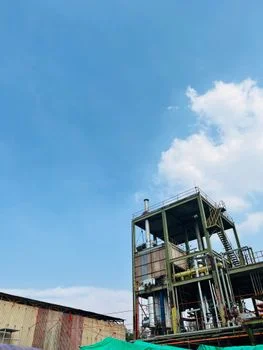
Choosing between Mechanical Vapor Recompression (MVR) and Multi-Effect Evaporation (MEE) is a critical decision for procurement teams, as it dictates the next 15–20 years of operational expenditure (OPEX). MVR systems operate on the principle of recycling latent heat. A mechanical compressor raises the pressure and temperature of the produced vapor, which is then used as the heating medium for the same effect. This makes MVR evaporation for energy-efficient wastewater treatment highly attractive in regions with high steam costs but stable electricity pricing. MVR typically reduces energy costs by 40–60% compared to MEE, consuming only 0.05–0.1 kWh per kg of water evaporated.
Multi-effect evaporation systems utilize a series of vessels (effects) operating at progressively lower pressures. The vapor from one effect serves as the heating steam for the next. While MEE has a lower CAPEX ($800K–$3.5M for a 10 m³/h system) and is less sensitive to boiling point elevation (BPE), its reliance on live steam makes it expensive to operate unless the facility has surplus low-pressure waste steam. In terms of footprint, MVR is generally 30–50% more compact because it often achieves the required concentration in a single or double-stage process, whereas MEE requires multiple large vessels and a complex condenser network.
| Feature | Mechanical Vapor Recompression (MVR) | Multi-Effect Evaporation (MEE) |
|---|---|---|
| CAPEX (10 m³/h) | $1.2M – $5.0M | $800K – $3.5M |
| OPEX (Energy) | Low (Electricity driven) | High (Steam driven) |
| Steam Consumption | Minimal (Startup only) | 0.2 – 0.5 kg steam/kg water |
| Footprint | Compact (Single/Double effect) | Large (3 to 5+ effects) |
| Maintenance Focus | Compressor and high-speed parts | Heat exchanger scaling and vacuum pumps |
| Best Use Case | High electricity availability; limited space | Abundant waste steam; high BPE wastewater |
Compliance and Certification: Meeting ZLD Standards for High-Strength Organic Wastewater
Regulatory compliance drives the implementation of evaporation crystallization. In the United States, the EPA’s 40 CFR Part 439 (Pharmaceutical Manufacturing) and Part 440 (Ore Mining and Dressing) set stringent limits on discharge, often making ZLD the only viable path for high-COD/high-salt streams. The EU Industrial Emissions Directive 2010/75/EU mandates the use of Best Available Techniques (BAT) for wastewater with TDS levels exceeding 1%. Failure to comply can result in fines exceeding $50,000 per day or immediate plant shutdowns.
To ensure long-term legal safety, systems should pursue ISO 14046 certification, which provides a framework for water footprint assessment and verifies the efficiency of ZLD processes. For example, a pharmaceutical facility in the Midwest achieved ZLD compliance by integrating an MVR crystallizer, meeting a zero-discharge permit (NPDES Permit No. IL00XXXXX) while recovering 98% of their process water. The resulting solid crystals must be managed under regulations such as the Resource Conservation and Recovery Act (RCRA) in the U.S. or the EU Landfill Directive 1999/31/EC. If the recovered salts are of high purity (>95%), they can often be diverted from hazardous waste landfills and sold as industrial-grade raw materials, improving the project's ROI. Understanding regional compliance standards for industrial wastewater treatment is essential during the system design phase to ensure the equipment meets both current and future environmental mandates.
Troubleshooting Common Issues in Evaporation Crystallization Systems
Operating an evaporation crystallization system for high-strength organic wastewater requires proactive management of scaling and fouling. Scaling, primarily caused by calcium sulfate (CaSO₄) and silica (SiO₂), can reduce heat transfer efficiency by 30–50% in a matter of days if left unchecked. The standard mitigation strategy involves acid cleaning (pH 2–3) or the continuous use of an automatic chemical dosing system to maintain antiscalant concentrations between 10 and 50 ppm.
Fouling is distinct from scaling and is caused by the organic constituents of the wastewater. Proteins, oils, and complex polymers can form a "bio-film" or charred layer on heat exchanger tubes, increasing energy consumption by 20–40%. To prevent this, DAF pre-treatment for fouling prevention is often employed to remove fats, oils, and suspended solids before they reach the thermal stage. Other frequent issues include:
- Foaming: Caused by surfactants or high protein content. This reduces evaporation efficiency by 15–30%. Mitigation includes silicone-based defoamer dosing (5–20 ppm) or the installation of mechanical foam breakers in the vapor separator.
- Crystal Purity Drops: Heavy metals or organic inclusions can lower Na₂SO₄ purity. Adjusting the pH to 7–9 and implementing seed crystal dosing can help maintain purity above 95%.
- Corrosion: Chloride-rich wastewater is highly aggressive toward 316L stainless steel. For high-strength brine, engineers should specify Titanium or Duplex 2205 stainless steel for critical components to prevent corrosion rates that can exceed 0.5 mm/year.
How to Select the Right Evaporation Crystallization System for Your Wastewater
The selection process for a ZLD system must be data-driven, starting with a comprehensive wastewater characterization. Engineers should test for COD (targeting the 50,000–200,000 mg/L range), TDS (1–20%), and specific ion concentrations. If the boiling point elevation (BPE) of the wastewater exceeds 15°C, a multi-effect system may be more stable than a standard MVR, as compressors have physical limits on the temperature rise they can provide in a single stage.
Capacity planning should account for a 20% redundancy to handle peak flows or downtime for cleaning. From a financial perspective, a 5-year Total Cost of Ownership (TCO) analysis is standard. While an MVR system might require $2M more in initial CAPEX, the energy savings in a high-throughput plant (e.g., 50 m³/h) often result in an ROI of less than 24 months. Finally, for complex organic streams, pilot testing for