Why the sewer path — not the surface-water path — sets the Como plant's 2026 budget
A facility discharging to a sewer manhole in the Como service area is not governed by an NPDES permit. It is governed by the Clean Water Act §307(b) pretreatment program at 40 CFR Part 403, with enforcement delegated to the local POTW through its sewer-use ordinance, per HydropureWater's pretreatment overview. Mining and metals operations typically qualify as Categorical Industrial Users under 40 CFR Part 437 (Ore Mining and Dressing, NAICS 2122) or, where plating, pickling, or anodizing lines exist, 40 CFR Part 433 (Metal Finishing), which layers copper at 3.38 mg/L daily max / 2.07 mg/L monthly average and total chromium at 2.77 / 1.71 mg/L per 40 CFR 433.15. A single monthly-average excursion on zinc, copper, or lead is one CWA §309 violation; a sustained excursion is a pattern of violations, and the civil penalty is up to $25,000 per day per violation.
Conflating the two pathways is the single most expensive mistake a small plant makes. The sewer path and the surface-water path have different numerical limits, different sampling frequencies, and different enforcement triggers, and most Como-area plants carry both because they have separate stormwater outfalls and a sewer manhole. The surface-water path is the receiving-stream assimilation number, enforced by EPA through the state; the sewer path is the POTW's biomass-protection number, enforced by the local control authority. When the two diverge — and they do, because the POTW is protecting its own sludge quality and biological process — the binding constraint is the local sewer-use ordinance, not the NPDES permit. That is what the rest of this article is sized to.
The 2026 POTW limit table: federal floor vs local ceiling for zinc, copper, lead
Federal categorical standards set the floor; the local POTW's sewer-use ordinance almost always sets a tighter ceiling, especially for zinc, copper, lead, and ammonia. The table below pulls the representative 40 CFR Part 437 subcategory limits (per EPA 40 CFR 437.40–437.47) next to typical 2026 local POTW limits, so the reader can pull up their own discharge authorization and check it against a single reference.
| Parameter | 40 CFR Part 437 Daily Max (mg/L) | 40 CFR Part 437 Monthly Avg (mg/L) | Typical 2026 Local POTW Limit (mg/L) |
|---|---|---|---|
| Zinc | 1.0 | 0.5 | 0.3–1.0 (monthly avg) |
| Copper | 1.0 | 0.5 | 0.3–0.5 (monthly avg) |
| Lead | 0.6 | 0.3 | 0.05–0.3 (driven lower by LCRR) |
| Total Suspended Solids | 50 | 30 | 30–45 (monthly avg) |
| pH | — | — | 6.5–9.0 (instantaneous) |
Local sewer-use ordinances in the Como service area typically set zinc at 0.3–1.0 mg/L monthly average and copper at 0.3–0.5 mg/L monthly average, tighter than the 40 CFR Part 437 floor of 1.0 mg/L daily max / 0.5 mg/L monthly average, per HydropureWater's 2026 Ashcamp compliance reference. Lead is being driven downward by the Lead and Copper Rule Revisions (LCRR) toward roughly 10 µg/L as the action level, which is one to two orders of magnitude below the Part 437 floor, so hydroxide precipitation alone is no longer a defensible endpoint for a strict POTW. Always confirm three things on the permit before any equipment is sized: the local limits for each metal on the analytical panel, the maximum daily and instantaneous loading rates, and any slug-control or flow-equalization requirements the POTW has added to the discharge authorization.
Influent envelope: what the headworks actually sees at a small-to-mid Como plant
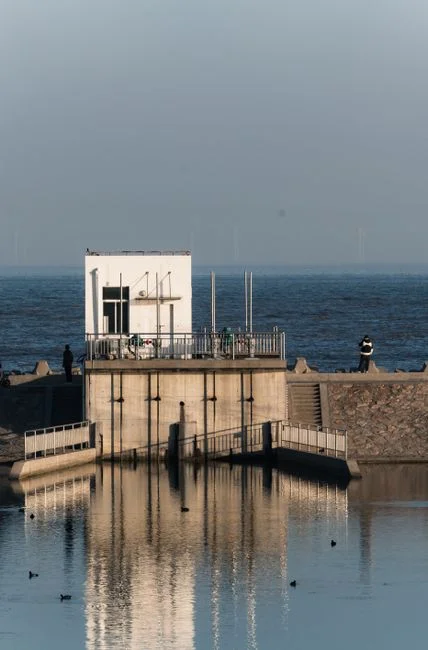
Raw acid mine drainage and spent process solutions typically arrive at the headworks at pH 2–4 with total suspended solids in the hundreds to several thousand mg/L, dissolved heavy metals (Pb, Cu, Zn, Cd, Ni, As), and elevated sulfate and TDS in leach-pad runoff and brine streams, per HydropureWater's influent envelope reference. The dissolved heavy metals define the categorical applicability under 40 CFR Part 437 and the local POTW limit; they come from the reaction of water and oxygen with sulfide minerals such as pyrite and pyrrhotite, which SME defines as acid rock drainage. ARD is not event-driven; it is persistent, which is why the equalization basin, not the clarifier, is the unit operation that decides whether a spike becomes a violation.
Elevated sulfate and TDS push the reagent choice toward NaOH rather than lime in high-TDS service because lime generates 3–5× more sludge at the same neutralization duty, and that sludge has to be dewatered, hauled, and disposed of. For legacy Como-area sites, mercury and cyanide from historic processing can still appear where legacy streams commingle with modern circuits. A full analytical panel (TSS, pH, total and dissolved metals, sulfate, TDS, cyanide where applicable) should precede any equipment selection. Any design that is not anchored against this envelope is guesswork.
Equalization hours: the cheapest civil decision that decides your monthly average
The equalization basin is the most undersized piece of equipment in most mining/metals pretreatment plants, and the most expensive to retrofit. The single number that justifies the investment is the monthly average, not the daily max. Spec the basin at 8–24 hours of average daily flow to dampen batch discharges from shift changes, dump-leach cycles, and mill clean-outs; a 4-hour basin passes every upstream spike straight into the clarifier, per the 2026 compliance reference.
Worked example inputs, per the same reference: 100 m³/h average flow, one 2-hour mill clean-out spike of 250 m³/h carrying 1,200 mg/L TSS and 8 mg/L zinc.
Case A — 4-hour basin (200 m³ capacity). The spike passes through with minimal attenuation. The 2-hour spike delivers 500 m³ × 8 mg/L Zn = 4,000 g of zinc over a 24-hour day, on top of the 2,200 m³ × ~3 mg/L baseline = 6,600 g. Total day: 10,600 g / 2,700 m³ = 3.9 mg/L zinc in the daily composite, and the rolling 30-day monthly average settles right at — or above — a 0.3–1.0 mg/L local ceiling. A single event pushes it over.
Case B — 24-hour basin (2,400 m³ capacity). The 500 m³ spike dilutes into the full 2,400 m³ active volume before discharge to the clarifier, giving an instantaneous zinc feed of roughly 2.1 mg/L. The clarifier sees a stable influent, the rolling 30-day monthly average drops to about 0.8 mg/L zinc, well below a 0.3–1.0 mg/L local ceiling, and the downstream hydroxide precipitation stage has a stable pH to work against.
Translate the difference into CWA §309 risk: a single monthly-average excursion is a violation; a sustained excursion is a pattern of violations. The marginal cost of a 24-hour basin over a 4-hour basin is small compared to a $25,000/day civil penalty, and the basin is the only unit operation in the train that can be installed once and never replaced. For the headworks protection that keeps rags and debris from accumulating, the standard approach is a rotary mechanical bar screen ahead of the equalization basin. For the dosing accuracy the local POTW ceiling demands, an automatic chemical dosing skid with a single PLC for pH and coagulant is the smallest unit operation that pays for itself the first time the operator is not standing next to it at 2 a.m.
The defensible 2026 treatment train, in the order water sees it
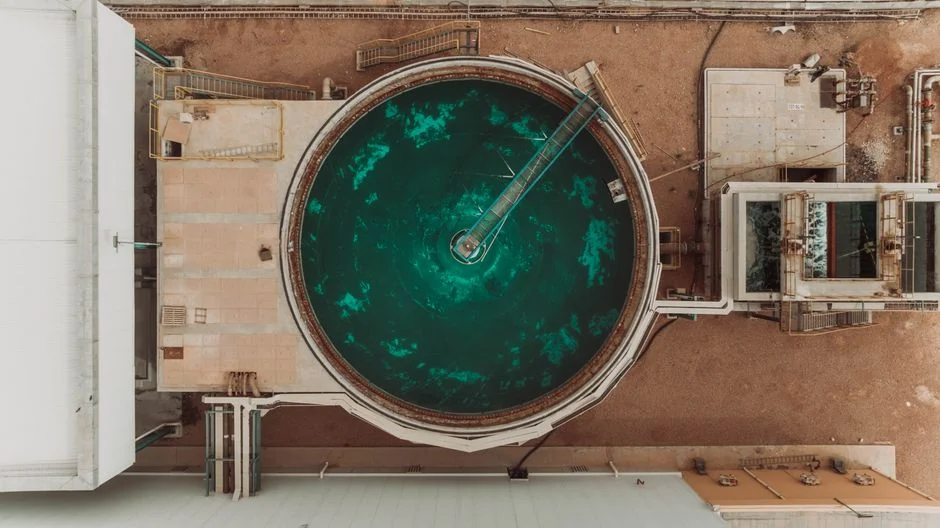
A defensible train for a small-to-mid Como-area plant follows the order water sees it, with each step sized to remove a defined fraction of the load so the next step performs within its design envelope. The order: rotary mechanical bar screen → equalization basin → automatic chemical dosing skid (pH + coagulant) → DAF system for oil/colloidal streams or lamella clarifier for metal-hydroxide sludge → multimedia filter safety net → optional chlorine dioxide generator or UV → plate and frame filter press for sludge dewatering.
Target pH 6.5–9.0 to satisfy virtually every POTW's instantaneous range; stage dosing in two reactors if the influent swings more than 2 pH units. Each 1 pH unit away from the metals-precipitation optimum can cut removal efficiency by an order of magnitude, sending zinc from <1 mg/L to 10+ mg/L with no other change to the chemistry, per HydropureWater's treatment-train reference. Sulfide precipitation (NaHS, FeS) achieves residual metals of 0.01–0.05 mg/L versus 0.5–2.0 mg/L for hydroxide, which matters when the local limit is below 0.3 mg/L; reagent cost runs 2–4× higher and the system requires sealed reactors with H₂S scrubbing. For most mining flows, hydroxide with sulfide polishing on a slipstream is the cost-effective compromise. Build the recycle loop in from the start: SME's technical position supports maximizing water recycling to reduce both freshwater demand and discharge volume, but the residual blowdown must still meet local POTW limits before it reaches the sewer manhole.
Choosing DAF or lamella — and matching delivery format to flow band
The decision most engineers actually face in a real project is DAF or lamella. Both work; neither is universally better. The DAF system operates at 5–25 m/h hydraulic loading, floats oil-coated and colloidal particles with microbubbles, and achieves 90–98% TSS removal and 85–95% oil/grease removal in mining/metal-finishing service, covering 4–300 m³/h across 13 models. A lamella clarifier operates at 20–40 m/h surface loading in roughly one-third the footprint of a conventional clarifier, has lower chemical consumption because the sludge blanket is denser, and handles heavy metal-hydroxide flocs very well. It does not remove free oil or colloidal fines as effectively as DAF, per HydropureWater's DAF-vs-lamella reference.
| Flow Band | Stream Character | Recommended Unit | Delivery Format |
|---|---|---|---|
| <10 m³/h | Oil, colloidal fines, or metal-bearing sludge | Compact DAF system or small lamella | Packaged skid with single-channel automatic dosing skid |
| ~50 m³/h | Mixed metals, modest oil/grease | Single DAF train or mid-scale lamella sized to peak | Factory-built modular, two-channel dosing skid (pH + coagulant) |
| >100 m³/h | Metal-hydroxide sludge, oily streams | Multiple DAF trains in parallel or lamella clarifier | Multi-train civil build; dual-stage dosing with feedforward on flow |
Use the heuristic: DAF when the stream carries oil, grease, or fine colloidal metals; lamella when the stream is primarily a metal-hydroxide sludge at high flow and the footprint is constrained. For a deeper side-by-side of the two, see the micro bubble flotation design criteria guide.
The 2024–2026 risk trifecta: LCRR, MSGP PFAS, and the 2025 ore-mining BAT revisions
Three 2024–2026 EPA trends are reshaping what counts as compliant, and the Como plant that sizes to today's limit is buying tomorrow's violation. First, the Lead and Copper Rule Revisions (LCRR) are pushing lead action levels toward 10 µg/L, and POTWs are re-deriving local limits at much lower numbers; a plant designing to today's 0.3 mg/L lead ceiling should expect lead to be the binding constraint within two permit cycles, per the 2026 compliance reference. Second, EPA's 2024 Multi-Sector General Permit (finalized 2024-09) added PFAS monitoring for PFOS, PFOA, PFHxS, and PFNA across sectors that include metal mining, and local control authorities are adopting the same analytical suite even for sewer discharges; GAC or ion-exchange polishing needs to be in the design envelope even if today's permit does not require it. Third, the 2025 ore-mining BAT revisions (2025-03) tightened the cost-benefit envelope on total recoverable metals, and plants that relied on hydroxide precipitation to 0.5–2.0 mg/L residuals are now installing sulfide polishing or ion exchange where hydroxide used to be enough. Treat all three as the next permit-cycle risk when you specify.
Permit-confirmation checklist before you sign a PO
Always confirm three things on the permit before equipment is ordered, per the HydropureWater pretreatment reference: local limits for each metal on the analytical panel against the specific POTW ordinance, not the federal categorical standard; maximum daily and instantaneous loading rates, and any slug-control or flow-equalization requirements the POTW has added to the discharge authorization; and the design envelope for the next permit cycle (LCRR lead, MSGP PFAS, 2025 ore-mining BAT), not just today's permit. Design for the peak 2-hour flow with 20–30% turndown capacity, and treat to the local POTW's sewer-use ordinance because the local numbers are tighter and the penalty structure is enforced directly by the local control authority. For a parallel compliance blueprint covering adjacent sectors, see the Bristol mining pretreatment 2026 guide.
Frequently Asked Questions
Does an NPDES permit cover the sewer manhole, or does pretreatment?
No. NPDES permits govern direct discharge to surface water under Clean Water Act §402. Sewer discharge to a POTW is regulated under CWA §307(b) and 40 CFR Part 403, with categorical standards in 40 CFR Part 437 (Ore Mining and Dressing) and 40 CFR Part 433 (Metal Finishing) where applicable. Most plants carry both authorizations because they have separate stormwater outfalls and a sewer manhole, and the local POTW enforces the sewer-side limits directly.
What is the local POTW limit in 2026 for zinc and copper, and is it tighter than the federal floor?
Local sewer-use ordinances in 2026 typically set zinc at 0.3–1.0 mg/L monthly average and copper at 0.3–0.5 mg/L monthly average, tighter than the 40 CFR Part 437 categorical standard of 1.0 mg/L daily max / 0.5 mg/L monthly average. Lead is being driven downward by LCRR to roughly 10 µg/L as the action level, one to two orders of magnitude below the Part 437 floor. Always confirm against the specific POTW ordinance before sizing equipment; a buyer should request the current sewer-use ordinance and the most recent 12 months of self-monitoring data from the POTW before committing to a treatment train.
What is the cost trade-off between hydroxide and sulfide precipitation, and when does sulfide pay for itself?
Sulfide precipitation (NaHS, FeS) achieves residual metals of 0.01–0.05 mg/L versus 0.5–2.0 mg/L for hydroxide, which matters when the local limit is below 0.3 mg/L. Reagent cost runs 2–4× higher and the system requires sealed reactors with H₂S scrubbing. For most mining flows, hydroxide precipitation with sulfide polishing on a slipstream is the cost-effective compromise. A buyer should request a site-specific jar-testing report and a reagent-cost quote tied to the local POTW's monthly-average ceiling before selecting the precipitation chemistry.
How do I size a DAF or lamella for a 25–250 m³/h Como plant, and which delivery format fits?
Standard DAF system units cover 4–300 m³/h across 13 models, with hydraulic loading of 5–25 m/h. Below 10 m³/h, packaged skid systems are common; 50 m³/h typically lands in the mid-range factory-built modular band with a single DAF train. Above 100 m³/h, multiple DAF trains in parallel or a lamella clarifier becomes more economical, especially when the stream is a metal-hydroxide sludge rather than an oily emulsion. A buyer should request a pilot or rental unit test on the actual site wastewater for at least one shift cycle before sizing, and confirm the delivery format (skid, modular, multi-train) against the site civil constraints.