Why Concentrator Expansions Reset the AMD Problem
Mining majors handle acid mine drainage (AMD) during concentrator expansions by scaling three parallel workstreams: source control (sealing exposed sulfides, diversions, covers), active treatment (high-density-sludge lime neutralization, biological sulfidogenesis, and reverse osmosis for sulfate and metals), and reuse or zero-liquid-discharge polishing tied to the new mill's water demand. AMD remains a persistent, decades-long consequence of mining activity per peer-reviewed reviews (Environmental Science and Ecotechnology, 2020; Alexandria Engineering Journal, 2022), so expansion scopes now lock in HDS-lime trains sized to incremental sulfide oxidation, RO for brine management, and packaged auxiliary units for clarification and chemical dosing.
Concentrator throughput is the lever that resets the AMD design basis. Every additional tonne milled exposes more sulfide-bearing rock to oxygen and water, increasing the reactive surface area that drives pyrite oxidation. An expansion that lifts mill throughput by 30-50% does not just produce more concentrate — it expands the AMD load on the existing treatment train by a comparable order, because acid generation scales with exposed sulfide mass, not with concentrate mass. Two physical changes drive this: a new grinding line pushes more tailings through the existing tailings storage facility (or triggers a raise), and the new mining cuts in the pushback expose fresh faces of reactive waste rock. Both expand the surface area generating acidity.
Engineering practice distinguishes two AMD management modes that an expansion EIA must revisit. The Bureau of Land Management literature separates "AMD control" — end-of-pipe treatment of contaminated water — from "AMD prevention and control" — source control through sealing, diversion, and covers (U.S. DOI, BLM Portland Service Center, per control and prevention and control references). A concentrator expansion that only resizes the lime silo and leaves source control untouched is over-designing the back end and under-designing the front end. The three-category framework used here — source control, active treatment, reuse/ZLD — is the scoping structure this article applies to BHP, Rio Tinto, and Freeport-McMoRan's published process trains.
How BHP, Rio Tinto, and Freeport-McMoRan Structure Their AMD Trains
The three majors converge on a recognizable unit-operation sequence, but the sequencing and the closure philosophy diverge in ways that matter for a mid-tier buyer benchmarking an expansion. BHP's 2026 mine wastewater process guide pairs high-density-sludge lime neutralization with sulfate-removal RO and water-reuse loops sized to new concentrator water demand — meaning RO permeate feeds the mill and brine concentrates for further treatment. Rio Tinto's 2026 mine wastewater process guide layers acid rock drainage management (covers, diversions, ARD-neutralizing covers on waste rock dumps) with RO brine concentration and active treatment of pit dewatering flows during concentrator uprates; the Kennecott-style sequencing puts ARD source control upstream of the active treatment train. Freeport-McMoRan's 2026 copper mine process guide combines HDS with biological polishing and sludge dewatering, with the process flow showing neutralization, clarification, and filter press steps in series.
The shared backbone across all three is: lime dosing → HDS reactor → lamella or thickener clarifier → RO or biological polish → filter press on gypsum sludge. The differences are in the polish step and the closure target. BHP defaults to RO when reuse or sulfate limits drive the design. Rio Tinto defaults to RO brine concentration plus active pit dewatering treatment, with reuse embedded in the mill water balance. Freeport-McMoRan adds biological sulfate reduction where discharge limits are tight and a low-OPEX polishing step is justified by climate and footprint. For a mid-tier miner scoping a 20,000-40,000 t/d concentrator expansion, pick the closure target first (discharge to a receiving water, full reuse, or ZLD), then select the polish step that matches it.
All three majors also lock the sludge side of the mass balance into the expansion scope. HDS produces gypsum-rich sludge at 5-15% solids from the underflow, and the filter press area is sized to that mass flow, not to the influent water flow. Skipping that sizing step is the most common scope error when an expansion EIA is handed to a vendor mid-flight.
Active Treatment Options Majors Actually Use: HDS, Biological, and RO
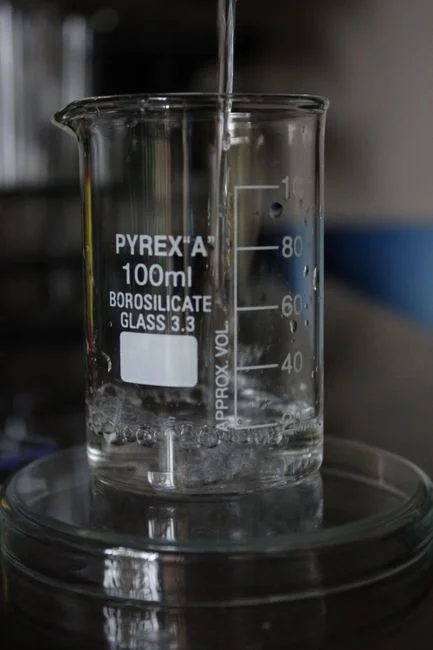
HDS lime neutralization is the default first active step because it handles the iron and aluminum acid load in a single reactor. The defining feature of an HDS reactor is the high underflow recycle ratio — typically 10-50× the influent TSS — which seeds the reactor with gypsum crystals and reduces both fresh lime consumption and total sludge volume relative to conventional neutralization. The underflow goes to a clarifier, then to a filter press for dewatering; the clarified effluent moves on to sulfate removal. Where source water contains high dissolved CO₂, a degassifier is placed between the HDS reactor and the clarifier to strip residual CO₂ and raise pH stability before downstream RO.
Biological sulfidogenesis and passive sulfate-reducing bioreactors (SRBs) are documented in academic reviews as a lower-OPEX path for sulfate reduction, with electron donors such as ethanol, methanol, or organic waste streams (Environmental Science and Ecotechnology, 2020). The catch is footprint and climate: SRBs need retention times measured in days, not hours, and they stall below roughly 10-15°C. That is why SRBs are rarely the sole path in a concentrator expansion — they appear as a polish step on RO concentrate or as a side stream, not as the primary active train. RO for sulfate and metals delivers permeate recovery of 75-95% in industrial systems with continuous PLC operation, and the brine is either recycled to the mill as process water or sent to a thermal crystallization step for ZLD closure.
Lime-HDS is the default for iron and aluminum removal; biological sulfate reduction is added when sulfate discharge limits are tight (typically <250-500 mg/L SO₄ in the effluent); and RO is added when water reuse or zero-liquid-discharge is the closure plan. The table below compares the three on the parameters that drive equipment selection.
| Parameter | HDS Lime Neutralization | Biological Sulfidogenesis (SRB) | Reverse Osmosis (RO) |
|---|---|---|---|
| Primary target | Fe, Al, acidity; gypsum sludge | SO₄ reduction to sulfide | SO₄, TDS, residual metals |
| Influent pH range | 2-5 (lime raises to 7-9) | 5-7 (downstream of HDS) | 6-8 (post-clarification) |
| Typical HRT / residence | 15-60 min in reactor | 2-7 days in bioreactor | Continuous; membrane flux 15-25 LMH |
| Sludge / by-product | Gypsum, 5-15% solids underflow | Metal sulfides, biological solids | Brine at 4-8× feed TDS |
| Closure path | Discharge or pre-RO | Low-OPEX polish | Reuse permeate; brine to ZLD or recycle |
| Footprint sensitivity | Low (compact reactor + clarifier) | High (large bioreactor volume) | Medium (skid-mounted, multistage) |
| Climate sensitivity | Low | High (stalls below 10-15°C) | Low |
An RO system for sulfate and metals brine polishing slots in after HDS clarification when the design basis calls for either a reuse loop or a tight sulfate discharge limit.
Sizing and Skid-Mounted Auxiliaries: Where Mid-Tier Miners Catch Up
Most expansion schedule pressure lands on the auxiliary steps: clarification, chemical dosing, sludge dewatering, and raw-water polishing. These are also the steps where packaged, skid-mounted equipment compresses installation time and concrete work — a critical advantage when the expansion brownfield has no room for new basins. A lamella clarifier for AMD neutralization steps runs at 20-40 m/h equivalent surface loading versus 1-3 m/h for a conventional thickener, delivering up to 30% lower chemical consumption because the sludge blanket acts as a floc blanket, and it occupies a fraction of the footprint — typically a 3-4 m tall packaged unit versus a 15-20 m diameter concrete thickener.
Chemical precision is what makes HDS reactor control stable. A PLC-controlled lime and coagulant dosing skid with feedback from pH and turbidity probes holds the HDS reactor inside its design pH window (typically 7.5-9.0) and avoids the over-liming that wastes reagent and burdens the downstream RO. For raw mine water with high suspended solids before it reaches the HDS train, a JY-series integrated water purification unit handles 10-200 m³/h and drops turbidity from up to 3,000 mg/L to under 3 mg/L, which is the polishing step that protects RO membranes from fouling when influent TSS spikes after heavy rainfall.
Sludge dewatering closes the mass balance. A plate-and-frame filter press for AMD sludge in the 1-500 m² filter area range, from manual to fully automatic PLC operation, takes HDS underflow from 5-15% solids to a filter cake of 35-45% moisture that can be stacked or co-disposed with tailings. The table below summarizes the packaged auxiliary equipment and its sizing envelope.
| Equipment | Capacity / Sizing Range | Footprint vs. Conventional | Role in AMD Train |
|---|---|---|---|
| Lamella clarifier (high-efficiency sedimentation tank) | 20-40 m/h surface loading; units to several hundred m³/h | ~1/10 of conventional thickener footprint | Post-HDS clarification; sludge thickening |
| Automatic chemical dosing skid | Lime, coagulant, flocculant; PLC-controlled with pH/turbidity feedback | Skid-mounted, 2-10 m² | HDS reactor reagent control; RO antiscalant dosing |
| JY integrated water purification unit | 10-200 m³/h; turbidity 3,000 mg/L → <3 mg/L | Containerized skid | Raw mine water pre-treatment; RO feed protection |
| Plate-and-frame filter press | Filter area 1-500 m²; manual to fully automatic PLC | Compact versus drying beds | Gypsum sludge dewatering; cake to 35-45% moisture |
Frequently Asked Questions
What is the standard unit-operation sequence majors use for AMD in a concentrator expansion?
The standard sequence is lime dosing → HDS reactor → lamella or thickener clarifier → RO or biological sulfate-reducing polish → plate-and-frame filter press on the gypsum sludge. BHP, Rio Tinto, and Freeport-McMoRan's 2026 process guides all show this backbone, with the polish step selected by closure target.
How much permeate recovery does RO deliver in a mine water reuse loop?
Industrial RO systems on mine water typically deliver 75-95% permeate recovery with continuous PLC operation, and the concentrate is recycled to the mill or sent to a thermal crystallizer for zero-liquid-discharge. Recovery is limited by feed TDS and the sulfate scaling index.
When is biological sulfate reduction the right choice for a concentrator expansion?
Biological sulfidogenesis is the right polish step when the discharge limit is below roughly 250-500 mg/L SO₄ and the site has warm climate plus footprint for a 2-7 day HRT bioreactor. It is rarely the primary active train because of the temperature and footprint constraints, but it pairs well downstream of HDS to cut OPEX versus RO alone.
How is gypsum sludge dewatering sized inside an expansion scope?
Plate-and-frame filter press area is sized to the HDS underflow mass flow (typically 5-15% solids), not to the influent water flow, and is delivered as a packaged unit with filter area 1-500 m² and manual to fully automatic PLC operation to produce a 35-