Rio Tinto and Mine Wastewater: Clearing Up the Naming Confusion
The search term "Rio Tinto" almost always triggers one of two confusions worth resolving before any technical discussion. The first is the Río Tinto river and historic mining complex in Huelva, southwestern Spain, which sits on the Iberian Pyrite Belt — one of the largest massive sulfide deposits on Earth. Mining there dates to roughly 5,000 years ago, and the river itself runs persistently acidic (pH 1.5–3.0) and orange-red from natural and legacy bio-oxidation of pyrite and chalcopyrite. This site is studied internationally as a natural analog for acid rock drainage (ARD) and biological sulfate reduction (S2, Applied and Environmental Microbiology, 2012).
The second is the Rio Tinto Group, a multinational mining major founded in 1873 when a consortium purchased the Spanish mine complex from the government (S3, MDPI Resources, 2020). The Group now operates copper, iron ore, aluminum, lithium, and critical minerals assets across six continents, runs seven hydropower plants that feed its mining, refining, and processing sites, and is a member of the International Council on Mining and Metals (ICMM) whose commitments map to the UN Sustainable Development Goals. For process engineers, the Group's flagship copper operation is the Kennecott Utah Copper complex near the Bingham Canyon pit in Utah — explored in a 2024 Penn State University Press book chapter on extraction politics (S1, 2024-12).
This article treats both: the Spanish site as the biological foundation for understanding acid mine drainage, and the Kennecott operation as the engineered pinnacle of modern water reuse. The bridge between them is the practical guidance a mid-scale mine operator can use today.
The Three Water Streams at a Modern Rio Tinto Mine Site
An active mine produces three distinct wastewater streams, and every modern Rio Tinto operation treats them through different unit processes before considering reuse or discharge.
Contact water is runoff and process water that has touched ore, haul roads, equipment wash bays, or disturbed ground. It is typically high in total suspended solids (TSS, often 200–2,000 mg/L during storm events), carries heavy metals bound to particulates, and frequently contains oil and grease from vehicle operations. At Kennecott, this stream feeds directly into the mill circuit or the RO plant after settling.
Tailings decant water is clarified water recovered from tailings storage facilities. It contains residual flotation reagents (collectors, frothers, depressants), dissolved metals, and elevated total dissolved solids (TDS, commonly 1,500–5,000 mg/L) from process chemistry. The decant is recycled to the mill whenever possible, but a bleed stream must be treated to prevent salinity build-up in the closed loop.
Acid rock drainage (ARD) is the most chemically aggressive stream. It forms when sulfide minerals — pyrite (FeS₂) and chalcopyrite (CuFeS₂) being the most common — are exposed to oxygen and water during mining, producing low-pH, sulfate- and metal-laden drainage. The Iberian Pyrite Belt, the namesake geology of the Spanish site, is one of the largest concentrations of these minerals on the planet, which is precisely why the Tinto River became a natural laboratory for ARD chemistry (S2, 2012). Across the Group, ARD is managed through engineered treatment trains whose biological core is borrowed from what the Spanish site teaches us for free.
How Rio Tinto Treats Acid Mine Drainage: Biological Attenuation in Practice
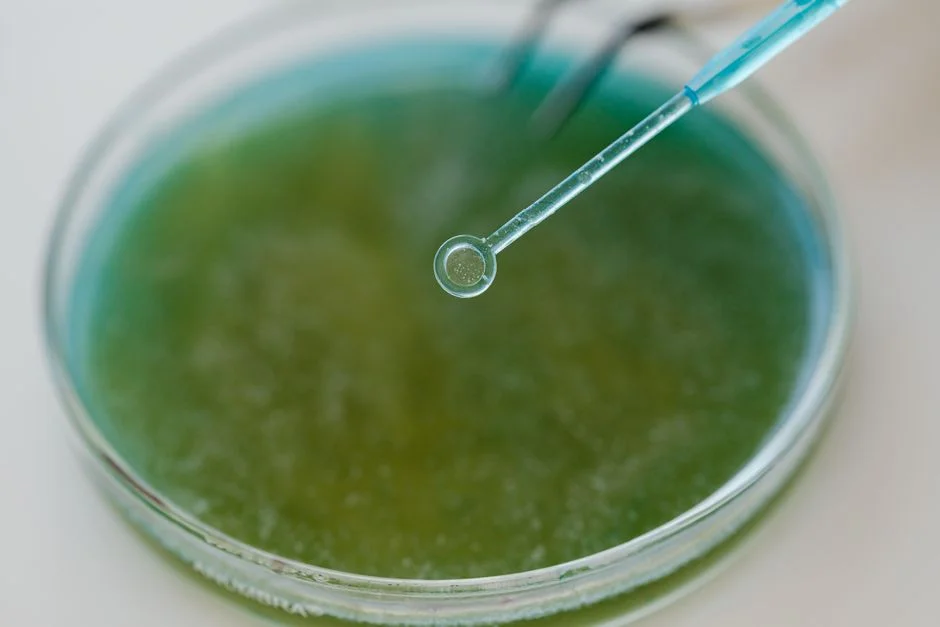
The most distinctive treatment concept associated with the Rio Tinto name is not a piece of equipment but a microbial community. Sulfate-reducing bacteria (SRB) thrive in anoxic, organic-rich environments and couple the oxidation of simple carbon sources (lactate, acetate, methanol, wood chips) to the reduction of sulfate into hydrogen sulfide. The sulfide then reacts with dissolved metals — Fe²⁺, Cu²⁺, Zn²⁺, Ni²⁺, Cd²⁺ — to form insoluble metal sulfides that precipitate out of solution, while the alkalinity generated during bacterial metabolism raises the water's pH toward circumneutral.
A 2012 quantification study of the Tinto River sediment microbiota found that Deltaproteobacteria probes produced high hybridization signals and that Desulfurella clones were abundant at both sampling sites, confirming that SRB communities are the dominant biological population driving natural ARD attenuation in this system (S2, Applied and Environmental Microbiology, 2012). What the Spanish site demonstrates at landscape scale, Rio Tinto Group sites replicate in engineered form: passive bioreactors (anaerobic cells packed with organic substrate such as compost, wood chips, or spent mushroom compost) and constructed wetlands that mimic the river's attenuation kinetics under controlled hydraulic retention times of 2–10 days.
The advantage of biological attenuation is operational cost: once the system is established, it runs on gravity flow and microbial metabolism, with no chemical reagent feed and minimal energy input. The limitation is footprint and climate sensitivity — SRB activity slows below 10 °C, and passive systems need real estate. Where these constraints bind, Rio Tinto supplements with chemical precipitation (lime or NaOH dosing) and downstream membrane polishing. The natural attenuation observed at the Spanish site does not replace engineered treatment at active Group operations; it sets the biological baseline those engineered systems are designed to replicate.
The Kennecott RO Plant: Rio Tinto's Flagship Closed-Loop System
The Kennecott Utah Copper operation sits roughly 40 km southwest of Salt Lake City, adjacent to the Bingham Canyon pit — the largest open-pit copper mine in North America, with copper production documented in the 2024 Penn State University Press book chapter on extraction politics (S1, 2024-12). At the heart of the site's water strategy is a reverse osmosis plant that polishes contact and process water for direct reuse in milling, leaching, and dust suppression rather than single-pass discharge.
The treatment train is conventional in sequence but tightly integrated: equalization and coagulation/flocculation removes the bulk of TSS and colloidal metals using pH adjustment (typically to 8.0–9.0) and polymer or ferric coagulant dosing; sedimentation/clarification drops the mixed liquor to under 20 mg/L TSS; multimedia filtration ahead of the RO membranes polishes residual particulates down to under 2 NTU; antiscalant dosing and 5-micron cartridge filtration protect the RO elements; and the RO array (typically two-pass, with energy recovery on the concentrate) splits the feed into a low-TDS permeate returned to the process circuit and a concentrated brine routed to either further evaporation or controlled deep-well injection, depending on site hydrogeology. Industrial reverse osmosis system for mine water polishing deployments follow this same architecture at smaller scale, and the multi-media filtration pretreatment ahead of RO membranes is the most common failure point when operators skip optimization.
The closed-loop philosophy is what distinguishes Kennecott from a conventional mine water system. Permeate is not discharged; it rejoins the mill water tank, the SAG mill dilution line, or the leach pad sprinkler system. Freshwater draw from surrounding aquifers is minimized, and effluent volume requiring off-site disposal drops by 50–80% compared to a once-through design. This approach directly supports Rio Tinto's headline sustainability targets: net-zero operational emissions by 2050 and a 30% reduction in carbon intensity by 2030 against a 2018 baseline (S3, MDPI Resources, 2020). PLC-controlled chemical dosing for pH and coagulation control is the workhorse subsystem that keeps the upstream of the RO stable enough for the membranes to deliver their design recovery.
| Stage | Unit Process | Primary Removal Target | Typical Operating Range |
|---|---|---|---|
| 1 | Equalization + pH adjustment | Flow/load dampening | pH 7.0–9.0, HRT 4–8 h |
| 2 | Coagulation / flocculation | TSS, colloidal metals | Ferric or polymer dose 10–50 mg/L |
| 3 | Lamella clarifier | Settled solids | Overflow rate 2–4 m/h |
| 4 | Multi-media filter | Residual TSS, turbidity | Effluent turbidity <2 NTU |
| 5 | Cartridge filter (5 µm) | Particulate guard | ΔP change-out at 1.0 bar |
| 6 | RO membrane array (2-pass) | Dissolved salts, trace metals | Recovery 70–85%, feed pressure 10–15 bar |
| 7 | Permeate storage / blend | Reuse distribution | Returned to mill/leach/dust suppression |
| 8 | Brine management | Concentrate disposal | Evaporation pond or deep-well injection |
Process Parameters and Recovery Targets Across Rio Tinto's Treatment Trains
Engineers designing or auditing an analogous system need a parameter envelope rather than a single number. The table below consolidates typical influent and target effluent characteristics for the three streams, drawn from general mining industry practice and the Iberian Pyrite Belt baseline established in the literature (S2, 2012).
| Parameter | Contact Water (typical) | Tailings Decant (typical) | ARD (Iberian Pyrite Belt baseline) | Biological Effluent Target | RO Permeate Target |
|---|---|---|---|---|---|
| pH | 6.5–8.0 | 7.0–8.5 | 2.0–4.0 | 6.5–8.0 | 6.5–7.5 |
| Sulfate (mg/L) | 200–1,500 | 500–3,000 | 1,000–10,000 | 200–500 | <50 |
| Total Fe (mg/L) | 5–50 | 1–20 | 100–2,000 | <5 | <0.3 |
| Cu (mg/L) | 0.1–5 | 0.05–2 | 5–200 | <0.5 | <0.1 |
| Zn (mg/L) | 0.5–10 | 0.2–5 | 10–500 | <2 | <0.2 |
| TSS (mg/L) | 200–2,000 | 50–300 | 50–500 | <30 | <2 NTU |
| TDS (mg/L) | 500–3,000 | 1,500–5,000 | 2,000–15,000 | 1,000–3,000 | <200 |
Recovery targets for the RO step are typically 70–85% for the first pass on a well-pretreated feed, with overall system reuse (defined as permeate volume divided by total treated volume) trending above 75% when the concentrate is routed to a secondary recovery step or evaporation. The 30% carbon intensity reduction commitment by 2030 (S3, 2020) translates operationally into reduced freshwater abstraction per tonne of ore processed; the Group does not publish a single m³/t number, but the directional commitment is clear and consistent with ICMM water stewardship reporting.
What Mine Operators and Engineers Can Learn from Rio Tinto's Approach
Four practical lessons translate Rio Tinto's scale-appropriate solutions into guidance for mid-scale mining and industrial operations.
1. Match the treatment train to the water stream, not the other way around. Contact water wants settling and filtration; tailings water wants reagent destruction and ion exchange or RO; ARD wants biological attenuation or chemical precipitation. Bundling all three into one homogenized stream forces over-engineering and inflates both capex and opex. Treat them separately until the chemistry forces convergence.
2. Use biological attenuation where sulfate and metal loads favor SRB activity. Passive bioreactors and constructed wetlands are not a low-cost fallback — they are the lowest-lifecycle-cost option for ARD with influent sulfate above 1,000 mg/L and ambient temperatures above 10 °C for most of the year. Supplement with chemical precipitation and ZLD system sizing for copper concentrator water when climate, footprint, or pace requirements exceed what biology alone can deliver.
3. Prioritize reuse loops over end-of-pipe discharge. A permeate stream that returns to the mill is worth two to three times the value of the same stream discharged to a receiving water body, because it displaces both freshwater abstraction and discharge-treatment cost simultaneously. This is also where 2026 regulatory pressure is tightening fastest, particularly in jurisdictions tracking ICMM-style water stewardship metrics.
4. Integrate online monitoring upstream and downstream of every unit process. pH, ORP, conductivity, sulfate, and dissolved metals are the minimum set. Without online data, biological systems drift and RO membranes scale or foul silently. Sulfide online monitoring for biological ARD treatment is the single highest-leverage instrumentation upgrade for any site running an SRB-based train, because it closes the loop on the chemistry that actually drives metal removal. For a broader regional framing of how these systems integrate with industrial compliance, see this regional industrial wastewater treatment engineering guide.
Frequently Asked Questions
What treatment technology does Rio Tinto use at Kennecott for mine water?
The Kennecott Utah Copper operation uses a multi-stage train — equalization, coagulation/sedimentation, multi-media filtration, and two-pass reverse osmosis — to polish contact and process water for reuse in milling, leaching, and dust suppression rather than discharge. The plant supports Rio Tinto's 2030 carbon intensity and 2050 net-zero operational commitments (S3, MDPI Resources, 2020).
How does biological sulfate reduction clean acid mine drainage?
Sulfate-reducing bacteria oxidize a carbon substrate (lactate, acetate, wood chips) under anoxic conditions, converting sulfate into hydrogen sulfide, which then precipitates dissolved metals as insoluble sulfides. Studies of the Tinto River sediment microbiota confirm that Deltaproteobacteria and Desulfurella populations dominate this attenuation in the Iberian Pyrite Belt system (S2, Applied and Environmental Microbiology, 2012).
Can mid-scale mine operators replicate Rio Tinto's closed-loop water strategy?
Yes — at smaller scale the same architecture (separate treatment of contact, tailings, and ARD streams; biological attenuation where SRB conditions are favorable; RO polishing for reuse; online monitoring) delivers most of the freshwater-saving and discharge-reduction benefits. The economics actually improve at smaller scale because passive bioreactor footprint requirements drop in absolute terms, though per-m³ costs are typically higher than at Kennecott's throughput.