Why a single unit is the wrong question for Vance petroleum wastewater
A Vance, Alabama refinery or tank-farm polishing step sees a separator effluent that is not a single-contaminant stream. Free oil, emulsified oil in the 10–100 µm band, dissolved organics, and suspended grit from tank bottoms and truck unloading all arrive at the same unit, and the loads shift hourly. The DAF-or-clarifier question only makes sense if one technology is sized to remove both fractions, and that is not how the physics works. Emulsified droplets are buoyant but too small to settle at typical clarifier residence time, so a clarifier alone leaves too much emulsified oil in the overflow to satisfy a 10–15 mg/L daily maximum; DAF wins the emulsified oil by attaching 10–100 µm microbubbles that lift what Stokes' law cannot capture.
Cold influent is a second reason a single clarifier is fragile. Outdoor Alabama winter operation drops the effective settling velocity of a clarifier on a stream that already sits at the edge of what gravity can resolve, while bubble attachment in a DAF is largely insensitive to temperature. The combination of episodic sediment pulses, an emulsified oil fraction, and winter cooldown is what makes the binary "DAF or clarifier" the wrong frame for a 2026 capex. The defensible question is which train, in which order, and that answer is site-specific to the operating profile downstream of the API or CPI separator.
Alabama regulatory anchors and 40 CFR Part 435
40 CFR Part 435 (the Oil and Gas Extraction Point Source Category) sets the federal floor for refinery and oilfield discharges on oil and grease, TSS, and COD, but it does not mandate a specific technology. Alabama Department of Environmental Management (ADEM) administers NPDES permits for direct discharges and delegates industrial pretreatment oversight to local POTWs for indirect discharges. In practice, Alabama POTW pretreatment programs typically enforce a daily maximum of 10–15 mg/L O&G and roughly 30 mg/L TSS, which is the effective ceiling the polishing step must hit on the discharge monitoring report (S4).
The capex decision is therefore: pick the train whose FOG and TSS performance lands safely inside the stricter of the federal and local limits, not the looser one. A 25-point FOG-removal spread between DAF and a clarifier on the same stream is the difference between a clean compliance event and a non-compliance event on a refinery DMR (S1, S4). The table below maps the relevant limits and the technology implications for a Vance site.
| Driver | Reference | Typical limit / target | Implication for polishing train |
|---|---|---|---|
| Federal oil & grease floor | 40 CFR Part 435 | Sets conventional pollutant limits; no specific technology mandated (S4) | Technology choice left to permittee; performance must be defensible on DMR |
| Alabama POTW O&G ceiling | Local pretreatment ordinance | 10–15 mg/L daily maximum (S4) | Polishing step must deliver >95% FOG removal on a separator effluent of several hundred mg/L oil |
| Alabama POTW TSS ceiling | Local pretreatment ordinance | ~30 mg/L (S4) | Sediment removal must precede or accompany oil removal to avoid resuspension |
| ADEM NPDES oversight | State-administered | Direct-discharge permits typically run tighter than POTW limits (S4) | Hybrid train provides margin on direct-discharge sites |
How DAF and clarifiers actually separate oil and solids
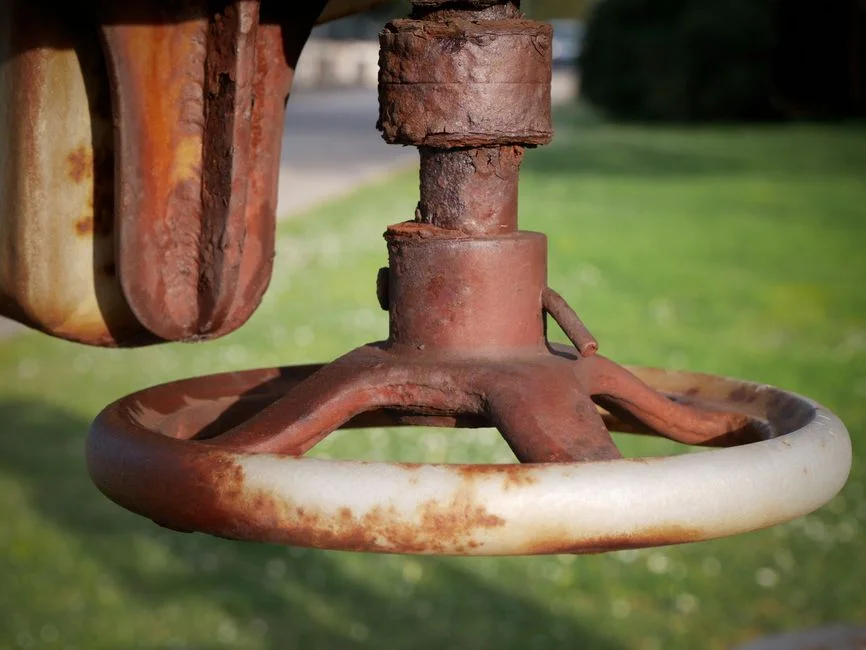
A gravity clarifier relies on Stokes' law settling: dense grit drops to a sludge hopper under quiescent conditions, and any floating free oil is supposed to overflow as clarified effluent (S1). On a refinery separator effluent the free oil eventually floats, but emulsified oil droplets in the 10–100 µm range settle too slowly to be captured at typical hydraulic residence time, which is the physical reason a clarifier alone does not satisfy a 10–15 mg/L daily O&G maximum (S1, S4). The clarifier is also sensitive to cold influent, density currents from influent jets, and short-circuiting in shallow basins, all of which appear on outdoor Alabama winter operations.
A DAF unit inverts the separation vector. Pressurized recycle water at 4–6 bar is saturated with air in a packed or venturi saturator, then released through a pressure-reduction valve so 10–100 µm microbubbles attach to oil droplets and floc, lifting them at 5–15 m/h rise rate (S4). Modern VFD-driven packed-tower saturators reach 80–95% air saturation efficiency, which trims compressor runtime and avoids the oversized-blower problem that penalized first-generation DAF installations (S4). The unit's performance is governed by three operating parameters that the jar-test program has to hold inside the operating window: A/S ratio 0.005–0.06 mL air per mg solids, recycle rate typically 20–40% of forward flow, and hydraulic loading 5–30 m³/m²·h standard, up to 40 m³/m²·h in HR-DAF plate-pack configuration (S3, S4).
The two units are not redundant; they separate different fractions. On a properly conditioned oily stream, DAF achieves about 95% FOG removal versus about 70% for a clarifier on the same stream (S1, S4). On a stream dominated by heavy settleable grit, a clarifier reduces solids efficiently and at lower cost. That complementarity is what the hybrid train exploits rather than a single-unit answer.
Side-by-side parameter comparison for Vance feed conditions
The wastewater profile downstream of a Vance API or CPI separator is unusually heterogeneous, with residual oil concentrations typically between 50 and 5,000 mg/L and sediment pulses during tank-bottom work (S3, S4). The table below is the parameter set a procurement engineer screens against for a 2026 capex on this feed; numbers reflect the operating ranges from the cited sources, not lab benchmarks.
| Parameter | Dissolved Air Flotation (DAF) | Gravity Clarifier (incl. Lamella) |
|---|---|---|
| Typical FOG removal on separator effluent | ~95% with chemical conditioning (S1, S4) | ~70% on the same stream (S1, S4) |
| Hydraulic loading rate | 5–30 m³/m²·h standard; up to 40 m³/m²·h HR-DAF (S3, S4) | ~1–3 m³/m²·h conventional; 20–40 m/h surface loading for lamella plates (S3, S4) |
| Footprint advantage | Compact; HR-DAF plate packs push the rate ceiling higher | Footprint advantage only on streams dominated by heavy settleable solids (S1) |
| Cold-weather sensitivity | Low — bubble attachment is largely temperature-insensitive (S4) | High — viscosity slows settling velocity (S4) |
| Chemical conditioning (coagulant + flocculant) | Typical; 5–15% of opex (S4) | Minimal unless used as primary oil step |
| Best-fit feed | Free and emulsified oil, compact footprint, cold or variable influent (S1, S4) | Heavy sediment and grit, low-cost operations, large available footprint (S1, S4) |
For a Vance site with both an emulsified oil fraction and episodic sediment pulses, neither row of the table is the full answer. The procurement decision is whether to combine them in a single train, and the DAF unit specified for the oil side is the dissolved air flotation system sized to the upper end of the 50–5,000 mg/L feed band.
Three Vance scenarios and the recommended train
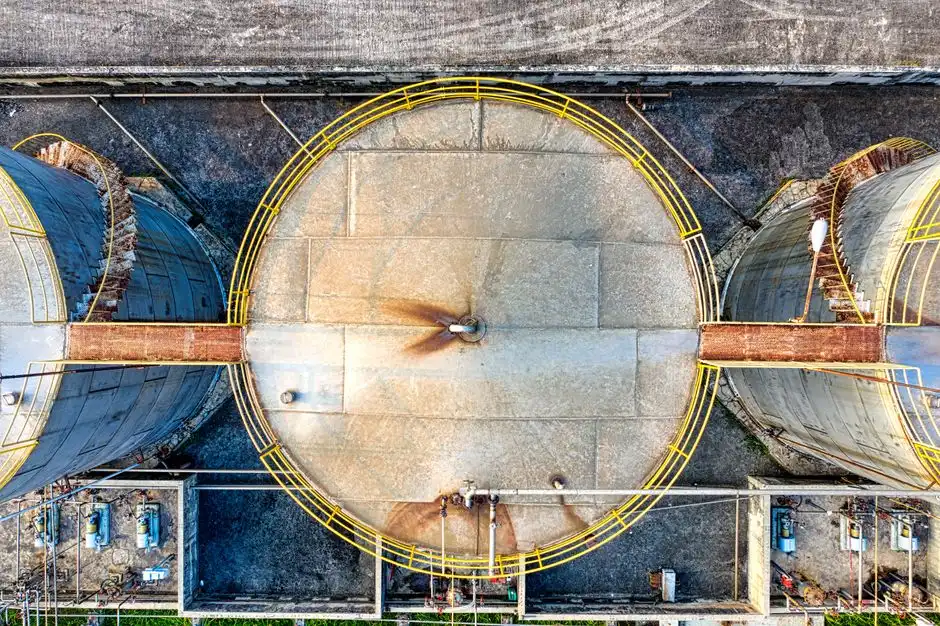
The right train is a function of the operating profile, not an abstract preference. The three scenarios below cover the operating envelopes a Vance refinery or tank farm typically falls into on a 2026 polishing-stage capex, and each maps to a defensible configuration drawn from the parameter table above.
| Scenario | Influent profile | Recommended train | Why it fits |
|---|---|---|---|
| A — Steady oily base load | 50–200 m³/h, moderate oil (200–800 mg/L post-API), limited footprint, variable production schedule | HR-DAF with plate packs at up to 40 m³/m²·h (S3, S4) | Compact footprint, >95% FOG removal, tolerates emulsified oil from desalter upsets (S3, S4) |
| B — Mixed oil plus grit | 100–500 m³/h, high grit and sediment from truck unloading and tank bottoms, plus free and emulsified oil | Primary lamella clarifier → DAF polish (S1 confirms hybrid as common) | Clarifier protects DAF from grit blinding; DAF polishes emulsified oil to discharge limits (S1, S4) |
| C — Variable produced water or oilfield service | Highly variable flow, 50–5,000 mg/L oil swings, short-duration or pilot projects, remote or temporary sites | Trailer-mounted mobile DAF on a frac-tank-style trailer 47–52 ft long, single-day deployment (S5) | Rapid mobilization for produced water, frac flowback, or surge capacity during turnarounds (S4, S5) |
For most Vance refineries and tank farms the operating profile sits between scenarios A and B, which is why a hybrid train rather than a single unit is the typical 2026 answer. A standalone clarifier alone is rarely sufficient to meet the Alabama POTW O&G limits on a separator effluent with any emulsified fraction, and a standalone DAF on a stream with sediment pulses will blind the float and drift outside the A/S and recycle window (S1, S4). The hybrid train is the configuration that protects both stages.
Capex, opex and ROI framing for a Vance 2026 project
A DAF carries higher upfront capital than a comparably rated clarifier, but on an oily stream the DAF requires far less tank volume to hit the same oil target. On a footprint-constrained Vance site, that footprint delta often reverses the capex comparison once land cost, civil work, and structural steel are priced in (S1, S4). DAF energy use is dominated by the recycle pump and the air compressor, and modern VFD-driven saturators reach 80–95% air saturation efficiency, which trims compressor runtime and avoids the oversized-blower problem of first-generation units (S4).
Chemical opex (coagulant plus flocculant) typically adds 5–15% of total opex depending on jar-test-optimized polymer selection, and is the line item where a good jar-testing program pays back fastest (S4). For jar-test-driven polymer control, the automatic chemical dosing system holds the A/S ratio and floc strength inside the operating window. For DAF sizing, the dissolved air flotation system covers 4–300 m³/h across 13 standard models, and for the clarifier side the high-efficiency sedimentation tank runs 20–40 m/h surface loading with internal sludge recirculation.
ROI is best framed as avoided cost plus recovered value, not as energy saved. The largest line items are avoided non-compliance events under 40 CFR Part 435 and the local POTW limits, plus recovered oil skimmed for resale rather than paid out as hauling and disposal (S4). Buyers should request a site-specific capex and opex breakdown from shortlisted suppliers, since the cited research does not publish a Vance price band; what the research does support is that DAF opex on a comparable oily stream typically lands within a few percent of clarifier opex once jar-test-optimized polymer dosing is included (S1, S4). For related regional context, the Meridian petroleum DAF vs clarifier guide applies the same matrix to a comparable refining footprint, and the petroleum pretreatment compliance guide covers pretreatment-program mechanics in more detail.
Frequently Asked Questions
What is the typical 2026 budget range a Vance refinery should plan for a polishing-stage DAF or hybrid train?
The cited research does not publish a Vance-specific price band for a 2026 polishing-stage DAF or hybrid train, so a defensible number has to come from a site-specific quote. Buyers should request a written capex and opex breakdown from at least three shortlisted suppliers that itemizes tank volume, saturator package, recycle pump, chemical dosing skid, civil work, and commissioning, and that benchmarks the proposed footprint against the 5–30 m³/m²·h standard hydraulic loading or the up to 40 m³/m²·h HR-DAF rate on the separator effluent (S3, S4).
How should a Vance buyer select and qualify a DAF or clarifier supplier in 2026?
Shortlist suppliers on documented performance at the same 50–5,000 mg/L separator-effluent range and on the same A/S and recycle operating window (0.005–0.06 mL air per mg solids, 20–40% recycle), and require references from at least two operating refineries or tank farms in the southeastern US (S3, S4). Confirm the saturator package is VFD-driven and rated at 80–95% air saturation efficiency, and require a jar-test report on a representative site sample before signing (S4). A wastewater predictive maintenance guide can be used to screen the supplier's service and monitoring offering.
Will a DAF or clarifier on a Vance separator effluent hit the 10–15 mg/L O&G daily maximum on its own?
On a separator effluent in the 50–5,000 mg/L range, a DAF with chemical conditioning reliably delivers about 95% FOG removal, which lands the unit's effluent inside the 10–15 mg/L O&G band that Alabama POTWs effectively require (S1, S4). A clarifier on the same stream delivers closer to 70%, which is typically not enough on its own to satisfy the daily maximum without a follow-on polishing stage, which is why a hybrid train is the common 2026 configuration (S1, S4).
What operating parameters determine whether a DAF stays inside spec on a Vance oily feed?
Three parameters define DAF performance on an oily feed: the A/S ratio must be held in the 0.005–0.06 mL air per mg solids band, the recycle rate is typically 20–40% of forward flow, and the hydraulic loading is 5–30 m³/m²·h standard or up to 40 m³/m²·h in HR-DAF configuration (S3, S4). A jar-test-optimized polymer program tied to an automatic dosing skid is what holds the floc strength inside the operating window described, and is the lowest-risk package to add when commissioning a unit on a Vance oily stream (S4).