Why Dutch Harbor Food and Beverage Plants Need the Right Primary Clarifier in 2026
Dutch Harbor's seafood and cannery base produces wastewater that is high in FOG, protein, and salt, and the Bering Sea intake water keeps influent cold year-round. That combination stresses any clarifier that relies on gravity alone: cold water raises oil viscosity, slows floc settling, and pushes more oil into an emulsified state that a settling basin cannot break. The 2026 decision is therefore not just about removal efficiency; it is also about whether the chosen primary unit protects the downstream biological stage and keeps sludge hauling costs inside the operating budget.
Cold water does have one redeeming feature for DAF operators: it holds more dissolved air at a given pressure. The technology primer on DAF notes that colder water can be an advantage for gas solubility but demands robust materials to handle supersaturated conditions without premature outgassing (cleantechnologypost.com, 2026-08). That statement frames every other sizing decision a Dutch Harbor engineer will make, because the saturator and recycle piping must be specified for the coldest expected influent, not the design average. Equipment suppliers that quote 20 °C performance will undersize the unit for a plant drawing process water off the bay.
Sludge handling is the second local pressure point. DAF sludge typically exits the float at 2–6% total solids, materially drier than the underflow of a conventional clarifier, which cuts the hydraulic load on a downstream filter press and reduces polymer demand (cleantechnologypost.com, 2026-08). On a remote island where hauling and disposal routes are limited, that difference in solids content translates directly into trucking volume and therefore into OPEX. A published food-processing comparison shows a DAF removing 95% of oils and grease versus 70% for a clarifier on the same stream (ecologixsystems.com), and that removal gap is the baseline every Dutch Harbor plant should be measured against in 2026. For a fuller, peer-equivalent treatment of the technology trade-offs, the sister factory guide for food and beverage DAF vs clarifier decisions walks through the same matrix for a different U.S. food-processing region.
How DAF and Lamella Clarifiers Actually Separate Solids
A DAF unit pressurizes 4–6 bar of air into a recycle stream inside a saturator vessel, then flashes that recycle to atmospheric pressure through a pressure-reducing valve. The drop in solubility releases a cloud of microbubbles, typically 10–100 µm in diameter, that collide with and attach to oil droplets or pre-conditioned flocs (cleantechnologypost.com, 2026-08). The buoyant aggregate rises at 5–15 m/h in the flotation tank, forming a float layer that a surface skimmer scrapes into a sludge trough. The clarified effluent exits from a submerged header near the tank bottom. Because the separation vector is upward rather than downward, DAF is indifferent to the density currents that disrupt gravity basins in cold water.
A lamella clarifier uses gravity, but on a much smaller footprint than a conventional basin. Inclined plates multiply the effective settling area, so the surface loading can reach 20–40 m/h while using up to 30% less coagulant than a traditional clarifier on equivalent duty. For a Dutch Harbor facility handling heavy grit, shells, and bone fragments, the inclined-plate geometry also reduces the distance a particle must fall before it hits a plate and slides into the hopper, which matters when the water is cold and viscosity is high. The trade-off is that a lamella clarifier only removes what will settle; emulsified oil and very fine protein pass through largely untouched, which is why seafood processors with significant stick-water or condensate streams do not rely on lamella alone.
The two technologies also differ sharply in their mechanical inventories. A DAF system requires a saturator, recycle pump, air compressor, pressure-reducing valve, and skimmer, plus chemical dosing to condition emulsified oil. A lamella clarifier needs only feed piping, a sludge pump, and occasional polymer dosing. Operational complexity scales accordingly: a DAF must be tuned to a target A/S ratio, defined as 0.005–0.06 mL of air per mg of suspended solids, which is the single most important DAF design knob (cleantechnologypost.com, 2026-08). Undershoot the A/S ratio and oil removal collapses; overshoot it and the compressor runs for no benefit. HydropureWater's industrial DAF system integrates the saturator and skimmer into a single skid, while the lamella clarifier for industrial solids ships with inclined plate packs pre-installed to keep civil work on site to a minimum.
DAF vs Clarifier: 2026 Side-by-Side Comparison for Food and Beverage Streams
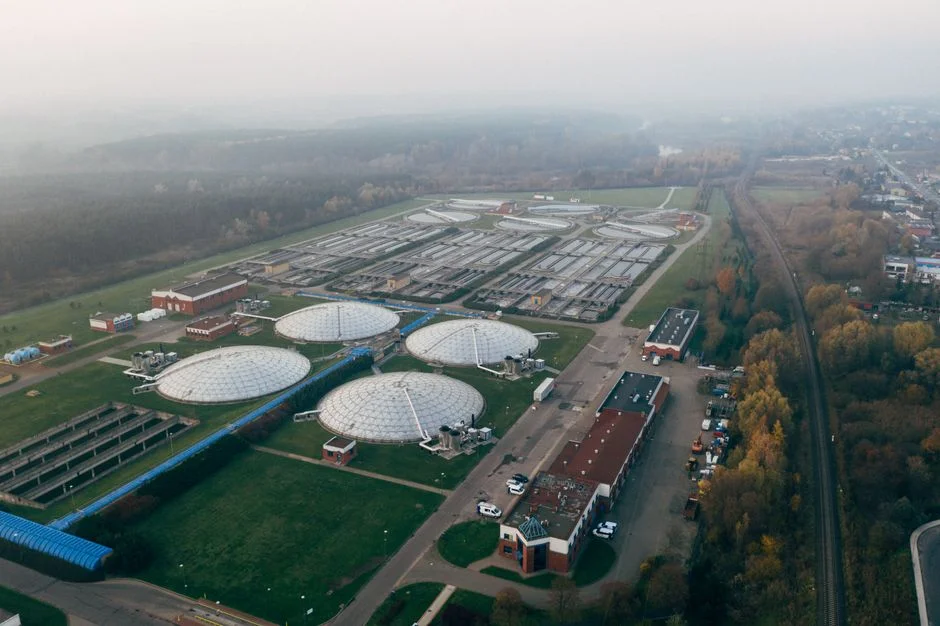
The comparison below is built from the technology primer's published parameters and the food-processing case in the Ecologix selection guide. It is the matrix a Dutch Harbor engineer should pin to the wall before opening vendor discussions, because every row maps to either a removal target, an OPEX line, or a sizing constraint.
| Parameter | DAF system | Lamella clarifier |
|---|---|---|
| FOG removal on food stream | >95% (cleantechnologypost.com, 2026-08) | ~70% on the same stream (ecologixsystems.com) |
| BOD reduction before biological stage | 40–60% (cleantechnologypost.com, 2026-08) | Lower; primarily TSS-driven |
| TSS removal | Effective on light, floc-conditioned solids | Effective on heavy, settleable solids |
| Hydraulic / surface loading | 5–30 m³/m²·h standard, up to 40–50 m³/m²·h high-rate (cleantechnologypost.com, 2026-08) | 20–40 m/h surface loading (HydropureWater spec) |
| Sludge solids content | 2–6% (cleantechnologypost.com, 2026-08) | Lower underflow solids, higher haul volume |
| OPEX intensity | Higher (compressor, recycle pump, polymer) | Lower for solids-dominated streams (ecologixsystems.com) |
| Footprint for a given flow | Compact at high loading | Compact at high loading |
| Cold-climate fit | Advantage: more dissolved gas at low T; requires robust saturator materials (cleantechnologypost.com, 2026-08) | Disadvantage: viscosity slows settling; needs covered, insulated basin |
| Skill level required | Higher (A/S ratio, saturator pressure, polymer dose) | Lower; largely gravity-driven |
| Best-fit feed | Emulsified oil, light flocs, protein | Heavy grit, shells, settleable TSS |
Reading the matrix, the rule of thumb is straightforward: if the influent has more oil than grit, DAF wins on removal and on sludge dryness. If the influent has more grit than oil, a lamella clarifier wins on capital and on OPEX. The interesting case, and the one most relevant to Dutch Harbor, is a mixed stream where both contaminants matter, and the right answer is a DAF primary followed by a lamella polish, exactly the hybrid pattern that the Ecologix selection guide identifies for complex wastewater streams.
Three Dutch Harbor Scenarios: Fishmeal, Surimi/Seafood Processing, and Cannery
Scenario 1, fishmeal plant. Stick-water and evaporator condensate carry emulsified oil, soluble protein, and finely suspended solids that resist gravity settling. A lamella clarifier alone stalls on the emulsified load and pushes more of the oil burden into the biological stage, where it can shock the biomass. The defensible 2026 choice is a DAF as the primary unit, with polymer conditioning to break the emulsion. The sludge leaving the float at 2–6% solids feeds directly into a plate-and-frame press without further thickening, which matters when the only disposal route is barge off the island.
Scenario 2, surimi and fillet lines. These lines release both emulsified oil from the wash water and fine suspended solids from the mince process. A DAF alone will lift the oil and most of the protein, but residual fines and any settleable grit can still escape into the biological stage. The recommended train is a DAF primary followed by a lamella clarifier polish; the DAF protects the aeration basin from oil shocks, and the lamella captures the settleable fines that the DAF float cannot lift. This hybrid train matches the design intent laid out in the 2026 2026 DAF design guide for high-FOG food wastewater, which puts DAF upstream of any secondary solids-removal step.
Scenario 3, cannery with shells, seeds, and heavy grit. The TSS load dominates the oil load in most cannery lines, especially during the seasonal peaks when fruit or vegetable solids flood the system. A lamella clarifier alone often brings TSS under the discharge limit on its own, and a small DAF is only justified as a polish step if the free oil reading on the clarifier underflow exceeds the local limit. In that case the DAF is sized for the residual oil load, not the full flow, which keeps both the saturator and the compressor small. The decision in every scenario maps back to the same 2026 question: which unit operation protects the biological stage and the sewer pretreatment limit at the lowest total annualized cost.
Cold-Climate Sizing Checks for Dutch Harbor Installations
The Bering Sea operating envelope breaks designs that were qualified in temperate water. A Dutch Harbor engineer should walk the checklist below with every vendor before signing a purchase order, because the unit that performs at 15 °C will not perform at 2 °C without these provisions.
| Check | What to verify | Why it matters in Dutch Harbor |
|---|---|---|
| Saturator sizing temperature | Use the lowest expected influent temperature, not the annual average | Solubility is higher in cold water, but air mass flow must still hit 70–100 mg/L target (cleantechnologypost.com, 2026-08) |
| Recycle ratio | 20–40% of forward flow at 4–6 bar saturator pressure | Deviating from this band either starves the bubble blanket or wastes compressor energy (cleantechnologypost.com, 2026-08) |
| Materials for supersaturation | Stainless saturator, reinforced recycle piping, no dead legs | Cold supersaturated water outgasses prematurely at fittings, causing bubble collapse in the tank |
| Heat-tracing and insulation | Trace and insulate recycle lines, saturator room, and skimmer trough | Viscosity rise in cold lines shifts the A/S ratio and breaks the 4–6 bar target |
| Upstream grit removal | Install a bottom-scraper or vortex grit chamber before the DAF | DAF does not lift dense settleable solids; shells and bone fragments accumulate on the floor without it |
| Polymer dose and mixing | Confirm dose and mix energy against a winter jar test, not a summer one | Emulsion stability shifts with temperature; summer-validated doses under-dose in winter |
HydropureWater's PLC-controlled coagulant and polymer dosing is one option for keeping the winter dose in step with the feed, because the controller can be trimmed against a streaming-current probe rather than a hand-titration done at room temperature. None of the top-ranking generic DAF vs clarifier pages carry this cold-climate check, and that is the gap an Alaskan engineer needs closed in writing before issuing a PO.
Cost, ROI, and Procurement Signals for a 2026 Decision
Clarifiers generally have lower operational costs than DAF systems, but that advantage only holds where the stream is dominated by settleable solids rather than emulsified oil (ecologixsystems.com). A Dutch Harbor food plant that is forced to add a polymer system, an oil-skimming step, and a sludge-thickener upstream of a clarifier is no longer running the lower-OPEX option; it is running a multi-unit train that quietly matches or exceeds the DAF's annualized cost. The honest comparison is unit operation against discharge compliance and downstream dewatering cost, not unit operation against unit operation in the abstract.
For a 2026 DAF budget, the line items that should be on the quotation before it is signed are the air compressor, the recycle pump, the PLC control scope, the polymer dosing skid, and the sludge discharge piping to the dewatering press. Pull a quote that includes the downstream filter press loading, because DAF sludge at 2–6% solids meaningfully reduces the hydraulic and polymer load on a plate-and-frame press relative to clarifier underflow (cleantechnologypost.com, 2026-08). HydropureWater's downstream sludge dewatering engineering guide sets out the sizing logic for that press and pairs naturally with a primary DAF. Request a jar test or a pilot run before locking the A/S ratio, recycle rate, and polymer dose; the technology primer is explicit that these are indispensable for DAF optimization and cannot be skipped without a real removal penalty.
For a 2026 clarifier budget, the quotation should detail plate-pack material, sludge pump head, and the polymer system only if the FOG load makes chemical conditioning necessary. A pure TSS stream may need neither polymer nor air supply, and the OPEX line in that case is genuinely lower than DAF. The procurement signal in both cases is the same: ask the vendor for a 2026 reference list on seafood or food-processing streams in cold climates, and for a written guarantee on FOG or TSS at the design temperature, not at 20 °C. Vendors that can answer both questions cleanly are the ones to take into the site visit.
Frequently Asked Questions
When is a clarifier the right call over a DAF for a Dutch Harbor food plant?
A lamella clarifier is the right primary when the influent is dominated by heavy settleable solids such as shells, seeds, and grit, and the free oil fraction is low enough that the discharge limit can be met without chemical conditioning. A DAF remains the better choice wherever emulsified oil or light protein is a meaningful share of the load, because a gravity clarifier plateaus at roughly 70% oil/grease removal on the same food stream where a DAF exceeds 95% (ecologixsystems.com; cleantechnologypost.com, 2026-08).
What flow rate range should a DAF or lamella clarifier cover for a mid-sized seafood processor?
The technology primer places DAF hydraulic loading at 5–30 m³/m²·h, with high-rate designs reaching 40–50 m³/m²·h, while the lamella clarifier surface loading runs 20–40 m/h (cleantechnologypost.com, 2026-08; HydropureWater spec). The buyer should request a sizing calc from the vendor based on the actual peak flow and the design temperature, and should ask for a written flow turn-down guarantee, because a Dutch Harbor plant sees wide seasonal swings between peak processing and clean-in-place standby.
How long does a 2026 DAF or clarifier lead time and install take, and what utilities are required?
No 2026 lead-time data was found in the supplied research. The buyer should request a written lead time from each shortlisted vendor, along with the utility list: a DAF needs compressed air, a recycle pump, and a chemical dosing skid, while a lamella clarifier needs only feed piping, a sludge pump, and (for FOG-bearing streams) a polymer system. Comparing those utility lists against the plant's existing capacity is the cleanest 2026 procurement check.
Can a DAF and a lamella clarifier be run together, and what is the order?
Yes, a hybrid DAF-then-lamella train is a recognized configuration for complex wastewater streams that carry both emulsified oil and settleable fines, with DAF protecting the biological stage and the lamella polishing the residual solids (ecologixsystems.com). The DAF goes first to lift oil and light flocs, and the lamella goes second to capture the settleable fines that the DAF cannot lift. The Ecologix selection guide explicitly identifies this hybrid pattern as the right answer for streams where neither unit alone is sufficient.