Why Pikeville Food & Beverage Plants Are Asking This Question in 2026
Pikeville sits inside the Big Sandy watershed, where the local POTW's pretreatment program enforces FOG and TSS limits that passive gravity settlers routinely miss during slug loads. US EPA categorical pretreatment programs still set FOG and solids expectations that downstream biological treatment cannot absorb, and active aeration plus continuous skimming have become the practical response (S5). Appalachian food and beverage processors — poultry, dairy, and beverage bottling operations concentrated around Pikeville and the surrounding counties — typically run high-FOG, variable-strength streams that drive municipal FOG surcharges and trigger compliance letters whenever a clean-in-place cycle sends a slug to the sewer.
The real procurement question is no longer which technology is newer, but which one matches the plant's solids density, FOG fraction, and peak-to-average flow ratio (S5). Two definitions matter before the comparison: a DAF clarifier is the flotation vessel where bubbles lift solids to the surface, while a DAF system is the full train — coagulation, saturator, recycle pump, clarifier tank, and sludge handling (S5). Plants that get the distinction wrong often buy a tank and inherit the operating cost of an incomplete package, so the first conversation with any vendor should pin down what is actually inside the quote.
How a DAF System Actually Works in a Food Plant
An industrial DAF system for food and beverage wastewater runs in four stages: coagulation and flocculation, air dissolution, bubble-particle attachment, and flotation with surface skimming (S5). Clarified effluent recycle of 10–30% is pressurized and saturated with air, then released into the flotation tank at atmospheric pressure so the dissolved air forms millions of 20–100 μm microbubbles (S5). Those bubbles attach to chemically conditioned flocs and carry them to the surface in 20–60 minutes, compared with 2–4 hours inside a gravity tank.
Air dissolution sets the performance ceiling. Saturation at 4–6 bar typically yields 85–95% saturation efficiency in modern packages, which is what produces the dense, uniform bubble cloud needed for stable float (S5). Chemical conditioning is the other half of the equation: a PLC-controlled chemical dosing system typically feeds cationic or anionic polymer at 0.5–5 mg/L to build buoyant aggregates, and a jar test on the actual plant stream is the only reliable way to pick the right charge (S5).
Surface loading of 5–15 m/h lets a DAF treat the same flow as a gravity settler in roughly 20–25% of the footprint, which is the single biggest reason food plants retrofit DAF into existing buildings instead of expanding the yard (S5). Float solids commonly reach 3–5% versus 1–2% for clarifier underflow, so the hauled sludge volume drops sharply before any secondary dewatering. The wet end is only half the spend, though; a plate and frame filter press for DAF float downstream typically raises cake solids to 25–35% in cited field work, reaching about 98% total solids removal (S5).
How a Gravity or Lamella Clarifier Handles the Same Stream
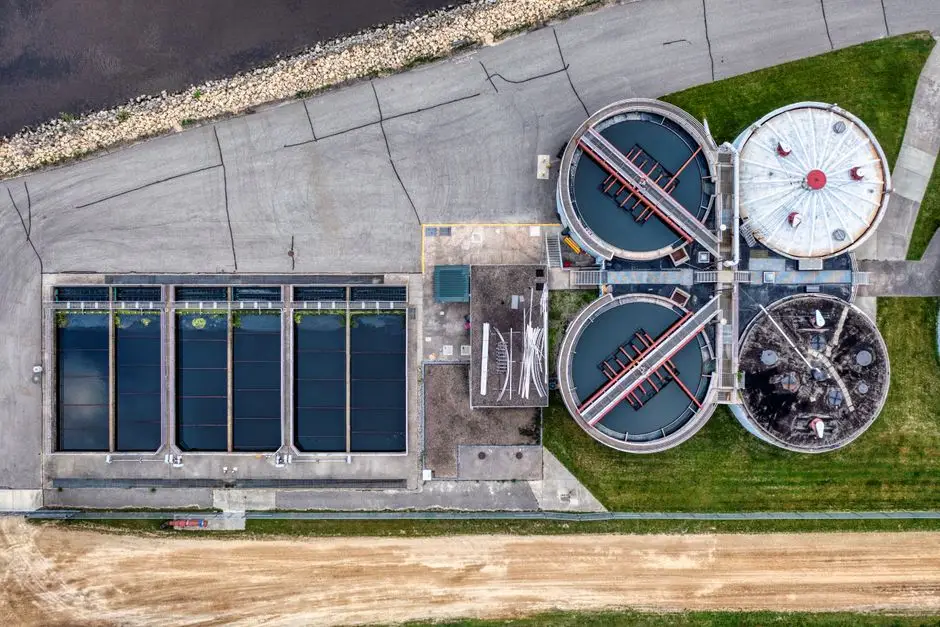
Gravity clarifiers do the opposite job: particles denser than water sink over hours and are raked to a central sludge pocket (S1). Conventional units need 120–240 minutes of retention and surface loading of 1–3 m/h, so a tank that handles 50 m³/h in a DAF footprint needs three to four times the floor area as a clarifier doing the same flow (S5). Lamella packs raise effective settling area inside a smaller tank when particles sink reliably, which is why a HydropureWater high-efficiency sedimentation tank is the natural fit on dense inorganic loads.
Clarifiers genuinely win on heavy grit, sand, and metal shavings, where DAF offers little advantage (S5). The cited mining and quarry case showed 90% solids reduction at lower cost on heavy sediment loads using a clarifier, while a food plant with high oil content running the same comparison got 95% oil removal on DAF against 70% for the clarifier on the same stream (S1). That split — settleable inorganics versus buoyant organics — is the simplest decision rule a procurement team can take into a vendor meeting.
For Pikeville plants, the practical implication is that any process line shedding pre-cook solids, bone fragments, or fruit stones into the waste stream is paying for grit handling whether it sits ahead of a DAF or replaces one. The lowest-cost answer for those streams is almost always a coarse screen plus a clarifier, with a DAF reserved for the FOG-bearing effluent downstream.
DAF vs Clarifier: Side-by-Side for High-FOG Food Wastewater
The single comparison that drives most Pikeville procurement meetings is a food processing case where DAF achieved 95% removal of oils and greases versus 70% for a clarifier on the same stream (S1). On light solids and emulsified FOG, HydropureWater 2025 field data show up to 95% FOG removal and 92–97% TSS removal at 5–15 m/h surface loading (S5). DAF Corp's FC Maximizer line reports 92–98% TSS removal at flows from 10 to 11,000 gpm in round tanks from 6 to 70 ft in diameter, with float thickened to 2–4% solids (S3). The table below lines up the head-to-head numbers a buyer needs in one place.
| Parameter | DAF system | Gravity / lamella clarifier |
|---|---|---|
| FOG / oil removal on light streams | Up to 95% (S1, S5) | ~70% on the same stream (S1) |
| TSS removal on light or emulsified solids | 92–98% (S3, S5) | Lower on buoyant organics; 90% on heavy sediment (S1) |
| Surface loading rate | 5–15 m/h (S5) | 1–3 m/h (S5) |
| Hydraulic retention | 20–60 minutes (S5) | 120–240 minutes (S5) |
| Footprint at equal flow | ~20–25% of a clarifier (S5) | Reference baseline |
| Float / sludge solids | 3–5% float, cake to 25–35% (S5) | 1–2% underflow (S5) |
| Best-fit feed | High FOG, light TSS, emulsified oils | Heavy grit, sand, settleable inorganics |
| Relative CAPEX | Higher, especially SS316 and automated packages (S5) | Generally lower (S1) |
| Relative OPEX | Higher power and polymer; lower haul cost | Lower power; higher haul cost on dilute sludge |
Clarifiers generally have lower operational costs, but DAF is more cost-effective for FOG-dominated streams once haul volume and avoided surcharges are counted (S1). That second clause is the one most vendor brochures leave out, and it is the line item that flips a Pikeville plant's payback calculation.
Which One a Pikeville Factory Should Pick: A Decision Framework
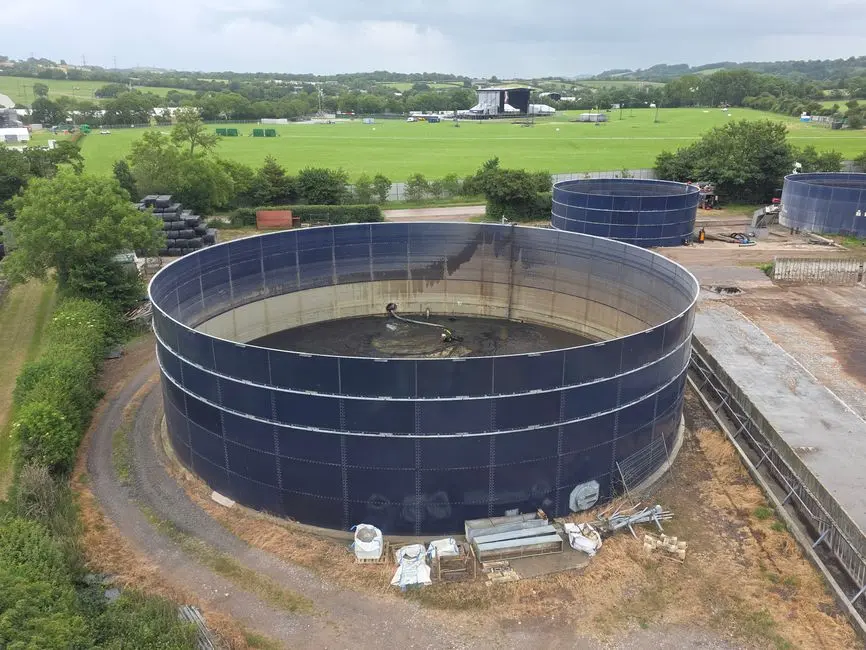
The selection rule from the S5 criteria is direct: choose DAF when FOG or light TSS dominate and retention must stay under about 60 minutes; choose a gravity or lamella clarifier when particles settle reliably and FOG is low. A DAF system for high-FOG food and beverage wastewater is the right call whenever the discharge tariff charges per pound of FOG or TSS, because the 95% removal headline turns directly into avoided surcharges. A lamella clarifier for settleable industrial wastewater is the right call when the stream carries pre-cook solids, bone meal, fruit stones, or grit that needs to come out before any biological step.
Before any vendor quote is signed, run jar tests on peak-hour samples — a wrong technology choice first shows up as cloudy effluent and high polymer spend, not as an obvious design miss (S5). If the stream mixes heavy grit with high FOG — common in poultry and certain dairy lines around Pikeville — a hybrid train is the defensible answer: a rotary mechanical bar screen and lamella primary captures the heavy fraction, and a DAF polishes the FOG-bearing overflow. DAF and clarifier hybrids are a recognized way to address complex wastewater streams that carry both fractions (S1).
For plants inside an existing building with no room to expand the yard, DAF's 20–25% footprint advantage at 5–15 m/h surface loading usually decides the technology on its own (S5). Before final sizing, confirm current POTW discharge limits, any FOG surcharge tariff, and slug-load expectations with the local pretreatment coordinator, because those three numbers set both the design flow and the disposal savings that drive payback.
CAPEX, OPEX, and Payback for a 2026 Installation
Industrial DAF packages in the 4–300 m³/h range typically fall between $50,000 and $500,000 in CAPEX, with the spread driven by SS304 versus SS316 construction, automation level, and whether the saturator, recycle pump, and chemical dosing are inside the quote or added later (S5). OPEX splits across energy at 0.2–0.5 kWh/m³ for the recycle pump and air system, polymer at 0.5–5 mg/L, and routine maintenance, while sludge haul usually dominates the disposal line (S5). The table below captures the line items a procurement manager needs to defend a spend.
| Cost line | Typical range or value | Source |
|---|---|---|
| CAPEX (4–300 m³/h package) | $50,000 – $500,000 | S5 |
| Energy use | 0.2–0.5 kWh/m³ | S5 |
| Polymer dose | 0.5–5 mg/L | S5 |
| Float solids | 3–5% | S5 |
| Clarifier underflow solids | 1–2% | S5 |
| Haul volume reduction | 50–70% versus clarifier sludge | S5 |
| Cited medium food plant disposal saving | Over $40,000 per year | S5 |
| Typical payback band for high-FOG plants | 1.5 to 3 years | S5 |
A practical payback screen is (Annual disposal savings + avoided compliance fines − Annual OPEX) divided by CAPEX, and high-FOG plants commonly reach payback in 1.5 to 3 years using that formula (S5). A cited medium food plant case saved over $40,000 per year in disposal fees after DAF conversion, which is the single most quotable number a Pikeville engineer can put in front of finance (S5). Excluded from the formula — but worth flagging — are avoided production shutdowns and any non-potable reuse of clarified water, both of which strengthen the case when sewer limits are tight or plant water is scarce.
Common Mistakes Pikeville Plants Make When Specifying Either System
Skipping coarse screening upstream is the most common cause of DAF underperformance. Without a rotary mechanical bar screen ahead of the unit, debris plugs nozzles and recycle pumps, and removal drops long before the operator notices (S5). Letting pH drift outside 6.5–8.5 quietly breaks the chemistry, because most polymers form weak flocs in that band that shear under buoyancy and sink back into the clear well (S5).
Polymer charge is the next frequent miss. Always confirm with jar tests on peak samples, because a wrong charge yields cloudy effluent and thin float, and the cost shows up in polymer spend rather than in any single instrument reading (S5). Running saturator pressure outside the 4–6 bar band, or starving recycle, collapses the bubble supply and sinks solids, which is why annual calibration of pressure and flow instruments is the cheapest insurance a plant can buy.
The procurement mistake is treating a CAPEX quote as a tank-only number. A DAF system is the full train — chemical dosing, saturator, recycle pumps, clarifier tank, and sludge handling — and pumps and saturators drive much of the installed cost and the achievable 92–97% TSS removal (S5). A PLC-controlled chemical dosing system sized to the actual flow is part of that quote, not an option to add later.
Frequently Asked Questions
What size DAF system does a small Pikeville food plant actually need?
Sizing depends on the design flow in m³/h, the peak-to-average ratio, and the FOG and TSS targets set by the local POTW. The first step is a wastewater analysis and jar test on a peak sample, followed by locking surface loading at 5–15 m/h and retention at 20–60 minutes (S5). A vendor should be asked to confirm those design numbers in writing against your permit limits, because a unit that is undersized on peak flow is the most common reason FOG surcharges continue after a DAF install.
How much should a 2026 DAF installation realistically cost a Pikeville plant?
Industrial DAF packages in the 4–300 m³/h range typically fall between $50,000 and $500,000 in CAPEX, with the spread driven by SS304 versus SS316 construction, automation, and whether the saturator, recycle pump, and chemical dosing are inside the quote (S5). OPEX adds energy at 0.2–0.5 kWh/m³ and polymer at 0.5–5 mg/L (S5). Buyers should request a written scope that lists every line item — tank, saturator, recycle pump, chemical dosing, controls, and sludge handling — so quotes can be compared on equal terms.
Can a Pikeville plant run a DAF and a clarifier together on the same train?
Yes, and for plants with mixed grit and FOG — typical of poultry and some dairy lines — a hybrid train is the defensible configuration. A coarse screen plus lamella primary captures the heavy settleable fraction, and a DAF polishes the FOG-bearing overflow (S1). The benefit is that each technology does the job it is sized for, instead of forcing one vessel to handle both duties.
What compliance risk should a Pikeville buyer raise with a DAF or clarifier vendor?
Ask the vendor to show how the proposed unit holds the local POTW's FOG and TSS limits during a peak-hour slug, because US EPA categorical pretreatment programs still set expectations that passive settlers miss during slug loads (S5). Request a defensible operating envelope for pH (6.5–8.5), saturator pressure (4–6 bar), and polymer dose (0.5–5 mg/L), and confirm that annual calibration of pressure and flow instruments is part of the service plan (S5). Without those written answers, the plant carries the compliance risk even after a successful install.