Why Tracy Food & Beverage Wastewater Is Fundamentally a Flotation Problem
Food and beverage (F&B) processing wastewater in Tracy, California, carries fats, oils, and grease (FOG), total suspended solids (TSS), and biochemical oxygen demand (BOD) loads that conventional gravity settling handles poorly, as most contaminants are lighter than water or emulsified (Ecologix, 2025-2026). Ecologix's F&B industry page notes that these concentrations from processing, cleaning, and production drive municipal discharge surcharges, environmental non-compliance, and operational headaches, framing the surcharge exposure as a direct threat to a plant's bottom line and reputation.
Unlike conventional sedimentation, dissolved air flotation (DAF) excels at removing lighter, emulsified pollutants that tend to float rather than settle, which is the dominant particle behavior in food processing streams. Seven Seas Water's industrial applications page adds a second economic lever: removing FOG and suspended solids via DAF enables recovery of valuable by-products such as fats and oils for repurposing, which matters for Tracy plants under pressure on operating margins. Reynolds & Bauhm's DAF research page specifically calls out dairy, meat processing, and snack food production as core DAF sub-sectors, and notes that DAF can also function as a secondary clarifier downstream of MBBR or anaerobic digestion for biological sludge separation, which is the configuration most Tracy F&B plants will see in vendor proposals.
DAF vs. Clarifier: Head-to-Head for F&B Streams
The two technologies separate on fundamentally different physics, dictating the procurement decision. DAF uses a pressurized recycle stream saturated with air to generate 30–50 micron micro-bubbles that attach to floc and rise to the surface, while clarifiers rely on gravity settling of denser particles (Reynolds & Bauhm, 2025-2026). These operational differences for a Tracy F&B engineer are summarized in the table below.
| Attribute | Dissolved Air Flotation (DAF) | Gravity / Lamella Clarifier |
|---|---|---|
| Separation mechanism | 30–50 µm micro-bubbles attach to floc and float it (Reynolds & Bauhm) | Gravity settling of denser particles |
| Relative speed | Up to 5× faster than gravity settling (Reynolds & Bauhm) | Baseline gravity settling rate |
| Footprint for same flow | Significantly smaller tank (Reynolds & Bauhm) | Larger footprint; lamella plates shrink it but do not match DAF |
| FOG / emulsified oil handling | Preferred; captures light, emulsified pollutants (Ecologix) | Poor; emulsified FOG does not settle |
| Energy use | Continuous for recycle pump and air compressor (Reynolds & Bauhm) | Passive; minimal electrical load |
| Sludge character | Concentrated floating blanket, skimmed off | Bottom sediment, scraped to a sump |
| Best-fit influent | High FOG, variable, emulsified F&B streams (Ecologix; Reynolds & Bauhm) | Heavy, settleable solids with low FOG |
Ecologix's F&B page reinforces the FOG row directly: DAF is preferred in F&B precisely because it captures lighter, emulsified pollutants that do not settle well in a clarifier. The energy tradeoff is also explicit in Reynolds & Bauhm's research: DAF requires continuous energy for recycle pumps and compressors, trading higher energy use for compactness and faster separation, while clarifiers are passive but larger. The sludge row matters operationally, because float-skimmed DAF sludge dewaters differently on a plate and frame filter press than scraper-collected clarifier underflow, affecting hauling costs.
2026 Drivers Pushing Tracy F&B Plants Toward DAF
The operating environment for a 2026 Tracy F&B plant is actively incentivizing DAF adoption. Reynolds & Bauhm's research page states that for facilities facing municipal surcharge structures based on TSS and BOD loading, DAF systems typically achieve project benefits within 12–24 months through compliance savings alone, which is directly relevant to Tracy plants discharging to the City of Tracy POTW under SJRWQCB Region 5 oversight. Industrial wastewater is the dominant DAF market segment, accounting for over 45% of total global DAF system output in 2024, reflecting broad F&B adoption. Ecologix frames tightening discharge surcharges for FOG, TSS, and BOD as a direct threat to the F&B bottom line, not just a compliance issue. DAF effluent is also suitable for non-potable reuse in process wash-down, cooling tower makeup, and irrigation, supporting the circular water economy goals that many 2026 corporate sustainability programs require. A buyer should request from any short-listed supplier: pilot or treatability study data on the actual plant stream, an Air-to-Solids (A/S) ratio justification, a polymer program matched to FOG and TSS variability, and an integration plan with downstream biological or reuse steps. Specific Tracy POTW surcharge rates and SJRWQCB numerical limits must be pulled from the City of Tracy's current discharge ordinance and the buyer's actual surcharge bills before the business case is finalized.
Inside a Food-Grade DAF: Design Metrics That Matter in 2026
A DAF quote is incomplete if it only lists flow rate and tank diameter. The metrics below are essential for a Tracy F&B engineer to see on every proposal datasheet, based on Reynolds & Bauhm's research.
| Parameter | Typical Range or Target | Why It Matters for F&B |
|---|---|---|
| Micro-bubble size | 30–50 µm (Reynolds & Bauhm) | Defines the 'whitewater' that scatters light; smaller bubbles lift fine emulsified FOG more effectively |
| Hydraulic loading rate (float zone) | 4–12 gpm/ft² (Reynolds & Bauhm) | Confirms the unit is sized on flux, not just pipe size |
| Solids loading rate | Expressed in lbs/ft²/hour (Reynolds & Bauhm) | Captures peak-shift events (CIP, seasonal runs) that flow alone misses |
| Recycle rate (A/S basis) | 15%–30% of forward flow standard; higher for high-strength F&B (Reynolds & Bauhm) | Drives air supply sizing and energy use |
| Floc contact angle | 40–80° optimized (Reynolds & Bauhm) | Outside this window bubble-particle attachment fails; polymer program is not optional |
| Controls | SCADA with real-time dosing and recycle trim (Reynolds & Bauhm) | F&B streams swing with CIP cycles and seasonal SKUs |
| Throughput envelope | 4–300 m³/h across 13 standard models on a HydropureWater DAF system (4–300 m³/h, 13 standard models) | Confirm the offered model is rated for peak FOG load, not just average flow |
Bubble-particle attachment is the heart of DAF performance, and Reynolds & Bauhm's research page is explicit that it requires floc with an optimized contact angle of 40–80° and is enabled by coagulation and flocculation chemistry, making the pairing of a DAF with a HydropureWater automatic chemical dosing system standard practice. SCADA integration matters for F&B lines that swing with clean-in-place cycles and seasonal production, because hand-tuned polymer dosing cannot hold the 40–80° window through a production shift.
When a Clarifier Still Wins — and How to Decide
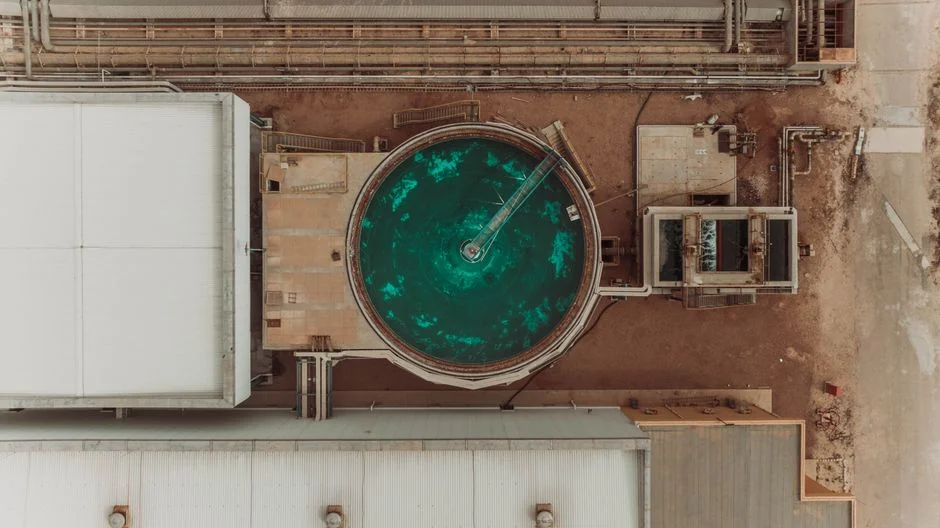
A clarifier is the right primary choice when the stream is dominated by heavy, settleable inorganic or biological solids and FOG is a minor fraction (Reynolds & Bauhm, 2025-2026). Lamella or high-rate sedimentation tanks use inclined plates to shrink footprint and reach 20–40 m/h surface loading with up to 30% lower chemical use, but they still depend on gravity settling and will not float emulsified FOG. For most Tracy F&B streams, including dairy, snack food, beverage bottling, and meat processing, the influent profile is light, oily, and variable, which tilts the decision toward DAF (Ecologix; Reynolds & Bauhm). A practical decision rule: if your FOG-to-TSS ratio is high and your product mix changes seasonally, specify DAF; if your stream is mostly settleable grit and biomass with little oil, a HydropureWater lamella clarifier can do the job at lower energy cost. Avoid selecting a clarifier for a stream that looks settleable on a jar test but emulsifies during a CIP cycle, as emulsified FOG is the fraction a gravity unit cannot recover.
Integrating DAF With the Rest of a 2026 F&B Treatment Train
DAF is one block in a larger treatment train, and the downstream choices affect both capex and the reuse case. Reynolds & Bauhm's research page notes that DAF pairs naturally as a pretreatment step ahead of biological polishing, with MBBR and anaerobic digestion commonly following for BOD reduction, and that DAF can function as a secondary clarifier for biological sludge separation. DAF float sludge is thick and skimmed, so a HydropureWater plate and frame filter press for sludge dewatering is the standard fit to produce a handleable cake for hauling or rendering. For Tracy plants targeting water reuse, DAF effluent can feed cooling tower makeup or wash-down loops, but residual organics typically require biological or membrane polishing first. Automatic chemical dosing of coagulants and flocculants is essential to keep bubble-particle attachment inside the 40–80° contact-angle window, placing the dosing system next to the DAF on the P&ID. Where space is tight, a HydropureWater MBR integrated wastewater treatment unit can collapse the biological and membrane steps into a single skid downstream of the DAF.
Frequently Asked Questions
Is a DAF or a clarifier the right primary for a Tracy F&B plant in 2026?
For a Tracy F&B stream dominated by FOG, emulsified cleaners, or light suspended solids, DAF is the correct primary because it floats the pollutants that a clarifier cannot settle (Ecologix). Choose a clarifier only when the stream is heavy, settleable, and low in FOG, which is uncommon in dairy, snack, beverage, and meat lines.
What payback window should a buyer expect from a DAF retrofit?
Reynolds & Bauhm's research page estimates DAF project benefits at 12–24 months for facilities on municipal TSS/BOD surcharge structures, driven by compliance savings. Buyers should request their own surcharge schedule from the City of Tracy and apply it to a vendor's projected removal efficiency to size the actual dollar benefit.
What should a buyer verify in a DAF vendor proposal before signing a PO?
Confirm the unit is sized on hydraulic and solids loading rate, not just flow; check the recycle rate and A/S ratio for the actual FOG load; require a polymer program that holds floc contact angle in the 40–80° window; and confirm SCADA integration for CIP and seasonal swings (Reynolds & Bauhm).
What is the lead-time and sizing risk a Tracy F&B project carries in 2026?
Lead time and sizing are project-specific, so request a written delivery date tied to the pilot or treatability study and require the vendor to rate the offered DAF model for peak FOG load rather than average flow, as F&B streams fluctuate during CIP and seasonal runs (Reynolds & Bauhm).
Related Equipment
- HydropureWater DAF system (4–300 m³/h, 13 standard models) — specifications, capacity range, and technical data
- HydropureWater automatic chemical dosing system — specifications, capacity range, and technical data
- HydropureWater plate and frame filter press for sludge dewatering — specifications, capacity range, and technical data
- HydropureWater lamella clarifier — specifications, capacity range, and technical data