The Regulatory Stack a Darlington Mining/Metals Plant Actually Faces
A mining or metals operation near Darlington, US that discharges wastewater to a sanitary sewer is sitting under three stacked regulatory layers at once, and a defensible 2026 basis of design has to address every one of them — not just the most visible one. The bottom layer is 40 CFR Part 436, the federal Mineral Mining and Processing Effluent Guidelines; EPA promulgated the rule in 1975 and amended it in 1976, 1977, 1978, and 1979, and the limits for active subparts are incorporated into the facility's NPDES permit (EPA, 2026-02, as cited in HydropureWater's 2026 Tenino reference).
The middle layer is 40 CFR Part 403, the general pretreatment regulations and any applicable categorical standards, which prohibit pass-through and interference at the receiving POTW (EPA, 2026-02). The top layer is the receiving POTW's technically based local limits, numeric values developed under EPA's Local Limits Development Guidance (EPA 833-R-04-002A, July 2004) using the MAHL/MAIL methodology (City of Circleville WWTP Local Limits Report, 2020-06; EPA Local Limits Development Guidance).
For a Darlington-area dimension-stone, aggregate, or lithium-exploration site, the federal floor is not always numeric. Several subparts of 40 CFR Part 436 are reserved and carry no current numeric federal effluent limits: Dimension Stone (Subpart A), Lightweight Aggregates (Subpart H), Lithium (Subpart U), Ball Clay (Subpart AH), Feldspar (Subpart AI), Talc/Steatite/Soapstone/Pyrophyllite (Subpart AJ), and Garnet (Subpart AK) (EPA, 2026-02). A small operator in that position must first confirm whether their mineral falls under an active subpart with numeric limits or under a reserved subpart, because the answer determines whether federal numbers exist at all before the local layer applies. No public source publishes the name of the receiving POTW for a Darlington mining site or its current local limit values; the operator must obtain the POTW's sewer use ordinance, current TBLL report, and any hauled-waste policy directly before sizing a treatment train. The stack consequence is direct: on a reserved subpart, the local POTW's limits — not federal numbers — are the binding compliance constraint.
| Layer | Authority | What it sets | Binding for Darlington when… |
|---|---|---|---|
| Bottom — Federal effluent guidelines | 40 CFR Part 436 (EPA, 2026-02) | Numeric effluent limits for active subparts; reserved subparts carry no current numeric limits | Active subpart only (e.g., copper, sand and gravel, etc.) |
| Middle — General pretreatment | 40 CFR Part 403 (EPA, 2026-02) | Prohibitions on pass-through and interference at the receiving POTW | Always, regardless of subpart status |
| Top — Local limits | POTW TBLL report under EPA 833-R-04-002A, July 2004 | Site-specific numeric limits for metals, pH, TSS, ammonia | Always; binding for reserved subparts |
How a POTW Sets the Local Limit Your Plant Will Be Measured Against
Every POTW that accepts industrial discharge runs a pretreatment program, and the local limit you receive is not an arbitrary number; it is the output of a documented calculation that the same POTW applies to all of its industrial users. The five-step MAHL process is defined in EPA's Local Limits Development Guidance (EPA 833-R-04-002A, July 2004), and the City of Circleville WWTP Local Limits Report (2020-06) is one worked example a Darlington engineer can read to see the methodology in practice.
Step 1 is the Pollutants of Concern screen. The POTW reviews the standard national POCs — arsenic, cadmium, total chromium, dissolved hexavalent chromium, copper, free cyanide, lead, mercury, molybdenum, nickel, silver, and zinc — plus the conventionals (BOD, TSS, ammonia), and adds any pollutant required by its own NPDES permit or by water quality, sludge quality, or air quality criteria (City of Circleville WWTP, 2020-06). Step 2 is data collection: influent, effluent, and sludge sampling, flow data, and detection-limit handling per EPA Local Limits Development Guidance Appendices R and V. Where the POC is detected less than half the time, surrogate removal efficiencies from Appendix R are used, and analyses reported below the detection limit are set equal to the MDL (City of Circleville WWTP, 2020-06).
Step 3 is the MAHL calculation, the federal equation that converts the POTW's own effluent limit into an allowable headworks loading. The MAHL formula is MAHL lbs/day = (NPDES limit mg/L × Flow MGD × 8.34) / (1 − Removal Efficiency as a decimal) (City of Circleville WWTP, 2020-06). Step 4 is the Maximum Allowable Industrial Loading (MAIL): the POTW subtracts uncontrolled sources, hauled waste, and a safety factor, then allocates the remainder to industrial users either by mass, concentration, or a hybrid approach. Step 5 is collection-system concerns, which the POTW layers back on top. The practical implication for a Darlington operator is that when a local limit looks aggressive, the MAHL/MAIL trail is the place to ask questions, because the same calculation governs the whole POTW's discharge, not just the mining industry.
Characterize the Influent Before You Talk to a Treatment Supplier

A copper mine, a coal operation, and a dimension-stone quarry produce fundamentally different wastewaters and cannot share a single default treatment train, which is why a Darlington operator must characterize each stream separately before asking a supplier for a generic mining skid (HydropureWater, 2025-09, drawing on AMPAC USA's mining water reference). Four common wastewater categories show up in the literature. Acid mine drainage is the most prevalent mining water quality problem and arises wherever sulfide minerals (pyrite, pyrrhotite) in waste rock and tailings are exposed to oxygen and water, producing sulfuric acid that leaches iron, manganese, copper, zinc, arsenic, and cadmium at concentrations far exceeding regulatory limits.
Process water from ore processing — flotation, heap leaching, cyanide gold extraction, and chlorination — contains process chemicals and dissolved ore constituents, typically high TDS, often with cyanide, ammonia, or chloramines depending on the circuit. Tailings pond effluent carries fine solids, processing chemicals, and leached metals. Dewatering discharge from underground mines or open pits is geology-dependent; in some settings it is relatively clean, in others it carries significant metal loading. The trap to avoid is the "one stream fits all" assumption, because mining operations generate some of the most chemically complex wastewater of any industrial sector (HydropureWater, 2025-09, citing AMPAC USA).
The inputs to collect before sizing any equipment are straightforward: peak and average flow in m³/h, influent pH, a full metal profile from a representative sampling round (not a single grab), TDS, and any process-reagent residuals. For operations that already run an auto-dosing for wastewater treatment engineering program in 2026, the chemistry setpoint data from that system is a useful sanity check on the influent numbers.
The Six-Step Unit-Operation Train That Maps to 2026 Best Practice
A defensible unit-operation sequence for a 2026 Darlington-area mineral mining or aggregate operation has six steps, and each one maps to a specific influent characteristic and a specific discharge parameter it protects. The sequence is the same in the literature and in commercial flow sheets: pH correction first, then coagulation, then solids separation, then multimedia filtration, then a membrane polish when salts or trace metals persist, with sludge dewatering on the back end (HydropureWater, 2025-11, citing Genesis Water Technologies; PMC review, 2024-02).
Step 1 is pH correction. Raise pH so dissolved metals precipitate as hydroxides and gypsum drops out; lime raise to pH >10 before thickening is the standard (PMC review, 2024-02). The reagent train is delivered by an automatic chemical dosing system for lime, coagulant, and flocculant, with PLC control and pre-wiring so the dosing ties into the same HMI the rest of the train reports through. Step 2 is coagulation: aggregate suspended solids and fine metal particles into settleable or floatable flocs, with the coagulant and flocculant matched to the floc density that drives the next clarification step (HydropureWater, 2025-11, citing Genesis Water Technologies).
Step 3 is solids separation. A DAF system for mining wastewater solids separation is preferred when the floc is buoyant or the influent carries oils and floating fines. A lamella clarifier for metal hydroxide sludge is preferred when sludge volume and footprint are the constraint. Step 4 is multimedia filtration to drop turbidity and colloids to protect downstream membranes; the basis of design is target SDI after the filter, not inlet turbidity. A multi-media filter for RO pretreatment is the workhorse for that job. Step 5 is membrane polish. UF handles fine colloids; an industrial RO system for mining wastewater handles dissolved salts and metals at >99% rejection, with 50–70% recovery on AMD feed and 70–85% recovery as the RO stage of a ZLD train (HydropureWater, 2025-09, citing AMPAC USA). Step 6 is sludge dewatering: chemical precipitation produces metal-hydroxide sludge that requires a filter press for mining sludge dewatering, sized to the cake volume from the precipitation train.
Controls are not an afterthought. A PLC/HMI with continuous pH, flow, and conductivity is what ties chemistry setpoints to self-monitoring records the POTW requires for permit compliance (LiqTech, 2025-08). For reference proof points: Nexom's Blue PRO reactive filtration achieved copper to 8 µg/L (0.008 mg/L) in a full-scale mining installation, demonstrating that reactive media can drive metals to the microgram-per-liter range when ultra-low limits apply (Nexom, 2025).
| Step | Unit operation | Influent problem it solves | Discharge parameter it protects |
|---|---|---|---|
| 1 | pH correction | Dissolved metals, gypsum | Metals precipitation (pH >10 lime raise) |
| 2 | Coagulation / flocculation | Suspended solids, fine metal particles | TSS, settleable metals |
| 3 | DAF or lamella clarification | Buoyant or heavy floc, oil/fines | TSS, sludge volume |
| 4 | Multimedia filtration | Turbidity, colloids | RO feed SDI |
| 5 | UF + RO polish | Dissolved salts and metals | TDS, trace metals (>99% rejection) |
| 6 | Filter press dewatering | Metal-hydroxide sludge | Cake volume, solids handling |
Meeting the Local Limits Versus Hitting a Reuse Target
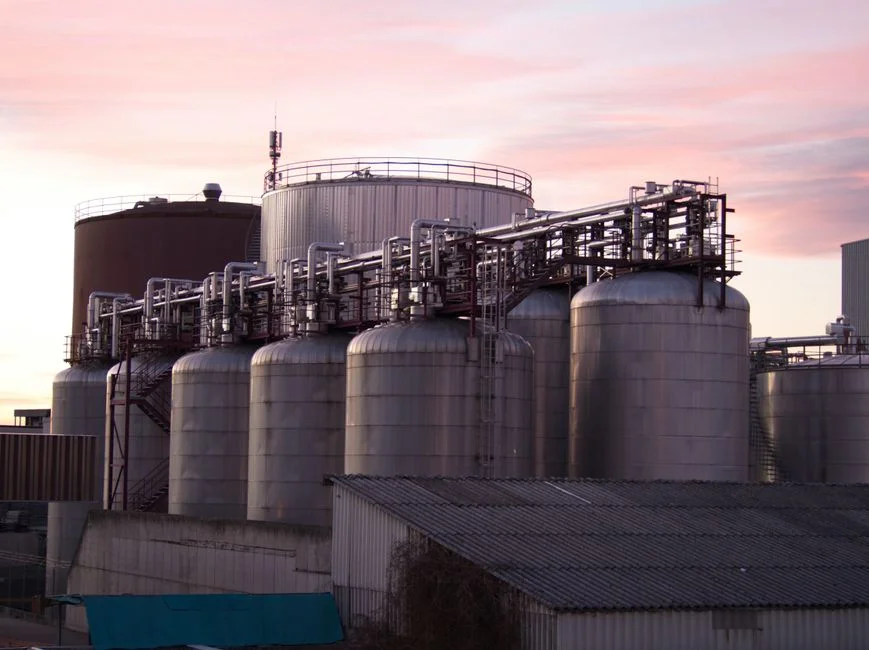
Sizing logic is "reuse as much as economics allow, then polish the rest to sewer quality," and the split is what determines whether the RO is sized for sewer polishing, partial reuse, or full zero-liquid discharge. RO-enabled internal reuse can reduce freshwater consumption by an estimated 40–60% versus once-through operation, which is the lever that turns compliance capex into a payback line for a Darlington-area operation (HydropureWater, 2025-09, citing AMPAC USA). Where ZLD is required, RO handles the bulk water recovery — 70–85% range cited for a ZLD RO stage — before the more energy-intensive thermal stages finish the concentrate, and suppliers should be asked for a recovery curve, not just a nameplate figure.
Any volume not recycled still has to meet local limits on metals, pH, and TDS, so even a reuse-led design must keep the pretreatment train intact on the sewer-discharge leg. For operations adding reuse to an existing train, an ultrafiltration system for RO pretreatment is the typical addition ahead of the RO skid. The sizing decision should be made against the highest anticipated daily discharge (peak), not the average, because peak flows are what drive equalization basin volume and pump selection (HydropureWater, 2025-09).
What to Put in a 2026 Supplier Request — and What No Public Source Can Tell You
The basis-of-design inputs a Darlington operator controls and must supply are clear: peak and average flow in m³/h, influent pH and full metal profile from a representative sampling round, the local POTW's discharge limits for metals, pH, and TSS, and the desired recovery percentage if reuse is in scope (HydropureWater, 2025-09). A comparable phases-of-building-a-water-treatment-plant 2026 engineering roadmap walks through the same checklist from a project-execution angle.
What no public source publishes for Darlington specifically are the inputs the operator must obtain from the local POTW: the POTW name, its current technically based local limits report, the sewer use ordinance, the hauled-waste policy, and any special conditions on mining or metals discharges. These should be requested in writing before equipment selection, because the local limit values drive the chemistry targets and the membrane selection. For a parallel regional reference, the Tenino mining pretreatment 2026 reference and the Maple Valley mining pretreatment 2026 reference walk the same regulatory stack for adjacent jurisdictions and show the same gap — the binding numbers come from the local POTW, not from any public database.
The supplier-selection check is to confirm the proposed scope ties chemistry dosing, PLC/HMI controls, and the membrane skid into a single integrated control system, and to verify the supplier has installed the same unit operations at flows in the same order of magnitude as the Darlington site (LiqTech, 2025-08). No published price points exist for a complete pretreatment train in the supplied research; a buyer has to request a quotation against their own basis of design rather than rely on a published range. The capex vs. opex framing matters: a DAF- or lamella-based train with an RO polish and a filter press is the standard 2026 package, and the opex question — lime consumption, polymer dose, membrane replacement, energy — is what differentiates competitive quotes more than headline equipment price.
Frequently Asked Questions
Is 40 CFR Part 436 the only federal rule a Darlington mining plant must satisfy?
No, it is the bottom layer. Operators must also satisfy 40 CFR Part 403 general pretreatment, NPDES permit conditions, and the receiving POTW's technically based local limits (HydropureWater, 2025-09; City of Circleville WWTP, 2020-06; EPA Local Limits Development Guidance, 2004-07).
What does a defensible 2026 treatment train look like and what unit operations does it include?
pH correction → coagulation → DAF or lamella → multimedia filtration → RO polish → sludge dewatering, with >99% rejection on the RO stage for dissolved metals and salts (HydropureWater, 2025-09, citing AMPAC USA).
How should a Darlington operator size a treatment train in 2026, and what is the typical cost range?
Size against the highest anticipated daily discharge (peak), not the average. The supplied research does not publish price points for a complete pretreatment train, so a buyer should request a quote against their own basis of design rather than rely on a published range (HydropureWater, 2025-09; gap flagged).
How long does it take to design, build, and commission a six-step pretreatment train, and what is the typical lead time?
Lead times vary by scope, but a PLC-tied DAF/lamella + multimedia + RO + filter press package from a single controls integrator is the shortest path to a defensible 2026 commissioning (LiqTech, 2025-08). No specific lead-time numbers are published in the supplied research; request a project schedule tied to the Darlington site's permit timeline.
What is the compliance risk of under-treating mining wastewater before sewer discharge, and what is the supplier-selection check?
Risk is permit revocation, surcharges, and consent-order penalties from the local POTW. The supplier check is integrated controls and matching flow-scale references; for example, Nexom's Blue PRO achieved copper to 8 µg/L (0.008 mg/L) at a full-scale mining installation, demonstrating that reactive media can hit microgram-per-liter limits when ultra-low limits apply (Nexom, 2025; HydropureWater, 2025-09).