Why Sauget Mining and Metals Plants Face a Real DAF-vs-Clarifier Choice in 2026
Sauget sits in a heavy-industrial corridor along the Mississippi River in St. Clair County, Illinois, with active mining, smelting, and metal-finishing operations that generate wastewater streams carrying suspended solids, oils and greases, and dissolved metals. Those discharges generally flow to the local sanitary sewer and are governed by the Metro-East Sanitary District sewer-use ordinance, so pretreatment decisions are tied directly to compliance, surcharges, and enforcement risk.
Kemco Systems documents dissolved air flotation (DAF) as a proven process for industrial wastewater containing oils, greases, suspended solids, BOD, COD, and metals, and lists metal finishing among the typical DAF applications. A lamella clarifier is sized around settleable-solids flux across inclined plates rather than bubble attachment, which makes it a fundamentally different design problem. The first decision for a Sauget plant is not a brand preference; it is influent characterization: is the dominant load floatable, colloidal, and oily, or is it settleable mineral fines? Suppliers in both camps, including ClearStream and Kemco, build equipment selection around jar testing and pilot work on the actual plant stream, not around generic capacity charts.
How a DAF Actually Removes Solids, Oils, and Metals
A DAF clarifies wastewater by dissolving air in a pressurized recycle stream and then releasing that air at atmospheric pressure inside a flotation tank, where it forms micro-bubbles that attach to suspended matter and float it to the surface for skimming (Kemco Systems). The bubble attachment only works if upstream chemistry does its job: coagulant and flocculant dosing is what causes colloidal particles and fine metal-hydroxide floc to clump into a size and surface charge that the bubbles can lift. Without that chemistry, the bubbles pass through without capturing the target solids.
DAF is applied across oil refineries, food processing, industrial laundries, paper mills, and metal finishing, with Kemco describing the technology as targeting "oils, greases, and suspended solids, and producing quality water safe for discharge to sewer or reuse back into your plant process." ClearStream supplies both circular and rectangular configurations: circular units are typically specified for installations under about 50 ft in diameter using a torque-tube drive, while rectangular units are often shipped fully shop-assembled with integral coagulation and flocculation chambers and are well suited to retrofits inside existing concrete basins (ClearStream). The float skimmed off a DAF is normally routed to a filter press for dewatering, which lowers hauling volume and disposal cost (Kemco). For a Sauget plant evaluating a DAF system for Sauget mining wastewater, the practical implication is that chemistry, recycle pressurization, and downstream sludge handling are inseparable from tank selection.
How a Lamella Clarifier Settles Solids Differently
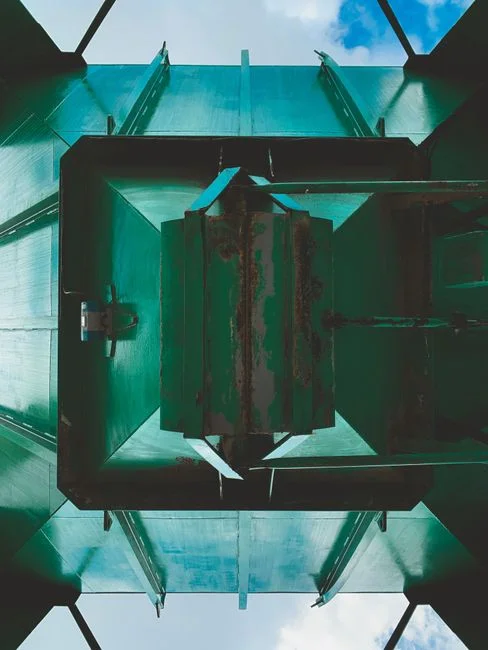
A lamella clarifier uses a stack of inclined plates to multiply the effective settling area inside a compact footprint. The plates give settleable particles a short, sloped path to a collection surface, and the clarified water rises counter-current through the plate pack. HydropureWater's lamella clarifier for Sauget mining wastewater is rated for surface loading rates of 20–40 m³/m²/h and integrates sludge recirculation and flocculation, which is documented to reduce chemical consumption by up to 30%.
Because the mechanism is gravity settling rather than bubble attachment, a lamella clarifier is structurally favored when the dominant solids fraction is settleable rather than colloidal or oily. A lamella does not generate a separate float layer, so any residual oils and greases pass through to downstream processes — a key differentiator from DAF for metal-bearing streams that contain machining emulsions or process oils. A lamella is also commonly positioned as a polishing step after chemical precipitation of dissolved metals, where the precipitated metal-hydroxide floc has already been grown large enough to settle. Where influent variability is high, the lamella's smaller footprint and higher loading rate can be decisive in a constrained plant layout. Engineers comparing designs often start from the lamella clarifier engineering specifications rather than a vendor's flow number alone, which is the approach outlined in our lamella clarifier engineering specifications reference.
DAF vs Clarifier: Side-by-Side Comparison for Mining/Metals Streams
The table below pairs the two technologies on the parameters a Sauget project engineer is most likely to weigh during specification. Where the suppliers and the catalog data overlap, the values are tied to the named source; where a parameter is qualitative, it is left as a design consideration rather than a fabricated number.
| Parameter | Dissolved Air Flotation (DAF) | Lamella Clarifier (Inclined Plate Settler) |
|---|---|---|
| Primary removal mechanism | Micro-bubbles attach to flocculated, oily, and colloidal particles and float them to the surface (Kemco Systems) | Gravity settling of solids across inclined plates, with sludge recirculation integrated (HydropureWater product data) |
| Best-fit influent | Floatable, colloidal, oily, and metal-bearing streams including metal finishing (Kemco Systems) | Streams dominated by settleable mineral fines and precipitated metal-hydroxide floc |
| FOG handling | Skimmed as a float layer; core DAF function (Kemco Systems; ClearStream) | No dedicated float-removal step; FOG passes downstream or accumulates on the surface |
| TSS capture | Effective on suspended solids when coagulant/flocculant chemistry is properly dosed (Kemco Systems) | Effective on settleable TSS; less effective on colloidal fractions without upstream chemistry |
| Metals co-removal | Documented for metals in industrial wastewater when paired with pH adjustment and coagulation (Kemco Systems) | Polishes precipitated metal-hydroxide floc downstream of a precipitation step |
| Footprint | Larger tank per unit flow; rectangular and circular configurations available, with rectangular units retrofit-friendly (ClearStream) | Compact for high-flow settleable streams at 20–40 m³/m²/h (HydropureWater product data) |
| Sludge handling | Float skimmed and normally dewatered through a filter press (Kemco Systems) | Underflow sludge, typically thicker; also dewaterable through a filter press |
| Capacity envelope | 4–300 m³/h across 13 standard models (HydropureWater DAF system catalog data) | Scales with plate area; sized from the 20–40 m³/m²/h surface loading metric (HydropureWater product data) |
| Pre-design step | On-site visits, testing, and pilot studies recommended (Kemco Systems; ClearStream) | Jar testing for coagulant/flocculant selection, then pilot or full-scale trial |
Both technologies depend on upstream pH control and chemical dosing. Kemco describes accurate pH control as vital to any wastewater treatment system, notes that discharge pH limits vary by region, and frames automatic acid/caustic addition as the preferred approach. Vendor selection should always be driven by jar testing and pilot work on actual process wastewater, which is a step both Kemco and ClearStream explicitly recommend.
Choosing for Sauget: When to Pick DAF, Clarifier, or Both
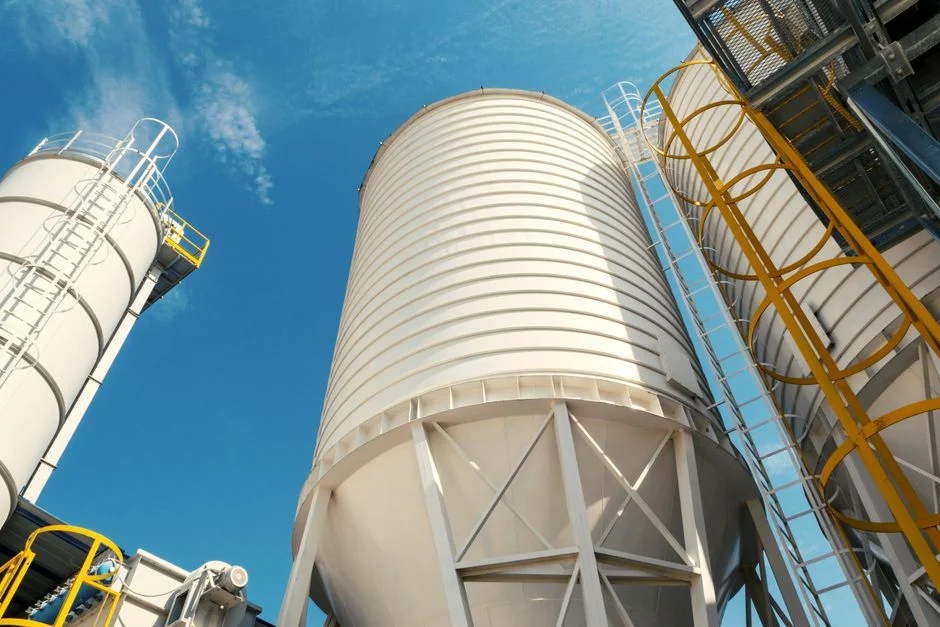
For a Sauget-area facility, the technology choice tracks the dominant influent fraction rather than the equipment brand. If the load is floatable or colloidal — emulsified oils from machining, fine metal-hydroxide floc, process FOG — a DAF system for Sauget mining wastewater is the better primary clarifier because it skims what a gravity settler cannot capture. If the load is dominated by settleable mineral fines and the site has a high flow with a constrained footprint, a lamella clarifier for Sauget mining wastewater is structurally favored because the 20–40 m³/m²/h loading metric delivers a much smaller tank than an equivalent DAF.
Many mining and metals sites run a DAF as primary treatment with a clarifier or thickener as a polishing or equalization step. Discharge to the Metro-East Sanitary District is governed by a sewer-use ordinance, and exceedances of TSS, FOG, pH, or metals limits typically carry surcharges and enforcement risk, which is why pH control and chemical dosing must be designed in from the start. Before committing to a vendor and a model, Sauget plants should request a jar test and a DAF or clarifier pilot on actual process wastewater, then size chemical dosing from those results using an automatic coagulant and flocculant dosing package.
2026 Implementation Checklist for Sauget Mining/Metals Plants
- Characterize influent: TSS, FOG, total metals for the suite regulated locally, pH range, and flow variability — a step both Kemco and ClearStream require before equipment selection.
- Run jar tests for coagulant and flocculant selection, because DAF performance is chemistry-driven, not just hardware-driven (Kemco).
- Compare DAF and lamella footprints using 20–40 m³/m²/h as the lamella benchmark, and size the DAF from the 4–300 m³/h standard range of packaged units.
- Plan sludge handling with a filter press for DAF float and clarifier underflow, sized to the combined dry-solids load (Kemco).
- Confirm pH control and automatic chemical dosing are integrated, since pH is fundamental to both metal precipitation and floc formation (Kemco).
- Document the Metro-East Sanitary District discharge limits and confirm the compliance pathway before placing the order, since pretreatment compliance is the gating issue described in our mining pretreatment compliance guide and the broader US mining and metals pretreatment compliance reference.
Frequently Asked Questions
What is the realistic budget range for a DAF or a lamella clarifier at a Sauget mining or metals plant in 2026?
Neither the supplied research nor the catalog data publishes a Sauget-specific price for a DAF or a lamella clarifier. Buyers should request a written quote that itemizes the tank or packaged unit, the recycle pump and air-saturation vessel (for DAF), the plate pack and sludge recirculation hardware (for lamella), the chemical dosing skid, the filter press, and the controls — and then compare like-for-like across at least two vendors.
How do I size a DAF or a lamella clarifier for a variable mining or metals influent?
Size the lamella from the 20–40 m³/m²/h surface loading metric against the highest sustained flow on the worst shift, and size the DAF from the 4–300 m³/h packaged-unit range against the same peak flow plus a hydraulic margin for float buildup. Both Kemco and ClearStream require on-site jar testing and a pilot on the actual process wastewater before final sizing, and that pilot data is the right basis for any vendor's performance guarantee.
Which is the lower-compliance-risk option for sewer discharge from a Sauget metals plant?
Compliance risk is set by influent variability and chemistry, not by hardware brand. A DAF is the lower-risk primary when the stream carries oils, greases, or colloidal metal-hydroxide floc, because it captures the floatable fraction that a clarifier would pass through. Either way, automatic pH control and coagulant/flocculant dosing are non-negotiable, because pH and metals precipitation drive the discharge numbers (Kemco).
What is a realistic lead time to install a DAF or a lamella clarifier at a Sauget facility in 2026?
The supplied research does not publish a Sauget lead time, and lead time depends on shop fabrication slot, pilot results, and the filter press and dosing skid delivery. Buyers should request a written schedule with engineering submittal, shop fabrication, shipping, anchor-bolt and utility installation, and commissioning milestones, and they should require that the pilot report and the jar test results be signed off before the fabrication release.